
Free tools Windows power users keep installed
One-click scans. No signup required.
iTechGuides is reader-supported. When you buy through links on our site, we may earn an affiliate commission. As an Amazon Associate I earn from qualifying purchases. Learn more
Finnish startup Flow Computing says its Parallel Processing Unit (PPU) could speed up suitable parallel workloads by as much as 100× when integrated into a future CPU and paired with software prepared for it. That is a conditional performance claim—not evidence that Flow has built a shipping CPU that makes every program, or every computer, 100 times faster.
What Flow Computing is proposing
Helsinki-based Flow Computing Oy emerged from stealth on 11 June 2024 as a fabless semiconductor intellectual-property startup spun out of Finland’s VTT Technical Research Centre. VTT announced that Flow had received €4 million in pre-seed funding and that VTT retained an equity stake after transferring patented technology developed at the research centre.
| # | Preview | Product | Price | |
|---|---|---|---|---|
| 1 |
|
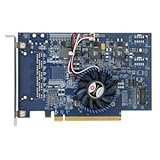
Intel QuickAssist CPIC-8955 Cryptographic Accelerator Card | $199.00 | Buy on Amazon |
Flow’s proposal is to add its PPU architecture alongside conventional CPU cores. The CPU would continue to handle sequential instructions and control-heavy work; the PPU would take on suitable parallel regions, where many operations can run at the same time. That is the basis for the company’s “SuperCPU” framing: a CPU design augmented with parallel-processing hardware, not a standalone retail processor that Flow has already put on sale.
How the PPU is intended to work
Flow’s architecture is designed to expose and exploit parallelism at a low level. IEEE Spectrum describes mechanisms intended to hide memory latency, provide communication bandwidth, coordinate parallel work and let the PPU process suitable regions identified by a compiler. In Flow CTO and co-founder Martti Forsell’s explanation to IEEE Spectrum, sequential work stays on the CPU while the CPU assigns parallel parts to the PPU.
#1 Best Overall
- Uses QuickAssist technology to provide up to 50Gbps of hardware acceleration
- Designed for easy drop-in implementation in new and existing equipment
- Makes establishing connections to web services hosted on NGINX lightning fast
- Helps maximize storage space and improves the performance of transmitting data
- Ideally suited for PCIe coprocessor-based IPsec or TLS security applications such as SSL, OpenSSL*, and NGINX
This division matters because a workload is rarely all parallel. A program may contain a section that can be split among many operations and another that must run in sequence. The sequential section does not automatically become faster just because a PPU is present; the potential gain depends on how much of the work can use the PPU and how efficiently the software and hardware coordinate it.
What “up to 100× faster” means
The headline figure combines claims with different assumptions. VTT’s 2024 announcement repeated Flow’s claim of up to 100-fold acceleration and backward software compatibility. IEEE Spectrum reported that the preliminary “up to 100×” comparison assumed a future silicon implementation running at the same clock speed as the commercial processor used for comparison, with Flow’s microarchitecture. TechCrunch reported a different software distinction: Flow described existing code as potentially about 2× faster, while gains of up to 100× could require code to be modified or recompiled for the PPU.
| Claim or result | What it describes | Qualification |
|---|---|---|
| Up to 100-fold acceleration | Flow’s headline claim, as reported by VTT in 2024 | A claim for suitable workloads, not a general result for all CPU tasks. |
| Up to 100× preliminary improvement | IEEE Spectrum’s account of a comparison using Flow’s microarchitecture | Assumes a future silicon implementation at the same speed as the compared commercial processor. |
| Potentially about 2× for existing code; up to 100× after changes | Flow’s software-related claims, as reported by TechCrunch | The larger figure is associated with modifying or recompiling code for the PPU. |
“Up to” describes a best-case ceiling, not a typical speedup. The result would vary with workload, the amount of parallel work, software preparation and the final chip implementation. Neither the headline nor the preliminary comparison establishes that ordinary single-threaded tasks or complete consumer-computer workloads would run 100 times faster.
What’s actually slowing this PC down?
Pick the symptom - the matching free tool is one click away.
What has been demonstrated—and what has not
IEEE Spectrum reported that Flow built a proof-of-concept FPGA implementation and that it matched the company’s simulator. TechCrunch also reported FPGA-based tests. An FPGA demonstration is a step beyond simulation, but it is not the same as a production CPU fabricated in silicon; the reported match to the simulator does not independently validate the projected 100× performance on a finished commercial processor.
Flow’s website listed a May 2025 milestone for end-to-end CPU operations in alpha testing with its compiler. That indicates development progress, but an alpha milestone is not evidence of a mass-produced processor or a public, independently replicated benchmark. The available public evidence described here does not establish an independently verified 100× result on a shipping CPU.
Independent reader supportYour contribution helps us test, update, and keep practical guides available for everyone.Why you cannot add a Flow PPU to an existing CPU
The PPU is intended to be integrated into a processor design as semiconductor IP. TechCrunch reported that it must be incorporated during chip design, while IEEE Spectrum said Flow was seeking CPU-production partners. As a result, commercialization depends on a vendor licensing the technology and integrating it into a CPU or system-on-chip; it is not an add-in upgrade for a computer that already has a conventional processor.
Flow is therefore pursuing a business-to-business licensing route rather than selling a branded consumer CPU. No retail Flow processor is established by the announcements and development milestones described above. The practical question is whether a chip partner will integrate the PPU and whether the resulting product can demonstrate useful gains across real workloads.
What would make the claim convincing
A meaningful evaluation would need to disclose more than a peak multiplier. Readers and chip customers would want to know which workloads were tested, whether code ran unchanged or was recompiled, what hardware and clock speeds were compared, and whether results came from simulation, FPGA or production silicon. Power use, chip area, compiler maturity and repeatable independent benchmarks also matter: a large speedup on a narrow, optimized task does not by itself establish a broadly faster or more efficient CPU.
Until a production design and independently checkable results are available, the accurate description is that Flow claims its PPU could accelerate suitable parallel workloads by up to 100× under projected configurations. It has not been shown here to have made a generally 100×-faster shipping CPU.
Quick Recap
Product prices and availability are accurate as of the date/time indicated and are subject to change. Any price and availability information displayed on Amazon at the time of purchase will apply.

