
Quick wins for a faster PC:
Clear out junk files and repair common Windows errorsFree Scan →Scan for outdated or missing drivers - takes under a minuteDriver Scan →Repair Windows errors before they cause bigger problemsFix Now →iTechGuides is reader-supported. When you buy through links on our site, we may earn an affiliate commission. As an Amazon Associate I earn from qualifying purchases. Learn more
You cannot confirm asbestos in soil by looking at it. Visible fragments or a history of asbestos use can be reasons to investigate, but fibers may be too small to see, and a clean-looking surface does not prove the soil is free of asbestos. If you suspect contamination, avoid disturbing the area and contact a qualified asbestos or environmental professional about a site-specific investigation and laboratory analysis.
Can you tell if soil contains asbestos by looking at it?
No. A visual check may reveal suspicious debris, but it cannot identify asbestos reliably or show whether fine fibers are present elsewhere in the soil. The U.S. Environmental Protection Agency (EPA) advises treating suspect material as asbestos-containing when in doubt and leaving it alone. In a 2015 report, the EPA Office of Inspector General concluded that visual inspection was not health protective when assessing soil contamination.

Potential clues include a known history of asbestos-containing building materials, demolition or dumping, visible fragments that may be building debris, or geology associated with naturally occurring asbestos. These clues can help guide an investigation; none confirms contamination. Soil may be affected by natural deposits or by human activities, and contamination can extend beyond visible fragments.
Free tools Windows power users keep installed
One-click scans. No signup required.
What should you do if you find suspicious debris?
- Stop disturbing the area. Do not dig, rake, sweep, dry-brush, or handle suspicious fragments. EPA guidance warns that improper sampling can create additional exposure; its public advice is to leave suspect material alone.
- Contact a qualified professional. Describe the site history, where debris is visible, and whether gardening, excavation, or construction could disturb the area. Ask the professional or your local environmental authority what steps apply to your property.
- Do not treat a photo or one casual sample as clearance. A sample represents only the material and area collected under a defined plan. It cannot establish that an entire yard or deeper soil is uncontaminated.
EPA’s public page on asbestos-containing materials recommends trained, accredited professionals for sampling in the household-material context. Soil investigations require a separate, site-specific approach. Local, state, tribal, or territorial rules may apply; U.S. EPA Superfund guidance does not establish requirements for every private property or jurisdiction.
#1 Best Overall
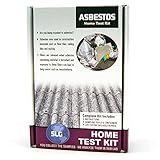
- SLGi Home Test Kits includes sampling tools, a prepaid return shipping label, instructions, and analysis.
- We perform Asbestos PLM analysis by EPA Method 600/R-93 for (1) sample.
- Your results will be ready within (5) business days of your kit arriving at our lab.
- Your sample takes 1–5 business days to reach our lab.
How professionals investigate suspected asbestos in soil
A useful investigation starts by defining the decision that results need to support: for example, whether a planned excavation needs controls, whether a particular area needs further assessment, or how potential exposure should be evaluated. EPA’s 2021 Framework for Investigating Asbestos-Contaminated CERCLA Sites recommends using a conceptual site model and data-quality objectives to guide the sampling method, sample count, locations, and processing. The plan may consider the size of the area under evaluation, surface and subsurface soil, sampling tools, and the possibility that contamination is unevenly distributed.
Sampling design
Targeted samples and incremental approaches answer different questions. A targeted sample may examine a specific visible fragment or suspected hotspot. Incremental sampling combines many increments from a defined decision unit to characterize that area. EPA’s 2021 framework relays a recommendation of 30 to 100 increments when incremental sampling methodology is used. This is a technical recommendation for planned investigations, not a do-it-yourself instruction or a universal number for every site.
Laboratory method and sample preparation
Soil is a challenging material to analyze for asbestos. The result can depend on how the sample was collected and prepared, which particle-size fractions were examined, and which analytical method was used. EPA’s Superfund technical resources list CARB Method 435 and ASTM D7521 as soil-related resources. EPA cautions that its polarized light microscopy (PLM) method developed mainly for bulk building materials can identify asbestos from building materials in site soils, but has limitations and is not recommended for Superfund characterization activities; it points to CARB 435 as augmented by Appendix C of its framework.
The Tool Desk
Outbyte PC Repair FREEClear out junk files and repair common Windows errorsFree Scan →Outbyte Driver Updater FREEFix the driver behind crashes, sound loss and screen glitchesFind Drivers →Other techniques, including stereomicroscopy, scanning electron microscopy, transmission electron microscopy, and X-ray diffraction, may be considered alongside PLM depending on the sample and question. A 2018 study describes differences between CARB 435 and ASTM D7521-13, including their sample-fraction approaches and microscopy steps; those study details should not be mistaken for one universal laboratory protocol. Ask the project professional which method and preparation are appropriate and how the laboratory will report the result.
Rank #3

- Easy and Safe Testing: Utilize our asbestos testing kit to safely collect 2 samples for analysis. Simple to use with clear instructions, ideal for both home and office environments.
- Accurate and Dependable Results: Trust in our reliable asbestos air test kit, offering precise results analyzed by EPA-approved lab methods. Receive professional reports within 1 week.
- Sample Analysis: Our asbestos home test kit allows the collection of two samples, enhancing the thoroughness of your asbestos PLM analysis and ensuring comprehensive coverage.
- Required In-Depth Lab Analysis: Our Asbestos test kit gives you the flexibility to seek professional lab analysis. With an optional $20 lab fee per sample, receive a comprehensive evaluation from our AIHA-accredited lab, enhancing the accuracy of your home's Asbestos detection.
- Ideal for Various Applications: Whether checking for asbestos in popcorn ceilings or other household materials, our kit is suitable for a range of testing needs, delivering peace of mind.
What a soil result does—and does not—tell you
A laboratory finding of asbestos in soil does not, by itself, establish the exposure a person will experience or dictate a cleanup decision. Soil concentration, the potential for fibers to become airborne, the activities taking place, and current or future land use are related but distinct considerations. EPA’s framework includes activity-based sampling to evaluate potential exposure during representative activities that disturb soil or dust at investigated sites. ATSDR focuses primarily on inhalation when evaluating asbestos health effects.
There is no universal percentage that means soil is safe. EPA’s policy, summarized on its current Superfund page, says that concentrations at or below 1 percent may still pose unacceptable risk depending on site conditions and land use. EPA uses site-specific, risk-based action levels for Superfund decisions. The applicable response for a private property depends on the site and the relevant authorities; seek a professional interpretation rather than treating a single percentage as a universal cutoff.
Rank #4
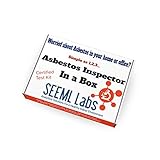
- DIY Asbestos Sample Test Kit
- Free Consultation and Lab Fees Included. No additional lab fees required
- Fast Turnaround: Results within 2–3 business days after samples are received.
- NVLAP 201031-0 Accredited Laboratory
- Professional and Detailed Report Included in Price
Questions to ask before an investigation
- What area and decision unit will the sampling plan represent, and what decision will the results support?
- Will the investigation include subsurface soil as well as surface soil?
- How will visible debris or suspected hotspots be handled separately from broader soil characterization?
- Which soil-appropriate analytical method and sample-preparation steps will the laboratory use?
- Will the results address asbestos presence in soil, potential exposure during a specific activity, or both?
- Which local requirements or environmental authority apply to this site and planned work?
A soil sampling auger is a tool a qualified team may consider as part of a planned collection approach; it cannot detect asbestos, and using one does not replace a sampling design or laboratory analysis.
What’s actually slowing this PC down?
Pick the symptom - the matching free tool is one click away.
Quick Recap
Best Value
- SLGi Home Test Kits includes sampling tools, a return shipping label, instructions, and analysis.
- We perform Asbestos PLM analysis by EPA Method 600/R-93 for (1) sample.
- Your results will be ready within (3) bus. days of your kit arriving at our lab.
- Your sample takes 1–5 bus. days to reach our lab.
Product prices and availability are accurate as of the date/time indicated and are subject to change. Any price and availability information displayed on Amazon at the time of purchase will apply.

