
iTechGuides is reader-supported. When you buy through links on our site, we may earn an affiliate commission. As an Amazon Associate I earn from qualifying purchases. Learn more
Point-of-care diagnostics can deliver test results near the patient, often from a small sample and with less preparation than centralized laboratory testing. But a device does not improve care simply because it is small or fast: it must also perform reliably, fit clinical workflows, be practical to manufacture, and offer a meaningful overall advantage.
That is the central challenge in lab-on-a-chip technology. A 2014 Chemistry World feature by Mark Peplow examined the promise and obstacles through examples including mChip, paper-based tests, and handheld analyzers. Those examples explain the engineering and clinical trade-offs; they should not be read as a current product or market survey.
What point-of-care diagnostics can change
Central laboratories can run sophisticated tests, but getting a sample there and returning a result takes time and infrastructure. A point-of-care test brings some of that analysis closer to where care is delivered. In an emergency, a faster answer may help clinicians make a decision sooner; for ongoing health monitoring, a compact test may make repeated measurements more practical. In places with limited clinical infrastructure, tests that need less equipment and preparation may widen access to diagnostic information.
“Point of care” describes where a test is used, not a guarantee of speed, accuracy, or simplicity. A device still has to produce a result clinicians can trust and act on. The goal is not merely to shrink a laboratory instrument, but to provide an appropriate test in the setting where its result is useful.
#1 Best Overall
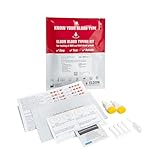
- Quick Results: Learn your blood type in just a couple of minutes with this easy-to-use testing kit
- Simple Interpretation: Easily understand your blood type group with clear and straightforward results
- Permanent Record: Keep as a permanent record of your blood type on the durable card for your records or safekeeping
- Reliable Accuracy: Offers a reliable and accurate way to learn your blood type using proven testing technology
- Convenient Home Use: Can be used conveniently at home without the need for laboratory visits
Why existing test formats involve trade-offs
Different diagnostic formats illustrate why one device rarely wins on every dimension. A simple test may be inexpensive and easy to use but offer limited information; a more capable analyzer may require an instrument, trained staff, or a more complex workflow.
| Format | What it can offer | Key trade-off |
|---|---|---|
| Lateral-flow tests | Inexpensive, convenient testing, often with a visible result. | Often qualitative, with limitations in sensitivity or the number of targets measured. |
| Glucometers | Quantitative readings for glucose, an analyte available at relatively high concentrations in the sample. | Their success does not mean the same approach can readily detect low-concentration biomarkers. |
| Handheld analyzers | Portable instruments can measure multiple blood parameters. | They rely on an analyzer and consumables, so instrument cost, operation, and workflow matter alongside analytical capability. |
These are broad examples, not a current head-to-head assessment of specific products. The useful comparison depends on the intended clinical decision and setting.
Why a lab-on-a-chip is an integration challenge
A microfluidic device moves and processes tiny amounts of fluid through small channels or chambers. The ambition is to bring several laboratory operations together in a compact system, potentially taking a sample through preparation and analysis to a result without sending it through a conventional laboratory workflow.
Quick wins for a faster PC:
Scan for outdated or missing drivers - takes under a minuteDriver Scan →Repair Windows errors before they cause bigger problemsFix Now →Rank #2
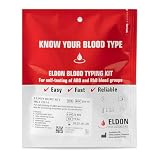
- Safe and easy Home Blood Typing Kit - now with Improved lancet
- Results in minutes at home to determine your blood type and Rhesus factor (positive or negative)
- Perfect for those interested in Dr. Peter D'Adamo's Blood Type Diet
- Read instructions carefully before you begin for accurate results
- Each Blood Typing Kit is good for one use (enough for 1 test for a single individual)
That integration is difficult because clinical samples are not tidy laboratory inputs. A practical system may need to prepare the sample, isolate or detect a low-concentration biomarker, automate multiple steps, and return dependable results across real patient samples. Making one component work in isolation is not enough: the complete device must handle the sample and produce a clinically meaningful answer consistently.
Examples discussed in Peplow’s 2014 feature show different ways researchers approached the problem:
- mChip: Samuel Sia’s microfluidic platform was presented as a way to integrate diagnostic steps into a compact format.
- Paper-based digital microfluidics: Work associated with Aaron Wheeler explored paper as a substrate for manipulating small fluid samples.
- Slide sample processing: David Beebe’s concept focused on processing samples in a format intended to simplify the path toward analysis.
- AuRA and the proposed X1: Shana Kelley’s approach sought to connect molecular detection with a compact diagnostic system.
These are historical research examples reported in 2014, not confirmation that any named prototype is currently available, approved, or routinely used.
Rank #3

- What is the EldonCard: You can learn your blood type in just a couple of minutes using the Eldon Blood Typing Kit. The EldonCard is used for ABO-and RHD blood grouping. The card allows individuals to understand what their blood group is. The Blood Typing cards are accurate and can be used in the home and once completed the card can be covered for future reference
- Why do I need the EldonCard: Your blood type is inherited from your parents and determined by the presence or absence of certain antigens and antibodies. The EldonCard is made of a special type of plastic upon which dried antibody formulations are placed. The EldonCard at home test kit is a reliable, durable, and flexible point-of-care blood typing system
- How EldonCard Works: The type of antigen you have tells us what your blood type is. While there are more than 20 blood-type systems, A, B, O and Rh (Rhesus) factors are by far the most important types. The blood is drawn by using a single-use safety lancet, which prevents accidental piercing by anyone picking up the lancet after it has been used. This home medical test is an essential part of blood testing supplies
- EldonCard Accuracy: The EldonCard is extremely accurate. It has been tested against the standard blood typing procedure using directly agglutinating antibodies. Tests have been performed at several laboratories in different countries and the results are in-line with laboratory-based tests
- Where and Who can use it: EldonCard health test kit is used by hospitals, blood banks, blood centers, where it can be used for general blood typing and for bedside testing. Given the flexibility, durability and accuracy of the EldonCard, it can be used outside hospitals and clinic environments. Often it is used within practitioner clinics, humanitarian settings, remote locations, battlefields, classrooms, private homes, and in many emergency situations calling for a speedy and reliable test
Materials and manufacturing are part of the design
A device that works in a research setting may still be too costly, delicate, or difficult to produce at the scale needed for clinical use. The 2014 feature describes researchers exploring plastics and paper-based devices as alternatives to materials such as glass, silicon, and polydimethylsiloxane (PDMS). The choice affects more than the unit cost: it can influence fabrication methods, repeatability, robustness, and whether production can scale.
Manufacturing therefore belongs in the design process, not as a final packaging task. A promising assay has limited practical value if its consumable cannot be produced consistently or its instrument is unsuitable for the environments in which it is meant to be used.
How to judge whether a faster test is better
Speed matters only in relation to the decision being made. A rapid result can be valuable when clinicians can act on it immediately, but a short turnaround does not compensate for an unreliable result or a test that does not answer the relevant clinical question.
Rank #4

- What is the EldonCard: You can learn your blood type in just a couple of minutes using the Eldon Blood Typing Kit. The EldonCard is used for ABO-and RHD blood grouping. The card is perfect for individuals to understand what their blood group is. The Blood Typing cards are accurate and can be used in the home and once completed the card can covered for future reference.
- Why do I need the EldonCard: Your blood type is inherited from your parents and determined by the presence or absence of certain antigens and antibodies. The EldonCard is made of a special type of plastic upon which dried antibody formulations are placed. The EldonCard is a reliable, durable, and a flexible point-of-care blood typing system.
- How EldonCard Works: The type of antigen you have tells us what your blood type is. While there are more than 20 blood-type systems, A, B, O and Rh (Rhesus) factor are by far the most important types. The blood is drawn by using a single-use safety lancet, which prevents accidental piercing by anyone picking up the lancet after it has been used.
- EldonCard Accuracy: The EldonCard is extremely accurate. It has been tested against the standard blood typing procedure using directly agglutinating antibodies. Tests have been performed at several laboratories in different countries and the results are in-line with laboratory-based tests.
- Where and Who can use it: EldonCard is used by hospitals, blood banks, blood centres, where it can be used for general blood typing and for bed side testing. Given the flexibility, durability and accuracy of the EldonCard, it can be used outside hospitals and clinic environments. Often it is used within practitioner clinics, humanitarian settings, remote locations, battlefields, classrooms, private homes, and in many emergency, situations calling for a speedy and reliable test.
For a meaningful comparison, assess the full system across these dimensions:
- Analytical performance: How sensitive and specific is the test for its intended target?
- Result type and scope: Is the output qualitative or quantitative, and how many analytes can it measure?
- Sample requirements: How much sample is needed, and what preparation must happen before testing?
- Time and workflow: How long does the entire process take, including preparation and user steps?
- Automation and usability: Can the intended operator run it reliably in the actual clinical setting?
- Total cost: What do the instrument and per-test consumables cost in the intended use model?
- Manufacturing scale: Can the device be made consistently and in quantities relevant to deployment?
- Clinical and regulatory footing: Is there evidence that it performs with patient samples and is appropriate for the intended clinical use?
These factors interact. More automation may reduce operator burden but add instrument complexity; broader testing may increase usefulness but make sample handling harder. The relevant question is whether the complete system improves a real clinical workflow, rather than whether one specification looks impressive.
Outdated Drivers Are Slowing You Down
One free scan finds every outdated or missing driver and matches the right update for your exact hardware.Free scan · exact hardware matchPC Slower Than It Used to Be?
A free scan shows the junk files, broken settings and background clutter dragging Windows down - then fixes them in one click.Free scan · Windows 10 & 11Why clinical collaboration determines adoption
Developers need to understand how a test will be used: who collects the sample, who operates the device, where it sits, what happens when a result is uncertain, and how quickly the result must guide care. Clinicians can identify workflow needs and failure points that are easy to miss when a device is designed around the assay alone.
Best Value
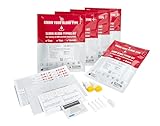
- What is the EldonCard: You can learn your blood type in just a couple of minutes using the Eldon Blood Typing Kit. The EldonCard is used for ABO-and RHD blood grouping. The card is perfect for individuals to understand what their blood group is. The Blood Typing cards are accurate and can be used in the home and once completed the card can covered for future reference.
- Why do I need the EldonCard: Your blood type is inherited from your parents and determined by the presence or absence of certain antigens and antibodies. The EldonCard is made of a special type of plastic upon which dried antibody formulations are placed. The EldonCard is a reliable, durable, and a flexible point-of-care blood typing system.
- How EldonCard Works: The type of antigen you have tells us what your blood type is. While there are more than 20 blood-type systems, A, B, O and Rh (Rhesus) factor are by far the most important types. The blood is drawn by using a single-use safety lancet, which prevents accidental piercing by anyone picking up the lancet after it has been used.
- EldonCard Accuracy: The EldonCard is extremely accurate. It has been tested against the standard blood typing procedure using directly agglutinating antibodies. Tests have been performed at several laboratories in different countries and the results are in-line with laboratory-based tests.
- Where and Who can use it: EldonCard is used by hospitals, blood banks, blood centres, where it can be used for general blood typing and for bed side testing. Given the flexibility, durability and accuracy of the EldonCard, it can be used outside hospitals and clinic environments. Often it is used within practitioner clinics, humanitarian settings, remote locations, battlefields, classrooms, private homes, and in many emergency, situations calling for a speedy and reliable test.
Adoption also depends on dependable performance with patient samples, usability, regulatory approval for the intended use, and evidence of clinical value. A technically elegant chip is not automatically a clinically useful test. As Beebe put it in the 2014 feature, success means winning on more than one dimension: cost, speed, and test quality have to combine into an advantage in the clinic.
What the 2014 examples do—and do not—establish
Peplow’s feature, published on September 24, 2014, captures a period of active work on miniaturized diagnostics. Its examples are useful for understanding design challenges, but its descriptions of company plans, prototypes, and commercialization are historical. They do not establish present-day availability, regulatory approval, ownership, or routine clinical adoption for the devices it names.
The article is also not a current market survey or a verified comparison of test performance. For a present-day decision about a particular device, check current information from the manufacturer and relevant regulatory authorities, and look for clinical evidence tied to the exact intended use. The feature itself is available at Chemistry World.
Free tools Windows power users keep installed
One-click scans. No signup required.
Quick Recap
Product prices and availability are accurate as of the date/time indicated and are subject to change. Any price and availability information displayed on Amazon at the time of purchase will apply.

