
iTechGuides is reader-supported. When you buy through links on our site, we may earn an affiliate commission. As an Amazon Associate I earn from qualifying purchases. Learn more
Europe’s 6G race is underway in research funding, standards work and spectrum planning—not in commercial network launches. The European Commission says deployment by 2030 is possible, but that is a policy horizon, not a guaranteed arrival date.
What does Europe’s 6G race actually mean?
“Race” describes a contest to build research capacity, shape global standards and retain industrial influence. It does not mean Europe has already won a measurable technology contest: the European Commission’s published figures describe investment and policy aims, not comparative outcomes against other regions.

Shared standards matter because 6G networks and devices will need to interoperate across borders and with equipment from multiple suppliers. The Commission emphasizes international engagement, including cooperation with the United States, the Republic of Korea and Japan. Its policy goals also include security, resilience, privacy, affordability, sustainability, openness and efficient spectrum use.
The Commission’s 6G policy page, last updated on 30 June 2025, states: “It is crucial to maintain Europe’s sovereignty and market positions in 6G and advanced 5G through partnership with European industry.” That is the Commission’s stated ambition, not independent evidence that Europe has secured those positions.
#1 Best Overall
When could 6G arrive in Europe?
The Commission says 6G is something “which we could see in deployment by 2030.” Its wording is deliberately prospective. It expects early standardisation work to start around 2025 and first products and infrastructure toward the end of the decade, but those expectations do not establish a firm date for commercial service.
| Milestone | What the Commission has said | How to read it |
|---|---|---|
| Early standards work | Expected to start around 2025, according to the Commission’s policy page last updated 30 June 2025. | An expected start for early study phases, not proof that final standards or products are ready. |
| First products and infrastructure | Expected toward the end of the decade, according to the same policy page. | A forecast, not a confirmed launch schedule. |
| Possible deployment | The Commission says deployment by 2030 could happen. | A possible horizon, not a guaranteed European rollout date. |
For readers, the key distinction is between a research and standardisation timeline and the availability of a working network from a commercial operator. The Commission’s stated horizon does not tell consumers when or where they will be able to subscribe to 6G service.
How is Europe funding 6G research?
The Smart Networks and Services Joint Undertaking (SNS JU) is the EU’s central research and innovation partnership for this work. Established in 2021, it is jointly led by the European Commission and the 6G Smart Networks and Services Industry Association. Its mandate is to develop European technology sovereignty through research and innovation, contribute to conception and standardisation, and prepare for early market adoption toward the end of the decade.
What’s actually slowing this PC down?
Pick the symptom - the matching free tool is one click away.
Rank #2
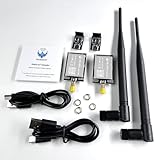
- 【Reliable Product】The DX-LR03 can achieve a communication range of up to 10 km in an open, unobstructed environment when used for drone communication (actual communication distance may vary depending on the environment; please refer to actual testing), including CE, FCC, and ROSH. This makes your product safer and more reliable.
- 【Uart Serial communication】DX-LR03 is a low-power lora module developed by DX-SMART. Serial communication can achieve transparent data transmission between devices. The baud rate supports 1200, 2400, 9600, 19200, 38400, 57600, 115200, 128000.
- 【AT command settings】Has multiple AT commands that can be used to set query the module's Mode, Frequency, Mac, Bandwidth, Spreading factor, Coding rate, Coding rate, etc. You can quickly start the project without writing the lora program by yourself.
- 【Application Scenarios】The DX-LR03 enables long-distance serial data transmission, for example, from the living room to the basement, from the living room to the yard, on pastures, on farms, and within industrial parks. It can also be used with Andruno, Raspberry Pi, or ESP32 MCUs to develop various DIY products, such as long-distance motor control and data acquisition. We have extensive sample code to quickly verify your product.
- 【Rich Documentation Resources】We provide comprehensive technical support, including technical documentation, AT command sets, module packages, reference design schematics, and development/test tools. To help you quickly verify module functionality and accelerate product development, we strongly recommend purchasing a development kit with your initial order. Additionally, click the Product Guides & Documentation link below to access user guides, complete product information, and YouTube product video tutorials.
The Commission’s current SNS JU partnership page states an EU budget of €900 million for 2021–2027, with industry resources also expected. A separate Commission announcement on 2 March 2026 reported €116 million in new funding for 20 projects. The announcement described those awards as part of €630 million in EU Horizon Europe funding and a 100-project portfolio; it also said another €270 million was planned for 2026 and 2027. The €270 million is planned future investment, not money already spent.
These figures describe different layers of the programme: the partnership’s stated EU budget, a newly announced set of awards, the broader funding and project portfolio, and planned future investment. They show sustained activity, but funding and project counts alone do not establish successful products, adoption or global leadership.
Is Europe’s 6G spectrum plan settled?
No. On 11 February 2026, the Commission summarized a consultation on a draft 6G spectrum roadmap from the Radio Spectrum Policy Group. The draft concluded that existing harmonised bands could be sufficient to support a 6G launch by 2030.
Rank #3

- 6G Forest Green Touch-Up paint Compatible with KIA models. Paint2Fix Touch-Up Paint prevents rust and is easy to apply. You can't go wrong, just remove the touch-up paint with our patented Touch-Up Paint Remover and try again.
- Paint2Fix Touch Up Paint is a new product that allows you to easily repair small scratches and stone chips on your car. It has high quality pigments and a long lasting formula so you can get professional results.
- Easy to Use. It comes with micro retouch brushes that let you apply the paint precisely. This makes it convenient for users of all levels.
- Fast Drying. Paint2Fix touch-up paint dries quickly. This means you can use the vehicle again quickly after painting. Durability: The paint can handle UV rays and weather. It will last a long time and won't fade or crack.
- Here's what's in the Paint2Fix touch-up paint kit: - Paint2Fix Touch Up Paint. - 2 fl oz (60 ml) of patented Touch Up Paint Remover - Five micro brushes. - Application gloves. - Special blue cloth and firm sponge to use with the Touch Up Paint Remover. - Detailed instructions
That is a draft conclusion under consultation, not a final EU spectrum decision. It also does not establish that spectrum planning is complete or that all practical spectrum constraints have been resolved. The roadmap’s consultation status is an important difference between a policy proposal and an adopted plan.
The Tool Desk
Outbyte PC Repair FREERepair Windows errors before they cause bigger problemsFix Now →Outbyte Driver Updater FREEScan for outdated or missing drivers - takes under a minuteDriver Scan →What might 6G be used for?
The Commission presents several applications as possibilities for future 6G systems, including virtual and augmented reality, hologram devices, remote surgery, digital twins, extended-reality sensing and autonomous vehicles. These are prospective examples, not services already delivered by 6G networks. The Commission’s list also does not establish that any one of these applications will require 6G exclusively.
For now, the examples help explain the ambitions behind the research: support for applications that may combine connectivity with sensing, computing or immersive experiences. They should not be read as a consumer feature list with availability dates.
Rank #4

- [Premium Quality] -- Brand new and made of premium electronic components, ensuring high-quality performance and durability.
- [Multi-functional] -- This sensor board is designed to measure temperature, humidity, and pressure, providing comprehensive data for your projects.
- [Sensitive Sensor] -- The bme680 sensor is highly sensitive, making it a great choice for various applications.
- [Compact Design] -- With a small size and light weight, this sensor board is convenient to use and easy to integrate into different setups.
- [Versatile Usage] -- Suitable for a wide range of applications requiring accurate temperature, humidity, and pressure measurements, the cjmcu-680 bme680 sensor is a choice.
How should readers judge Europe’s progress?
A realistic assessment separates activity from outcomes. The Commission’s dated announcements document an active funding programme and ongoing spectrum-policy work, while its policy page sets out a possible deployment horizon. They do not, on their own, show whether Europe is ahead of other regions or whether funded projects will lead to commercial systems.
- Ambition versus readiness: distinguish policy timelines and early research from completed standards, products and infrastructure.
- Funding versus results: distinguish amounts announced and projects funded from demonstrated technical results, market adoption or deployed networks.
- Spectrum proposals versus decisions: distinguish the draft roadmap consultation from finalized policy and actual allocations.
- European influence versus interoperability: assess Europe’s industrial capacity alongside the need for international standards that work across markets.
On the available evidence, Europe is investing in the foundations of 6G and trying to influence how the technology develops. Whether that work translates into a timely rollout and lasting industrial strength remains an open question.
Do these 3 things before closing this tab:
1Clear out junk files and repair common Windows errors2Scan for outdated or missing drivers - takes under a minute3Repair Windows errors before they cause bigger problemsQuick Recap
Product prices and availability are accurate as of the date/time indicated and are subject to change. Any price and availability information displayed on Amazon at the time of purchase will apply.

