
iTechGuides is reader-supported. When you buy through links on our site, we may earn an affiliate commission. As an Amazon Associate I earn from qualifying purchases. Learn more
Converting a file from one format to another rarely saves much time by itself. The efficiency gain comes when a document moves through the whole chain: capture, cleanup, classification, data extraction, validation, and delivery into the system where someone acts on it. This guide separates simple digitization from intelligent document processing (IDP), shows how to choose a first workflow, and lists what to check before you commit to a platform.
Digitizing a file and processing a document are different jobs
Microsoft draws the line clearly in its Power Automate documentation. It says that automated document processing “is used primarily to digitalize paper documents,” so that copies can be indexed and searched. Intelligent document processing goes further. Microsoft defines IDP as “a workflow automation technology that scans, reads, extracts, categorizes, and organizes meaningful information in accessible formats from large streams of data.”
| Aspect | Automated document processing (digitization) | Intelligent document processing (IDP) |
|---|---|---|
| Primary purpose | Produce digital copies that can be indexed and searched | Identify, extract, and organize the information inside documents for use |
| Core output | A searchable image or file | Classified records with extracted fields, ready for another system |
| Formats described by Microsoft | Paper documents | Paper, PDF, Word, spreadsheets, and other formats |
| Typical question it answers | Can we find this file? | What does this document say, and where should the data go next? |
| Staff effort after the step | Usually still needed to read, key in, or route the content | Reduced for standard documents; exceptions still need review |
The practical consequence is that a conversion tool that produces a clean PDF/A or searchable scan may leave the expensive part of the process untouched. Someone still has to open the file, find the invoice number or claim date, and type it into a ledger. Efficiency gains depend on removing that step, not on the format of the output.
The stages of a complete document pipeline
Microsoft describes a practical pipeline that runs from collection through integration. Amazon Web Services (AWS) describes a cloud pattern that adds AI/ML enrichment, automated validation, optional human review, and downstream storage. Taken together, a complete workflow usually has these stages:
#1 Best Overall

- PORTABLE SCANNER FOR USE ON-THE-GO — The fastest and lightest mobile single-sheet-fed compact document scanner in its class¹
- QUICK DOCUMENT SCANNING ― This Epson ultra-fast scanner scans a single page as quickly as 5.5 seconds²; Windows and Mac compatible
- VERSATILE PAPER HANDLING ― Portable scanner scans documents up to 8.5 x 72 in; Also easily digitizes receipts and ID cards to make accounting, bookkeeping, and organizing simpler
- INTUITIVE, HIGH-SPEED SOFTWARE — Epson ScanSmart Software³ is a smart tool allowing you to easily scan, review, and save; Stay organized easily with the help of this Epson scanner
- EASY SETUP — USB-powered connect to your computer for quick and simple scanning; No batteries or external power supply required to operate portable document scanner; Standard Connectivity: USB 2.0
- Collection. Documents arrive from scanners, email, uploads, or storage locations. Microsoft’s pipeline starts here; AWS’s example architecture begins with documents already in storage.
- Preprocessing. Images are cleaned so later steps read them accurately. Microsoft’s description includes correcting skew, removing background noise, and cropping unwanted image areas.
- Classification. The system decides what kind of document it is, such as an invoice, an HR form, or an insurance claim.
- Extraction. Named fields are pulled out: totals, dates, identifiers, line items, and similar values.
- Validation. Extracted values are checked against rules, and uncertain results are flagged. AWS’s architecture makes this an explicit step, with optional human review for exceptions.
- Integration. Verified data is written to a database, ERP, case management tool, or other workstream, and stored for downstream use.
Each stage can fail independently. A badly skewed scan that reaches extraction produces wrong values that may pass validation unless the rules are strict. That is why the stages should be designed together, not bought as separate features and bolted together later.
How to choose the first workflow
The first project should be narrow enough to finish and measure, and valuable enough that a result matters. Use this sequence:
- Inventory document types, volumes, and formats. For each candidate, record how many documents arrive per week, whether they are paper, scanned, or born-digital PDFs, how many layouts they come in, and how long a person spends on each one from arrival to completion.
- Rank candidates by manual effort and repetition. Microsoft recommends assessing which datasets consume the most manual processing time. A high-volume, repetitive form usually beats a rare, complex one for a first pilot.
- Weigh accuracy needs. Some workflows tolerate a few errors with a quick check; others, such as payments or regulated records, do not. Microsoft’s guidance on starting points includes considering accuracy requirements, and that consideration should shape how much validation you build in.
- Define the end state. Name the system that will receive the data and the person or queue that handles exceptions. If you cannot name them, the pilot will end as a searchable archive.
- Select a representative sample. Choose real documents, including the messy ones, before comparing products. Vendor demonstrations usually use clean files.
Improve input quality before adding intelligence
Extraction accuracy is limited by what the system can see. Scanned pages that are tilted, noisy, or cropped badly reduce accuracy in every later stage. Microsoft’s preprocessing guidance points to three corrections worth testing first: straightening skew, removing background noise, and cropping image areas that do not contain document content, such as scanner borders or adjacent pages.
Input quality also depends on the physical intake process. If paper is fed by hand, one page at a time, the most useful improvement may be a consistent scanning setup rather than a more advanced model. Test preprocessing on a sample of your worst scans and compare extraction results before and after.
Rank #2

- FAST SPEEDS - Scans color and black and white documents a blazing speed up to 16ppm (1). Color scanning won’t slow you down as the color scan speed is the same as the black and white scan speed.
- ULTRA COMPACT – At less than 1 foot in length and only about 1. 5lbs in weight you can fit this device virtually anywhere (a bag, a purse, even a pocket).
- READY WHENEVER YOU ARE – The DS-640 mobile scanner is powered via an included micro USB 3. 0 cable allowing you to use it even where there is no outlet available. Plug it into you PC or laptop and you are ready to scan.
- WORKS YOUR WAY – Use the Brother free iPrint&Scan desktop app for scanning to multiple “Scan-to” destinations like PC, Network, cloud services, Email and OCR. (2) Supports Windows, Mac and Linux and TWAIN/WIA for PC/ICA for Mac/SANE drivers. (3)
- OPTIMIZE IMAGES AND TEXT – Automatic color detection/adjustment, image rotation (PC only), bleed through prevention/background removal, text enhancement, color drop to enhance scans. Software suite includes document management and OCR software. (4)
Automate only the fields and document classes that matter
Automating every field on every document creates more validation work and more exceptions. Start with the fields that drive the next action, such as a payment amount, a due date, or a case identifier, and leave low-value fields for manual entry or later automation.
Validation rules and exception routing
Validation rules are where automation becomes safe to use. Examples include checking that a total equals the sum of line items, that a date falls within an expected range, or that an identifier matches a record in another system. Anything that fails a rule or falls below a confidence threshold should go to an exception queue, not straight into the system of record.
When human review stays in the loop
AWS’s example architecture includes human review as an optional step invoked when needed, and it stores verified data for downstream use. Keeping people in the loop for exceptions is not a failure of automation. It is the mechanism that protects accuracy while the system learns which documents it handles reliably. Plan for reviewers to correct values and for those corrections to be logged, so you can see which document types generate the most exceptions.
What’s actually slowing this PC down?
Pick the symptom - the matching free tool is one click away.
Connect verified data to the next action
A common mistake is to digitize documents into a searchable repository and stop there. Searchability helps retrieval, but it does not remove the work of acting on the content. Microsoft’s guidance is to consider the next workflow step before digitizing, and the question to ask is concrete: which system, which field, and which person will use this output within the same day?
Rank #3
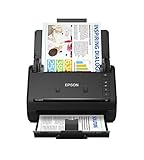
- FAST DOCUMENT SCANNING — Document scanner with feeder allows you to speed through stacks with a 50-sheet Auto Document Feeder (ADF); Efficient office scanner to help you scan more productively
- INTUITIVE, HIGH-SPEED SOFTWARE — Quickly scan with this desktop document scanner; Epson ScanSmart Software lets you easily preview scans, email files, upload to the cloud, and more; Plus, automatic file naming saves even more time
- SEAMLESS INTEGRATION — Easily incorporate your data into most document management software with the included TWAIN driver; Office document scanner integrates seamlessly with business workflows
- EASY SHARING — Duplex scanner allows you to scan straight to email or popular cloud storage2 services like Dropbox, Evernote, Google Drive, and OneDrive for simple storage and sharing
- SIMPLE FILE MANAGEMENT — Scanner allows the creation of searchable PDFs with Optical Character Recognition (OCR) and convert scans to editable Word or Excel files effortlessly; Designed for home and office document scanning
Check how each candidate platform delivers data: through APIs, prebuilt connectors, or file exports. Confirm that failed records can be routed back for review and that the integration can be monitored. A workflow that silently drops records is worse than a manual one.
Measure the pilot against the current process
Compare the pilot against how the work is done today, using the same representative documents. Track these measures:
- Processing time per document, from arrival to the record being usable in the target system.
- Field-level extraction error rate, measured against a manually checked answer key.
- Exception and rework rate, meaning the share of documents needing human correction or reprocessing.
- Implementation and maintenance effort, including the hours to configure, test, and update templates when layouts change.
These are evaluation measures, not outcomes reported by the vendors reviewed for this article. None of the vendor documentation publishes comparable results for them, so the baseline has to come from your own process.
Recommended Free Tools
Compare solutions on five axes
Input formats and document variability
Ask how each service handles paper scans, born-digital PDFs, images, forms, tables, handwriting, and the languages you need. The vendor documentation describes different supported capabilities, so confirm coverage for the exact service and your own documents rather than assuming a general claim applies.
Rank #4

- Scanner type: Document
- Connectivity technology: USB
- With Auto Scan Mode, the scanner automatically detects what you're scanning
- Digitize documents and images
Accuracy and review design
Ask for field-level accuracy on your sample, not an overall accuracy percentage. Confirm how confidence scores work, where validation rules are configured, and how exceptions are routed. AWS’s guidance explicitly builds validation and optional human review into its pattern; check whether a candidate offers the same controls.
Integration and workflow fit
Map each candidate’s APIs, connectors, and exception handling to your downstream systems. Check whether operational monitoring shows failed jobs and processing backlogs, because these are the signals that tell you an automated workflow has stopped working.
Deployment and security
Compare cloud and on-premises hosting, access permissions, encryption, and any regional data requirements that apply to your documents. Microsoft describes cloud versus onsite tradeoffs. AWS’s example architecture describes encryption and access control features, along with monitoring and scaling. Confirm these against the specific product and region you would use.
Free tools Windows power users keep installed
One-click scans. No signup required.
Total operating effort
Processing fees are only part of the cost. Compare implementation speed, the effort to maintain templates and rules, service support, and how the system scales as volumes grow. Microsoft lists implementation, maintenance, support, document recognition, and accuracy among the questions to ask when selecting software, and those questions are a reasonable checklist for any vendor.
Best Value

- OUR MOST ADVANCED SCANSNAP. Large touchscreen, fast 45ppm double-sided scanning, 100-sheet document feeder, Wi-Fi and USB connectivity, automatic optimizations, and support for cloud services. Upgraded replacement for the discontinued iX1600
- CUSTOMIZABLE. SHARABLE. Select personalized profiles from the touchscreen. Send to PC, Mac, mobile devices, and clouds. QUICK MENU lets you quickly scan-drag-drop to your favorite computer apps
- STABLE WIRELESS OR USB CONNECTION. Built-in Wi-Fi 6 for the fastest and most secure scanning. Connect to smart devices or cloud services without a computer. USB-C connection also available
- PHOTO AND DOCUMENT ORGANIZATION MADE EFFORTLESS. Easily manage, edit, and use scanned data from documents, receipts, photos, and business cards. Automatically optimize, name, and sort files
- AVOIDS PAPER JAMS AND DAMAGE. Features a brake roller system to feed paper smoothly, a multi-feed sensor that detects pages stuck together, and skew detection to prevent paper damage and data loss
Vendor documentation at a glance
| Option | What the vendor documentation describes | Caveats to verify |
|---|---|---|
| Microsoft Power Automate (IDP) | Low-code workflow automation covering document capture, preprocessing, classification, extraction, validation, and integration. Listed use cases include invoice processing, HR documents, government applications, insurance claims, and legal data. | Benefit statements are Microsoft’s own claims. Verify current feature availability and plan terms before choosing a tier. |
| Adobe Document Services | APIs for creating PDFs from Word, PowerPoint, and HTML; PDF conversion; OCR; extraction of structured content; and document generation. | Adobe’s support page, last updated 2025-06-05, restricts scripted or RPA automation of enterprise Acrobat licenses. Broader workflows may need separate Document Cloud offerings. Check regional terms. |
| AWS intelligent document processing guidance | An architecture pattern: documents in storage, asynchronous Textract detection, AI/ML enrichment and classification, validation, optional human review, and storage of verified data. Encryption, access controls, monitoring, and scaling are discussed. | This is reference architecture, not a packaged application. Service pricing and regional availability are not stated in the guidance reviewed. |
| ABBYY FineReader Server | OCR that converts scanned and electronic documents into searchable digital formats, with scheduled or continuous processing. | The product page reviewed does not show a publication date, and current program terms are not stated there. |
Check licensing before automating PDF workflows
Licensing can block an automation project even when the technology works. Adobe’s support documentation states: “Adobe doesn’t permit automation of a licensed copy of Adobe Acrobat for enterprises through automated scripts or RPA, except when a customer uses Acrobat Pro’s Action Wizard.” If your plan is to script Acrobat desktop licenses inside an enterprise robotic process automation (RPA) tool, that plan needs a licensing review first. Adobe’s guidance indicates that broader automation may require a separate Document Cloud offering, and terms vary by region.
Where scanners fit
A document scanner with an automatic document feeder is a practical input device for organizations whose process starts with paper. It handles collection and, with good settings, produces the cleaner images that preprocessing depends on. It does not classify, extract, validate, or integrate anything. Those functions come from the software or cloud service described in the sections above, and the process design determines whether the output reaches the right system.
What the published figures do and do not show
- Manual processing cost. Microsoft’s Power Automate IDP page states that manual document processing costs an average of $6 to $8 per document. The page did not show a publication date when reviewed, and the figure is Microsoft’s average, not a measured benchmark. It should not be applied to your workflow without checking your own per-document handling time.
- Throughput. A 2022 research paper reported processing over one million PDF pages per hour. That was the best-performing method in the authors’ benchmark, run on 3,072 CPU cores across 192 nodes. It describes a specific research setup, not a throughput guarantee for a commercial product.
- General efficiency gains. The vendor documentation reviewed does not establish a general percentage time saving, and no independent cross-vendor study was found that does. Treat any universal savings percentage with caution and build your own baseline, as described above.
Product capabilities, regional availability, and licensing terms change over time. Check the current vendor documentation before finalizing a plan, and run the pilot on your own documents before drawing conclusions about efficiency.
Do these 3 things before closing this tab:
1Repair Windows errors before they cause bigger problems2Scan for outdated or missing drivers - takes under a minute3Clear out junk files and repair common Windows errorsQuick Recap
Product prices and availability are accurate as of the date/time indicated and are subject to change. Any price and availability information displayed on Amazon at the time of purchase will apply.

