
What’s actually slowing this PC down?
Pick the symptom - the matching free tool is one click away.
iTechGuides is reader-supported. When you buy through links on our site, we may earn an affiliate commission. As an Amazon Associate I earn from qualifying purchases. Learn more
Dynamic Smart Cooling (DSC) is HP’s name for a data-center cooling approach that uses temperature sensors near IT racks and control software to adjust cooling in response to local conditions. Rather than treating the whole room as thermally uniform, it uses a feedback loop to direct cooling where equipment needs it. The term is also used descriptively for adaptive cooling, but the available sources do not establish it as a universal formal standard.
How Dynamic Smart Cooling works
DSC combines rack-level temperature measurements, control logic, and adjustable cooling equipment. A sensor by itself is not a DSC system: the readings must inform controls that can change cooling output.
- Measure conditions near the equipment. Sensors monitor temperatures at rack air inlets and, in some deployments, exhaust locations. This captures conditions experienced by IT equipment instead of relying only on return-air readings at cooling units.
- Send readings to a controller. The controller evaluates local thermal conditions and the relationship between each computer-room air conditioner (CRAC) and the sensor locations it can affect.
- Adjust cooling output. The controller can change a CRAC’s supply-air temperature and airflow to address local demand, rather than unnecessarily cooling areas that do not need it.
- Maintain equipment inlet temperatures. The goal is to keep conditions at equipment air inlets within the facility’s requirements while making better use of its cooling infrastructure.
The control loop depends on the facility’s sensor coverage, airflow layout, cooling equipment, and controls. The 2007 USENIX technical paper describes the rack sensors, controller feedback, CRAC adjustments, and each unit’s “region of influence.” Read the USENIX paper.
PC Slower Than It Used to Be?
A free scan shows the junk files, broken settings and background clutter dragging Windows down - then fixes them in one click.Free scan · Windows 10 & 11Crashes, No Sound, or Screen Glitches?
Random freezes, missing sound and display glitches usually trace back to one bad driver. Find and replace yours safely.Free scan · under a minuteHow DSC differs from room-level cooling control
| Control approach | Temperature measurement | Response |
|---|---|---|
| Conventional room-level control, as described by HP Labs | May rely on return-air readings at cooling units | Controls may treat the room more broadly rather than using rack-specific conditions |
| Dynamic Smart Cooling | Uses sensor readings at rack inlets and, in some deployments, exhaust locations | Control logic can adjust cooling units in response to local conditions and their influence on racks |
This distinction matters because a room-wide or return-air reading may not show the temperature at a particular rack inlet. Rack-aware feedback gives the controller more local information, but its usefulness still depends on sensor placement and how well the cooling units’ effects are mapped. HP Labs describes the technology as adjusting air-conditioning settings based on real-time temperature measurements from sensors deployed on IT racks. HP Labs: Data centers.
#1 Best Overall
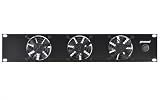
- 2U 2 rack spaces / 19" x 3.5" x 2" / Airflow= 159 CFM - INTAKE - Noise= 44 dBA
- High airflow, high pressure fans / First choice for server applications. Best for any application where high airflow and pressure are needed.
- High power fans push more air harder to more effectively cool larger racks
- Select from Intake or Exhaust. Fans can be easily flipped over to change airflow if needed.
- 3 Year Warranty | Built by hand in the USA
What savings have been reported—and what they mean
Historical HP materials report different potential reductions. They use different measures and conditions, so they are not directly comparable or a forecast for a new installation.
| Reported figure | Measure and qualification | Source |
|---|---|---|
| 25–40% | Potential reduction in data-center cooling costs; HP Labs’ page does not show a publication year and presents this as potential, not a guarantee. | HP Labs |
| 30–60% | Reduction in cooling power described in a 2006 HP Labs article; the article says results depended on facility infrastructure. | HP Labs, 2006 |
| Up to 45% | Reduction in cooling costs claimed in Hewlett-Packard’s 2007 QuickSpecs, qualified by cooling plant; this is a historical vendor claim. | HP QuickSpecs, 2007 |
Cooling cost and cooling power are different measures. These historical figures do not establish a current, independent, cross-facility performance estimate, and a particular site’s results would depend on its infrastructure and implementation.
Rank #2

- 【Efficient Cooling Fan】Features a high-performance ventilation fan with an adjustable speed controller (1000-3000 RPM) for customized airflow. Balances optimal cooling efficiency with noise reduction, perfect for maintaining ideal temperatures in server racks and electrical enclosures.
- 【Upgraded Ventilation Grille】The #803 ventilator filter kit is upgraded with white ventilator mesh featuring one-touch open/close button. With high-quality ABS for superior heat resistance, ensuring safer operation in high-temperature environments. Perfect for both industrial enclosures and household applications.
- 【Dustproof & IP44 Moisture-proof 】The cabinet fan filter kit boasts an IP44 protection rating with a premium sealing ring mesh design to prevent dust, moisture, and debris from entering your cabinets. Keeps internal components clean and dry, extending the lifespan of your electrical equipment and reducing maintenance needs.
- 【Easy DIY Installation】Standard 150x150mm (5.91x5.91 inch) dimensions fit most cabinets, control boxes, and industrial enclosures. Includes a complete installation kit with all necessary mounting accessories for quick and hassle-free setup – no professional tools required.
- 【Wide Application】Thin, space-saving fan filter kit design works perfectly in compact installations while delivering powerful, reliable airflow. Ideal for data centers, HVAC systems, laboratory equipment, compact AV systems, network cabinets, and household electrical applications.
What to check before considering an implementation
- Sensor coverage: Determine whether measurements capture temperatures at the rack inlets that matter, and whether exhaust readings are useful for the facility’s layout.
- Monitoring and control compatibility: Confirm that sensors can communicate with the monitoring platform and controller, and that the controller can adjust the installed cooling equipment.
- Cooling-unit mapping: Establish which racks each CRAC can affect. The controller needs a useful picture of these relationships to respond locally.
- Facility assessment: Evaluate airflow and existing controls before projecting savings. The reported historical figures are not guarantees for a modern site.
The historical sources document the approach and earlier HP components, but do not establish whether HP DSC is currently sold or supported, or whether any particular current sensor is compatible. A generic rack temperature sensor should not be assumed to connect to HP DSC or control a CRAC autonomously.
Is Dynamic Smart Cooling a standard?
DSC is historically HP’s name for this rack-aware control approach. The phrase can also describe adaptive cooling more generally, but the available sources do not establish it as a formal universal standard. A 2023 glossary summarizes the term, but broader claims about AI or benefits are not independently substantiated by the technical and HP sources cited here. TechTarget glossary entry.
Quick Recap
Best Value
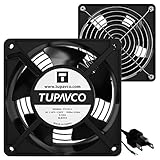
- Pair of axial fans made to keep air flow and your equipment at low temperature
- Fits all standard 19” network cabinets; AC 110V Fan; 95/110CFM Airflow; 2600-2800rpm; 45dBA, Silent; AC cable 6.2ft and Ground wire 9" attached
- Network Cabinet Fan Applications - fan cooler panels, trays or server, media cabinets, computer case, DIY mount; overheat protection
- Steel Frame; Metal Finger Guard; Quick Mount Silicone Rubber Screws - Rivets; Self-tapping screws;
- Standard accessories exhaust replacement size: outer dimensions: 4.75”x4.75" - 4 inch between holes
Rank #4

- 1U One rack space - 19" x 1.75" x 2" - Airflow = 48 CFM Noise = 30.8 dBA
Rank #3

- 1U RACKMOUNT DESIGN: Fits standard 10-inch mini server racks and cabinets, making it ideal for compact network setups.
- ACTIVE EXHAUST COOLING: Features three 40×40mm fans @ 4500 RPM (13.41 CFM) to remove hot air, reduce internal heat buildup, and help prevent thermal recirculation
- DUAL-BALL BEARING FANS: Provide consistent airflow and stable performance with relatively low noise levels (25 BA), contributing to reliable long-term operation
- Metal Case: Sturdy metal construction for durability.
- On/Off Switch: Easy power control for convenient operation.
Product prices and availability are accurate as of the date/time indicated and are subject to change. Any price and availability information displayed on Amazon at the time of purchase will apply.

