
Do these 3 things before closing this tab:
1Fix the driver behind crashes, sound loss and screen glitches2Clear out junk files and repair common Windows errors3Scan for outdated or missing drivers - takes under a minuteiTechGuides is reader-supported. When you buy through links on our site, we may earn an affiliate commission. As an Amazon Associate I earn from qualifying purchases. Learn more
The DreamQuest N100 Mini PC running Linux is a credible low-cost x86-64 computer for web work, media playback, home automation, file serving, and lightweight homelab tasks. The tested unit used an Intel N100, 16GB of DDR4 memory, and a 512GB M.2 SSD, and its hardware worked with several Linux distributions without additional drivers.
That verdict applies to the tested configuration, not automatically to every product listing called “DreamQuest N100.” Wireless cards, SSDs, memory, firmware, and cooling can vary between batches, so the exact listing matters almost as much as the processor.
Key takeaways
- The reviewed DreamQuest configuration contained an Intel N100 processor, 16GB DDR4 RAM, and a 512GB M.2 SSD.
- The review tested Ubuntu 24.10, Arch Linux, Devuan, Fedora, openSUSE, and Debian, reporting that the hardware worked without additional drivers.
- The compact chassis provides two M.2 2280 slots, reported support for up to 32GB of RAM, two 1GbE ports, four USB 3.2 Type-A ports, two HDMI outputs, and one DisplayPort.
- The Intel N100 has four cores, four threads, and a 6W processor TDP, making the system efficient but unsuitable for demanding desktop, gaming, editing, or multi-VM workloads.
- The included SSD was described as relatively slow compared with storage in some competing mini PCs, making backups and SSD health monitoring important.
- The review found quiet operation under light load and audible fan noise under heavy load; an all-core stress test reportedly reached about 55°C.
What is the DreamQuest N100 Mini PC running Linux?
The DreamQuest N100 is a compact x86-64 mini PC built around Intel’s low-power N100 processor. The specific review unit was supplied with 16GB of DDR4 memory, a 512GB M.2 SSD, and a Windows 11 Professional digital license. The unit was then evaluated with Linux, including Ubuntu 24.10 and several other distributions.
The original product introduction and Linux review identifies the tested configuration and its physical features. The review does not establish that every DreamQuest N100 listing uses the same memory, SSD, Wi-Fi card, BIOS revision, or cooling assembly.
#1 Best Overall

- 12th Intel Alder Lake N95 Processor – The GMKtec G3 S Mini PC is powered by the 12th Gen Intel N95 processor with 4 cores, 4 threads, 6MB cache and a burst frequency up to 3.4GHz. Compared with N100/N5105/N5100/N5095, the N95 delivers up to 36% overall performance improvement. Perfect for routine tasks, office work, and home entertainment, this compact mini desktop is more convenient than traditional bulky PCs.
- 8GB RAM & 256GB SSD Storage – Pre-installed with 8GB DDR4 memory and a fast 256GB M.2 2242 SSD, the G3 S mini desktop offers quicker startup, smoother multitasking, and faster file transfers. Enjoy seamless performance whether you’re working on multiple applications, browsing, or streaming content.
- Rich Interfaces & Connectivity – The G3 S mini computer comes equipped with USB 3.2 (up to 10Gbps), dual HDMI 2.0 (4K@60Hz), and a 3.5mm audio jack. With support for WiFi 5, Bluetooth 5.0, and Gigabit Ethernet (RJ45 1000MbE), it connects easily with monitors, projectors, printers, office equipment, and other peripherals, making it versatile for both home and business use.
- Dual 4K Display Support – Featuring upgraded Intel UHD Graphics (up to 1000MHz), the G3 S supports 4K video playback and AV1 decoding for a smooth viewing experience. With dual HDMI outputs, you can connect two 4K@60Hz displays simultaneously, enabling efficient multitasking for work and entertainment.
- GMKtec WARRANTY - GMKtec offers a 1-year limited GMKtec's warranty for each mini PC, starting from the date of the purchase. All defects due to design and workmanship are covered. With a professional after sales team always ready to attend to your needs, you can simply relax and enjoy your mini PC.
This distinction is important because “DreamQuest N100” functions more like a product family description than a guaranteed, permanently fixed configuration. A buyer should check the exact listing for RAM type and capacity, SSD interface and model, wireless hardware, operating system, and upgrade information before assuming that the review unit matches the product being purchased.
What configuration was tested?
| Component | Tested or reported detail | Qualification |
|---|---|---|
| Processor | Intel N100 | Applies directly to the reviewed unit |
| CPU topology | 4 cores / 4 threads | Four modest CPU cores; no hyperthreading was reported |
| Memory | 16GB DDR4 | Configuration-specific |
| Storage | 512GB M.2 SSD | Exact SSD brand and model should be checked |
| Operating system supplied | Windows 11 Professional digital license | Relevant to the reviewed configuration |
| Linux test environment | Ubuntu 24.10, with Arch, Devuan, Fedora, openSUSE, and Debian also tested | Testing took place in November 2024; Ubuntu 24.10 is not a current-release recommendation |
Who should buy the DreamQuest N100 for Linux?
The DreamQuest N100 makes the most sense when low cost, low power use, small size, and broad Linux compatibility matter more than peak performance. The four-core, four-thread N100 can handle ordinary desktop computing and modest always-on services, but efficiency should not be confused with speed.
Good uses
- Web browsing, email, documents, and office applications.
- Linux coding, scripting, SSH, and remote administration.
- 1080p media playback and some 4K playback with correctly configured hardware acceleration.
- Home Assistant or similar low-load home automation deployments.
- File serving and small network services.
- Lightweight Docker containers.
- Small homelab experiments where two Ethernet ports are useful.
- Living-room or compact desktop use.
Less suitable uses
- Modern AAA gaming or demanding 3D applications.
- Professional video editing, high-end CAD, or AI workloads.
- Large software builds or sustained compilation.
- Several demanding virtual machines running simultaneously.
- Large databases, high-throughput storage, or compute-intensive data processing.
- Environments that require completely silent operation.
Benchmark coverage found the N100 surprisingly competitive in some low-thread or efficiency-focused tests, but those results should not be interpreted as proof that the mini PC matches substantially more powerful processors across general workloads. The benchmark overview is useful context, while the processor’s modest core count remains the more practical limit for multitasking and sustained workloads.
Recommended Free Tools
What ports and physical features does the DreamQuest N100 have?
The reviewed chassis measures approximately 5.45 × 5.45 × 1.45 inches and uses a dark-gray plastic enclosure with an illuminated top logo. The source review’s hardware overview reports the following ports:
| Port or feature | Reported provision | Useful for |
|---|---|---|
| USB | Four USB 3.2 Type-A ports | External drives, keyboards, controllers, and peripherals |
| Card reader | One TF/microSD slot | Removable storage and some appliance deployments |
| Video | Two HDMI outputs and one DisplayPort | Multi-monitor or television connections, subject to unit-specific validation |
| Audio | One 3.5mm audio jack | Headphones, speakers, or analog audio equipment |
| Networking | Two 1GbE RJ45 ports | File servers, separate management and service networks, and basic router experiments |
Two Ethernet ports are more valuable for server and network experimentation than for an ordinary desktop. They can support separate management and service networks, basic firewall testing, or a small file-server setup. Two Ethernet ports do not, by themselves, guarantee that the system is suitable for routing, firewalling, or high-throughput network workloads; the NIC drivers, firewall software, cooling, and intended traffic load still need testing.
The physical port list does not prove that every output supports every combination of resolution, refresh rate, audio mode, or simultaneous display. The N100 platform may be described as capable of driving three 4K displays at 60Hz, but the DreamQuest board, firmware, cables, connectors, and Linux graphics stack determine what works on a particular unit.
How well does the DreamQuest N100 work with Linux?
The reviewed hardware reportedly worked without additional drivers in Ubuntu 24.10, Arch Linux, Devuan, Fedora, openSUSE, and Debian. That is strong evidence for the tested unit and a useful indication that the Intel platform is Linux-friendly, but it is not a guarantee for every distribution, kernel, or DreamQuest production batch.
| Component | Review result | Confidence and limitation |
|---|---|---|
| Intel N100 CPU | Detected correctly | High confidence for N100-based units |
| Integrated Intel graphics | Worked in the review | High confidence, but kernel and Mesa versions affect behavior |
| Ethernet | Available in the tested environment | High confidence for the tested unit |
| Wi-Fi and Bluetooth | Worked in the review | Medium confidence because wireless modules can vary between listings |
| SSD | Detected | High confidence for the supplied drive, not every replacement or batch |
| Audio | Not fully characterized in the supplied review material | Test HDMI, DisplayPort, and analog audio after installation |
| Suspend and resume | Not fully characterized in the supplied review material | Test before deploying as a laptop-like desktop or server |
The most important qualification is that Linux compatibility depends partly on components surrounding the N100. A replacement wireless module, different SSD controller, firmware revision, or revised motherboard can change the result. The useful claim is therefore: the reviewed hardware worked across the named distributions without additional drivers.
Ubuntu 24.10 was the review environment in November 2024. Readers should install a currently supported distribution release rather than treating Ubuntu 24.10 as the recommended version. Official download pages for Ubuntu Desktop, Linux Mint, and Debian provide the appropriate current images and release information.
How should Linux be installed on the DreamQuest N100?
Linux installation should be straightforward in principle, but the supplied research does not document a complete, model-specific installer walkthrough or verify a particular firmware boot key. Use the following as a practical general procedure and treat firmware labels and keyboard shortcuts as model-dependent.
- Back up Windows first. Copy personal files and record any activation or recovery information before deleting or resizing the original installation.
- Choose a supported distribution. Download the ISO from the distribution’s official website and verify its checksum when checksum information is provided.
- Create a bootable USB drive. Use a trusted image-writing tool and understand that writing the image normally erases the USB drive.
- Boot in UEFI mode. Open the firmware setup or temporary boot menu and select the USB installer. Do not guess a specific key if the exact DreamQuest revision has not been documented.
- Test the live environment. Check the display, Ethernet, Wi-Fi, Bluetooth, audio, SSD, and microSD reader before committing to an installation.
- Choose the storage layout. Replace Windows, dual-boot, or install Linux to a second SSD if the exact slot and installer support have been confirmed.
- Update after first boot. Install current system updates, kernel updates, and firmware packages before judging wireless, Bluetooth, graphics, or suspend behavior.
- Run a hardware checklist. Test reboot, suspend, audio through the intended output, video playback, all display outputs, network interfaces, and automatic startup after power loss.
If the machine will become a server, disable automatic sleep and test recovery after an unexpected power interruption. If the machine will be a desktop, test suspend from both the graphical menu and the command line before relying on it.
The Tool Desk
Outbyte PC Repair FREERepair Windows errors before they cause bigger problemsFix Now →Outbyte Driver Updater FREEFix the driver behind crashes, sound loss and screen glitchesFind Drivers →What should you do if Linux cannot see the SSD or wireless hardware?
If the installer cannot see the SSD
An unseen SSD does not automatically indicate an incompatible N100. Confirm that the installer booted in UEFI mode, inspect the firmware storage page, and test the drive from a live environment before deleting partitions.
lsblk
nvme list
sudo fdisk -l
Possible causes include storage-controller firmware settings, a defective SSD, unusual existing partition metadata, or an installer image that behaves differently with the system’s firmware. Back up data before changing partitions, and test a second installer image if the rest of the hardware is detected normally.
Rank #2
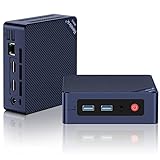
- ✅【2025 New 13th Intel Twin Lake- N150】The Beelink Mini S13 Mini computer is built-in 13th Intel Twin Lake- N150 processors(max up to 3.6GHz, 4C/4T, 6MB L3 Cache), Power consumption is only up to 25W. As an upgrade of the Alder Lake N100 and N95, the N150 offers an overall performance improvement of 10% and 15%. The power-saving, super-quiet Mini PC Ideal for outine tasks, office work and home entertainment.
- ✅【More Storage Expansion & Upgraded Fan】The Beelink N150 Mini PC has built-in 16GB DDR4, 500GB M.2 PCIe3.0 SSD (Support up to 4TB dual M.2 2280 Nvme/SATA3 SSD), more storage space which will make the device run more smoothly and solve the problem of pc lag. The Mini PC supports a large silent CPU fan, a copper heat sink and a dedicated SSD cooling shield, heat dissipation performance is improved by 40%, you will enjoy a speedier experience.
- ✅【4K Dual Screen Display & Compact Size】The mini pc is equipped with upgraded Intel Graphics(max 1000MHz)to support 4K@60Hz connect 2 monitors at the same time, and perform different tasks on the dual screens, making your work more efficient. Small form factor and measures only 4.9 x 4.4 x 1.6 inches, and comes with a wall-mounted bracket to allow you to hang the mini-computer behind the monitor, making your desk look tidier.
- ✅【Additional Functions & Intel Unison APP Support】The Beelink N150 PC Support Wake On LAN, PXE Boot, RTC Wake, Auto Power On, and while support Connect your PC and devices seamlessly with Intel Unison App, make and receive phone calls, managing notifications, viewing galleries and transferring files, share files quickly and easily From PC. It greatly improves user productivity and reduces dependence on mobile phones during work.
- ✅【USB 3.2 GEN2 & WiFi 6&BT 5.2】Compared with USB3.0, USB3.2 Gen2(10Gbp) has increased the bandwidth rate from the original 5GB/S to 10GB/S. It also supports direct output of video and audio. The Beelink mini pc is Built-in Wifi 6 802.11ax @ 2.4+5G dual wifi and BT5.2, WiFi 2.4G+5G Dual Band networking ensure stable, high-speed data transfers, even in crowded networking environments. BT 5.2 connect faster Speed and Farther Coverage.
If Wi-Fi or Bluetooth is missing
Check the wireless module rather than assuming that the Intel N100 is responsible. Use Ethernet during installation and update the kernel and firmware packages before deciding that the computer is incompatible.
lspci -nn
lsusb
rfkill list
dmesg | grep -iE 'wifi|wlan|bluetooth|firmware'
The commands identify PCI and USB hardware, radio blocking status, and relevant kernel or firmware messages. Different wireless chipsets between product batches are one reason to verify the exact listing.
Free tools Windows power users keep installed
One-click scans. No signup required.
If video works but HDMI or DisplayPort audio does not
First select the correct output in the desktop sound panel. Then check the HDMI or DisplayPort profile in PipeWire or PulseAudio, confirm the monitor or television input, and inspect the device in the desktop audio settings or pavucontrol.
If suspend and resume fail
Desktop users should test suspend from the graphical menu and command line, then inspect the previous boot and current logs:
journalctl -b -1 -p warning
journalctl --since "-10 minutes"
Server users should normally disable automatic sleep, use display blanking instead, and test wake-on-LAN separately. A kernel update, firmware change, or peripheral can affect suspend behavior.
Is the DreamQuest N100 quiet and cool?
The review found quiet operation under light load and audible fan noise under heavy load. The fan reportedly remained audible from approximately one metre away in a very quiet room, so “silent” is not an accurate description.
During a reported all-core stress test, the processor reached about 55°C. That is a reviewer measurement under particular ambient, firmware, power-limit, and workload conditions rather than a guaranteed maximum temperature for every unit. The detailed specifications and thermal observations also report that BIOS fan-profile settings had no observable effect.
The low 6W figure associated with the N100 is processor TDP, not whole-system wall consumption. The complete computer also uses power for memory, the SSD, wireless hardware, Ethernet, the motherboard, display outputs, and the fan. A proper buying or homelab decision should distinguish CPU TDP from idle, typical desktop, peak, and sustained system power.
How upgradeable is the DreamQuest N100?
The reviewed system is reported to have two M.2 2280 storage slots supporting SATA and PCIe 3.0 SSDs, plus reported memory expansion up to 32GB. Confirm the slot wiring, populated slot, memory type, and maximum capacity for the exact revision before buying parts.
| Upgrade | Reported possibility | What to verify first |
|---|---|---|
| Memory | Up to 32GB reported | Whether memory is replaceable, the exact DDR4 module type, and whether the 32GB limit is manufacturer-confirmed |
| Primary SSD | 512GB M.2 SSD supplied | Drive model, health, interface, and backup before cloning or replacement |
| Second SSD | Two M.2 2280 slots reported | Which slot supports SATA, PCIe, or both, and whether one slot is empty |
| External storage | Four USB 3.2 Type-A ports and a microSD slot | Actual sustained transfer needs and server backup strategy |
The included SSD deserves special attention. Benchmark coverage characterizes its performance as ordinary and slower than storage in some competing mini PCs. The SSD benchmark and backup discussion supports treating the drive as a replaceable component rather than trusting it with irreplaceable data.
What’s actually slowing this PC down?
Pick the symptom - the matching free tool is one click away.
Enable SMART monitoring where supported, maintain regular backups, and consider using a second SSD for data when the workload justifies separating the operating system from server or media files.
sudo smartctl -a /dev/nvme0The device path may differ, and the appropriate smartmontools package must be installed first. A SMART report is useful for health monitoring, but it is not a substitute for backups.
What can the DreamQuest N100 realistically do as a server or homelab?
The DreamQuest N100 is a sensible low-cost node for lightweight containers, home automation, file serving, DNS, monitoring, remote administration, and small development environments. Two 1GbE ports can simplify network segmentation or management access, while the compact chassis is suitable for an always-on installation.
Rank #3

- 【Mini Pc with Intel Alder Lake N100】Powered by the 12th Gen Intel Alder Lake-N100 processor, the OUMAX Mini PC delivers versatile performance for home and office. Featuring 4 cores, 4 threads, and a turbo frequency up to 3.4GHz, it delivers quick and responsive performance to effortlessly handle productivity tasks, 4K media, and casual games
- 【16GB DDR4 & 512GB SSD】The OUMAX N100 Mini PC is equipped with 16GB of DDR4 RAM and a 512GB M.2 2280 PCIe×4 SSD, with an additional expandable slot for a single M.2 2280 PCIe×1 SSD (not included).With dual M.2 2280 slots, the total storage capacity can reach up to 4TB. Massive storage ensures smooth performance, delivering a more fluid and responsive experience
- 【Dual 1000Mbps LAN, WiFi 5 & Bluetooth 5.0】This compact desktop PC is engineered for versatile, high-performance networking. It features dual 1000Mbps LAN ports for blazing-fast wired speeds, reliable WiFi 5 for wireless freedom, and Bluetooth 5.0 to establish stable, low-interference connections with all your peripherals—from keyboards and mice to TV and more
- 【Dual 4K@60Hz Output】Driven by Intel UHD Graphics, this mini PC delivers dual crisp 4K@60Hz HDMI outputs, creating a seamless, expansive canvas. Effectively double your screen real estate for fluid workflows in data analysis and content creation, all from a compact powerhouse
- 【Design of Mini PC】①Ultra-Compact Business Form Factor: Measures 4.72×4.72×1.4 inches for easy placement without occupying desk space. ②Advanced Heat Dissipation & Quiet Operation: Optimized heat pipe, large heat sink, and low-noise fan ensure stable, quiet performance. ③Integrated Power Design: Built-in 45W power supply eliminates external adapters for a clean workspace
Docker is a practical fit when services are modest and storage is reliable. Readers can consult the official Docker product page for current tooling and licensing information. Container count alone is not a useful performance measure: databases, search engines, media transcoding, and other sustained workloads can exhaust the N100 quickly even when many idle containers appear harmless.
Proxmox VE can be useful for experimentation, but the four-core processor and typical memory ceiling limit the number of demanding virtual machines. The official Proxmox downloads page is the appropriate starting point. A few lightweight services may be reasonable; several desktop VMs, compilation jobs, or storage-heavy guests are a poor match.
Before deploying the unit as a server, verify automatic power-on after an outage, cooling during continuous load, network-driver behavior, storage health, backup and restore procedures, and whether suspend is disabled. Two Ethernet ports do not automatically turn a small mini PC into a dependable router or firewall.
How does the DreamQuest N100 compare with its main alternatives?
The DreamQuest should be compared by complete configuration and support rather than processor name alone. Current prices were not verified in the supplied research, so no present-day price ranking is justified.
| Alternative | Potential advantage | Potential disadvantage | Best comparison criteria |
|---|---|---|---|
| Another Intel N100 mini PC | Similar low-power Linux performance | May differ in cooling, SSD, wireless hardware, and warranty | Exact components, ports, support, and price |
| Intel N150 mini PC | Newer low-power platform may offer a better value when the premium is small | Higher price is not automatically justified for light workloads | Measured performance, configuration, power, and support |
| Used Lenovo ThinkCentre Tiny, HP EliteDesk Mini, or Dell OptiPlex Micro | Often stronger business-oriented construction and documentation | Older CPUs, less consumer-style expansion, and potentially higher power use | CPU generation, condition, noise, parts, and warranty |
| Raspberry Pi-class computer | Small size, low-power projects, GPIO, and ARM-focused ecosystems | Not a direct replacement for x86 software compatibility or desktop performance | Software architecture, peripherals, storage, and intended project |
| Entry-level AMD mini PC | More multicore performance and stronger integrated graphics may be available | Potentially higher purchase price and power consumption | Performance required, graphics workload, thermals, and total cost |
The DreamQuest is most attractive when the exact 16GB/512GB-style configuration is clearly specified and priced as a budget machine. If its price approaches a better-documented N100, N150, or entry-level AMD system, the alternatives deserve serious consideration.
What should you check before buying?
- Processor: Confirm that the listing says N100 rather than N95, N97, N150, or another chip.
- Memory: Confirm capacity, DDR4 type, replaceability, and the actual maximum.
- Storage: Check the SSD brand, interface, capacity, health policy, and slot arrangement.
- Wireless: Identify the Wi-Fi and Bluetooth chipset if possible.
- Networking: Confirm that both Ethernet ports are present and suitable for the intended server or firewall workload.
- Displays: Treat three-display or three-4K claims as platform-level possibilities until the exact board and Linux configuration are verified.
- Cooling: Do not assume the system is silent or that fan curves are user-configurable.
- Firmware: Look for documented BIOS updates, auto-power-on options, and Secure Boot behavior.
- Warranty: Check the seller’s return policy and support responsiveness.
- Price: Compare the complete configuration with N150, used business mini PCs, and entry-level AMD systems.
A historical review reported a US price of $159.99 after a $40 voucher in November 2024. That figure is not current pricing and should not be used as a present-day buying benchmark.
Final verdict: is the DreamQuest N100 a good Linux mini PC?
Yes, if the buyer wants an inexpensive, compact Linux computer for light desktop work, media playback, home automation, file serving, or a small homelab. The reviewed unit demonstrated broad compatibility across Ubuntu 24.10, Arch, Devuan, Fedora, openSUSE, and Debian, and its two Ethernet ports and dual M.2 design add useful flexibility.
The recommendation becomes weaker for demanding compilation, modern gaming, professional media work, large databases, or several virtual machines. The processor has only four cores and four threads, the fan is audible under heavy load, and the supplied SSD may be the weakest component. Product-batch variation also means that the reviewed Linux result cannot be applied automatically to every DreamQuest N100 listing.
Buy the DreamQuest N100 when the exact configuration is clearly specified and the price is firmly in budget territory. Choose a better-documented or more powerful mini PC when the price gap is small, manufacturer support matters, or the workload needs more than this efficient four-core platform can provide.
Quick wins for a faster PC:
Scan for outdated or missing drivers - takes under a minuteDriver Scan →Repair Windows errors before they cause bigger problemsFix Now →Frequently Asked Questions
Does the DreamQuest N100 come with Linux preinstalled?
The reviewed DreamQuest N100 came with a Windows 11 Professional digital license rather than Ubuntu preinstalled. Buyers should check the exact listing because operating-system bundles can vary.
Which Linux distributions were tested on the DreamQuest N100?
The review tested Ubuntu 24.10, Arch Linux, Devuan, Fedora, openSUSE, and Debian, and reported that the hardware worked without additional drivers. That result applies to the tested unit and does not guarantee every future distribution or product revision.
Can the DreamQuest N100 run three 4K monitors?
The Intel N100 platform is associated with support for three 4K displays at 60Hz, but the DreamQuest motherboard, firmware, connectors, cables, and Linux graphics stack determine whether that configuration works simultaneously. The supplied review material does not establish a complete three-display validation for this exact unit.
Is the DreamQuest N100 completely silent?
No. The review found quiet operation under light load but audible fan noise under heavy load, with the fan remaining audible from about one metre in a very quiet room.
PC Slower Than It Used to Be?
A free scan shows the junk files, broken settings and background clutter dragging Windows down - then fixes them in one click.Free scan · Windows 10 & 11Outdated Drivers Are Slowing You Down
One free scan finds every outdated or missing driver and matches the right update for your exact hardware.Free scan · exact hardware matchThe Bottom Line
Bottom line: The DreamQuest N100 is a worthwhile budget Linux mini PC when the exact hardware listing is verified and the workload is modest. Its strongest features are broad reported Linux compatibility, compact size, dual Ethernet, and M.2 expansion; its main cautions are four-core performance, fan audibility, SSD quality, and configuration variation between listings.
Quick Recap
Product prices and availability are accurate as of the date/time indicated and are subject to change. Any price and availability information displayed on Amazon at the time of purchase will apply.

