
Free tools Windows power users keep installed
One-click scans. No signup required.
iTechGuides is reader-supported. When you buy through links on our site, we may earn an affiliate commission. As an Amazon Associate I earn from qualifying purchases. Learn more
A disaggregated network device separates its network software—especially its network operating system (NOS)—from the physical router or switch platform. The hardware and software can be chosen separately, but only supported combinations work reliably; disaggregation does not make components universally interchangeable.
What is separated in a disaggregated device?
In a conventional, vertically integrated router or switch, the vendor supplies the hardware and the software as one device stack. In a disaggregated design, the hardware platform and software stack are distinct choices. A white-box or bare-metal platform provides the physical device; a separately selected NOS runs on it. The GSMA-hosted Disaggregated Routing Overview describes this separation while cautioning that hardware and software combinations still need to be compatible.
The device still has multiple layers
Disaggregation changes how components are selected and integrated; it does not eliminate the device’s functional parts. AT&T’s paper on an open, disaggregated network operating system describes a software stack that can include a base operating system, control and management plane, and data planes. The platform may include a general-purpose CPU plus forwarding silicon such as an ASIC, NPU, or FPGA. Depending on the design, the CPU and forwarding device can be together or connected across a bus or network.
How it differs from SDN and OpenFlow
Disaggregation and software-defined networking (SDN) describe different boundaries. Disaggregation separates the device’s software from its hardware platform. The Open Networking Foundation’s SDN definition instead focuses on separating the network control plane from the forwarding plane, with a control plane able to control multiple devices.
#1 Best Overall

- GIGABIT ETHERNET PORTS: Features 5 x 1.0Gbps Ethernet ports for high-speed connectivity. Auto-negotiating ports detect the optimal speed for connected devices and work with existing Cat5e or Cat6 Ethernet cables.
- PLUG-AND-PLAY UNMANAGED NETWORK SWITCH: Simple plug-and-play setup with no software to install or configuration required.
- FLEXIBLE MOUNTING OPTIONS: Compact metal design supports desktop or wall-mount placement for versatile installation.
- SILENT & ENERGY-EFFICIENT OPERATION: Fanless design ensures silent performance, while IEEE 802.3az Energy Efficient Ethernet reduces power consumption without compromising high-speed network performance.
- REGIONAL COMPATIBILITY: Made for use in U.S. & CA only
OpenFlow is associated with SDN, not a definition of hardware/software disaggregation. The ONF explains in its specifications overview how software-based access to flow-control tasks relates to a switch data path and higher-level routing decisions handled by a separate controller. A system can use SDN concepts without being disaggregated, or be disaggregated without that being the defining feature of its control architecture.
What “white box,” “bare metal,” and “open” mean
In open or disaggregated switching discussions, “white box” and “bare metal” commonly describe the hardware platform rather than a particular NOS. The Open Compute Project’s networking work covers switch hardware and Linux-based operating systems. The project’s ONIE overview describes an installation environment associated with switches that can support multiple operating-system vendors.
Rank #2

- 𝗢𝗻𝗲 𝗦𝘄𝗶𝘁𝗰𝗵 𝗠𝗮𝗱𝗲 𝘁𝗼 𝗘𝘅𝗽𝗮𝗻𝗱 𝗡𝗲𝘁𝘄𝗼𝗿𝗸: 5× 10/100/1000Mbps RJ45 Ports supporting Auto Negotiation and Auto MDI/MDIX.
- 𝗚𝗶𝗴𝗮𝗯𝗶𝘁 𝘁𝗵𝗮𝘁 𝗦𝗮𝘃𝗲𝘀 𝗘𝗻𝗲𝗿𝗴𝘆: Latest innovative energy-efficient technology greatly expands your network capacity with much less power consumption and helps save money.
- 𝗥𝗲𝗹𝗶𝗮𝗯𝗹𝗲 𝗮𝗻𝗱 𝗤𝘂𝗶𝗲𝘁: IEEE 802.3X flow control provides reliable data transfer and Fanless design ensures quiet operation.
- 𝗣𝗹𝘂𝗴 𝗮𝗻𝗱 𝗣𝗹𝗮𝘆: Easy setup with no software installation or configuration needed.
- 𝗔𝗱𝘃𝗮𝗻𝗰𝗲𝗱 𝗦𝗼𝗳𝘁𝘄𝗮𝗿𝗲 𝗙𝗲𝗮𝘁𝘂𝗿𝗲𝘀: Prioritize your traffic and guarantee high quality of video or voice data transmission with Port-based 802.1p/DSCP QoS and IGMP Snooping.
These terms signal an ecosystem designed to allow more choice; they are not a guarantee that any NOS can be installed on any switch. Compatibility depends on the hardware platform, supported software, and the integration between them. Open interfaces or software can make component choice possible, but the system still needs an appropriate supported combination.
What disaggregation can—and cannot—offer
Separating components can give an operator more choice about suppliers, software, and interfaces, and may reduce dependence on a single vertically integrated stack. The Open Compute Project describes work on open networking technologies, while the ONF’s Open Disaggregated Transport Network project applies the idea to optical transport equipment, aiming to combine equipment from multiple vendors through open standards and open-source software.
Rank #3
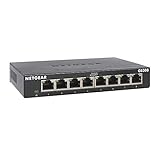
- GIGABIT ETHERNET PORTS: Features 8 x 1.0Gbps Ethernet ports for high-speed connectivity. Auto-negotiating ports detect the optimal speed for connected devices and work with existing Cat5e or Cat6 Ethernet cables.
- PLUG-AND-PLAY UNMANAGED NETWORK SWITCH: Simple plug-and-play setup with no software to install or configuration required.
- FLEXIBLE MOUNTING OPTIONS: Compact metal design supports desktop or wall-mount placement for versatile installation.
- SILENT & ENERGY-EFFICIENT OPERATION: Fanless design ensures silent performance, while IEEE 802.3az Energy Efficient Ethernet reduces power consumption without compromising high-speed network performance.
- REGIONAL COMPATIBILITY: Made for use in U.S. & CA only
Those are architectural possibilities and project goals, not guarantees of lower cost, simpler operations, or better performance in every deployment. A disaggregated system also makes integration and support boundaries important: the operator must know which party validates the hardware/software pairing, handles lifecycle updates, and resolves issues across components.
What to check when evaluating a disaggregated router or switch
- Compatibility: Confirm that the NOS supports the exact hardware platform and its components.
- Forwarding requirements: Check that the device’s forwarding silicon and software support the features and performance the network needs.
- Operations and lifecycle: Establish how provisioning, monitoring, software updates, and ongoing support will work.
- Interfaces and standards: Verify that the interfaces required by the rest of the network are supported.
- Validation and responsibility: Identify who tested the complete configuration and who owns troubleshooting when hardware and software come from different suppliers.
The practical question is not simply whether a device is “open.” It is whether the specific platform, NOS, features, tooling, and support arrangement form a system that meets the deployment’s needs.
Rank #4

- 【One Switch Made to Expand Network】Features 5 RJ45 ports with 10/100/1000Mbps speeds, supporting Auto-Negotiation and Auto MDI/MDIX for hassle-free setup. Ideal for expanding your network, with 1 uplink (input) port and 4 output ports to split your Ethernet connection to multiple devices.
- 【Gigabit that Saves Energy】Latest innovative energy-efficient technology greatly expands your network capacity with much less power consumption and helps save money
- 【Reliable and Quiet】IEEE 802.3X flow control provides reliable data transfer and Fanless design ensures quiet operation
- 【Plug and Play】Easy setup with no software installation or configuration needed
- 【Ethernet Splitter】Connect to your router or modem for additional wired connections (laptop, gaming console, printer, etc)
Disaggregation beyond routers and switches
The same architectural idea can apply to other network equipment. The ONF’s Open Disaggregated Transport Network project applies it to optical transport, where equipment from multiple vendors can be assembled around open standards and open-source software. The term therefore describes a way of separating and integrating network components, rather than one particular type of Ethernet switch.
Quick wins for a faster PC:
Fix the driver behind crashes, sound loss and screen glitchesFind Drivers →Clear out junk files and repair common Windows errorsFree Scan →Quick Recap
Best Value

- 𝗘𝗶𝗴𝗵𝘁 𝟮.𝟱 𝗚𝗯𝗽𝘀 𝗣𝗼𝗿𝘁𝘀 𝗳𝗼𝗿 𝗦𝘂𝗽𝗲𝗿-𝗙𝗮𝘀𝘁 𝗖𝗼𝗻𝗻𝗲𝗰𝘁𝗶𝗼𝗻𝘀: 8× 2.5-Gigabit ports unlock the highest performance of your Multi-Gig bandwidth and devices, and provide up to 40 Gbps of switching capacity.
- 𝗔𝘂𝘁𝗼-𝗡𝗲𝗴𝗼𝘁𝗶𝗮𝘁𝗶𝗼𝗻: Auto-negotiation intelligently senses the link speeds and adjusts between 3-speeds (100Mb/1G/2.5G) for compatibility and optimal performance for all your devices, including 2.5G WiFi 6 AP, 2.5G NAS, 2.5G PCIe Adapter, 2.5G Server, gaming computer, 4K video, and more.
- 𝗜𝗱𝗲𝗮𝗹 𝗳𝗼𝗿 𝗩𝗮𝗿𝗶𝗼𝘂𝘀 𝗦𝗰𝗲𝗻𝗮𝗿𝗶𝗼𝘀: Built for LAN parties, home entertainment, small and home offices, and instant transfer for workstations.
- 𝗛𝗮𝘀𝘀𝗹𝗲-𝗙𝗿𝗲𝗲 𝗖𝗮𝗯𝗹𝗶𝗻𝗴: Instantly upgrade to 2.5 Gbps without the need to upgrade to Cat6 wiring, reducing wiring costs and hassle. *
- 𝗦𝗶𝗹𝗲𝗻𝘁 𝗢𝗽𝗲𝗿𝗮𝘁𝗶𝗼𝗻: Industry-leading fanless design ensures silent operation, ideal for any home or business.
Product prices and availability are accurate as of the date/time indicated and are subject to change. Any price and availability information displayed on Amazon at the time of purchase will apply.

