
What’s actually slowing this PC down?
Pick the symptom - the matching free tool is one click away.
Not in the same way, and the phrase “U.S. ban” obscures several different actions. The 2020 executive orders targeting WeChat and TikTok were blocked before they took effect and revoked in 2021. TikTok later faced a separate 2024 law requiring a qualified divestiture to avoid restrictions; the Supreme Court upheld the law as applied to the petitioners in January 2025. Later federal actions addressed a proposed TikTok framework and a specific version of the app on federal government devices. Those actions do not establish a universal ban—or universal permission—for consumers today.
Why did the U.S. target WeChat and TikTok?
The stated concerns went beyond ordinary app privacy. The Trump administration argued that data collected by the apps could be accessed by the Chinese government, and that platform control could create risks involving censorship, disinformation, or covert manipulation of content. These were government risk claims; they should not be treated as court findings that a particular user’s data was transferred or that manipulation occurred.
| # | Preview | Product | Price | |
|---|---|---|---|---|
| 1 |

|
DoorDash eGift Card | $50.00 | Buy on Amazon |
| 2 |

|
$100 Apple Gift Card—Email Delivery | $100.00 | Buy on Amazon |
| 3 |
|
DoorDash eGift Card | $75.00 | Buy on Amazon |
| 4 |
|
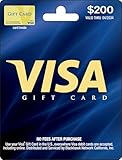
Visa Physical Gift Card $200 (plus $6.95 Purchase Fee) | $206.95 | Buy on Amazon |
WeChat: information collection, access, and censorship concerns
In its August 6, 2020 executive order, the White House described WeChat as a messaging, social-media, and electronic-payment app owned by Tencent Holdings Ltd. The order alleged that the app collected broad information and asserted that the Chinese Communist Party might gain access to it. It also raised censorship and possible disinformation concerns. The order described WeChat as reportedly having more than one billion users worldwide at that time. These are the administration’s stated rationale and the order’s qualified usage figure, not independent findings about individual users or data transfers.
TikTok: data and the ability to influence what users see
In the TikTok litigation, the government argued that data collection and the possibility of covert content manipulation posed national-security risks. The Supreme Court’s January 2025 opinion discussed those concerns alongside the expressive interests of people who use the platform. The distinction matters: the law at issue focused on foreign-adversary control of the platform, rather than banning particular viewpoints or types of speech.
#1 Best Overall
- Get thousands of restaurants, convenience stores, pet stores, grocery stores, gifts, and more at your fingertips.
- Easy ordering, order customizations, and real-time tracking
- Pickup, group order, and scheduled delivery options available
- No returns and no refunds on gift cards.
The government’s position was also stated forcefully by Justice Department officials. On January 17, 2025, Deputy Attorney General Lisa Monaco warned of “the ability to gather sensitive information about tens of millions of Americans and to covertly manipulate the content delivered to them.” That quotation describes the Justice Department’s position, not a separate judicial finding that those harms had occurred.
Why concern about a country’s laws is not proof about a particular app
The Congressional Research Service describes broader U.S. concerns about Chinese laws and state influence over firms, including data-localization rules and requirements for firms to support state security authorities. That context helps explain the government’s risk theory; by itself, it does not establish that information from a particular American user’s account was sent to the Chinese government.
What happened to the 2020 WeChat and TikTok orders?
The Trump administration issued separate executive orders in August 2020. The WeChat order was Executive Order 13943; the TikTok order was Executive Order 13942. They proposed restrictions on transactions involving the apps, with the Commerce Secretary directed to identify transactions covered by the proposed prohibitions. Federal courts enjoined the measures before they took effect.
Rank #2
- For all things Apple - products, accessories, apps, games, music, movies, TV shows, iCloud+, and more.
- Perfect for App Store purchases and subscriptions—get apps, games, music, movies, TV shows, and more.
- The perfect gift to say happy birthday, thank you, congratulations, and more.
- Available in $15 - 500, Card delivered via email or SMS
- Use it for purchases at any Apple Store location, on the Apple Store app, apple.com, the App Store, iTunes, Apple Music, Apple TV, Apple News+, Apple Books, Apple Arcade, iCloud+, Fitness+, Apple One, and other Apple properties in US only
On June 9, 2021, President Biden issued Executive Order 14034, revoking both 2020 orders and directing agencies to rescind measures implementing them. The Federal Register’s account says the related prohibitions had already been enjoined before taking effect. Thus, those 2020 orders did not become operative nationwide bans.
Free tools Windows power users keep installed
One-click scans. No signup required.
How was the later TikTok law different?
Congress took a separate route in April 2024 by enacting the Protecting Americans from Foreign Adversary Controlled Applications Act. As the Supreme Court described it, the law makes it unlawful for U.S. companies to provide distribution, maintenance, or updating services for TikTok unless U.S. operations are severed from Chinese control, subject to a qualified-divestiture exception and the statute’s timing rules. This was a statute, not a revival of the blocked 2020 executive order.
What the Supreme Court decided
On January 17, 2025, the Supreme Court upheld the Act as applied to the petitioners against their First Amendment challenge. The Court recognized that an effective ban would burden users’ expressive activity, while considering the government’s stated national-security rationale and the law’s focus on foreign-adversary control. The decision does not mean national-security concerns automatically defeat every speech challenge, nor does it establish every underlying security allegation as fact.
Rank #3
- Get thousands of restaurants, convenience stores, pet stores, grocery stores, gifts, and more at your fingertips.
- Easy ordering, order customizations, and real-time tracking
- Pickup, group order, and scheduled delivery options available
- No returns and no refunds on gift cards.
The Court’s opinion described TikTok as having more than 170 million users in the United States and more than one billion worldwide. It also reported that U.S. users uploaded more than 5.5 billion videos in 2023 and that those videos received more than 13 trillion views around the world. Those are figures stated in the Court’s 2025 opinion about the platform and 2023 activity, not current usage estimates.
What did later federal actions establish?
The September 2025 White House order
A September 25, 2025 White House order described a framework agreement for TikTok and amended the divestment order’s condition: the referenced prohibition would cease if the Committee on Foreign Investment in the United States (CFIUS) executed an agreement with certain investors consistent with the order. The order establishes what the administration announced and the condition it set. On its own, it does not establish every subsequent implementation fact or every current condition of consumer access.
The July 2026 opinion about federal government devices
On July 17, 2026, the Justice Department’s Office of Legal Counsel concluded that the TikTok version operated by the U.S. Data Security Joint Venture does not fall within the prohibition in the No TikTok on Government Devices Act. OLC cited the venture’s independent operation, majority American investor ownership, and revisions to the recommendation algorithm and cybersecurity program. This is a narrow opinion about that Act and that defined version of TikTok; it does not decide other federal or state policies, private-device restrictions, or consumer access generally.
Rank #4
- Gift Cards are shipped active and ready for use.
- This card is non-reloadable. No cash or ATM access. Funds do not expire. If available funds remain on your card after the valid thru date has passed, please call customer service for a replacement card. A one-time purchase fee applies at the time of checkout. No fees after purchase.
- To access your card information safely, type the complete website address shown on your Gift Card (MyGift.GiftCardMall.com) directly into your browser's address bar. Don't use search engines or shortened versions of the website address, as these may lead you to fake or fraudulent sites. Do not provide any Gift Card details (example: Card Number) to someone you do not know or trust. If you believe you've reached an illegitimate website, contact cardholder service at 1-888-524-1283. Be cautious of phishing sites, there are a variety of scams in which fraudsters try to trick others into paying with gift cards.
- To report your Lost or Stolen Physical Visa Card, call Customer Service 24/7 at 1 (888) 524-1283 to cancel your Gift Card as soon as you can. You will be asked to provide the Gift Card number and other identifying information.
- Use your Visa Gift Card in the U.S. everywhere Visa debit cards are accepted, including online.
Are WeChat or TikTok currently banned nationwide?
The official materials cited above do not establish a complete, independently verified picture of app-store availability or enforcement across every U.S. app store, network, state, and private device as of October 4, 2026. They therefore do not support a blanket claim that WeChat is currently banned nationwide, or that TikTok is universally available to every consumer. The 2020 restrictions on both apps were blocked and revoked; TikTok’s later legal history includes a separate statute and subsequent federal actions with narrower, specifically described scopes.
For readers checking a particular device or workplace, the applicable answer may depend on the app version, the organization’s policy, and the specific federal or state rule involved. The July 2026 OLC opinion is not a general consumer-access ruling.
Quick Recap
How the two apps’ legal histories differ
| Question | TikTok | |
|---|---|---|
| What happened in 2020? | Executive Order 13943 proposed transaction restrictions. Courts enjoined them before effect; Executive Order 14034 revoked the order in 2021. (White House, 2020; Federal Register, 2021) | Executive Order 13942 proposed restrictions. Courts enjoined them before effect; Executive Order 14034 revoked the order in 2021. A separate statutory route followed. (Congressional Research Service, 2024; Federal Register, 2021) |
| Was there a later statute and Supreme Court decision in the cited material? | No WeChat-specific counterpart is established in the cited official materials. (Congressional Research Service, 2024; Supreme Court, 2025) | The 2024 foreign-adversary applications law created a divestiture-or-restriction framework. The Supreme Court upheld it as applied to the petitioners in January 2025. (Supreme Court, 2025) |
| What later federal action is established? | No comparable later federal action is established in the cited materials. (White House, 2025; DOJ Office of Legal Counsel, 2026) | A September 2025 White House order described a framework and a CFIUS agreement condition; a July 2026 OLC opinion addressed the government-device statute and a defined joint-venture version. Neither source alone settles all consumer access questions. (White House, 2025; DOJ Office of Legal Counsel, 2026) |
| How should the risk claims be described? | As allegations and rationale stated in the 2020 executive order, not adjudicated findings about individual users’ data. (White House, 2020) | As government concerns discussed in the litigation and Justice Department statements, distinct from the Supreme Court’s legal holding. (Supreme Court, 2025; DOJ, 2025) |
Product prices and availability are accurate as of the date/time indicated and are subject to change. Any price and availability information displayed on Amazon at the time of purchase will apply.

