
iTechGuides is reader-supported. When you buy through links on our site, we may earn an affiliate commission. As an Amazon Associate I earn from qualifying purchases. Learn more
Tencent EdgeOne Makers can host a Next.js project, and its official documentation describes the path from source code to a preview URL. What the documentation does not cover is your specific studio. Nothing in Tencent’s published material confirms that a 3D procedural asset generator built on Next.js and Three.js will build and run on Makers unchanged. This guide sets out the documented deployment steps first, then the checks you need to make yourself for a browser-rendered 3D application.
What Makers provides
Tencent describes EdgeOne Makers as a platform for web and agent development and deployment. Its product introduction states: “EdgeOne Makers is a Web and Agent development and deployment platform built on the Tencent EdgeOne infrastructure” (Tencent Cloud, EdgeOne Makers product page).
The same product page says Makers supports mainstream full-stack frameworks, including Next.js, and rendering modes such as SSR and ISR. Read that as a general capability statement. It does not promise that every Next.js version, router setup or server route will behave the same way in your project.
The Tool Desk
Outbyte PC Repair FREERepair Windows errors before they cause bigger problemsFix Now →Outbyte Driver Updater FREEFix the driver behind crashes, sound loss and screen glitchesFind Drivers →The product page also displays three network figures. The publication year for each is not stated on the page:
#1 Best Overall

- Up to 16 Colors: Bring your designs to life with vibrant multi-color/multi-material printing capabilities, perfect for showcasing your creativity. Note: Connecting Bambu Lab AMS is required.
- 500mm/s and 20000 mm/s² Acceleration True High Speed: Don't wait around for your masterpieces. Lightning-fast printing speed lets you focus on creating, not waiting.
- Enclosed Design: Fully enclosed body improves print performance for advanced filaments. Automatic Bed Leveling: Say hello to high-quality, successful prints. Auto bed leveling makes 3D printing such an easy thing.
- Set Up in 15 Minutes: Spend more time printing and less time setting up. User-friendly design ensures a hassle-free assembly experience for all skill levels.
- Supported Filament: Ideal: PLA, PETG, TPU, PVA, PET ABS, ASA; Capable : PA, PC; Not Recommended: Carbon/Glass Fiber Reinforced Polymer.
- 3200+ nodes (Tencent EdgeOne)
- 400 Tbps (Tencent EdgeOne)
- Latency below 50 milliseconds (Tencent EdgeOne)
These are vendor claims, not independent performance measurements. The page does not say what latency a visitor in a given city should expect, so do not use these figures to predict how fast your studio will load for your users.
Check the application before you deploy
A 3D studio has more moving parts than a marketing site. Settle these points before you choose a deployment route:
- Next.js version and router. Confirm whether the project uses the App Router or the Pages Router, and which Next.js version is pinned in
package.json. The Tencent material does not specify a required version or router for this kind of app. - Build output. Run your production build locally and confirm it completes without errors. Makers builds the project itself, so a build that fails on your machine will fail there too.
- Server routes. List every API route or route handler the studio calls, such as a generation endpoint. Confirm each one works in your local production build before you rely on it in a deployed environment.
- AI provider access. Identify which model or service generates the assets, and where its credentials are stored. Keep keys on the server, never in client-side code.
- Static 3D assets. Note any large models, textures or generated files the viewer loads, and confirm their paths resolve from the site root.
Choose a project creation route
Tencent’s quick deployment guide describes three ways to create a project on Makers (Tencent Cloud, Deploying Websites Quickly via Makers):
Recommended Free Tools
Rank #2

- One-Click Automatic Printing: Experience hassle-free 3D printing with the Adventurer 5M Series. Enjoy automatic bed leveling for flawless first layers, ensuring consistent adhesion and saving time with no manual adjustments required.
- 12X Ultra Fast Printing: Featuring a CoreXY structure with 600mm/s travel speed and 20000mm/s² acceleration, the AD5M maximizes efficiency, reduces production cycles, and ensures high precision, making it ideal for rapid prototyping and mass production.
- Smart and Efficient Design: Quick 3-second nozzle changes, a high-flow 32mm³/s nozzle, and fast 35-second warm-up to 200°C deliver stable high-speed printing. Its dual-sided PEI platform and versatile options provide easy removal and adaptability for various creative projects.
- Superior Print Quality & Adaptability: Combines a 280°C direct drive extruder with dual-fan cooling and vibration compensation. Includes a standard 0.4mm nozzle and accepts optional sizes from 0.25mm to 0.8mm to fit various printing needs.
- Real-Time App Monitoring: Monitor print progress, adjust settings, and receive instant status alerts remotely with the Flash Studio. Smart mobile control ensures a seamless, effortless printing experience anytime, anywhere.
| Route | Starting point | Use it when |
|---|---|---|
| Repository import | A Git repository containing the studio source | You want future changes to flow from version control |
| Template | A Makers template | You are starting a new project and want a preconfigured base |
| Direct upload | Local project files | The code is not yet in a repository |
The guide describes these routes at a general level. It does not say whether a given template includes Three.js or a particular Next.js setup, so inspect the template’s dependencies before you use it for a 3D studio.
Deploy with the Makers CLI
The CLI route gives you the most control over local development and preview builds. The steps below follow the command set in the EdgeOne CLI documentation.
- Install the EdgeOne CLI by following the installation section of the CLI documentation, then confirm the command runs in your terminal.
- For a new studio project, run
edgeone makers createand follow the prompts. - For a studio codebase that already exists, change into its folder and run
edgeone makers initto connect it to Makers. - Start local development using the workflow in the CLI documentation. Open the studio in a browser and confirm that the 3D viewer renders and that a sample asset generates before you deploy anything.
- Run
edgeone makers deployto publish. Use the preview deployment option described in the same documentation to test a build before it reaches production. - Open the preview URL that the deployment returns and repeat the checks from step 4 against the deployed build, not only the local one.
Build the project locally before step 5. A deployment that fails halfway through is easier to diagnose when you already know the production build succeeds.
Rank #3
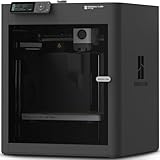
- Up to 16 Colors: Bring your designs to life with vibrant multi-color/multi-material printing capabilities, perfect for showcasing your creativity. Note: Connecting Bambu Lab AMS is required.
- 500mm/s and 20000 mm/s² Acceleration True High Speed: Don't wait around for your masterpieces. Lightning-fast printing speed lets you focus on creating, not waiting.
- Enclosed Design: Fully enclosed body improves print performance for advanced filaments. Automatic Bed Leveling: Say hello to high-quality, successful prints. Auto bed leveling makes 3D printing such an easy thing.
- Set Up in 15 Minutes: Spend more time printing and less time setting up. User-friendly design ensures a hassle-free assembly experience for all skill levels.
- Supported Filament: Ideal: PLA, PETG, TPU, PVA, PET ABS, ASA; Capable : PA, PC; Not Recommended: Carbon/Glass Fiber Reinforced Polymer.
Keep Three.js in the browser
Three.js draws scenes with WebGL, and it expects a browser canvas and the window and document objects. On the server, those objects do not exist. If the viewer renders during server-side rendering, the build or the first page load can fail. Even when it does not fail, the server markup and the browser canvas may not match.
In the App Router, put the viewer in a Client Component by adding the directive at the top of the file:
'use client'

import { useEffect, useRef } from 'react'
import * as THREE from 'three'

export default function AssetViewer() {
  const mountRef = useRef(null)
  useEffect(() => {
    // create the renderer and scene here, inside the browser-only effect
  }, [])
  return <div ref={mountRef} />
}
In the Pages Router, load the viewer with next/dynamic and set ssr: false, so the component is only imported in the browser. You can keep the surrounding page server-rendered if you need it for navigation or metadata.
Rank #4

- High-Speed Precision: The Bambu Lab P2S 3D printer prints up to 600 mm/s while maintaining exceptional accuracy. With the PMSM Servo Extruder and Active Flowrate Compensation, every layer of your printed object stays sharp and smooth, delivering flawless corners and consistent results.
- Ready to Print in 15 Minutes: Set up your P2S FDM 3D printer and start printing in just 15 minutes. With AI failure detection, quick-swap nozzles, and automatic calibration, this 3D printer makes professional-grade 3D printing effortless, even for beginners.
- Effortless Multi-Color Printing: The AMS 2 Pro enables seamless multi-color/multi-material 3D printing. It features built-in filament drying at up to 65 °C, keeping every spool ready for flawless prints. (Note: The P2S 3D printer does not support multi-color printing; Combo version required.)
- Smart Airflow for Any Filament: The Adaptive Airflow System automatically balances cooling and heat retention—keeping overhangs crisp with cool air, or maintaining a 50 °C chamber for engineering-grade materials. A carbon filter ensures clean, safe air while you print.
- Limitless Creativity, Seamless Workflow: Explore over one million 3D models on MakerWorld and bring them to life with a smooth, unified workflow using Bambu Studio, Bambu Handy, and your FDM 3D printer, from design to finished print.
Whether SSR or ISR suits any part of the studio is a decision you need to test. The platform’s general SSR and ISR support does not tell you whether the scene itself benefits from either mode, and the scene itself is almost always client-side.
Handle the AI generation calls
Put every call to the AI provider in a server route, and read the API key there from an environment variable. The browser should send only the generation parameters and receive the result. The Tencent documentation linked in this guide does not describe how Makers stores or injects environment variables, so set them through the project settings in the Makers console and confirm they are available to server routes in the deployed build.
Free tools Windows power users keep installed
One-click scans. No signup required.
Verify the deployment
If you automate deployments, Tencent’s SDK documentation (last updated 15 September 2026) separates the steps. The deploy call returns deployment identifiers. A separate wait operation then returns the completion information and the preview URL (Tencent Cloud, Creating a Deployment). Your pipeline should wait for completion before it runs any tests against the preview URL.
Best Value

- 600mm/s Speed & CoreXY Structure — Powered by an all-metal CoreXY frame and 20,000mm/s² acceleration, Adventurer 5M Pro reaches speeds up to 600mm/s. Integrated vibration compensation algorithms eliminate ghosting and ringing for smooth, high-precision surface finishes.
- 3-Second Quick-Swap Nozzle & Auto Leveling — Features a tool-free, quick-release nozzle mechanism for effortless 3-second replacements across multiple sizes (0.25/0.4/0.6/0.8mm). One-click full auto-leveling ensures precise bed calibration and a perfect first layer every time.
- Dual Filtration System & Quiet Enclosure — Built with an integrated dual filtration system and a fully enclosed chamber to ensure a clean printing environment and thermal stability. Powered by low-noise motion control, it operates quietly under 50dB for seamless home, office, or classroom use.
- 280°C High-Temp Extruder & Broad Material Compatibility — With a 280°C max nozzle temperature and a 110°C heated bed, it reliably prints engineering materials like ABS, ASA, and PETG-CF, as well as standard PLA and PETG.
- Smart Camera & Mobile Control — Features a built-in camera for real-time monitoring and time-lapse video creation. Monitor progress, adjust settings, and receive instant status alerts via Flash Studio. Integrated with filament detection, power loss recovery, and a 4.3-inch touchscreen for effortless operation.
After each deployment, run this check against the preview URL:
- The page loads without console errors.
- The 3D viewer renders on a hard reload, not only after client-side navigation.
- One generation request completes and the returned asset displays in the viewer.
- Assets load from their deployed paths, with no 404 responses in the network panel.
- A refresh of the page keeps the scene working, which confirms the viewer is not depending on state from a previous session.
Troubleshooting common failures
- Build fails with “window is not defined”. A browser-only module is being imported on the server. Move the Three.js code into a Client Component, or load it with
ssr: false, as described above. - Blank canvas. Check the browser console for WebGL errors, confirm the canvas has a non-zero width and height in the layout, and test the same URL in a second browser.
- Generation works locally but fails after deployment. The server route is probably missing its environment variable. Check the project settings in the Makers console, then redeploy.
- Assets return 404 after deployment. Paths that worked under your local dev server may not match the deployed site root. Check each asset URL against the build output.
What you still need to verify
Tencent’s published material supports the deployment workflow for Next.js projects. It does not establish the rest of your stack on Makers. Before you call the studio production-ready, confirm the following yourself:
- That your exact Next.js version and router work on Makers in the rendering mode you choose.
- That your Three.js setup and any large 3D assets load within your performance budget for your users.
- That your AI provider integration and key handling meet your security requirements.
- That your storage choices for generated assets are supported by the project’s runtime.
The Makers overview lists the application categories the platform documents (Tencent EdgeOne, Makers overview). Check that your studio falls within a documented category before you commit to a production launch.
PC Slower Than It Used to Be?
A free scan shows the junk files, broken settings and background clutter dragging Windows down - then fixes them in one click.Free scan · Windows 10 & 11Crashes, No Sound, or Screen Glitches?
Random freezes, missing sound and display glitches usually trace back to one bad driver. Find and replace yours safely.Free scan · under a minuteQuick Recap
Product prices and availability are accurate as of the date/time indicated and are subject to change. Any price and availability information displayed on Amazon at the time of purchase will apply.

