
Quick wins for a faster PC:
Fix the driver behind crashes, sound loss and screen glitchesFind Drivers →Clear out junk files and repair common Windows errorsFree Scan →Scan for outdated or missing drivers - takes under a minuteDriver Scan →iTechGuides is reader-supported. When you buy through links on our site, we may earn an affiliate commission. As an Amazon Associate I earn from qualifying purchases. Learn more
Word prediction software is assistive writing software that suggests words while you type. You decide whether to accept a suggestion, and each accepted choice saves the keystrokes needed to finish the word. The feature can appear in a phone or computer, in a keyboard, in an app, or inside desktop literacy software, and it is also used as a text-entry support in some augmentative and alternative communication (AAC) systems. Because the same name covers several kinds of products, the most accurate definition describes a function, not one program.
What word prediction software does
In ordinary use, you type a few letters, review a short list of suggestions, and select one if it fits. The suggestions can be single words, and depending on the tool they can also be phrases or sentences. The National Center on Educational Outcomes describes the suggestions as appearing after the first letters are entered, and the W3C Web Accessibility Initiative describes the aim as saving typing.


W3C’s official accessibility guidance on input explains the purpose in one sentence: “Some people use word prediction software to help complete words and sentences with minimal typing, grammar and spelling tools to help correct text, and tools to help click, select text, and scroll with minimal movement.” (W3C Web Accessibility Initiative, “Input – typing, writing, and clicking”)
Free tools Windows power users keep installed
One-click scans. No signup required.
How the suggestions are produced
Prediction is not one fixed method. The general sequence is the same across most tools:
#1 Best Overall
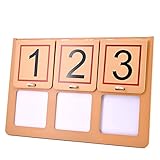
- This is one of the finest and most straight forward mental effects ever conceived
- The magician makes three predictions on a slate of three words or numbers selected by three members of the audience. These predictions are found to be absolutely correct
- This large slate which measures 12" by 18" and is divided into six sections
- The large size slate permits you to use this on stage as well
- 【ONLINE TUTORIAL】 If you need instruction, please contact us by mail
- You enter letters. The first one or two letters are often enough to start a list, though this depends on the tool’s settings.
- The software matches those letters. Understood’s overview of the technology says the basic prediction uses the letters you have typed.
- Some tools also consider context or typing patterns. In these tools, the words already in the sentence or your habits can change what is offered. W3C and NCEO both describe context as a possible input, not a requirement.
- You select or ignore the suggestion. Nothing is inserted unless you choose it, which is the feature’s defining user control.
The public overviews do not establish the specific algorithm, the use of personal history, or the language model behind any given product. If you need to know how a particular tool learns, check its own documentation rather than assuming it works like another tool.
Who uses it and why
Word prediction is discussed as an assistive technology for writing and text entry. The sources describe these possible uses:
- People who have difficulty spelling, choosing words, or typing (Understood).
- Students with spelling, word-recall, or physical typing challenges, which is the educational accommodation context covered by NCEO’s Accommodations Toolkit.
- Faster and easier information entry in some communication settings (National Institute on Deafness and Other Communication Disorders, “Assistive Devices for People with Hearing or Speech Disorders”).
- Rate enhancement in alphabet-based AAC, where word or phrase prediction is one listed technique (American Speech-Language-Hearing Association, “Augmentative and Alternative Communication (AAC)”).
These are use cases, not a diagnosis, an eligibility rule, or a guarantee of better outcomes. Whether a tool suits a person depends on that person, the task, the language being written, and the specific product.
Windows Errors? Fix Them Before They Spread
Repair common Windows errors and clear accumulated junk for a smoother, more stable PC - no reinstall needed.Free scan · no reinstallOutdated Drivers Are Slowing You Down
One free scan finds every outdated or missing driver and matches the right update for your exact hardware.Free scan · exact hardware matchForms word prediction takes
Understood’s overview, updated April 8, 2026, identifies four common ways users encounter the feature. The table below shows them with the examples that overview names.
| Form | Where you meet it | Examples named in Understood’s overview |
|---|---|---|
| Built-in device prediction | Operating-system or device text entry | Not named |
| Apps | Standalone writing or messaging apps | Not named |
| Onscreen keyboard features | Touch or on-screen keyboards | Not named |
| Desktop literacy software | Installed programs built for reading and writing support | Co:Writer Universal, Read&Write, Clicker 7, Kurzweil 3000, Ghotit Real Writer & Reader |
The named products are examples from one source, not endorsements or a comparison. This overview does not confirm their current availability, versions, pricing, or language coverage.
Optional features that vary by tool
Understood describes several features that some word prediction tools add. None of them is required by the basic definition:
- Text-to-speech that reads word choices aloud.
- Fuzzy spelling, which can suggest the word you meant even when your spelling is approximate.
- Topic-specific dictionaries that favor specialized vocabulary for a subject.
- Example sentences that help distinguish confusing words.
A tool that lacks these features still performs word prediction. A tool that has them may not be better for your task, so judge them by the writing you actually do.
Do these 3 things before closing this tab:
1Scan for outdated or missing drivers - takes under a minute2Clear out junk files and repair common Windows errors3Fix the driver behind crashes, sound loss and screen glitchesHow it differs from autocorrect
The sources used for this overview do not compare word prediction with autocorrect, so this article does not draw a detailed line between them. The definition does establish one practical difference: word prediction offers words for you to choose. If you are comparing features on your device, check whether a tool shows suggestions you can accept or ignore, or whether it changes text without asking. That check tells you more than any label.
Independent reader supportYour contribution helps us test, update, and keep practical guides available for everyone.What the evidence does and does not show
The sources describe word prediction as potentially helpful for writing and AAC, but they do not provide a prevalence figure, a keystroke-reduction percentage, or a measured learning or communication effect that could be quoted here. This article therefore describes what the feature does and who it is discussed for, not how much it improves writing.
Checklist for comparing tools
If you move from definition to choosing a tool, compare products on these points:
- What the suggestions draw on: typed letters, typing patterns, context, or a combination.
- What is suggested: single words, next words, phrases, or sentences.
- Extra supports: spoken suggestions, approximate-spelling support, topic vocabularies, or example sentences.
- Platform and input method: built-in feature, app, on-screen or physical keyboard, AAC system, or desktop software.
- Your needs: the task, the language you write in, and the communication goals involved.
Before you rely on any named tool, confirm its current platform compatibility, version, licensing, accessibility features, and language support with the vendor, since those details change.
Quick Recap
Product prices and availability are accurate as of the date/time indicated and are subject to change. Any price and availability information displayed on Amazon at the time of purchase will apply.

