
iTechGuides is reader-supported. When you buy through links on our site, we may earn an affiliate commission. As an Amazon Associate I earn from qualifying purchases. Learn more
A triple-level cell (TLC) is a NAND flash memory cell that stores three bits of data. Because three bits can be arranged in eight distinct combinations, each TLC cell has eight possible states. That is the whole definition, but it matters for how drives are built, priced, and rated.
What TLC means
NAND flash stores data as an electrical charge held in a memory cell. In a TLC cell, that charge is set to one of eight levels, and each level encodes a unique three-bit pattern. The term describes bits per cell, not the number of cells, chips, or layers in a device. A TLC chip can still be stacked into many 3D layers; “triple-level” refers only to the three bits held in each cell.
Samsung Semiconductor describes TLC as storing three bits per NAND cell, and Micron Technology’s presentation on NAND cell types diagrams the same cell as eight charge states (presentation updated January 2025). Samsung’s accessed page did not show a publication date.
Do these 3 things before closing this tab:
1Fix the driver behind crashes, sound loss and screen glitches2Repair Windows errors before they cause bigger problems3Scan for outdated or missing drivers - takes under a minuteHow TLC compares with other NAND cell types
The naming follows a simple pattern: each step up doubles the number of states a cell must distinguish, and the bits per cell count rises by one.
#1 Best Overall

- Supports up to Ultra DMA transfer mode 4
- Up to 32GB storage capacity
- Up to 50 MB/s Read; 20 MB/s write
- Mlc NAND flash memory
- Ideal for entry-level DSLRs
| Cell type | Bits per cell | Charge states per cell |
|---|---|---|
| SLC (single-level cell) | 1 | 2 |
| MLC (multi-level cell) | 2 | 4 |
| TLC (triple-level cell) | 3 | 8 |
| QLC (quad-level cell) | 4 | 16 |
The charge-state column follows directly from the bit count (2 to the power of the bits). Samsung and Micron both describe the bit counts; the state counts are the arithmetic consequence.
Samsung’s general comparison describes TLC and QLC as storing larger data volumes, with relatively slower processing than SLC and MLC. Packing more bits into each cell raises storage density and can make a given capacity cheaper to produce. The trade-off is that telling eight charge levels apart is harder than telling two apart, so building fast, reliable TLC is more technically demanding. These are broad technology-level comparisons, not guarantees about any particular SSD.
Rank #2
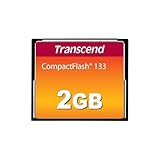
- Perfect for entry level DSLRs
- Manufactured with brand-name MLC NAND Flash chips
- Support up to Ultra DMA transfer mode 4
- Built-in Error Correcting Code (ECC) to detect and correct transfer errors
- Up to 50 MB/s read; 20 MB/s write
What the definition does not tell you
A cell type is one input into a drive’s behavior, not a ranking of products. Two SSDs with TLC NAND can differ in controller design, cache strategy, firmware, and the amount of NAND used, so their real speed and durability can differ substantially. Endurance figures in particular should not be assumed from the cell type alone; the sources used here do not establish a single endurance number that applies to all TLC products.
Quick wins for a faster PC:
Scan for outdated or missing drivers - takes under a minuteDriver Scan →Repair Windows errors before they cause bigger problemsFix Now →For a specific drive, the useful checks are on the manufacturer’s product page and warranty terms:
Rank #3

- Internal memory: 1024 MB
- Flash card Type: CompactFlash (CF)
- Dimensions W x d x H: 42.8 x 36.4 x 3.3 mm
- Weight: 11.4 g
- Width: 36.4 mm
- The listed sequential and random read and write speeds, and whether they are sustained or burst figures.
- The rated endurance (often given as terabytes written, TBW) and the warranty period tied to it.
- Whether the drive uses a DRAM cache or a pseudo-SLC cache, which affects write speed once the cache fills.
- The interface (SATA or NVMe) and form factor, which determine compatibility with your system.
Where TLC NAND appears
Samsung lists SSDs, memory cards, and USB flash drives among devices that use NAND flash. TLC is one of several cell types those devices may use, and the cell type printed on a consumer product is often not stated in its headline specifications. When shopping, a phrase such as “TLC NAND SSD” in a listing or spec sheet tells you the cell type, but it should be read alongside the speed, endurance, and warranty figures above rather than used as a stand-alone quality signal.
Quick Recap
Best Value

- 2 Pack CF Memory Card 2GB
- Supports the Video Performance Guarantee specification for professional-quality video (VPG-65)
- Designed for older DSLR cameras, professional photography equipment, HD camcorders, and CompactFlash Type I compatible devices.
- FAT16 pre-formatted. Interface specifications: 50 pin hole interface Dimensions: 43 mm x 36 mm x 3.3 mm.
- CF memory card utilize the most reliable SLC NAND flash memory chips, specifically designed for harsh environments. Featuring a wide operating temperature range (-25°C to 85°C), they are ideally suited for demanding photography in harsh weather conditions
Rank #4

- Exceptional Shot to Shot Performance - Read speeds of up to 120MB/s and write speeds of up to 85MB/s
- Professional-Grade Video Capture - VPG-20 ensures sustained data recording rate of 20MB/s for a smooth and unbroken video stream
- Durable Design - Backed by rigorous stress, shock, and vibration testing and includes RTV silicone coating for protection against shock and vibration
Key points to remember
- TLC means three bits stored in each NAND flash cell, not three cells or three layers.
- Three bits give eight possible data states per cell.
- SLC, MLC, TLC, and QLC store one, two, three, and four bits per cell.
- More bits per cell generally increases density and lowers cost per gigabyte, at the price of more demanding engineering; it does not by itself determine a drive’s performance or endurance.
Product prices and availability are accurate as of the date/time indicated and are subject to change. Any price and availability information displayed on Amazon at the time of purchase will apply.

