
Outdated Drivers Are Slowing You Down
One free scan finds every outdated or missing driver and matches the right update for your exact hardware.Free scan · exact hardware matchWindows Errors? Fix Them Before They Spread
Repair common Windows errors and clear accumulated junk for a smoother, more stable PC - no reinstall needed.Free scan · no reinstalliTechGuides is reader-supported. When you buy through links on our site, we may earn an affiliate commission. As an Amazon Associate I earn from qualifying purchases. Learn more
Lane keeping assist (LKA) is a driver-assistance feature that helps stop a vehicle from unintentionally drifting out of its lane. When its sensors detect a likely unintended departure, the system can steer the vehicle back toward its lane, apply braking, accelerate one or more wheels, or combine these actions. It is an aid to the driver, not a replacement for the driver, who remains responsible for driving.
What lane keeping assist means
The term describes a corrective function. The system watches where the vehicle sits relative to the lane markings. If it judges that the vehicle is moving out of its lane without a deliberate signal from the driver, it intervenes to bring the vehicle back. NHTSA, the U.S. National Highway Traffic Safety Administration, describes the feature in its Driver Assistance Technologies overview.
Because the feature is only a correction when drift is detected, it is easy to confuse with other lane-related systems. The next section separates them.
How it differs from lane departure warning and lane centering
Three features are often grouped together, but they do different jobs. NHTSA’s definitions separate them by whether the system only alerts the driver or also acts on the vehicle.
#1 Best Overall
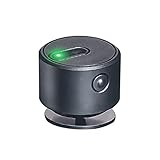
- Made of ABS,lightweight,mini size,portable.
- Keep the led light project on the middle of the road,which helps you drive straightly,avoid collision and ensure safety driving.
- The led light will be bright at daytime and soft at night,works well for any environment.
- The lane departure assist device is USB charging,it can work for 8-12 hours after fully charging.
- Paste on the dashboard directly with 3M adhesive.
| Feature | Alerts the driver | Takes action on the vehicle | Steering pattern |
|---|---|---|---|
| Lane departure warning (LDW) | Yes, when drift toward or across lane markings is detected | No avoidance action, per NHTSA | None |
| Lane keeping assist (LKA) | Not stated as a universal rule; check the vehicle’s manual | Yes: steering, braking, accelerating one or more wheels, or a combination | Corrective, applied when likely unintended departure is detected |
| Lane centering assistance | Not stated as a universal rule | Yes, continuously | Continuous steering to keep the vehicle centered in its lane |
The practical difference is timing and purpose. Lane departure warning tells you that something is happening. Lane keeping assist responds to a specific drift event. Lane centering is a different function altogether: it keeps adjusting steering to hold the vehicle near the middle of the lane, rather than waiting for a departure. A vehicle-specific NHTSA-hosted document also states plainly that its described lane keeping system is “NOT lane centering,” which shows why the two should not be treated as interchangeable.
How a lane keeping system typically works
NHTSA explains that lane keeping assistance uses information from the same kind of sensors used for lane departure warning. The general sequence looks like this:
Rank #2

- Universal Fit for Most 12V Vehicles-Designed for sedans, SUVs, and pickup trucks with DC 12V power systems. Professional installation is recommended. Includes an installation manual and radar angle alignment tool for accurate setup and optimal detection performance
- 24GHz Millimeter Wave Radar Detection-Built-in dual 24GHz millimeter wave radar sensors provide stable blind spot monitoring with a detection range of 1–32.8 ft (0.3–10 m). When a moving vehicle approaches from the side or rear blind zone, the LED warning indicator activates automatically
- Multi-Mode Blind Spot Warning Alerts-The system provides real-time alerts based on driving conditions for safer lane changes: 1.Turn signal OFF – the corresponding LED warning light stays illuminated when a vehicle enters the blind spot zone 2.Turn signal ON – the corresponding LED flashes and the buzzer sounds 3 warning beeps during lane changes 3. Hazard lights ON – the LED flashes continuously and the buzzer sounds 3 times for increased driver awareness
- Professional Installation Required-Radar sensors cannot penetrate metal surfaces. Please read the installation manual carefully before installation. Proper sensor mounting position, angle, height, and wiring are essential for accurate blind spot monitoring performance
- Enhanced Driving Safety in All Conditions-Improves driving awareness by monitoring vehicles approaching from rear and side blind spots. Effective during lane changes and in low-visibility conditions such as nighttime driving, rain, snow, or fog
- Sensing lane position. Sensors measure the vehicle’s position relative to the lane markings.
- Judging the drift. The system decides whether the vehicle is about to move out of its lane unintentionally.
- Choosing a correction. Depending on the design, the system may steer, brake, accelerate one or more wheels, or use a combination of these.
- Returning toward the intended lane. The correction aims to bring the vehicle back toward the lane it was following.
The exact sensors, correction methods and thresholds are set by each manufacturer. NHTSA does not describe a single universal design, so the steps above describe the general logic rather than any one vehicle.
Quick wins for a faster PC:
Clear out junk files and repair common Windows errorsFree Scan →Scan for outdated or missing drivers - takes under a minuteDriver Scan →Repair Windows errors before they cause bigger problemsFix Now →One documented implementation: a windshield camera
A 2024 NHTSA-hosted manufacturer document, System Limitations and System Features, describes one camera-based design. A forward-facing camera mounted behind the windshield detects lane markings and the vehicle’s position relative to them. When drift is detected, the system applies corrective torque to the steering gear. In that system, the driver can override the intervention, and the feature is available above 37 mph (60 km/h) when road conditions and camera recognition allow.
Rank #3

- [Vehicle Fitment]: Lane Departure Warning Actuator Compatible with Chevrolet Chevy Silverado 1500/Silverado 2500 HD/Silverado 3500 HD/Suburban/Suburban 3500 HD/Tahoe 2015-2019, Silverado 1500 LD 2019; Compatible with Cadillac Escalade/Escalade ESV 2015-2019; Compatible with GMC Sierra 1500/Sierra 2500 HD/Sierra 3500 HD/Yukon/Yukon XL 2015-2019, Sierra 1500 Limited 2019
- [Reference Number]: 926-368, 926368, 19353978, 22884702, 84017512, 84287377---Please enter your vehicle information in the top left corner of listing and check our "Special Note" before ordering this lane departure warning seat actuator
- [Direct Replacement]: This 926-368 lane departure warning seat actuator restores full lane departure warning seat vibration function, eliminates dashboard error codes caused by a faulty seat actuator, and directly matches the fit, form, and performance for Cadillac, Chevrolet, GMC models
- [Function]: A-Premium Lane Departure Vibrating Seat Actuator delivers precise, real-time vibration alerts through the vehicle seat to effectively warn drivers of unintended lane drift, actively preventing potential collisions and significantly enhancing driving safety on highways and during long-distance travel
- [Buy with Confidence]: A-Premium offers a one-year unlimited-mileage guarantee on our meticulously crafted lane departure warning seat actuator. We offer a wide variety of automotive accessory categories, ensuring that you can hit the road with peace of mind.
These figures describe that one system only. Other manufacturers may use radar, different speed thresholds, or different override methods.
Conditions that can limit or disable it
Lane keeping assist relies on recognizing lane markings and operating within its design envelope. When those conditions are not met, the feature may be limited or unavailable. Documented examples from manufacturer materials include:
Rank #4

- RADAR FRONT COLLISION/LANE DEPT WARNING
- Missing, faded or otherwise unrecognized lane markings.
- Road conditions that the system is not designed to handle.
- Road curvature, which can exceed what the system can track.
- Speed outside the system’s operating range.
- Driver steering input that overrides the system’s correction.
- Vehicle-specific calibration circumstances, described in a 2019 NHTSA-hosted manufacturer document, Lane Assist.
The specific list, and what the driver sees when the feature is unavailable, varies by vehicle. Treat these examples as the kinds of limits to expect, not as a complete specification for any model.
Driver responsibility
NHTSA classifies lane keeping assistance as Level 1 driver assistance. When engaged, the system may provide steering or acceleration and braking assistance, but the driver remains fully engaged and attentive. The driver must continue to monitor the vehicle and stay responsible for driving, including when the feature appears to be working. NHTSA’s Driver Assistance Technologies page makes the same point about all driver-assistance features.
Best Value

- 【Simple Installation】This tip light has a simple installation procedure with no cutting required. When the device is powered on, the left and right indicator lights flash 3 times respectively, this is the normal state of the device.
- 【Two Status Alerts】The radar transmits a signal to the indicator light, which has two states, a kind of constant light, the other is flashing. The first level alarm is the reminder light is always on. When the vehicle speed exceeds 15km/h and there is a target vehicle in the blind spot, the indicator light is on, and turn to the second level alarm: buzzer sounds and indicator light flashes.
- 【】During the driving process, this product will continuously monitor the blind spot position behind the car with radar, and the indicator light will be on when it monitors a vehicle in the blind spot, which greatly s your driving .
- 【Adaptability Reference】This reminder light is a universal model and can be fitted to all vehicles with an opeing voltage of 5V.
- 【High Quality Material】This product is made of high quality plastic, with strong and durable characteristics, the working tempeure range is - 25℃ ~ +75℃(-13℉ ~ 167℉).
Why feature names differ between manufacturers
Automakers use their own marketing names for lane-related features, so the badge on a car does not tell you how it behaves. Two cars labelled “lane assist” may warn only, may steer only when drift is detected, or may keep steering continuously. Three things help you check:
- Whether the system only warns or also intervenes.
- Whether steering is occasional and corrective, or continuous.
- Which sensors and operating conditions the particular vehicle requires.
NHTSA advises consulting the owner’s manual for the exact vehicle, because it contains the system description, activation conditions, alerts and override instructions.
How to check how your own vehicle behaves
- Open the owner’s manual for your exact vehicle and find the section on lane keeping, lane assist or lane departure features.
- Note whether the system only alerts you or also applies steering, braking or wheel acceleration.
- Note the speed range and the road conditions in which it is available.
- Find out how to override the intervention and whether the feature can be switched off, and how.
- Note any warning messages the manual associates with the feature, so you recognize them if they appear.
If the feature stops working or behaves unexpectedly, the manual and the manufacturer’s service information for your vehicle are the right starting points for diagnosis and any calibration work.
Quick Recap
Product prices and availability are accurate as of the date/time indicated and are subject to change. Any price and availability information displayed on Amazon at the time of purchase will apply.

