
Recommended Free Tools
iTechGuides is reader-supported. When you buy through links on our site, we may earn an affiliate commission. As an Amazon Associate I earn from qualifying purchases. Learn more
DeFi as a Service (DaaS) is a loose market label for services that help businesses offer decentralized-finance features—not one standardized product, and not proof that banks or financial markets are being replaced. Some providers supply APIs or wallet tools that connect an app to on-chain protocols; in another usage, an intermediary manages customers’ assets in DeFi strategies. Those models differ in who controls the money, who bears operational responsibility, and what risks customers take on.
What is DeFi as a Service?
DaaS generally means that a business uses an outside provider or infrastructure layer to make DeFi functions available through its own product. The label is not a settled technical or legal category. A fintech might use a wallet SDK or API to connect customers to blockchain-based services; a virtual-asset intermediary might instead choose and manage strategies using customer assets. The name alone does not tell a customer whether a service is decentralized, non-custodial, or directly controlled by the user.
DeFi itself refers to financial services implemented through blockchain networks and smart contracts. A BIS working paper published on 19 January 2023 describes DeFi as a competitive, contestable, composable, non-custodial ecosystem that does not require a central organization to operate. That is the paper’s analytical definition, not a guarantee that every product branded DaaS has those properties.
What’s actually slowing this PC down?
Pick the symptom - the matching free tool is one click away.
Two different service models
| Model | What the service provider does | What to establish |
|---|---|---|
| Embedded infrastructure | Supplies APIs, wallet tools, or integrations so a business can connect an app to on-chain protocols. | Who holds or can move assets, who signs transactions, and which permissions the wallet grants. |
| Intermediary-managed strategy | Selects or operates activities such as lending or liquidity provision on behalf of customers. | What authority the intermediary has over assets, what strategy it uses, and what terms govern withdrawal and remuneration. |
The second usage appears in Binance’s response to a Brazilian public consultation, which describes an intermediary organizing DeFi activities and returning agreed remuneration. That submission records a participant’s position; it is not a regulator’s legal determination.
#1 Best Overall

- Proven security at scale: Over 9 years and millions of cards issued with no known remote hacks, while military‑grade EAL6+ security keeps your private keys locked inside the chip. Your cryptocurrencies stay strongly protected from online attackers.
- Tap once to manage your entire crypto wallet across 90 blockchains - no USB cables or Bluetooth, no batteries, no setup. Access 14,100+ coins & tokens, DeFi, NFTs, and staking instantly from your phone
- Smart backup: Use your second Tangem Wallet as your Backup keys with end‑to‑end encryption; no more papers, pictures. If one card is lost, the remaining can still restore full access, with an optional seed phrase available for advanced users.
- Engineered to last up to 25 years: Waterproof (IP69K), shockproof and tested for extreme temperatures from −25°C to 50°C. A durable cold wallet with long‑term protection and independently audited security.
- Trusted by 6 million users worldwide - buy, sell, swap, stake, and spend cryptocurrency directly. The secure offline storage wallet designed for how people actually use crypto wallets
How does DeFi as a Service work?
A typical embedded service links a customer-facing app to a chain and one or more protocols. The app’s interface, wallet, contracts, and underlying protocols are separate parts of the system, even when a customer sees a single product.
- The business chooses a function. It might offer a token swap, lending, borrowing, staking, or access to a liquidity pool.
- An infrastructure provider supplies a connection. This can include an API, wallet SDK, or other integration that helps the business interact with blockchain networks and smart contracts.
- The app presents the service and transaction. Depending on the design, a customer may approve transactions directly, or a provider may exercise some or all operational control.
- Smart contracts execute protocol actions. The result depends on the contracts, assets, network, and any connected services—not just on the app’s interface.
The BIS’s technical taxonomy separates DeFi into settlement, application, and interface layers. Settlement concerns the underlying network and assets; applications use smart contracts to provide financial functions; interfaces expose those functions to users. Composability lets one protocol call or build on another’s functions, enabling combinations of services but also creating dependencies between them.
What vendors say they provide
Cometh describes infrastructure for fintechs, asset managers, and corporates, including custody, staking, swaps, and smart-wallet functionality. Its documentation says the full DaaS API-layer documentation is forthcoming, so the public material does not establish every technical detail. Cryptum describes a platform for Web2 businesses to integrate lending and borrowing, liquidity pools, decentralized exchanges, and yield farming. These descriptions establish the vendors’ stated offerings; they do not independently verify security, regulatory status, adoption, or performance.
Free tools Windows power users keep installed
One-click scans. No signup required.
Rank #2

- Proven security at scale: Over 9 years and millions of cards issued with no known remote hacks, while military‑grade EAL6+ security keeps your private keys locked inside the chip. Your cryptocurrencies stay strongly protected from online attackers.
- Tap once to manage your entire crypto wallet across 90 blockchains - no USB cables or Bluetooth, no batteries, no setup. Access 14,100+ coins & tokens, DeFi, NFTs, and staking instantly from your phone
- Smart backup: Use your second Tangem Wallet as your Backup keys with end‑to‑end encryption; no more papers, pictures. If one card is lost, the remaining can still restore full access, with an optional seed phrase available for advanced users.
- Engineered to last up to 25 years: Waterproof (IP69K), shockproof and tested for extreme temperatures from −25°C to 50°C. A durable cold wallet with long‑term protection and independently audited security.
- Trusted by 6 million users worldwide (4.9 App Store, 4.8 Google Play) - buy, sell, swap, stake, and spend cryptocurrency directly. The secure offline storage wallet designed for how people actually use crypto wallets
Which financial services can it support?
DeFi protocol families map to functions familiar from finance, although their mechanisms and protections can differ from conventional services. They include decentralized exchanges, lending, derivatives, and aggregators. Policy research also discusses credit and portfolio-management applications. A DaaS provider may package access to one or more of these functions in a business’s app.
The potential appeal is programmability and the ability to combine protocol functions. An existing business may be able to add an on-chain feature without building every component itself. But easier integration does not make the underlying service simple: the product may depend on several contracts, networks, asset markets, or service providers, each with its own failure modes.
Is DeFi as a Service reshaping global finance?
The evidence supports a growing connection between DeFi and institutional or regulated participants, not a demonstrated replacement of banks or financial markets. FATF’s 21 July 2026 report says institutional investors, virtual-asset service providers (VASPs), and other regulated entities are participating more, while DeFi remains a relatively small share of the broader virtual-asset market.
Rank #3

- EAL5+ CERTIFIED SECURE ELEMENT + FINGERPRINT PROTECTION — Your private keys stay encrypted offline on a certified EAL5+ chip, the same security tier used in EMV bank cards. Built by DCENT, securing crypto since 2018. Fingerprint authentication adds a second layer no PIN-only wallet can match.
- 10,000+ ASSETS NATIVE ON 100+ BLOCKCHAINS — Hold Bitcoin, Ethereum, XRP, Solana, Cardano, popular stablecoins (USDT, USDC), and NFTs in one wallet. No third-party apps, no fragmented setup — every supported asset works straight out of the box.
- TAP-TO-SIGN MOBILE EXPERIENCE — Pair your wallet with the DCENT mobile app over Bluetooth. Manage tokens, review transactions, and access in-app swap features directly from your phone — no cables, no desktop required.
- WEB3 & dAPP ACCESS VIA METAMASK — Connect to MetaMask and other browser extension wallets to manage NFTs, claim airdrops, and access dApps. A large screen and intuitive 4-button interface keep every transaction clearly visible before you sign.
- SEAMLESS FIRMWARE UPDATES & 30-DAY MONEY-BACK GUARANTEE — Apply security updates without resetting your wallet or migrating funds. Backed by Amazon's 30-day money-back guarantee — your purchase is risk-free.
FATF’s report, citing DeFiLlama, gives total value locked (TVL) of USD 86.644 billion on 10 May 2026, compared with USD 46.86 billion on 10 May 2023. These are observations on two specific dates. TVL is not transaction volume, revenue, a measure of DaaS adoption, or evidence that traditional banks adopted these services.
- FATF reported that North America and Europe accounted for approximately 60% of global DeFi transactions, while the Middle East and Africa together were estimated at less than 10%. These are estimates reported in FATF’s 2026 assessment, not a permanent regional distribution.
- FATF estimated that the top 20 DeFi protocols represented more than 70% of total DeFi activity. This points to concentration in activity; it does not establish that 20 firms control the sector.
- In its 2026 findings on Recommendation 15 implementation, FATF reported that 132 of 143 reporting jurisdictions had not implemented its standards for qualifying DeFi arrangements, and 2 of 142 had licensed or registered a DeFi arrangement in practice. The denominators differ, and the survey results are not a complete census of national laws.
These figures indicate that activity, geographic participation, and regulatory implementation are uneven. They do not quantify the share of finance delivered through DaaS specifically. The European Commission’s 2022 policy report and a BIS paper published on 15 April 2025 discuss DeFi’s potential efficiencies and innovation alongside information frictions, operational complexity, and financial-stability concerns.
How is DeFi as a Service different from traditional banking?
| Question | Typical DeFi arrangement | Traditional banking arrangement |
|---|---|---|
| Where is the financial function carried out? | In smart contracts on a blockchain network, potentially combined with other protocols. | Within a bank’s systems and processes, subject to the applicable institutional and regulatory framework. |
| Who can operate or change the service? | It depends on the specific protocol and service. Developers, governance-token holders, administrators, or infrastructure operators may have influence or technical privileges. | The bank and its designated operators manage its service under its governance and applicable rules. |
| What does an intermediary contribute? | A DaaS business may provide only technical access, or it may hold assets and manage strategies. The label does not resolve which. | A bank is the identifiable institution providing the account or financial product and handling its stated responsibilities. |
| What should a customer check? | Wallet permissions, contract and protocol dependencies, governance powers, asset exit conditions, and the responsible parties. | Product terms, institutional protections, fees, and the bank’s responsibilities in the relevant jurisdiction. |
This is a distinction in operating models, not a claim that every DeFi service is more efficient or every bank service has identical protections. DeFi’s openness and composability can enable new combinations of financial functions; they can also make it harder to see who is accountable when a multi-part service fails.
Rank #4

- Dual-chip architecture for maximum protection: The next-gen, fully auditable TROPIC01 chip works alongside a certified EAL6+ Secure Element—completely NDA-free—to deliver radically transparent, industry-leading defense against physical attacks.
- Quantum-ready security: Get protection against future threats with the first-ever hardware wallet designed with quantum-ready architecture.
- See every detail with confidence: Our largest high-resolution color touchscreen makes it easy to navigate your assets, review transactions and manage your coins with clarity.
- Wireless freedom with encrypted Bluetooth control: Manage, buy, swap and stake securely using Trezor Suite on desktop or mobile. Qi2-compatible wireless charging keeps your Trezor powered up. No cables required—security meets convenience.
- Works seamlessly with Android, iOS and desktop: Connect wirelessly or via USB-C to your phone or computer. Manage your crypto anywhere with our companion Trezor Suite app.
Who controls the money in a DeFi service?
Control depends on the wallet design, transaction-signing rules, and permissions—not the product’s name. In one arrangement, a customer controls a wallet and must approve transactions. In another, an intermediary may hold assets or be authorized to deploy them in a strategy. Even a user-facing wallet can have permissions that let an operator pause activity or change how it works.
FATF takes a functional approach to regulatory analysis: it considers whether a natural or legal person exercises control or sufficient influence over a DeFi arrangement. A project may describe itself as decentralized while control remains concentrated through governance tokens, administrator privileges, upgrade authority, influential developers, or infrastructure operators. For a customer, the practical questions are who can sign transactions, transfer assets, pause service, and change wallet permissions or protocol parameters.
Is DeFi as a Service safe?
No general safety conclusion follows from the DaaS label. A service can reduce the effort needed to add an on-chain feature while concentrating technical or operational complexity in its provider and dependencies. The BIS identifies technological and economic complexity and systemic risks; FATF also discusses criminal use of bridges and cross-chain techniques.
Best Value
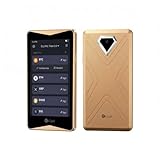
- 100% Offline Crypto Wallet with Air-Gapped Tech: The ELLIPAL Titan 2.0 features fully air-gapped technology, making it a 100% offline crypto wallet that is completely isolated from the internet. With absolutely no WiFi, no Bluetooth, and no network cables, it ensures your private keys always remain safe and sound. You can create and recover your accounts entirely offline, signing transactions securely via simple QR code scans. Since this ultra-secure cold wallet never connects to any network, your cryptocurrency will never suffer from any network-level cyberattacks.
- Clear Signing Transparency with Your Hardware Wallet: Take absolute control of your funds with a massive 4-inch Touchscreen. The ELLIPAL Titan 2.0 lays out every single transaction in plain, readable words: exactly who you are paying, how much you are sending, and what smart contracts you are authorizing. It double-checks every detail between your phone and the crypto hardware wallet before anything is signed. This completely eliminates blind signing, giving you absolute peace of mind with your trusted hardware wallet.
- Multi-Asset Crypto Cold Wallet: Manage all your portfolio effortlessly within a single crypto cold wallet. Pair the Titan 2.0 with the intuitive ELLIPAL App to buy, sell, swap, send, and earn rewards across 45+ coins and more than 10,000 tokens all on one platform. It is a seamless and convenient crypto wallet for your digital asset management.
- 8 Years of Zero Breaches & Trusted Secure Crypto Wallet: Invest in a highly recommended, secure crypto wallet backed by an unblemished 8-year track record of zero security breaches. Proudly Forbes Recommended and trusted by over 1 million users across more than 140 countries, this robust cold storage wallet provides enterprise-grade physical and digital security, ensuring your life savings are perfectly protected against evolving Web3 threats and physical tampering.
- Up to 5 Accounts in One Cold Storage Hardware Wallet: Maximize your storage efficiency with a versatile cold storage hardware wallet that supports up to 5 completely separate accounts on a single device. You can perfectly isolate and organize your daily spending, long-term savings, active trading, and even family funds without the need for multiple devices. It is the ultimate companion for your long-term crypto journey.
FATF’s 21 July 2026 release attributed two major April 2026 cyberattacks on DeFi platforms to the DPRK. It reported combined proceeds of more than USD 570 million and said the attacks represented approximately 76% of annual losses from virtual-asset hacking incidents. Those figures concern the incidents described by FATF; they are not a loss rate for DaaS services.
Questions to ask before using a service
- Custody and permissions: Who holds the assets, signs transactions, can move funds, or can pause activity? Can a provider change wallet permissions?
- Governance and upgrades: Who controls administrator keys, upgrades, emergency powers, and protocol parameters? Is there a delay or independent oversight of material changes?
- Technical dependencies: Which smart contracts, bridges, oracles, networks, wallets, and third-party services must work correctly? How are failures detected and handled?
- Liquidity and exit: Can assets be withdrawn under stress? What fees, limits, or lockups apply? A quoted yield does not guarantee either a return or immediate liquidity.
- Compliance responsibilities: Which party handles customer checks, transaction monitoring, sanctions controls, recordkeeping, and incident reporting in each relevant jurisdiction?
- Transparency and incentives: What fees, conflicts, governance-token holdings, and strategy assumptions does the provider disclose? Who is responsible if the provider or a protocol fails?
FATF says its standards apply to qualifying arrangements where a person exercises control or sufficient influence, and that financial institutions and VASPs interacting with DeFi should comply with relevant Recommendations as appropriate. The applicable obligations depend on the arrangement and jurisdiction; a provider’s product description is not a substitute for jurisdiction-specific legal advice.
What DaaS does—and does not—show about finance
DaaS can make it easier for a business to expose customers to on-chain financial functions, while shifting work and risk into wallet design, infrastructure, protocol selection, or asset management. The central distinction is whether the provider merely enables a customer-controlled interaction or also controls assets and strategies. Until those roles are clear, claims about decentralization, user control, and protection are difficult to assess.
The scale figures FATF reports describe DeFi activity and regulatory conditions, not a measured global DaaS market. They show why businesses and regulators are examining the connection between on-chain services and established financial participants, but they do not establish that DeFi is replacing traditional finance.
Quick Recap
Product prices and availability are accurate as of the date/time indicated and are subject to change. Any price and availability information displayed on Amazon at the time of purchase will apply.

