
Free tools Windows power users keep installed
One-click scans. No signup required.
iTechGuides is reader-supported. When you buy through links on our site, we may earn an affiliate commission. As an Amazon Associate I earn from qualifying purchases. Learn more
Deep-TEMPEST is a University of the Republic research project in Uruguay that uses software-defined radio (SDR) and a learned image-restoration model to reconstruct images from unintended electromagnetic emissions associated with HDMI cables and connectors. Its authors report a substantial improvement in OCR-based character error rate over earlier implementations—but the result comes from a defined experimental pipeline and dataset, not proof that screens can routinely be read at a distance.
What Deep-TEMPEST does
The project examines whether information associated with an HDMI display signal can be recovered from electromagnetic emissions that escape the intended cable-and-connector path. The researchers treat reconstruction as an inverse problem: they capture a complex-valued signal, process it into a degraded representation, then use a convolutional neural network to restore an image closer to the displayed source. The method and its evaluation are described in the 2024 paper.
This is a research demonstration of one signal-capture and reconstruction approach. It is not a general-purpose screen interception tool: results depend on the HDMI signal characteristics, SDR capture and processing chain, training data, and experimental setup.
How the capture and reconstruction pipeline works
- Capture the emissions. SDR hardware records complex-valued signal samples associated with the HDMI setup. The project’s published work describes its capture and processing approach in the Deep-TEMPEST repository.
- Identify useful signal information. The researchers analyze HDMI signal behavior to select relevant frequencies and generate training examples. The paper says the approach avoids the amplitude-demodulation step used in earlier systems and learns directly from complex samples.
- Train the restoration model. A convolutional neural network learns to map degraded signal-derived images toward their clean source images. The model is part of a wider capture, data-preparation, training, and inference workflow; it does not independently intercept arbitrary displays.
- Evaluate recovered text. The paper uses OCR-based Character Error Rate (CER) to compare reconstructed text with source text. CER measures character-level recognition errors, not whether every character is visually clear to a person.
The repository integrates the project with GNU Radio and provides code, data, and flowgraphs. Its README documents Tesseract OCR as a prerequisite for its workflow and gives environment examples using Python 3.10 or 3.12 and Ubuntu 22.04.5 or 24.04.2. These are project instructions, not an assurance that the workflow will run unchanged on different hardware or software.
#1 Best Overall
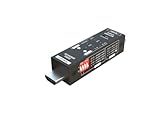
- Used as HDMI signal generator or display emulator (signal analyzer)
- Provides 4‑pin DIP switch for setting video resolution and HDCP content
- Supports 4K @60Hz 4:4:4, 4K@60Hz 4:2:0, 4K@30Hz 4:4:4, and 1080p@60Hz video signal outputs
- Supports HDCP OFF, HDCP 1.4, and HDCP 2.2 outputs
- Supports four different test patterns for HDCP versions
What the reported results mean
The authors’ 2024 paper reports a dataset of 3,491 clean/degraded image pairs: 2,189 simulated samples and 1,302 real-life samples. On its evaluated comparison with previously available implementations, the paper reports an average CER improvement of over 60 percentage points. That is the paper’s study-specific metric and comparison, not a guarantee of equivalent performance on other displays, captures, or environments.
The project README gives a separate comparison: it describes CER falling from 90% with unmodified gr-tempest to below 30% with the Deep-TEMPEST module. This README figure should be read in that project comparison’s experimental context; it is not interchangeable with the paper’s “over 60 percentage points” summary.
Rank #2

- Easy to use; compact and portable
- Simply plug your cables into the tester''s DVI-F and HDMI-F connectors
- Diagnoses the cause of color shift, sparkle, or missing picture
- Tester can be located at the source or display end of the system
- Displays the status of each HDMI signal component
The repo also describes project data at 1600 × 900 and a dataset SDR center frequency at a third pixel-rate harmonic, 324 MHz. These values characterize the published dataset and setup; they are not universal HDMI tuning settings.
Recommended Free Tools
What the demonstration does—and does not—establish
- It establishes a research result for a defined pipeline. The paper reports learned image restoration from SDR-captured, signal-derived data and evaluates text recovery with OCR.
- It does not establish general interception range or success rates. The available evaluation does not show that arbitrary screens can be recovered at a specified distance or across consumer equipment generally.
- It does not show that an SDR alone is sufficient. Reproduction involves suitable capture conditions, processing, training or inference components, and the project’s software workflow.
- It does not establish universal defenses. Countermeasures discussed by the researchers are proposals rather than independently validated, complete controls.
For organizations that display sensitive information, electromagnetic leakage can be considered as one element of a broader physical-security threat model. Deep-TEMPEST is evidence that such emissions can be studied and used in a particular reconstruction pipeline; it is not evidence that ubiquitous or effortless attacks are occurring.
Rank #3

- PRECISION TESTING: Evaluates HDMI cables for shorts, open circuits, or incorrect wire pairings for each wire pair
- VERSATILE USE: Perfect for use on 1.2V, 1.3V, 1.4V, 2.0V HDMI or Mini HDMI cables. Works on any cable length (tested up to 500 m)
- REMOTE TESTING: Remote can be detached from the main unit, allowing you to quickly and easily test HDMI cables that are installed or very long
- SCAN MODE: Allows you to see each individual connection being tested
- FULL DISPLAY MODE: Shows all of the tested connections at once
Countermeasures discussed by the researchers
The article and project discussion describe two possible ways to make reconstruction harder: introducing low-level noise into the displayed image, or adding a background color gradient. The gradient may be more perceptible to viewers. The available sources do not independently validate either idea as a universal defense, so they should be treated as research proposals rather than ready-made security controls.
Independent reader supportYour contribution helps us test, update, and keep practical guides available for everyone.Can you reproduce Deep-TEMPEST?
The authors have published source code and data in the project repository, including capture, training, and inference materials and GNU Radio flowgraphs. That makes the work inspectable, but not plug-and-play: an SDR receiver is only one component, and the repository’s environment and capture instructions are tied to the project’s setup. The sources do not establish a particular receiver model as a complete, verified match for reproducing the reported results.
Quick Recap
Best Value

- HDMI 2.1 & HDCP 2.x Compatible – Full support for HDMI 2.1 with backward compatibility for earlier standards.
- Resolutions up to 8K@60Hz – Analyzes ultra-HD signals across multiple RGB and YUV color formats.
- 40Gbps Total Bandwidth – Up to 10Gbps per lane for accurate high-speed signal validation.
- FRL & TMDS Signal Analysis – Accurately reads both HDMI 2.1 FRL and legacy TMDS transmission modes.
- Automatic Signal Detection & Recording – Instantly detects and logs incoming signal parameters for efficient troubleshooting.
Rank #4
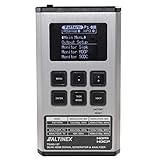
- HDMI input and output with 18Gbps (600MHz) 2K/4K UHD support
- Source video, audio, and timing analysis
- 4K to 1080p scaling to support a range of displays
- HDCP compliant, EDID management
- Tests cables bandwidth and compliance
Product prices and availability are accurate as of the date/time indicated and are subject to change. Any price and availability information displayed on Amazon at the time of purchase will apply.

