
The Tool Desk
Outbyte PC Repair FREERepair Windows errors before they cause bigger problemsFix Now →Outbyte Driver Updater FREEFix the driver behind crashes, sound loss and screen glitchesFind Drivers →iTechGuides is reader-supported. When you buy through links on our site, we may earn an affiliate commission. As an Amazon Associate I earn from qualifying purchases. Learn more
The CyberPowerPC FangBook was a distinctive, MSI-based 17.3-inch desktop-replacement gaming notebook sold around 2013. The reviewed Core i7-3630QM/GeForce GTX 675MX configuration delivered strong performance for its price then, but the GPU was well below NVIDIA’s GTX 680M flagship. In 2026, a FangBook makes sense mainly as a cheap, tested retro or older-game machine—not as a modern gaming-laptop recommendation.
What was the CyberPowerPC FangBook?
FangBook was a family of customizable gaming notebooks rather than one fixed specification. Coverage identifies the X7-100, X7-200 and X7-300, with options for processors, graphics, memory, storage, wireless networking and optical drives. HotHardware’s overview describes the X7 systems as configurable machines built around a slick, visually distinctive chassis.
The chassis came from MSI’s gaming-notebook platform. AnandTech found its physical construction closely resembled the iBuyPower Valkyrie CZ-17 because both used the same underlying design. The FangBook was consequently a heavy desktop replacement, not a thin laptop intended for frequent travel. Its embossed lid and angular styling were deliberate alternatives to an anonymous black business chassis.
Windows Errors? Fix Them Before They Spread
Repair common Windows errors and clear accumulated junk for a smoother, more stable PC - no reinstall needed.Free scan · no reinstallOutdated Drivers Are Slowing You Down
One free scan finds every outdated or missing driver and matches the right update for your exact hardware.Free scan · exact hardware matchThe configuration tested by AnandTech
Because FangBook specifications varied, the following figures apply to AnandTech’s review unit, published May 1, 2013—not to every X7-series machine.
#1 Best Overall
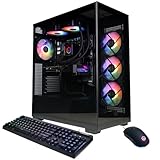
- System: AMD Ryzen 9 9900X 4.4GHz 12 Cores | AMD B850 Chipset | 32GB DDR5 | 1TB PCIe 4.0 NVMe SSD | Windows 11 Home
- Graphics: NVIDIA GeForce RTX 5070 12GB Graphics | 1x HDMI | 3x DisplayPort
- Connectivity: 2 x USB-C 3.2 | 4 x USB-A 3.2 | 2 x USB-A 2.0 | 1 x LAN | WiFi 6 | Bluetooth 5.3 | 7.1 Channel Audio
- Liquid Cool CPU | Tempered Side Case Panel | Custom RGB Lighting | Keyboard and Mouse
- 1 Year Parts & Labor Warranty, Free Lifetime Tech Support
| Component | Reviewed configuration |
|---|---|
| Processor | Intel Core i7-3630QM (Ivy Bridge mobile quad-core) |
| Graphics | NVIDIA GeForce GTX 675MX |
| Memory | 16GB DDR3-1600 |
| Storage | 60GB SSD plus 750GB hard drive |
| Display | 17.3-inch, 1920×1080 matte panel |
| Operating system | Windows-era gaming-notebook software platform |
| Quoted price | Approximately $1,578 in 2013 |
| Review date | May 1, 2013 |
That approximately $1,578 figure is a historical configuration price, not a 2026 valuation. Hardware Asylum separately reviewed an X7-200 with a 17.3-inch 1080p display, SSD storage, optional RAID 0, discrete NVIDIA graphics, Killer networking, a backlit keyboard and an optical drive. Its unit used an 8x DVD burner, with Blu-ray/DVD burning available as an order-time option.
Design, keyboard, ports and display
The angled keyboard deck and broad palm rest were considered comfortable by Hardware Asylum. Backlighting and accent lighting reinforced the gaming aesthetic, while the large footprint left room for a conventional optical drive and extensive connectivity.
Reported X7-series connections included three USB 3.0 ports on one side, two USB 2.0 ports on the other, a card reader, analog headphone/microphone/line connections, HDMI, eSATA, D-Sub/VGA and wired Ethernet. Rear-mounted power and other fixed connections helped keep cables away from the sides. Port availability can differ by exact FangBook variant, so a listing should be checked against photographs rather than assumed from a family-level description.
The 17.3-inch 1920×1080 matte TN display was a sensible match for the hardware in 2013. AnandTech found it competitive with contemporary gaming-notebook panels and somewhat better than the apparently identical panel in its Valkyrie comparison system. TN technology still means narrower viewing angles and less consistent color than modern IPS, OLED or mini-LED displays, and panel quality may vary between configurations. Hardware Asylum criticized the included 720p webcam.
Rank #2

- System: AMD Ryzen 5 8400F 4.2GHz 6 Cores | AMD A620 Chipset | 16GB DDR5 | 1TB PCIe 4.0 NVMe SSD | Windows 11 Home
- Graphics: NVIDIA GeForce RTX 5060 8GB Graphics | 1x HDMI | 2x DisplayPort
- Connectivity: 2 x USB-C 3.2 | 4 x USB-A 3.2 | 3 x USB-A 2.0 | 1 x LAN | WiFi 6 | Bluetooth 5.3 | 7.1 Channel Audio
- Tempered Side Case Panel | Custom RGB Lighting | Keyboard and Mouse
Gaming performance in its 2013 context
The GTX 675MX was a respectable 2013 mobile GPU, but its significance is easy to misread. AnandTech measured it roughly 10–15% ahead of the GTX 675M/GTX 580M class in practical comparisons while emphasizing that it remained far behind the GTX 680M.
| Game and setting | GTX 675MX advantage over GTX 675M |
|---|---|
| BioShock Infinite, 1366×768 medium | Approximately 11.2% |
| Skyrim, 1366×768 medium | Approximately 14.2% |
| Sleeping Dogs, 1366×768 medium | Approximately 14.0% |
| StarCraft II: Heart of the Swarm, 1366×768 medium | Approximately 11.4% |
| Tomb Raider, 1366×768 medium | Approximately 1% |
| BioShock Infinite, 1920×1080 ultra | Approximately 27.1% |
| Skyrim, 1920×1080 ultra | Approximately 8% |
| Sleeping Dogs, 1920×1080 ultra | Approximately 11.5% |
| StarCraft II, 1920×1080 ultra | Approximately 16.1% |
| Tomb Raider, 1920×1080 ultra | Approximately 3.7% |
These are AnandTech results from 2013 games, test settings and beta NVIDIA 320.00 drivers. They show relative positioning at launch; they are not current frame-rate promises. The review’s practical conclusion was that owners of GTX 580M or GTX 675M systems had little reason to upgrade to a 675MX machine, while buyers choosing a new notebook could obtain good value if they did not need the much faster GTX 680M.
CPU, storage and everyday use
The Core i7-3630QM supplied four Ivy Bridge CPU cores and was powerful for a 2013 notebook. The SSD made Windows and frequently used applications feel substantially more responsive than a hard drive alone, while the 750GB mechanical disk provided inexpensive capacity. A modern browser, office workload or creative application will place very different demands on this old platform, so the 2013 CPU reputation should not be treated as a current performance rating.
Battery life, heat and noise
AnandTech recorded a minimum of approximately three hours of useful running time under its test methodology. The result reflected a 45-watt mobile CPU, discrete graphics and a large display; it was not exceptional battery life, and gaming away from the charger would be considerably shorter. AnandTech also cautioned that its newer battery methodology made direct comparison with older notebook results difficult.
Rank #3

- System: Intel Core i7-14700F 2.1GHz 20 Cores | Intel B760 Chipset | 16GB DDR5 | 1TB PCIe 4.0 NVMe SSD | Windows 11 Home
- Graphics: NVIDIA GeForce RTX 5060 Ti 8GB Graphics | 1x HDMI | 2x DisplayPort
- Connectivity: 1 x USB-C 3.2 | 3 x USB-A 3.2 | 4 x USB-A 2.0 | 1 x LAN | WiFi 6 | Bluetooth 5.3 | 7.1 Channel Audio
- Tempered Side Case Panel | Custom RGB Lighting | Keyboard and Mouse
- 1 Year Parts & Labor Warranty, Free Lifetime Tech Support
Hardware Asylum praised quiet operation in its review. That is a launch-era observation, not a guarantee for a thirteen-year-old unit. By 2026, battery wear, dust buildup, dried thermal compound and fan-bearing noise are unit-specific risks.
Upgradeability and limitations
AnandTech highlighted two drive bays, allowing an owner to retain a data drive while adding or replacing an SSD. For a used system, a compatible SATA SSD is generally a more useful improvement than preserving a slow boot hard drive. Confirm the exact X7 model, drive interface, mounting hardware, BIOS behavior and supported capacity before ordering; two bays do not imply NVMe support.
- Check the exact RAM type, maximum capacity and module compatibility rather than assuming the review’s 16GB configuration applies.
- Wireless cards differed by configuration. AnandTech preferred a dual-band card, while Hardware Asylum listed Killer networking on its X7-200. Do not assume Wi-Fi 5, Wi-Fi 6 or Wi-Fi 6E without verifying an upgrade in the individual machine.
- An optical-drive bay may support a replacement or caddy in some configurations, but compatibility is not established for every FangBook.
- Do not promise a graphics-card upgrade. Any MXM or firmware compatibility is model-specific and requires hardware-level verification.
What the contemporary reviews concluded
| Review | Focus and conclusion |
|---|---|
| HotHardware (April 4, 2013) | Presented the X7-200 as stylish, configurable and performance-oriented. |
| AnandTech (May 1, 2013) | Found competitive boutique value and a solid chassis; the GTX 675MX was faster than the previous class but well below the GTX 680M. |
| Hardware Asylum (2013-era review) | Praised the display, SSD/RAID options, keyboard, lighting and quiet operation; criticized the 720p camera. |
Windows and software in 2026
Hardware Asylum’s X7-200 shipped with 64-bit Windows 8. Windows 8 is obsolete and should not be treated as a current security baseline. Windows 10 or 11 support depends on the exact processor, firmware, graphics drivers and intended workload; legacy driver coverage may be incomplete. Linux can be useful for general computing, but game compatibility must be checked separately.
Free tools Windows power users keep installed
One-click scans. No signup required.
Should you buy a FangBook used in 2026?
It can make sense when
- You want a retro-PC or an inexpensive machine for older games.
- The price is low enough to cover battery, storage or cooling work.
- The exact model and GPU are documented, the charger is included and the machine passes a sustained load test.
- You value a large 1080p screen and potentially serviceable SATA storage.
Avoid it when
- You expect modern AAA gaming, current graphics features or dependable long battery life.
- You need USB-C, modern wireless, a high-quality webcam, contemporary display technology or strong security support.
- The seller cannot identify the GPU or demonstrate operation under load.
- The battery is swollen or missing, hinges are damaged, cooling is unstable, or the asking price approaches that of a newer entry-level gaming laptop.
There is no defensible universal 2026 fair price without current sold-listing evidence. Value the individual unit by its exact model, GPU, RAM, SSD/HDD condition, battery health, charger, screen, hinges, keyboard, ports, cooling and return rights. A missing charger or failing hinge can matter more than the nominal specification.
Rank #4
- System: Intel Core Ultra 5 225F 3.3GHz (Max 4.9GHz) | Intel B860 Chipset | 32GB DDR5 | 2TB PCIe 4.0 NVMe SSD | Windows 11 Home
- Graphics: NVIDIA GeForce RTX 5060 8GB Graphics | 1x HDMI | 2x DisplayPort
- Connectivity: 1 x USB 3.1 Type C | 5 x USB 3.1 Type A | 2 x USB 2.0 | 1 x LAN | WiFi 6 | Bluetooth 5.3 | 7.1 Channel Audio
- Tempered Side Case Panel | Custom RGB Lighting | Keyboard and Mouse
Used-buying inspection checklist
Before paying
- Request the exact model number and CPU/GPU identification from BIOS or Windows.
- Ask for underside-label and charger photographs, plus a battery-health report.
- Confirm that the display has no dead pixels, flicker or backlight damage.
- Ask whether every USB, audio, Ethernet, HDMI, optical-drive, keyboard-backlight, webcam and card-reader function works.
- Request storage-health information and a sustained game or benchmark result, not merely a boot photograph.
After delivery
- Test cold boot, restart, BIOS access, AC-only operation, charging, sleep and wake.
- Check fan noise at idle and under load, CPU/GPU temperatures and graphics stability.
- Inspect brightness, uniformity, pixels and hinge movement.
- Test every port, the keyboard, touchpad, speakers, microphone, webcam, wireless and Ethernet.
- Check SSD/HDD health and the optical drive if one is fitted.
If something fails
- Verify the charger’s voltage, connector and wattage before troubleshooting further.
- Remove peripherals and retry boot; test one RAM module at a time if memory errors appear.
- Replace a failing mechanical disk with a model-compatible SATA SSD.
- Clean dust and consider thermal-paste replacement only if you are comfortable opening the chassis and documenting its condition.
- Treat artifacts, load crashes or GPU initialization failures as possible hardware faults, not automatic driver problems. Preserve return or refund rights before attempting major repairs.
What replaces the FangBook today?
CyberPowerPC’s current gaming-laptop family is Tracer, not FangBook. The official gaming-laptop page describes customizable current systems and gives a broad approximately $1,200–$2,500 range as of August 18, 2026, depending on configuration. The company’s homepage promotes current RTX 50-series products and Tracer IX laptops.
| Category | FangBook | Current Tracer-class laptop |
|---|---|---|
| Platform age | 2013-era | Current generation |
| Processor | Ivy Bridge mobile quad-core | Modern multi-core CPU |
| Graphics | GTX 675MX-class Kepler | Current RTX or other modern graphics options |
| Display | 17.3-inch 1080p TN | Model-dependent, often higher-refresh and newer panel technology |
| Storage | SATA SSD/HDD | Usually modern SSD storage |
| Wireless | Legacy or individually upgraded | Current wireless options |
| Battery and support | Used, likely degraded; legacy support | New battery, current operating system and warranty |
| Best use | Retro or older games at a low purchase price | Current PC gaming, depending on configuration |
Tracer is a current category, not an officially described direct FangBook successor. Choose it—or another modern gaming laptop—if current-game support, warranty coverage, battery reliability and modern connectivity matter more than collecting or repairing vintage hardware.
The Bottom Line
The FangBook was a good-value 2013 desktop-replacement gaming notebook, and the reviewed GTX 675MX configuration was capable for its era. In 2026, buy only a complete, tested and inexpensive example for retro use or older games; for current gaming, a modern Tracer-class laptop is the sensible choice.
Quick Recap
Product prices and availability are accurate as of the date/time indicated and are subject to change. Any price and availability information displayed on Amazon at the time of purchase will apply.

