
iTechGuides is reader-supported. When you buy through links on our site, we may earn an affiliate commission. As an Amazon Associate I earn from qualifying purchases. Learn more
Arduino help comes from several places: official troubleshooting and documentation, peer discussion in the Arduino Forum and Discord, and community-contributed projects. Choose a route based on whether you need product support, a focused fix, a live discussion, or a complete build—and verify peer advice against documentation for your exact board and setup.
Where to get Arduino help
Arduino does not have a single Q&A channel. Its official Help Center, documentation, community spaces, and Project Hub serve different purposes.
| Route | Best suited to | What to expect |
|---|---|---|
| Arduino Help Center | Guided troubleshooting and product-related support | Topics include hardware, software, Arduino Cloud, education, store support, and accounts. It suggests searching with the exact error text from the console and links to help for compile or upload problems and boards missing from a selector or port list. |
| Arduino Forum | A focused question that can benefit from a public, searchable discussion | Categories cover development tools, projects, official hardware, other hardware, community, and international topics. Arduino documentation describes it as a place to find topics and tips or connect with users. |
| Arduino Discord | Starting a community discussion | Arduino documentation identifies Discord as an official community space, and the Help Center points to it as a place to start a discussion. The cited pages do not establish that Discord conversations are as searchable or durable as forum threads. |
| Arduino Documentation | Checking how a board, software feature, library, or setup is supposed to work | Primary documentation covers hardware, software, Cloud, programming, libraries, tutorials, and setup. Use it to check whether a proposed fix applies to your particular board and software context. |
| Arduino Project Hub | Finding or sharing a complete build rather than asking about one isolated fault | Arduino’s 2022 report describes Project Hub as a community-maintained project repository with sketch code and bills of materials. |
| Direct Arduino support | A product-help issue, exchange, or question that remains unanswered | The Help Center says users can contact Arduino when they need product help, an exchange, or cannot find an answer. |
Choose a route for the problem you have
- Compiler or upload error: Search the exact console text in the Help Center and documentation first. If you still need help, post the error and a minimal example in the relevant Forum category.
- Board missing from a selector or port list: Start with the Help Center’s troubleshooting guidance, then provide your board model, operating system, connection details, and what appears in the IDE or CLI.
- Wiring, power, or sensor behavior: Use the Forum for a focused, reproducible question and consult the documentation for the board and components. Include a clear wiring description or diagram.
- Cloud, account, education, or store issue: Start in the matching Help Center area. Contact Arduino directly when the Help Center indicates product support is needed.
- Need a full working example: Search Project Hub for a build with code and a bill of materials, then check that its parts and instructions match your hardware.
- Prefer a live discussion: Discord is an official community option, but the cited Arduino pages do not establish its searchability or permanence relative to the Forum.
Arduino’s own guidance does not establish response-time guarantees or rank these routes by answer quality.
How to write a question people can reproduce
Arduino Forum guidelines advise searching existing topics before opening a new one, choosing the right category, avoiding duplicate posts, and contributing constructively. A clear title also helps because forum discussions can be indexed by search engines.
#1 Best Overall

- START CODING WITH THE ELEGOO UNO R3: Connect the included USB cable, upload your first sketch, and build sensor, motor, display, and automation projects, making it a practical controller for maker desks, classrooms, coding clubs, and robotics labs
- ATMEGA328P CORE FOR EVERYDAY PROJECTS: A 16 MHz clock, 32 KB flash, 14 digital I/O pins with 6 PWM outputs and 6 analog inputs provide a versatile foundation for LEDs, buttons, relays, servos, displays and sensors
- RELIABLE USB PROGRAMMING AND CLEAR WIRING: The ATmega16U2 USB interface supports sketch uploads and serial communication, while clearly labeled headers help simplify connections to jumper wires, shields and modules
- POWER AND EXPAND YOUR WAY: Run the board from USB or a recommended 7-12 V external supply, then add compatible shields and modules for data logging, automation, robotics, test fixtures and custom electronics projects
- BOARD AND USB CABLE INCLUDED: Comes with 1 ELEGOO UNO R3 development board and 1 USB-A to USB-B data cable; breadboard, sensors, shields and power adapter are not included, and younger learners should work with an experienced adult
For example, “Why won’t my Arduino sketch compile?” or “Why is my Arduino board not detected?” gives readers a clearer starting point than “Arduino broken.” These are useful search-style phrasings, not quoted Arduino titles.
Include the details that let someone distinguish a code issue from a board, software, or wiring issue:
Rank #2
![Arduino Uno REV3 [A000066] - ATmega328P Microcontroller, 16MHz, 14 Digital I/O Pins, 6 Analog Inputs, 32KB Flash, USB Connectivity, Compatible with Arduino IDE for DIY Projects and Prototyping](https://m.media-amazon.com/images/I/515P6aYSP4L._SL160_.jpg)
- ATmega328P Microcontroller: Powered by the reliable ATmega328P, running at 16 MHz with 32KB of flash memory, 2KB SRAM, and 1KB EEPROM, offering ample resources for a wide range of basic to advanced electronics projects.
- 14 Digital I/O Pins & 6 Analog Inputs: Features 14 digital I/O pins (6 of which support PWM output) and 6 analog inputs (10-bit resolution), providing flexible options for sensors, motors, and other external components.
- USB Connectivity for Easy Programming: The built-in USB port allows for direct programming and serial communication, enabling a simple connection to your computer for sketch uploading and debugging through the Arduino IDE.
- Compatible with Arduino IDE: Full compatibility with the Arduino IDE ensures easy access to a vast array of libraries, code examples, and community-driven projects, making the Uno a great choice for both beginners and experienced makers.
- Widely Used in Education & Prototyping: The Arduino Uno is a standard in educational environments, widely used for learning and teaching electronics and programming. It's perfect for prototyping, robotics, IoT projects, and more.
- Board: Exact model and revision, if known.
- Software: Arduino IDE or CLI and its version; include your operating system when it could affect the result.
- Code and libraries: A minimal sketch that still shows the problem, plus the relevant library name and version.
- Failure details: The exact compiler or serial error, or a precise description of what happened. Say what you expected to happen as well.
- Hardware setup: Wiring, power source, connected components, and relevant pin assignments for a hardware fault.
- Steps tried: What you have already checked or changed, so replies do not need to repeat those steps.
Keep the question focused on one problem. Do not post Wi-Fi passwords, account tokens, credentials, or other private information. These details are practical troubleshooting advice; they are not presented as a verbatim Arduino checklist.
How to assess a community answer
Treat a reply as a hypothesis to test in your own setup, not as a guaranteed fix or official endorsement. Arduino Forum guidelines say moderators do not preview new posts and take no responsibility for community content.
Rank #3
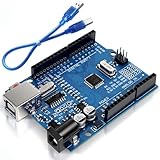
- Unlock your creativity with the versatile UNO R3 Board ATmega328P! Explore endless possibilities in electronics projects with its user-friendly Arduino development environment, extensive digital and analog I/O pins, and compatibility with various sensors and modules. Let your imagination soar!
- Experience the power of UNO R3 Board ATmega328P! This feature-packed development board boasts a high-performance ATmega328P microcontroller, 32KB of flash memory, and 2KB of SRAM. It's perfect for both beginners and advanced users seeking to build innovative applications in robotics, home automation, and more.
- Ignite your passion for electronics with the UNO R3 Board ATmega328P! Its open-source design allows for customization, while its 14 digital I/O pins and 6 analog input pins provide ample connectivity options. Get ready to bring your ideas to life and create interactive projects like never before.
- Elevate your DIY projects with the UNO R3 Board ATmega328P! This highly versatile development board offers seamless integration with the Arduino ecosystem, providing access to a vast library of code and resources. With its reliable performance and broad compatibility, you can easily prototype and realize your electronic dreams.
- Discover the endless potential of the UNO R3 Board ATmega328P! With its robust communication interfaces, including UART, SPI, and I2C, you can connect and communicate with a wide range of devices. Whether you're a hobbyist or a professional, this powerful development board is a must-have for creating innovative and interactive electronic systems.
- Match the context. Check whether the reply concerns the same board family, core, IDE or CLI, library release, operating system, and wiring.
- Look for a cause and repeatable steps. An explanation of why a change should help is more useful than code or commands without context.
- Check the relevant primary documentation. Verify pin assignments, voltage, board support, and API behavior against the documentation for your hardware and software.
- Ask for the missing detail. If a reply depends on an unspecified board, library, or setting, ask a focused follow-up before changing your setup.
- Pause on risky hardware advice. Before trying a suggestion that could create an electrical or mechanical hazard, verify power, polarity, voltage, and board-specific limits in official documentation.
What community contributions show—and what they do not
Arduino’s Open Source Report 2022 gives a dated view of contributions in calendar year 2022, with its snapshot as of December 31, 2022. These figures describe activity reported for that year, not current totals or the number or quality of Q&A answers.
| Reported contribution | What the 2022 figure means |
|---|---|
| 1,042 new contributed libraries added to Arduino Library Manager; 5,491 total libraries | Arduino’s reported library additions and total for the report’s 2022 snapshot. |
| 421 approved open-source tutorials added to Project Hub | Approved and published projects; the report says submissions were quality-reviewed and moderated, so this is not a count of every submission. |
| 6,600 interactions on official Arduino repositories on GitHub | Repository activity reporting issues or submitting pull requests, not Forum traffic. |
| 84 new versions of contributed Arduino cores | The report notes the figure may omit platforms Arduino did not know about because there was no official platform registry. |
| 5,781 new versions of libraries | Library versions or releases in 2022, a different measure from the number of new libraries. |
Arduino’s report also says it is difficult to track contributions posted on unofficial platforms and independent websites, including sketches, code examples, documentation, tutorials, and hardware designs. The report therefore offers a snapshot of particular contributions, not a complete count of Arduino community knowledge or a measure of answer accuracy.
Rank #4

- START CODING WITH A FLEXIBLE UNO R3 BOARD: Connect the included USB cable, upload sketches with Arduino IDE and build sensor, motor, display and automation projects for maker desks, classrooms, coding labs and electronics prototyping
- ATMEGA328P CORE FOR EVERYDAY PROJECTS: A 16 MHz clock, 32 KB flash, 2 KB SRAM, 1 KB EEPROM, 14 digital I/O pins with 6 PWM outputs and 6 analog inputs support LEDs, buttons, relays, servos, displays and sensors
- CH340C USB-TO-SERIAL INTERFACE: The onboard CH340C handles USB communication for sketch uploads and serial monitoring, while clearly labeled digital, analog and power headers help simplify wiring to modules and shields
- USB OR EXTERNAL POWER: Run the board from the included USB cable or a recommended 7-12 V external DC supply, then expand with compatible shields and modules for robotics, data logging, automation and custom embedded projects
- BOARD AND USB CABLE INCLUDED: Comes with 1 ELEGOO UNO R3 controller board and 1 USB-A to USB-B data cable; breadboard, jumper wires, sensors, shields and power adapter are not included
When a board or kit is relevant
A physical board or kit is useful when you need to reproduce a hardware answer or follow a project that depends on real components. Arduino documentation directs people without hardware to its store; the 2022 report names original boards and the Make Your UNO Kit and says purchases of original boards support open-source development.
Free tools Windows power users keep installed
One-click scans. No signup required.
Before buying anything for a troubleshooting step or Project Hub build, check the exact board model and component compatibility. A kit is not necessary for a software-only question, and no particular current marketplace listing or kit contents are established here.
Quick Recap
Best Value

- TURN CODE INTO REAL-WORLD RESULTS — Follow 22+ guided lessons to make LEDs blink, read temperature and distance, move servo and stepper motors, control an LCD and respond to joystick or IR input; ideal for a family weekend build, homeschool unit, coding club or STEM classroom
- MORE PROJECT VARIETY IN ONE ORGANIZED KIT — Includes the UNO R3 controller, LCD1602 with pre-soldered header, breadboard power module, ultrasonic and DHT11 sensors, joystick, IR receiver and remote, SG90 servo, stepper motor, relay, DC motor, fan blade, displays, LEDs, buttons, resistors and jumper wires
- START WITHOUT SOLDERING — Plug-in modules, a solderless breadboard and the pre-soldered LCD help beginners focus on wiring, code and testing; the illustrated component list makes it easier to find each part and move from one lesson to the next
- LEARN THE LOGIC, THEN CREATE YOUR OWN — Use Arduino IDE and the included example code to understand digital input and output, analog sensing, timing, motor control and display functions, then change thresholds, speeds and sequences for alarms, environmental monitors, reaction games and motion projects
- CLEAR SETUP SUPPORT FOR FIRST-TIME BUILDERS — Download the latest tutorial and code, select the UNO board and correct computer port, check component polarity and breadboard rows, and keep power-module input at 9V or below; younger learners should work with an experienced adult
Product prices and availability are accurate as of the date/time indicated and are subject to change. Any price and availability information displayed on Amazon at the time of purchase will apply.

