
iTechGuides is reader-supported. When you buy through links on our site, we may earn an affiliate commission. As an Amazon Associate I earn from qualifying purchases. Learn more
Cray’s CS300-LC, nicknamed Shadow, was a liquid-cooled cluster supercomputer contracted for Mississippi State University’s High Performance Computing Collaboratory (HPC²) in 2013. The announcement described an intended primary shared research system; a 2014 Cray presentation later referred to the installation. The available records do not establish its exact commissioning date, final configuration, measured performance, or whether it still operates.
What was the CS300-LC Shadow?
Shadow was the liquid-cooled version of Cray’s CS300 cluster-supercomputer family. In October 2013, Asetek announced that the CS300-LC was contracted for Mississippi State University’s High Performance Computing Collaboratory, where it was intended to serve as the primary shared research HPC system. That announcement documents the contract and planned placement, not by itself a completed commissioning. Asetek’s October 2013 announcement
Cray CEO Peter Ungaro described the system in the company’s 2013 earnings-call transcript as “the first liquid-cooled Cray cluster supercomputer” and said it featured Intel Ivy Bridge and Xeon Phi processors. Those details describe the announcement-era system; the transcript does not give a complete final configuration or a benchmark result. Cray’s 2013 earnings-call transcript
Where was Shadow intended to be installed, and what research role was planned?
The 2013 contract announcement placed Shadow at Mississippi State University’s HPC² and described it as the collaboratory’s primary shared research HPC system. Cray’s 2014 conference presentation later referred to the installation and credited Trey Breckenridge, Mississippi State’s director of high performance computing, with saying: “This investment is the latest example of Mississippi State’s commitment to providing powerful, energy-efficient and technologically-advanced HPC system for scientific research”. The slide is evidence of a later reference to the system, but these sources do not pin down its acceptance or production-start date. Cray’s 2014 conference presentation
#1 Best Overall
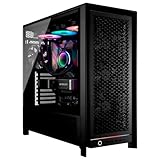
- CPU 32-Core AMD Ryzen Threadripper 9970X 4.0GHz ; 280mm Liquid Cooler
- MB TRX50 AERO ; RAM 64GB DDR5 ECC High Performance Memory
- STORAGE M.2 SSD 1TB NVMe 990 PRO PCI Express 4.0x4 + 8TB HDD
- GPU Geforce RTX 5060 8GB ; PSU Toughpower 1200W 80 PLUS Gold
- OS Windows 11 Pro 64-bit ; Wi-Fi 7 2x2 (802.11be) ; Bluetooth v5.3
How did the CS300-LC cooling work?
Cray’s 2013 annual report describes the CS300-LC as using a low-pressure, isolated secondary liquid loop to cool critical components, including processors and memory. The system’s liquid loop transferred heat through warm-water heat exchangers. Asetek identified its RackCDU technology as hot-water, direct-to-chip data-center cooling. These descriptions concern the LC design; they should not be assumed to apply to every CS300 configuration. Cray’s 2013 annual report Asetek’s October 2013 announcement
CS300-AC compared with CS300-LC
| Variant | Cooling approach described by Cray | Facility implication |
|---|---|---|
| CS300-AC | Air-cooled | Air cooling; further facility requirements are not stated in the cited annual report. |
| CS300-LC | Warm-water heat exchangers and an isolated secondary liquid loop for critical components | Requires provision for the described liquid loop; detailed site requirements are not stated in the cited annual report. |
How to read the published efficiency figures
Cray’s 2013 annual report claimed that CS300-LC reduced typical data-center cooling energy consumption by 50%, delivered three times the energy efficiency per rack compared with traditional air-cooled designs, and captured 80% of heat into warm water for potential reuse. These are Cray’s product claims from 2013, not independently measured results from Shadow.
Rank #2

- For SALES TO CALIFORNIA — Please write to us. Our certified laboratory tests and registers all computers in accordance with the laws of California.
- CPU 24-Core Intel Core i9 14900K 3.2GHz ; 360mm AIO Liquid Cooler
- MB Z790 PRIME Series ; RAM 64GB DDR5 High Performance Memory
- STORAGE M.2 SSD 2TB NVMe 990 EVO PCIe GEN4 + 10TB HDD
- GPU Integrated Graphics: HDMI/DP ; PSU Smart 850W 80 PLUS Bronze
Asetek’s October 2013 release separately said RackCDU removed up to 80% of server heat through an all-liquid path, with cooling-cost reductions “in excess of 50%” and density increases of 2.5x. Those are Asetek’s technology figures, not verified outcomes for the Mississippi State installation.
Quick wins for a faster PC:
Clear out junk files and repair common Windows errorsFree Scan →Scan for outdated or missing drivers - takes under a minuteDriver Scan →What is known about Shadow’s final configuration and performance?
The cited announcement-era material identifies Ivy Bridge and Xeon Phi processors, but does not establish Shadow’s final node or processor count, memory capacity, interconnect, or independently measured application performance. No specific benchmark score should be inferred from the cooling or product-efficiency claims.
Rank #3

- Intel Core i9-14900KF CPU, B760 chipset motherboard, 32GB DDR5 6000MT/s RGB Memory, 1TB NVMe M.2, WiFi, Windows 11
- NVIDIA GeForce RTX 5070, Display Port/HDMI
- Closed Loop Liquid Cooling with 240mm Radiator
- 2x USB 3.0, 1x Headphone, 1x Mic
- PSU Power cover with Filtered Ventilated Vertical Side mount Radiator support
Is Shadow still running?
The available sources do not establish whether Shadow remains installed or operational, or whether this particular system remains supported. HPE’s general support page covers CS300, CS400, and CS-Storm customers, but it does not confirm support for Shadow specifically. HPE’s general Cray CS-series support information
Independent reader supportYour contribution helps us test, update, and keep practical guides available for everyone.How does this historical system relate to current HPE Cray liquid-cooled platforms?
Current HPE Cray EX QuickSpecs describe a distinct platform generation using direct-attached cold plates and cooling distribution units. Those specifications explain modern HPE Cray cooling architecture; their rack capacities and other figures are not CS300-LC specifications and should not be applied to Shadow. HPE Cray EX QuickSpecs
Quick Recap
Best Value

- A M D R9-9950X3D2 4.3GHz 16 core | 256GB DDR5 RAM
- N V I D I A - G e F o r c e 2X5090 64 GB | 1600W Power Supply
- 360mm Liquid Cooler | 8 TB NVMe SSD Boot Drive
- Ready to work, preloaded with Windows 11 Pro and the latest drivers
- Custom built Dual GPU AI Workstation, professional cable management, fully tested
Rank #4
- CPU 32-Core AMD Ryzen Threadripper 9970X 4.0GHz ; 280mm Liquid Cooler
- MB TRX50 AERO ; RAM 128GB DDR5 ECC High Performance Memory
- STORAGE M.2 SSD 1TB NVMe 990 PRO PCI Express 4.0x4 + 8TB HDD
- GPU Geforce RTX 5060 8GB ; PSU Toughpower 1200W 80 PLUS Gold
- OS Windows 11 Pro 64-bit ; Wi-Fi 7 2x2 (802.11be) ; Bluetooth v5.3
Product prices and availability are accurate as of the date/time indicated and are subject to change. Any price and availability information displayed on Amazon at the time of purchase will apply.
What’s actually slowing this PC down?
Pick the symptom - the matching free tool is one click away.

