
iTechGuides is reader-supported. When you buy through links on our site, we may earn an affiliate commission. As an Amazon Associate I earn from qualifying purchases. Learn more
Core Web Vitals are Google’s three metrics for real-world page loading, responsiveness, and visual stability: Largest Contentful Paint (LCP), Interaction to Next Paint (INP), and Cumulative Layout Shift (CLS). Their recommended “good” targets are LCP at or below 2.5 seconds, INP at or below 200 milliseconds, and CLS at or below 0.1, measured at the 75th percentile of page loads. They help site owners assess user experience and are among Google Search’s page experience considerations, but passing the targets does not guarantee higher rankings.
What are Core Web Vitals?
Core Web Vitals are a set of field metrics intended to describe important parts of the experience people have when using a web page. They focus on whether the main content appears promptly, whether the page responds to interactions, and whether visible content stays in place. Google’s current set is LCP, INP, and CLS; the metrics and recommended targets are documented in web.dev’s Web Vitals guidance.


Largest Contentful Paint (LCP): loading
LCP measures how long it takes for the largest image, text block, or video visible in the viewport to render, relative to navigation. It is a user-oriented indicator of when the main content appears. A good result is 2.5 seconds or less; a result over 4 seconds is considered poor. The range between those values is “needs improvement.” See Google’s LCP guidance.
What’s actually slowing this PC down?
Pick the symptom - the matching free tool is one click away.
Interaction to Next Paint (INP): responsiveness
INP measures the latency of qualifying interactions—such as clicks, taps, and keyboard input—across a visit. It reflects how quickly the page provides visual feedback after a person interacts, accounting for the interaction’s processing and the next paint. A good result is 200 milliseconds or less; over 500 milliseconds is poor. Values between those thresholds need improvement. Details are in Google’s INP guidance.
#1 Best Overall
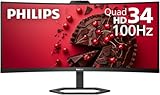
- EXPAND YOUR HORIZONS: 3440 x1440 UltraWide QHD (WQHD) resolution with 21:9 aspect ratio for efficient productivity
- CURVED IMMERSION: The 1500R radius curved VA panel allows for more immersion and better color accuracy. It can also help alleviate eye strain during long hours of working
- RICH COLORS FOR WORK AND PLAY: Ultra Wide-Color technology produces true-to-life images and a wider spectrum of colors with sRBG 123.24 percent , NTSC 99.25 percent color gamut area coverage
- WINDOWS HELLO WEBCAM WITH NOISE-CANCELING MIC: Comes with built-in 5MP webcam, noise canceling microphone, and speakers, perfect for remote working. The webcam is equipped with advanced sensors for Windows Hello facial recognition, which conveniently logs you into your Windows devices in less than 2 seconds
- ONE CABLE IS ALL YOU NEED: USB-C docking transfers high-speed data, high-resolution video signal, and power to your laptop (up to 65W of Power Delivery support) via a single USB-C cable. Play and work in high resolution while simultaneously charging your notebook
Cumulative Layout Shift (CLS): visual stability
CLS measures unexpected movement of visible page content. A low score indicates that elements are less likely to shift around while a person is trying to read or interact. A good CLS is 0.1 or less; over 0.25 is poor. Values between those thresholds need improvement. See Google’s CLS guidance.
What are the Core Web Vitals thresholds?
| Metric | Good | Needs improvement | Poor |
|---|---|---|---|
| Largest Contentful Paint (LCP) | ≤ 2.5 seconds | > 2.5 to 4 seconds | > 4 seconds |
| Interaction to Next Paint (INP) | ≤ 200 milliseconds | > 200 to 500 milliseconds | > 500 milliseconds |
| Cumulative Layout Shift (CLS) | ≤ 0.1 | > 0.1 to 0.25 | > 0.25 |
These are practical targets, not a promise that every visit will be fast, responsive, or stable. Google evaluates field performance at the 75th percentile: in effect, the metric value should be good for at least three-quarters of measured page loads. Review mobile and desktop separately because their results can differ. The percentile approach is intended to reflect most visits without letting a small number of extreme outliers dominate; Google explains its rationale in its Core Web Vitals threshold methodology.
Rank #2
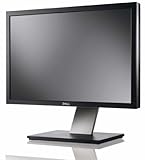
- Dell UltraSharp U2410 - LCD display - IPS- 24" - widescreen - 1920 x 1200 / 60 Hz
For an overall good assessment, a page or origin needs to meet the good target for all three metrics when enough field data is available. A percentile result summarizes a distribution; it does not mean every individual visitor experienced a result within the target.
Recommended Free Tools
Why do Core Web Vitals matter?
The metrics map to tangible user outcomes: content appears, interactions receive a timely response, and the layout remains stable. That makes them useful for diagnosing friction even when search rankings are not the immediate concern. Improving a poor experience can make a page easier to use, but the metrics are indicators—not a complete measure of usability, accessibility, content quality, or business performance.
Google says Core Web Vitals are used by its ranking systems as part of page experience. They are not a standalone ranking guarantee or a substitute for relevance: there is no single page experience signal, and strong scores alone do not ensure a top position. Google’s page experience guidance states that its systems may still prioritize the most relevant content even when page experience is subpar.
How do I check my Core Web Vitals?
Start with field data, which reflects actual visits. Use lab tools afterward to investigate what might be causing an issue; lab and field results answer different questions and are not interchangeable.
Rank #4
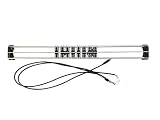
- Exclusively compatible with N scale locomotives, this test stand works with most standard N gauge models, making it a flexible and practical addition to any hobbyist’s collection.
- With a straightforward structure and simple connection design, the rolling test stand can be assembled and put into use quickly without complicated tools or procedures.
- Manufactured from premium metal materials, the test bench offers excellent stability and wear resistance, ensuring reliable performance even with frequent daily use.
- This dedicated test treadmill lets you safely debug, test speed and inspect locomotive performance, greatly upgrading the fun and professionalism of your model train hobby.
- This is not a toy. Not intended for use by children under 14.
- Check field results. Enter a URL in PageSpeed Insights to see available Chrome UX Report (CrUX) field data alongside Lighthouse lab diagnostics. If you manage a verified site, open the Core Web Vitals report in Google Search Console to review groups of similar pages.
- Separate devices and identify the metric. Review mobile and desktop results independently. Note whether LCP, INP, or CLS is outside the good range and which page groups are affected.
- Investigate the cause. Use Lighthouse or Chrome DevTools for controlled diagnostics, then compare with real-user evidence where available. CrUX can show that a field problem exists but generally does not explain its cause.
- Make a focused change. Address the suspected bottleneck rather than optimizing only for a lab score. A change aimed at one metric can affect another, so check all three afterward.
- Reassess field performance. Give changes time to reach enough real visits, then check the relevant mobile and desktop percentiles again. Field data is based on user experiences over time, not an immediate confirmation from a single test.
What each measurement source tells you
| Source | Evidence and scope | Best use | Important limit |
|---|---|---|---|
| PageSpeed Insights | Combines CrUX field data, when available, with Lighthouse lab diagnostics for a URL. | Quickly see real-user context and a controlled diagnostic in one place. | CrUX data may be unavailable for a particular URL; lab runs do not reproduce the full range of real devices, networks, and behavior. |
| Search Console Core Web Vitals report | CrUX-based field data, with similar pages grouped to reveal broader patterns. | Find site-wide or template-level groups that merit attention. | It does not necessarily provide a separate, conclusive diagnosis for every URL. |
| Lighthouse and DevTools | Lab measurements in controlled test conditions. | Reproduce scenarios and inspect likely causes while developing or debugging. | A lab score may differ from real visits, especially for interactions and shifts that occur after the test’s initial load. |
| Real user monitoring (RUM) | Site-specific field measurements collected from visitors, such as with the web-vitals JavaScript library or another RUM service. | Add diagnostic detail about the conditions and experiences behind field problems. | Implementation and coverage depend on the site; RUM supplements rather than replaces Google’s CrUX-based reports. |
CrUX does not have enough eligible traffic data for every URL or origin. If a report shows only origin-level data, treat it as evidence about the site’s origin-level experience—not proof that a particular page has the same problem. Field results can also differ from lab results because visitors use different devices and networks and perform different interactions. Google’s Core Web Vitals workflow and field measurement guidance explain how the data sources fit together.
Is FID still a Core Web Vital?
No. Interaction to Next Paint replaced First Input Delay (FID) as a Core Web Vital on March 12, 2024. Older articles or tools may mention FID as historical context or as a diagnostic metric, but the current Core Web Vitals trio is LCP, INP, and CLS. Google announced the change in its INP transition notice.
Quick Recap
Best Value
Product prices and availability are accurate as of the date/time indicated and are subject to change. Any price and availability information displayed on Amazon at the time of purchase will apply.

