
iTechGuides is reader-supported. When you buy through links on our site, we may earn an affiliate commission. As an Amazon Associate I earn from qualifying purchases. Learn more
Comparative analysis of 3G, 4G, and 5G shows a progression from practical mobile internet, to mainstream mobile broadband, to a more flexible network platform for high capacity, lower latency, dense device populations, and industrial connectivity. 5G can be better than 4G, but the result depends on spectrum, coverage, congestion, device support, and whether the network is standalone.
That distinction matters because “3G,” “4G,” and “5G” are not fixed speed tiers. Each generation also changes radio technology, core-network architecture, spectrum usage, capacity, mobility management, and the types of services a network can support.
Key takeaways
- 3G made mobile web browsing, email, picture messaging, app downloads, and early video calling practical.
- 4G made high-quality mobile broadband mainstream, but commercial “4G” often included LTE systems that did not initially meet the formal IMT-Advanced definition.
- 5G is not one performance level: low-band 5G prioritizes coverage, mid-band 5G balances coverage and capacity, and high-band or mmWave 5G prioritizes very high throughput over shorter distances.
- According to Ericsson’s illustrative comparison, 5G has theoretical peak targets of 20 Gbps downlink, 10 Gbps uplink, and 1 millisecond latency, compared with 1 Gbps, 0.2 Gbps, and 10 milliseconds for 4G; those are design figures, not normal consumer results.
- A capable 4G connection remains sufficient for many phones, while 5G is most valuable in congested areas, fixed-wireless access, dense IoT deployments, and specialized enterprise networks.
- 3G retirement can affect old phones, alarms, payment terminals, vehicle systems, and other equipment unless the hardware and carrier provisioning support 4G VoLTE or another replacement technology.
What does a mobile “generation” mean?
A mobile generation is a coordinated change in radio access, network architecture, spectrum efficiency, capacity, supported services, and device requirements—not merely a faster speed-test result. The International Telecommunication Union groups the major generations under IMT-2000 for 3G, IMT-Advanced for 4G, and IMT-2020 for 5G, as explained in the ITU overview of mobile broadband standards.
Do these 3 things before closing this tab:
1Clear out junk files and repair common Windows errors2Scan for outdated or missing drivers - takes under a minute3Repair Windows errors before they cause bigger problemsGenerational boundaries are not perfectly clean. 3G includes several technology families, 4G was used commercially for LTE before every LTE deployment met the formal IMT-Advanced requirements, and 5G networks can combine a new 5G radio with either a 4G core or a 5G Core.
#1 Best Overall

- 【Lightning-fast Qualcomm SDX62 5G Modem inside】The RM520N 5G NR SA NSA AX3000 WiFi 6 CPE Router delivers 5G cellular speeds up to 3.4 Gbps (5G SIM), bringing reliable, high-speed internet to rural/remote locations where wired broadband isn’t available or as an alternative to urban broadband.
- 【Fast Wi-Fi 6 Cellular Router】The RM520N 5G NR router provides reliable high-speed internet with up to 574Mbps (2.4GHz) + 2402Mbps (5GHz) Wi-Fi speeds. Support 128 WiFi users connect simultaneously!
- 【9 Detachable High Gain Antennas】The RM520N 5G Sim Card router provides 4 x 5dBi cellular antennas and 5x5dBi WiFi antennas to improve the signal quality of 5G NR and Wi-Fi in different place. If you want to use an outdoor cellular antenna, the SMA connector also provides the possibility of an external cellular antenna.
- 【Multiple VPN Clients】With built-in PPTP/ L2TP / GRE/WireGuard / Zerotier VPN, this 5G Sim card router can easily establish a connection to the VPN server to transport all your online data and traffic, securing it with its encryption at the same time. Compatible with 20 more DDNS providers, convenient to manage your remote cameras.
- 【Reliable & Uninterrupted Internet】The RM520N 5G Cellular Router with multi-WAN technology lets users utilize multiple connection methods, including Ethernet, Repeater, Cellular, and Tethering; Load-balancing capabilities let users distribute bandwidth by custom proportion among multiple connection methods; Supports Network Failover and the option to configure Failover priorities among multiple connection methods.
How are 3G, 4G, and 5G different?
The following table is a conceptual comparison. Actual performance depends on the operator’s spectrum, channel width, cell loading, backhaul, signal conditions, device, and location.
| Dimension | 3G | 4G | 5G |
|---|---|---|---|
| Formal ITU family | IMT-2000 | IMT-Advanced; commercial 4G commonly also includes LTE | IMT-2020, including 5G New Radio deployments |
| Main consumer change | Practical mobile internet beyond voice and SMS | Mainstream mobile broadband for video, apps, and cloud services | Higher capacity, lower-latency potential, dense-device support, and new enterprise uses |
| Network architecture | Packet data added to networks historically centered on voice | Predominantly IP-based mobile broadband | 5G New Radio with a 4G core in NSA or a 5G Core in SA |
| Spectrum behavior | Mostly lower-frequency spectrum with comparatively narrow allocations | Multiple bands, wider channels, improved efficiency, MIMO, and carrier aggregation | Low-, mid-, and high-band spectrum, including mmWave |
| Capacity | Limited by modern standards | Strong for ordinary consumer broadband | Designed for high traffic density and many connected devices |
| Latency | Generally high enough to constrain interactive applications | Lower and suitable for many real-time applications, but variable | Designed for substantially lower latency and specialized reliability targets |
| Coverage | Historically broad where still available, but increasingly retired | Often the dependable coverage layer | Highly dependent on band, deployment density, device, and operator |
| Current role | Legacy technology being shut down or refarmed in many markets | Mature and still essential | Expanding while commonly coexisting with 4G |
What did 3G introduce?
3G made mobile data useful enough for ordinary internet activity. UMTS/WCDMA and CDMA2000 were important 3G technology families, while later HSPA revisions improved the experience substantially. A 3G phone could support web browsing, email, picture messaging, app downloads, maps, basic multimedia, and early video calling instead of being primarily a voice-and-text device.
HSPA was not one fixed speed level. The GSMA describes HSPA as a 3GPP family that includes HSDPA, HSUPA, and HSPA+, with later revisions improving downlink and uplink performance; the GSMA technology overview provides the relevant history. Early UMTS and later HSPA+ could feel very different under real network conditions, so assigning one universal 3G speed would be misleading.
3G’s central limitation was that capacity and throughput were modest by modern standards. A 3G connection could handle basic browsing and messaging, but video streaming, cloud applications, large downloads, and crowded events exposed its limitations quickly. The same limitations now make 3G spectrum attractive for refarming to more efficient 4G and 5G services.
What did 4G change?
4G transformed cellular service into dependable mobile broadband. LTE and later LTE-Advanced provided higher throughput, greater spectral efficiency, wider channels, MIMO, and carrier aggregation, enabling smoother video streaming, social-media applications, cloud services, navigation, mobile gaming, and modern smartphone operating systems.
Formal 4G and commercial 4G are not identical. The formal ITU-Advanced requirements included peak rates of approximately 100 Mbps for high-mobility scenarios and 1 Gbps for low-mobility scenarios, according to the ITU discussion of mobile broadband trends from 3G to 6G. Mobile operators also marketed earlier LTE systems as 4G even though those early systems did not initially satisfy every formal IMT-Advanced target.
LTE’s all-IP design also changed voice service. LTE does not inherently provide the older circuit-switched voice service used by preceding networks, so operators generally use Voice over LTE, or VoLTE, for native voice calls. This is why a phone can support LTE data yet still have a calling problem after a carrier retires 3G if the phone lacks compatible VoLTE support, carrier certification, or correct provisioning.
The Tool Desk
Outbyte Driver Updater FREEFix the driver behind crashes, sound loss and screen glitchesFind Drivers →Outbyte PC Repair FREERepair Windows errors before they cause bigger problemsFix Now →What does 5G add beyond 4G?
5G extends cellular networking beyond faster phone downloads. The three commonly cited 5G service families are enhanced Mobile Broadband (eMBB), Ultra-Reliable Low-Latency Communications (URLLC), and massive Machine-Type Communications (mMTC). The ITU explanation of 5G describes these broader objectives and the associated network evolution.
- eMBB: Higher throughput and capacity for smartphones, hotspots, video, and fixed-wireless access.
- URLLC: Support for demanding, time-sensitive applications where latency and reliability are important.
- mMTC: Support for very large populations of sensors and other connected devices.
5G New Radio can use wider channels, massive MIMO, beamforming, and more flexible spectrum arrangements. A 5G Core can also support service-based networking, more specialized quality-of-service handling, network slicing, and closer integration with edge computing. Those capabilities matter more to industrial and enterprise deployments than to a person sending messages or watching ordinary video.
Network slicing should not be interpreted as a feature automatically available to every consumer phone. Slicing is a network capability that depends on the operator’s 5G architecture, policies, commercial service, device support, and application requirements.
Are 5G speed and latency figures real-world results?
No. Theoretical targets, laboratory measurements, operator peak claims, and typical user speeds are different measurements. 5G can provide much higher performance than 4G, but a 5G icon does not guarantee a particular download rate or one-millisecond end-to-end response.
Rank #2

- CABLE INTERNET AND WIFI MADE FOR YOUR HOME: This two-in-one cable modem and WiFi router puts every setting in your hands, from your WiFi names and passwords to how your network runs, so it works the way your household needs.
- APPROVED FOR YOUR PROVIDER AND PLAN: Works with Xfinity internet plans up to 800Mbps and Cox plans up to 500Mbps. Not compatible with Verizon, AT&T, CenturyLink, DirecTV, DISH, or bundled voice plans. ISP activation required after setup.
- GET THE FULL SPEED OF PLANS UP TO 800 MBPS: DOCSIS 3.0 delivers plenty of speed for HD and 4K streaming, online gaming, and video calls across your home. Actual speeds vary by plan and provider.
- AC1900 WIFI COVERAGE FOR THE WHOLE HOME: Stay connected in every room with dual-band AC1900 WiFi covering up to 1,800 sq ft and Beamforming+ for stronger signal to mobile devices. Real-world coverage depends on home size, layout, and building materials.
- WIRED CONNECTIONS FOR YOUR FASTEST DEVICES: Four Gigabit Ethernet ports keep gaming consoles, desktops, and streaming devices hardwired for the lowest latency and the most stable connection in your home.
| Illustrative metric | 4G | 5G | How to interpret it |
|---|---|---|---|
| Theoretical peak downlink | 1 Gbps | 20 Gbps | Design or peak illustration, not an ordinary user guarantee |
| Theoretical peak uplink | 0.2 Gbps | 10 Gbps | Design or peak illustration, not a typical plan speed |
| Theoretical latency target | 10 milliseconds | 1 millisecond | Does not equal end-to-end application latency |
| Practical advantage | Mature mobile broadband for most consumer tasks | More capacity, higher potential throughput, and specialized service support | Actual benefit depends on deployment and congestion |
According to Ericsson’s illustrative 4G and 5G comparison, 4G has theoretical peak download and upload rates of 1 Gbps and 0.2 Gbps, while 5G has theoretical peak rates of 20 Gbps and 10 Gbps. Ericsson’s same illustration lists theoretical latency targets of 10 milliseconds for 4G and 1 millisecond for 5G. These figures describe technical potential, not the speed or latency every subscriber will experience.
Latency is the time between sending a request and receiving a response, but the radio link is only one part of the journey. Internet routing, backhaul, congestion, server location, application design, and device processing can dominate total delay. A 5G connection to a distant cloud server may therefore feel less responsive than a local edge-computing deployment, even when both use 5G radio access.
Why is 5G not always faster than 4G?
5G is not always faster than 4G because the 5G label covers different frequency bands, network architectures, channel widths, cell loads, and deployment densities. Low-band 5G may provide broad coverage with only modest additional bandwidth, while a lightly loaded 4G cell may deliver a better speed test.
Other causes include weak signal, limited backhaul, a device modem that lacks the operator’s best bands, carrier traffic management, a congested cell, an overloaded server, or an application bottleneck. Non-standalone 5G can deliver useful radio capacity while still depending substantially on 4G infrastructure.
Outdated Drivers Are Slowing You Down
One free scan finds every outdated or missing driver and matches the right update for your exact hardware.Free scan · exact hardware matchWindows Errors? Fix Them Before They Spread
Repair common Windows errors and clear accumulated junk for a smoother, more stable PC - no reinstall needed.Free scan · no reinstallThe most important consumer improvement may be capacity rather than the highest single-user speed. A 4G connection may be perfectly adequate for one person streaming video. A well-designed 5G network may maintain better performance when many people and machines compete for resources at a stadium, airport, downtown area, or large event.
How do low-band, mid-band, and high-band 5G differ?
5G spectrum creates a trade-off between range, building penetration, capacity, and peak throughput. The GSMA 5G spectrum guide explains why networks need multiple spectrum ranges for different use cases.
| 5G spectrum type | Coverage and propagation | Capacity and speed | Best fit |
|---|---|---|---|
| Low band | Travels farther and generally penetrates buildings better | Usually offers less capacity than higher bands | Broad-area coverage and rural or suburban service |
| Mid band | Balances range and building performance with capacity | Often provides the strongest general-purpose 5G experience | Urban, suburban, and high-capacity mobile broadband |
| High band or mmWave | Shorter range and more sensitivity to walls, foliage, vehicles, and other obstacles | Very wide channels and potentially very high throughput | High-performance zones with dense small-cell deployment |
Ericsson characterizes low-band 5G as important for coverage, mid-band as a backbone balancing coverage and capacity, and high-band spectrum as suitable for high-performance zones that require denser deployment. The GSMA also identifies 3.5 GHz as a major 5G launch band and emphasizes that low-, mid-, and high-band spectrum serve different needs.
A “5G available” indicator therefore does not establish indoor performance, rural range, speed, or consistency. A strong mid-band deployment may be considerably faster than local 4G, while high-band 5G may be the fastest option only in particular streets, venues, or line-of-sight areas.
Quick wins for a faster PC:
Clear out junk files and repair common Windows errorsFree Scan →Scan for outdated or missing drivers - takes under a minuteDriver Scan →What is the difference between 5G NSA and 5G SA?
5G Non-Standalone (NSA) uses 5G New Radio together with substantial dependence on an existing 4G LTE network and core, while 5G Standalone (SA) uses a 5G radio-access network with a 5G Core. NSA can accelerate initial deployment; SA enables a more complete set of 5G-core capabilities.
| Feature | 5G NSA | 5G SA |
|---|---|---|
| Radio | 5G New Radio combined with LTE support | 5G New Radio connected to a 5G Core |
| Core network | Relies substantially on the existing 4G core | Uses a new 5G Core without requiring an underlying 4G core |
| Deployment purpose | Faster path to initial 5G coverage and capacity | Fuller 5G architecture and advanced service capabilities |
| Advanced enterprise features | Some capabilities may be limited by the 4G core | Better foundation for slicing, specialized QoS, and some low-latency services |
| Consumer implication | Can improve speed and capacity without being “less real” 5G | Does not automatically make every application faster |
The ITU description of standalone and non-standalone 5G distinguishes these deployment models. A phone connected to 5G radio is not necessarily using every advanced 5G service, and a consumer generally cannot infer the core-network architecture from the 5G icon alone.
How do 3G, 4G, and 5G compare for common uses?
| Use case | 3G | 4G | 5G | Best practical conclusion |
|---|---|---|---|---|
| Messaging, email, basic browsing | Historically adequate where available | Comfortable and dependable | Usually unnecessary unless coverage or capacity is better | A capable 4G connection is normally sufficient |
| HD video streaming | Often constrained by throughput and congestion | Generally adequate | Useful for capacity and faster recovery from congestion | Choose based on consistency and data policy, not the icon |
| Video calls | Possible but more variable | Well suited | May improve consistency in crowded areas | 4G is usually enough; latency and uplink quality matter |
| Mobile gaming | High variability and limited capacity | Supports many games | Can improve responsiveness where engineered well | Server distance and congestion remain decisive |
| Hotspot use | Poor fit for modern heavy use | Good general-purpose option | Useful for high throughput and busy locations | Check hotspot limits, bands, and data prioritization |
| Fixed wireless access | Not a practical modern broadband choice | Possible in limited circumstances | Important option where wired broadband is unavailable | Check signal, capacity, upload performance, and data policies |
| IoT sensors | Legacy deployments face retirement risk | Good for higher-bandwidth devices | Useful for dense or specialized deployments | Low-power LTE-M and NB-IoT remain important alongside 5G |
| Industrial automation | Generally unsuitable for modern demanding control | Useful for many monitoring tasks | Potentially valuable with private networks, local compute, and managed QoS | 5G radio alone does not guarantee mission-critical performance |
| Rural coverage | Historically broad but increasingly withdrawn | Often the dependable layer | Low-band may help; high-band is usually a poor long-distance solution | Compare actual local bands and tower deployment |
Is 5G better for fixed wireless internet?
5G can provide home or business broadband through a cellular connection, especially where fiber or cable is unavailable. The GSMA spectrum guidance and Ericsson’s 5G use-case material identify fixed wireless access as an important application.
Rank #3
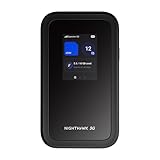
- WIFI 7 SPEEDS UP TO 3.6 GBPS, ANYWHERE YOU GO: Powered by a 5G or 4G cellular connection, M7 delivers fast, reliable WiFi 7 performance. Real-world speeds depend on carrier network, signal strength, location, and connected devices
- GLOBAL COVERAGE WITH NETGEAR eSIM IN 140+ COUNTRIES: Purchase 5G or 4G data plans from the Nighthawk app with no contracts. Requires free NETGEAR account. Coverage and speeds vary by country and carrier
- US CARRIER SUPPORT: The M7 is certified for AT&T and T-Mobile, unlocked for flexible use across compatible carriers. For US local carrier eSIM or SIM activation and data plan details, contact your carrier directly
- POWERFUL BUILT IN SECURITY - includes firewall protection, WPA3 encryption, and automatic firmware updates help protect your data when using public WiFi
- CONNECT UP TO 32 DEVICES AND FREE UP YOUR PHONE: A dedicated hotspot outperforms phone tethering. Connect laptops, tablets, and smart devices simultaneously while keeping your phone free
5G home internet is a stronger candidate for a household without an affordable wired option, a renter who wants simpler installation, or someone seeking a secondary connection. The result depends on band, antenna placement, indoor signal, line-of-sight conditions, tower capacity, evening congestion, upload performance, data caps, and network management.
Free tools Windows power users keep installed
One-click scans. No signup required.
Fiber or cable may remain preferable for users who need highly consistent upload speeds, static IP support, symmetrical bandwidth, strict service-level guarantees, or predictable performance. A premium 5G gateway cannot overcome inadequate tower capacity or unsupported spectrum.
What does 5G change for IoT and industrial networks?
5G’s distinctive promise for IoT is the ability to support large numbers of devices and more specialized service requirements, not simply to connect a faster phone. Potential applications include connected vehicles, factory sensors, robotics, automated guided vehicles, remote monitoring, machine coordination, and time-sensitive communications.
Low-power technologies such as LTE-M and NB-IoT remain important for battery-powered and low-bandwidth devices. 5G does not automatically replace every earlier IoT technology.
Industrial automation also requires more than a 5G subscription. A workable deployment may need a private network, local or edge compute, carefully designed applications, security controls, managed quality of service, reliable backhaul, and operational redundancy. 5G can be part of that system, but 5G alone does not guarantee deterministic or mission-critical performance.
Why are 3G networks being retired?
Operators are retiring 3G because newer 4G and 5G systems can use spectrum and infrastructure more efficiently while supporting more current traffic. The GSMA discussion of spectrum refarming and network sunsets explains how retiring older networks allows spectrum to be reused.
There is no single worldwide 3G shutdown date. Timing varies by country, operator, frequency band, legacy technology, and regulatory environment. Ericsson reported that 80 service providers had completely shut down 3G networks by the end of 2025, and Ericsson reported that 3G subscriptions continued to decline during the first quarter of 2026 in its mobile subscriptions outlook. Those figures describe Ericsson’s reported global trend, not a universal retirement date for every market.
3G retirement can affect more than old smartphones. Alarm systems, medical devices, payment terminals, vehicle telematics, backup connectivity, meters, and industrial equipment may contain 3G modems. Equipment owners should identify the modem generation, confirm the operator’s retirement schedule, verify LTE-M, NB-IoT, or LTE compatibility where appropriate, and check whether a software update, new SIM, carrier certification, or hardware replacement is required.
How do voice calls work during the transition?
4G voice generally uses VoLTE, while 5G voice may use VoLTE fallback or Voice over New Radio (VoNR), depending on the network and device. A phone can display LTE data service and still fail to place ordinary or emergency calls if its VoLTE support, carrier certification, SIM or eSIM provisioning, software, or regional band compatibility is inadequate.
Recommended Free Tools
Ericsson describes the migration of voice subscriptions toward VoLTE and VoNR as operators close 2G and 3G networks in its voice-service and SMS transformation paper. Roaming is an additional complication: a handset may work on a home network but lack the necessary voice provisioning or bands on a roaming partner.
Which generation should you choose?
The right choice depends on location, device lifecycle, usage, and plan terms rather than the generation number alone.
Rank #4

- MultiGig speed for today & tomorrow: DOCSIS 3.1 performance supports cable internet plans up to 2.5 Gbps, delivering ultrafast streaming, gaming, and downloads.
- Save on rental fees: Own your modem and avoid monthly equipment charges - check with your cable provider for plan compatibility.
- Compact, modern design: Space saving footprint with simple LED indicators for power, upstream/downstream, and online status.
- Easy setup: Connect cable, power on, and activate with your cable provider. Then join the default Wi-Fi or personalize your own Wi-Fi network name and password.
- Wi-Fi 6 Coverage: Includes dual-band W-Fi 6 (AX3000) delivering up to 3 Gbps wireless performance for your whole home.
| Reader situation | Most sensible starting point | What to verify |
|---|---|---|
| Light phone user | Capable 4G may be the best value | Coverage, VoLTE, price, and whether the phone is nearing retirement risk |
| Heavy mobile-data user | 5G when local mid-band coverage is strong | Priority data, hotspot allowance, supported bands, congestion, and total plan cost |
| Rural user | Whichever local low-band 4G or 5G network performs better | Actual tower coverage, terrain, indoor signal, backhaul, and operator maps |
| Frequent traveler | A modern 4G/5G phone with broad regional compatibility | VoLTE roaming, eSIM, carrier certification, supported bands, and local shutdowns |
| Home without fiber or cable | 5G fixed wireless may be worth testing | Indoor signal, installation position, upload speed, congestion, caps, and cancellation terms |
| Business deploying sensors | 4G, LTE-M, NB-IoT, or 5G depending on bandwidth and density | Lifecycle, power use, coverage, security, device management, and sunset risk |
| Industrial or private-network operator | Evaluate 5G SA or a private wireless design | Local compute, QoS, reliability, security, spectrum rights, backhaul, and application behavior |
Before buying a phone, hotspot, router, or plan, check the operator’s supported bands, VoLTE requirements, NSA and SA support, software-update lifespan, eSIM compatibility, hotspot restrictions, priority-data rules, roaming terms, and coverage in the places where the service will actually be used. A more expensive 5G plan is not automatically better value if a mature 4G plan already meets the user’s needs.
What should you check when 5G performs poorly?
“My phone says 5G, but 4G is faster.”
Check whether the connection is low-band 5G, whether the cell is congested, whether the signal is weak, and whether the phone supports the operator’s most capable bands. Backhaul limits, carrier traffic management, server performance, and application bottlenecks can also erase the benefit of 5G.
What’s actually slowing this PC down?
Pick the symptom - the matching free tool is one click away.
“My 5G phone stopped working after a network upgrade.”
Check VoLTE support, carrier certification, supported LTE and 5G bands, SIM or eSIM provisioning, operating-system updates, and emergency-call compatibility. A phone designed for another region may have technically capable hardware but lack the carrier approval or frequency support required on the local network.
“5G has worse coverage than 4G.”
That result is plausible, particularly with high-band or mmWave deployments. Low-band 5G can cover broad areas, while high-band service requires denser infrastructure and is more easily weakened by walls, foliage, vehicles, and other obstructions. Coverage maps also do not guarantee usable indoor speeds.
“Does 5G replace Wi-Fi?”
5G does not universally replace Wi-Fi. Wi-Fi can remain preferable for indoor local networking, home-device connections, shared access, and locations with reliable fixed broadband, while 5G provides a wide-area connectivity layer.
“Does 5G automatically mean one-millisecond latency?”
No. One millisecond is a technical target or illustrative radio-related figure, not a promise of one-millisecond end-to-end application latency. Internet routing, server distance, congestion, backhaul, and software design can dominate the total delay.
Frequently Asked Questions
Is 5G always faster than 4G?
5G is not always faster than 4G. Low-band 5G may provide only modest gains, and congestion, signal strength, backhaul, device capability, and server performance can make a 4G connection faster in a particular place.
What is the main difference between 4G and 5G?
4G made mobile broadband mainstream, while 5G adds higher capacity, lower-latency potential, greater device density, more flexible spectrum use, and support for advanced enterprise and IoT applications. Not every 5G connection provides every advanced feature.
Can a 4G phone keep working after 3G is shut down?
A 4G phone can keep working after 3G shutdown if the phone supports the operator’s LTE bands, has compatible VoLTE and carrier certification, and is correctly provisioned. LTE data capability alone does not guarantee voice or emergency-call support.
Which is better for rural coverage, 4G or 5G?
The better rural option is whichever local low-band network provides stronger coverage, capacity, and backhaul. Low-band 5G may cover broad areas, but high-band 5G generally has shorter range, and a strong low-band 4G network can outperform a weak 5G deployment.
Do these 3 things before closing this tab:
1Scan for outdated or missing drivers - takes under a minute2Clear out junk files and repair common Windows errors3Fix the driver behind crashes, sound loss and screen glitchesIs 5G home internet better than fiber?
5G home internet can be useful where fiber or cable is unavailable or unattractive, but fiber is often preferable for predictable performance, high upload speeds, symmetrical bandwidth, static-IP requirements, or strict service guarantees. Local signal, tower capacity, congestion, and plan restrictions determine the result.
The Bottom Line
Bottom line: 3G enabled mobile internet, 4G made mobile broadband dependable and mainstream, and 5G expands cellular networking toward higher capacity, lower latency, dense IoT, fixed wireless, private networks, and industrial applications. For ordinary browsing, messaging, music, and standard video, good 4G may be enough. Choose 5G when the local deployment, device, plan, and use case provide a measurable benefit—not simply because the phone displays a 5G symbol.
Quick Recap
Product prices and availability are accurate as of the date/time indicated and are subject to change. Any price and availability information displayed on Amazon at the time of purchase will apply.

