
iTechGuides is reader-supported. When you buy through links on our site, we may earn an affiliate commission. As an Amazon Associate I earn from qualifying purchases. Learn more
Climate-related distress can be met with professional mental-health care, peer connection, nature-based or educational programs, and constructive collective action. The right option depends on whether someone needs help with symptoms, a space to process difficult emotions, stronger social support, or a sense of agency. Climate concern is not automatically a mental-health disorder, and evidence for treatments designed specifically for eco-anxiety is still limited.
What eco-anxiety means—and when distress may need care
UK Health Security Agency guidance describes eco-anxiety as distress and worry related to the threat of climate change. Climate-related emotions can also include fear, grief, anger, sadness, and helplessness. The term describes an experience; it does not, by itself, establish a psychiatric diagnosis.
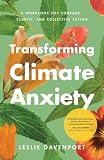


These feelings may follow direct exposure to floods, wildfires, or other extreme weather, or arise indirectly from climate information and concerns about future risks. Climate distress can be an understandable response to real threats. It may also motivate environmental action and community involvement. Support is worth considering when distress is persistent, disrupts daily life, or is difficult to manage—not because having climate concerns is inherently pathological.
Free tools Windows power users keep installed
One-click scans. No signup required.
The scale of concern is not uniform. UK government guidance published in 2025, citing Hickman and colleagues’ 2021 study in The Lancet Planetary Health, reports that 26% of young people responding to a survey said eco-anxiety affected their daily functioning. The same guidance reports that 39% of UK survey respondents said climate change made them hesitant to have children because of concerns about future quality of life. These are findings from particular surveys, not estimates of how everyone experiences climate distress.
#1 Best Overall
Which kinds of support can help?
Options differ in their intended outcomes and in how directly they have been evaluated. The 2026 systematic review in Cambridge Prisms: Global Mental Health groups approaches around emotion regulation and resilience, meaning-making and acceptance, and agency and connection. That is a useful way to think about fit, not a proven ranking of treatments.
| Approach | What it may offer | What the evidence supports |
|---|---|---|
| Professional mental-health care, including CBT | Individual support for symptoms and impairment, in person or, in some programs, through therapist-assisted online care | UK Health Security Agency guidance (2025) reports strong evidence for CBT reducing PTSD, depression, anxiety, and insomnia after extreme weather. This does not prove CBT is an established treatment specifically for eco-anxiety. |
| Digital CBT, mindfulness, and ACT-based tools | Guided self-help or remote support for people who can use the program independently or with a therapist | The 2025 UK guidance describes improved mental-health outcomes for some digital tools. It reports wellbeing improvement and reduced distress over six months for ACT apps used with farmers and rural populations; findings depend on the program and population. |
| Peer groups and climate cafés | A place to discuss climate emotions, feel less isolated, and build connection | UK guidance describes climate cafés as safe spaces for sharing and emotional connection. Reviews include group and community approaches, but call for more intervention evidence. |
| Nature-based activity and citizen science | Time in nature, participation, and a practical way to engage with environmental questions | UK guidance lists citizen science and nature prescribing as community options. The available evidence does not establish them as guaranteed treatments for eco-anxiety. |
| Climate education and youth programs | Climate knowledge, coping skills, purpose, and a route to collective participation | UK guidance describes workshops and youth programs as promising, while noting inconsistent wellbeing effects from educational interventions. |
| Individual or collective climate action | A possible source of agency, meaning, and social connection | Reviews and UK guidance describe action and engagement as potentially helpful, but do not show that taking action will remove distress. |
How to choose an option that fits
Start with the need rather than the name of an intervention. One person may need treatment for disabling symptoms; another may mainly want to talk with people who understand the concern. A combination can make sense, but the options are not interchangeable.
Rank #2

- IMPROVES MENTAL HEALTH: Use this journal to improve mindfulness, uncover triggers, track physical and emotional sensations, document your worries, evaluate evidence for and against your automatic thoughts and ultimately walk away, in control, with more constructive ways of thinking.
- PERFECTLY DISCREET: Finally a wellness journal that doesn’t spell out “worry” or “anxiety” on the cover. This sleek journal looks beautiful on your bedside table, in the office, or wherever you may take it.
- BACKED BY RESEARCH: The exercise in this journal is backed by Cognitive Behavioral Therapists who use these prompts in their own work to help clients learn how to own their thoughts to overcome anxiety and reduce stress.
- HABIT BUILDING: This therapy journal features repetitive worksheets featuring the same journal prompts designed to enhance your mental resilience against anxious thoughts (anti anxiety). With consistent use, this exercise will naturally integrate into your daily routine.
- TAKE ON THE GO: It’s best to use this journal whenever anxiety strikes which is why we created it in a size that's perfect to travel with (5-7/8" x 8-1/4”). With the professional cover and convenient diary size, you’ll be mastering your thoughts in no time.
- For significant symptoms or impaired functioning: Consider a GP or mental-health professional. A clinician can assess what is contributing to the distress and discuss appropriate care. Evidence for CBT after extreme weather is relevant to some climate-related impacts, but should not be mistaken for proof of a specific eco-anxiety protocol.
- For isolation or difficult feelings that need room to be expressed: Look for a facilitated peer group, climate café, or community setting that makes emotional discussion possible without requiring participants to agree on a single response or level of activism.
- For practical knowledge and agency: Climate-literacy workshops, youth programs, citizen science, or a chosen community action may help connect concern with learning or participation. Education and action can be meaningful even when they do not resolve anxiety.
- For remote or structured self-help: Check who a digital program was designed for, whether it includes therapist support, what outcomes were measured, and how long people were followed. A result from one population or tool may not transfer to another.
- For a nature connection: Nature-based activity or nature prescribing may be worth exploring as a community or wellbeing option, while keeping expectations distinct from clinical treatment.
When comparing programs, ask what outcome they target—symptom relief, emotional processing, belonging, or agency—who they were designed for, how they are delivered, and how long outcomes were assessed. Accessibility matters too: cost, location, language, disability access, digital access, and cultural fit can determine whether a theoretical option is usable. Heterogeneous programs and outcome measures make simple rankings unreliable.
Who may need support tailored to their circumstances?
Climate impacts and access to support are unequal. UK government evidence materials highlight children and young people, socioeconomically disadvantaged groups, farmers and frontline responders, and people with existing mental or physical health conditions as groups of particular concern. Distress may be linked not only to awareness of climate risks, but also to direct exposure and related pressures such as food insecurity or housing instability.
A program designed for young people, people displaced by wildfire, or farmers may not suit someone in a different situation. When considering support, look for an approach that accounts for the person’s exposure, age, health, community, and practical barriers to participation.
When should someone seek urgent help in the UK?
For distress that is difficult to manage or affecting everyday life, UK guidance advises contacting a GP. In England, people can also self-refer to NHS Talking Therapies for non-urgent support. For urgent but non-emergency help, use NHS 111. In a mental-health emergency, call 999 or go to A&E.
The guidance also lists Samaritans, Shout, Papyrus for people under 35, and Childline for children under 19. Service availability and contact details can change; check the relevant service’s current information. These routes are UK-specific and should not be assumed to apply elsewhere.
Do these 3 things before closing this tab:
1Repair Windows errors before they cause bigger problems2Fix the driver behind crashes, sound loss and screen glitches3Clear out junk files and repair common Windows errorsWhat the evidence can—and cannot—tell us
Xue and colleagues’ 2024 scoping review identified 40 records describing 37 unique interventions, including psychotherapy, resilience-building, nature-based activities, community networks, and climate activism. The review spans both responses to direct exposure to extreme events and distress related to climate awareness; those contexts should not be treated as the same problem.
Best Value
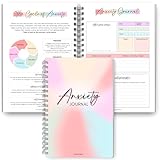
- CBT-BASED ANXIETY RELIEF — Designed around proven Cognitive Behavioural Therapy techniques. Guided prompts help you identify triggers, reframe anxious thoughts and build practical coping strategies, one day at a time.
- DAILY GUIDED PROMPTS — Each page features structured journaling questions, mood tracking and reflection prompts. Helps clear mental clutter and surface patterns in your anxiety without staring at a blank page.
- SLEEP & HYDRATION TRACKING — Track the lifestyle factors that quietly drive anxiety. Spot the connection between sleep, hydration and how you feel — and make small changes that compound over time.
- SLEEP & HYDRATION TRACKING — Track the lifestyle factors that quietly drive anxiety. Spot the connection between sleep, hydration and how you feel — and make small changes that compound over time.
- A5 SIZE, BUILT TO LAST — Compact A5 (15 x 21 cm) fits in a handbag, on a bedside table or in a desk drawer. Premium thick paper that doesn't bleed. A thoughtful gift for anyone managing anxiety.
Seven studies in that review reported a formal evaluation method and effectiveness results, and all seven were conducted in low- and middle-income settings. That is a description of the review’s included studies, not a global estimate of how well programs work. The review authors, led by Siqi Xue, called climate change’s impact on mental health and wellbeing “a pressing global challenge.”
UK guidance and the reviews identify gaps in interventions specifically targeting eco-anxiety, long-term follow-up, representation of at-risk populations, and evidence about mechanisms and cost-effectiveness. UK-specific research and system-level evidence are also limited. Educational approaches have mixed wellbeing findings, and the evidence base does not establish one best intervention for everyone.
For children and families, UK guidance names Coco’s Fire: Changing Climate Anxiety into Climate Action as an educational book resource. It is a learning resource, not a therapy or a proven clinical intervention.
Crashes, No Sound, or Screen Glitches?
Random freezes, missing sound and display glitches usually trace back to one bad driver. Find and replace yours safely.Free scan · under a minutePC Slower Than It Used to Be?
A free scan shows the junk files, broken settings and background clutter dragging Windows down - then fixes them in one click.Free scan · Windows 10 & 11Quick Recap
Product prices and availability are accurate as of the date/time indicated and are subject to change. Any price and availability information displayed on Amazon at the time of purchase will apply.

