
iTechGuides is reader-supported. When you buy through links on our site, we may earn an affiliate commission. As an Amazon Associate I earn from qualifying purchases. Learn more
Claude Shannon helped lay the mathematical foundations of digital circuits, communication theory, and modern cryptography. He also built maze-solving machines, juggling devices, and other contraptions for amusement. The connection is not that every gadget applied information theory; it is that Shannon moved comfortably between abstract problems and things he could make work.
Why Shannon is called the father of information theory
Shannon’s best-known contribution was a way to analyze communication quantitatively: how information can be represented, sent through a channel, and recovered despite noise. His 1948 paper, A Mathematical Theory of Communication, established a framework for measuring information and reasoning about coding and the limits of reliable transmission. MIT describes its significance in terms of information measured in bits, communication rates, and channel capacity.


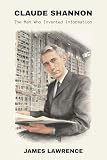

As Shannon put it in the paper’s opening sentence: “The fundamental problem of communication is that of reproducing at one point either exactly or approximately a message selected at another point.” The aim was not simply to say that everything is ones and zeroes. It was to give engineers tools for quantifying information and understanding what a communication system can reliably convey. MIT News’ account of Shannon’s life and work and its explainer on the Shannon limit provide background on the theory and its engineering consequences.
What the Shannon limit means for communication
The Shannon limit is the theoretical boundary on how much information can be transmitted reliably over a channel with a given capacity and noise level. It is not a speed rating for a particular modem or a promise that any system can achieve a specified rate. Rather, it describes a constraint engineers can use when designing communication systems.
#1 Best Overall
Coding adds structured redundancy to a message so a receiver can detect or correct errors introduced in transmission. Better coding can let a system operate closer to its channel’s theoretical limit, though the practical result depends on the channel and the design. MIT’s 2010 explainer gives a historical modem example in which error-correcting codes increased transmission rate by 25 percent; that is an example reported there, not a universal speed gain or a statement about current modem performance.
How Shannon connected logic to switching circuits
Shannon was born in Michigan on April 30, 1916. After earning degrees in mathematics and electrical engineering at the University of Michigan in 1936, he went to MIT and worked with Vannevar Bush’s differential analyzer. While studying relay circuits, he recognized that Boolean algebra—the two-valued logic used to express propositions—could describe how switches and relays combine.
His 1937 MIT master’s thesis, A Symbolic Analysis of Relay and Switching Circuits, showed how that logic could be applied to circuit design. This work helped establish theoretical foundations for digital circuits: it provided a systematic way to analyze switching behavior rather than treating each circuit as an isolated collection of components.
How his work in cryptography differed
Shannon joined Bell Laboratories in 1941, following a research fellowship at the Institute for Advanced Study. During World War II, he worked on secrecy systems. His 1949 paper, Communication Theory of Secrecy Systems, applied mathematical analysis to cryptography. MIT characterizes the paper as transforming cryptography from an art to a science; that is MIT’s assessment of its importance, not a quotation from Shannon.
Rank #3
These three areas involved different problems and methods:
| Area | Problem and method | Contribution |
|---|---|---|
| Switching circuits | Used Boolean algebra to analyze relay and switching behavior. | A theoretical foundation for digital circuit design. |
| Communication theory | Used mathematical information measures and coding theory to analyze transmission, noise, and capacity. | A framework for quantifying communication and the limits of reliable transmission. |
| Cryptography | Applied mathematical analysis to secrecy systems. | Helped put cryptography on a mathematical footing. |
What Shannon built for fun
Shannon’s curiosity also showed up in the workshop at his home. MIT News reported that he built roughly a dozen devices from about 1950 to the mid-1980s, using materials such as Erector and Meccano sets, gears, sprockets, relays, and miscellaneous hardware. Some were technologically groundbreaking; others were made simply for fun. They should not all be mistaken for commercial prototypes or direct applications of his information theory.
Theseus, the maze-navigating mouse
Theseus was an electromechanical mouse that navigated a maze. MIT describes it as an early machine-learning device: it could find its way through the maze and use what it learned to repeat the route.
Quick wins for a faster PC:
Repair Windows errors before they cause bigger problemsFix Now →Scan for outdated or missing drivers - takes under a minuteDriver Scan →Juggling machines and other contraptions
Shannon also built a mechanical W.C. Fields that juggled balls, as well as a juggling machine, rocket-powered Frisbees, motorized Pogo sticks, a mind-reading machine, and a Rubik’s Cube-solving device. John Durant, then director of the MIT Museum, said the objects were mostly invented for Shannon’s amusement and offered vivid evidence of his creative ability. The museum’s account is a useful reminder that play was part of the story, not proof that each device had a practical application.
Best Value
MIT News’ report on the Shannon devices in the MIT Museum collection describes their construction and range.
Independent reader supportYour contribution helps us test, update, and keep practical guides available for everyone.Shannon’s later life and the record of his work
Shannon became a visiting professor at MIT in 1956, was named Donnor Professor of Science in 1958, and became professor emeritus in 1978. He was affiliated with Bell Laboratories from 1941 to 1972. He died on February 24, 2001, aged 84. MIT reported that he had Alzheimer’s disease.
The Library of Congress holds the Claude Elwood Shannon Papers, covering 1932–1995. Its collection description lists correspondence, speeches, writings, notes, scientific papers, drawings, diagrams, and other materials, making it a path into both his published work and the records surrounding it. See the Library of Congress collection description. For a book-length account, MIT’s page on Erico Guizzo’s The Essential Message: Claude Shannon and the Making of Information Theory describes a narrative based on papers, letters, interviews, and other sources: MIT Comparative Media Studies/Writing.
Free tools Windows power users keep installed
One-click scans. No signup required.
Quick Recap
Product prices and availability are accurate as of the date/time indicated and are subject to change. Any price and availability information displayed on Amazon at the time of purchase will apply.

