
Free tools Windows power users keep installed
One-click scans. No signup required.
iTechGuides is reader-supported. When you buy through links on our site, we may earn an affiliate commission. As an Amazon Associate I earn from qualifying purchases. Learn more
CISA’s artificial intelligence work spans three distinct areas: capabilities the agency is interested in, AI tools it intends to use in support of its mission, and guidance and collaboration to help organizations secure AI systems. CISA’s list of ten capability areas is not a confirmed inventory of systems it has deployed. Its 2023–2024 roadmap describes five lines of effort, while newer JCDC resources address sharing information about AI-related cyber incidents and vulnerabilities.
What does “CISA AI use cases” mean?
The phrase covers related but different kinds of activity. CISA identifies technologies it is interested in, describes responsible AI adoption within its own mission, and works with government, industry, and international partners on AI security. Keeping those categories separate matters: a capability listed as an area of interest does not establish that CISA has procured it, put it into production, or measured its effectiveness.
- Technology interest: capabilities CISA identifies as relevant to its cybersecurity and critical-infrastructure mission.
- Agency mission use: the roadmap’s commitment to responsibly use AI-enabled tools to support CISA’s work.
- Securing AI: guidance and collaboration intended to improve the security of AI systems and responses to AI-related cyber incidents.
Which AI capabilities does CISA identify?
CISA’s Technologies of Interest page names ten areas. It frames them around deterring and responding to cyber threats, rapidly deploying new capabilities, and updating existing models with minimal risk.
The Tool Desk
Outbyte PC Repair FREEClear out junk files and repair common Windows errorsFree Scan →Outbyte Driver Updater FREEScan for outdated or missing drivers - takes under a minuteDriver Scan →| Capability area | What it concerns |
|---|---|
| Adversarial AI countermeasures | Addressing attacks that target or exploit AI systems. |
| AI for Zero Trust Architecture (ZTA) | Applying AI capabilities in support of Zero Trust security approaches. |
| AI-powered cyber defense | Using AI capabilities for cyber defense and threat response. |
| AI training and inference hardware security | Security risks involving hardware used to train or run AI models. |
| AI system assurance | Assessing whether AI systems meet relevant security and reliability expectations. |
| Autonomous AI systems | AI systems that can perform tasks with a degree of autonomy. |
| Emergency communication chatbots | Chatbots that support emergency communications. |
| Intelligent automation | Automating workflows with AI-related capabilities. |
| LLM prompt engineering | Designing and refining prompts for large language models. |
| ML drift detection | Detecting when a machine-learning model’s behavior changes over time. |
These entries describe interests and functional areas, not specific operational deployments. For example, the page supports discussing emergency chatbots as a capability area, but does not establish that a particular CISA chatbot is in use or provide performance results.
#1 Best Overall
![Arduino® UNO™ Q 4GB [ABX00173]- Hybrid Board, Qualcomm Dragonwing QRB2210 microprocessor (MPU) & STM32U585 Microcontroller(MCU), AI Vision, Voice, IoT, Robotics, Linux Debian OS, Wi-Fi 5, USB-C](https://m.media-amazon.com/images/I/51cl4xygwGL._SL160_.jpg)
- Dual-Brain Hybrid Power: Combines the Qualcomm Dragonwing QRB2210 MPU (Quad-core Arm Cortex-A53 @ 2.0 GHz CPU, Adreno GPU, AI acceleration) and the real-time, low-power STM32U585 MCU for advanced applications like object recognition, voice commands, and motion detection.
- AI & Linux Capabilities: Unlocks AI-powered vision and sound solutions; runs Linux Debian OS for coding in Python and supports the Arduino ecosystem with libraries and Sketches; quick start with Arduino App Lab.
- Advanced Features: Equipped with 4 GB LPDDR4 RAM, 32 GB eMMC built-in storage, ideal for single-board computer (SBC) mode, running multiple simultaneous high-level processes, more complex AI or ML models, extensive logs. Dual-band Wi-Fi 5 (2.4/5 GHz), Bluetooth 5.1, and high-speed headers for vision, audio, and display peripherals.
- Seamless Expansion & Connectivity: Features the classic UNO form factor for shields compatibility, an 8x13 LED matrix, and a Qwiic connector for easy expansion with Modulino nodes; power and connect via the USB-C connector.
- Intended Use & Development: The perfect platform for prototyping robotics or IoT projects, empowering innovators with a unified development experience to mix Arduino Sketches, Python scripts, and containerized AI models in a single interface.
How does CISA organize its AI work?
CISA’s 2023–2024 Roadmap for Artificial Intelligence organizes its work into five lines of effort:
- Use AI responsibly to support CISA’s mission. The roadmap states, “CISA will use AI-enabled software tools to strengthen cyber defense and support our critical infrastructure mission.”
- Assure AI systems. CISA describes supporting trustworthy, secure-by-design AI adoption.
- Protect critical infrastructure from malicious uses of AI. This includes addressing ways AI may be used to threaten infrastructure and cybersecurity.
- Collaborate and communicate. The roadmap calls for work with interagency, international, and public partners.
- Expand AI expertise in the workforce. Building staff expertise is part of the strategy, alongside technical capabilities.
The roadmap says responsible adoption should be consistent with the Constitution and applicable laws and policies, including those covering federal procurement, privacy, civil rights, and civil liberties. That is why the agency’s stated approach includes governance and workforce expertise as well as technical use cases.
Rank #2
- Dual-Brain Hybrid Power: Combines the Qualcomm Dragonwing QRB2210 MPU (Quad-core Arm Cortex-A53 @ 2.0 GHz CPU, Adreno GPU, AI acceleration) and the real-time, low-power STM32U585 MCU for advanced applications like object recognition, voice commands, and motion detection.
- AI & Linux Capabilities: Unlocks AI-powered vision and sound solutions; runs Linux Debian OS for coding in Python and supports the Arduino ecosystem with libraries and Sketches; quick start with Arduino App Lab.
- Advanced Features: Equipped with 2 GB LPDDR4 RAM, 16 GB eMMC built-in storage, ideal to develop in PC-connected mode, running the OS, Python scripts, and basic network services (SSH) without a demanding GUI or heavy multitasking; great for lightweight AI and memory-optimized TinyML applications, needing local storage for basic OS and core libraries. Dual-band Wi-Fi 5 (2.4/5 GHz), Bluetooth 5.1, and high-speed headers for vision, audio, and display peripherals.
- Seamless Expansion & Connectivity: Features the classic UNO form factor for shields compatibility, an 8x13 LED matrix, and a Qwiic connector for easy expansion with Modulino nodes; power and connect via the USB-C connector.
- Intended Use & Development: The perfect platform for prototyping robotics or IoT projects, empowering innovators with a unified development experience to mix Arduino Sketches, Python scripts, and containerized AI models in a single interface.
How is CISA exploring adoption?
CISA’s open-innovation work seeks industry insight to explore use cases, understand successful transition and adoption, and inform safe procurement, use, and management. This describes an approach to learning and adoption; it does not confirm that a particular industry proposal has become a deployed CISA system.
What resources address secure AI and incident collaboration?
Secure development guidance
On November 26, 2023, CISA and the UK National Cyber Security Centre announced joint Guidelines for Secure AI System Development. The guidance is aimed primarily at AI-system providers, including providers that host models themselves or use external APIs. It complements a secure-by-design approach.
Rank #3
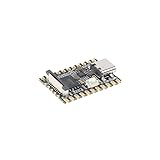
- Single core ARM Cortex-A7 32-bit core, integrated with NEON and FPU
- Built in Micro's self-developed 4th generation NPU, with high computational accuracy and support for mixed quantization of int4, int8, and int16. Among them, int8 has a computing power of 0.5 TOPS and int4 has a computing power of up to 1.0 TOPS
- Built in self-developed 3rd generation ISP3.2, supports 4 million pixels, and supports various image enhancement and correction algorithms such as HDR, WDR, and multi-level denoisin
- It has powerful encoding performance, supports intelligent encoding, adapts to save bit rates according to the scene, and saves more than 50% of the bit rate compared to conventional CBR mode, making the captured images high-definition, smaller in size, and doubling the storage space
- The design with built-in RISC-V MCU supports low-power fast startup, 250ms fast capture, and simultaneous loading of AI model library, enabling facial recognition to be completed within 1 second
Voluntary information sharing through JCDC
On January 14, 2025, CISA announced the JCDC AI Cybersecurity Collaboration Playbook and a fact sheet. The playbook describes voluntary information-sharing processes for government, industry, and international partners dealing with incidents and vulnerabilities associated with AI systems. It also describes information-sharing protections and CISA’s actions when it receives shared information.
Preparedness exercise
CISA’s JCDC Plans & Resources page lists a JCDC Artificial Intelligence Cyber Tabletop Exercise. Its listing establishes that the exercise is a public resource; it does not provide a basis for claims about results or participation figures.
Rank #4

- 【POWERFUL ESP32‑S3 CONTROLLER】Built‑in Xtensa 32‑bit LX7 dual‑core processor, 512KB SRAM, 8MB PSRAM, 16MB Flash for stable AI voice computing and multitask processing.
- 【Preloaded Dual AI Platforms】Comespre-installed with complete Deepseek and OpenAI voice dialogue projects.Experience intelligent voice interaction instantly. (Note: OpenAI functionality requires your own API key.)
- 【STABLE WIRELESS & CLEAR AUDIO】Integrated 2.4GHz Wi‑Fi + Bluetooth 5 (LE); dedicated audio decoding module for natural, responsive voice interaction.
- 【USER‑FRIENDLY VISUAL & PLUG‑AND‑PLAY】2” TFT‑SPI color screen shows real‑time chat; modular design, no extra wiring, ready to use after setup.
- 【FULL LEARNING SUPPORT】45 programmable GPIOs, rich interfaces, online web tutorials, free technical support for beginners & developers.
Do CISA’s Cybersecurity Performance Goals address AI?
Not explicitly in their current version, according to CISA’s Cybersecurity Performance Goals (CPG) FAQ. In response to a question about generative-AI-based cyber threats, the FAQ says, “The current version of the CPGs does not yet explicitly address AI.” It also says AI security is a priority under assessment, including how AI should be addressed in the goals and how the goals might inform secure AI development.
This is a qualification about the current CPG version, not a statement that CISA has no AI guidance or activity. The roadmap, secure-development guidelines, and JCDC collaboration resources address AI through separate efforts.
Quick Recap
What is established—and what is not?
- Established: CISA names ten AI capability areas of interest and describes five lines of effort in its 2023–2024 roadmap.
- Established: CISA has published secure-development guidance with the UK NCSC and announced voluntary JCDC information-sharing processes for AI-related incidents and vulnerabilities.
- Not established by these materials: a complete current inventory of AI systems deployed by CISA, the production status of each listed capability, or measured outcomes from specific tools and exercises.
- Not established: that the current CPGs explicitly cover AI; CISA’s FAQ says they do not yet do so.
Product prices and availability are accurate as of the date/time indicated and are subject to change. Any price and availability information displayed on Amazon at the time of purchase will apply.

