
Free tools Windows power users keep installed
One-click scans. No signup required.
iTechGuides is reader-supported. When you buy through links on our site, we may earn an affiliate commission. As an Amazon Associate I earn from qualifying purchases. Learn more
Plant certified paddy seed when you need independently documented variety identity and lot quality, or cannot verify your own seed. Farm-saved seed can be a sound choice when you have maintained its identity, selected healthy plants, cleaned and stored the lot well, and confirmed that it germinates and establishes satisfactorily. Neither source guarantees a good crop: judge the seed lot, the variety’s fit for your field, and the rules where you farm.
What certification tells you—and what it does not
Seed certification is a formal process for verifying varietal identity and compliance with the requirements of a particular scheme. What is checked, and the thresholds that apply, vary by jurisdiction and seed class. A label is useful evidence about that lot, but it is not a promise of a particular yield or proof that the variety suits your location, planting date, water regime, or market.
Seed quality is broader than certification. It includes varietal and physical purity, germination, vigor, moisture, and seed health. The USDA Agricultural Marketing Service seed-testing program describes tests covering such properties as physical purity, noxious weeds, germination, vigor, moisture, and variety. Testing requirements and the information on a label depend on the applicable rules.
IRRI describes good rice seed as pure, full, uniform, viable, labeled, and free of weeds, seed-borne disease, pathogens, insects, and other matter. A certified lot may offer documented checks, but certification is not a guarantee against every defect or field problem.
#1 Best Overall

- Green Blooms - Bells of Ireland produces tubular blooms that almost resemble Foxglove flowers. They originate from most of the eastern Mediterranean.
- Annual Flowers - Bells of Ireland flowers are grown as annuals, which means that they will grow strong from seed, flower through the Summer months, and later wilt with the first frost.
- Uses - These flowers are great for flower beds & borders. They also make a wonderful cut flower in floral arrangements and bouquets as well.
- Butterfly Garden - Like most flowers, Moluccella laevis can attract a number of beneficial pollinators to the garden, such as bumblebees, butterflies, lady bugs and more.
- Quantity - Seed Needs offers generous quantities. You can share with friends and family, or you can save the extra seeds until the following season, if properly stored.
How the two options compare
| Decision | Certified seed | Farm-saved seed |
|---|---|---|
| Variety identity | Certification aims to preserve identity under the relevant scheme. Check the tag, variety name, seed class, and lot information. | Identity depends on careful selection and preventing mixing with other varieties. Off-types or admixture can make the lot less true to type. |
| Germination and vigor | Check current lot documentation and the scheme’s requirements; the label alone does not tell you how the seed will establish in your field. | Test a representative sample before planting, then check emergence in soil. Germination in a test can be higher than field establishment. |
| Purity and weeds | Applicable standards may set purity and weed tolerances. Verify what the local standard and lot label actually cover. | Cleaning, inspection, and careful threshing and storage matter. Contamination risk depends on how the seed was handled. |
| Seed health | Certification or associated testing may include checks, but coverage varies and cannot rule out every disease or pest risk. | Disease can carry over in seed. Start with healthy crops and seed; seek local advice if disease is suspected. |
| Local fit | A certified label does not establish that the variety is adapted to your conditions or preferred by your market. | A variety maintained locally may fit farmer needs, but its identity and performance still need to be established. |
| Cost and access | Purchase cost and availability vary. Compare the actual lot and its documentation with local alternatives. | Saving seed avoids buying a new lot, but selection, cleaning, testing, storage, and the risk of poor establishment also take resources. |
| Rules | Follow local certification, labeling, and seed-sale rules. | Saving, exchanging, or selling seed may be subject to local laws and variety protections. Check the rules that apply to your situation. |
When certified seed is the better choice
- You cannot confidently establish the saved lot’s variety identity, germination, purity, or health.
- You need a documented lot for a production scheme, buyer, or market requirement; confirm the specific requirement rather than assuming certification is sufficient.
- Your saved seed was mixed, poorly stored, harvested from an uneven or diseased crop, or has not been tested.
- You want to introduce a different variety. Confirm that it suits your local planting window, water conditions, and intended use before buying.
Check the tag and lot information, and buy from a source that can identify the variety and the applicable certification. If you suspect a seed-health problem, certification status alone is not a substitute for local guidance.
When farm-saved seed can be a sound choice
Saving seed is worth considering when you want to maintain an adapted variety and can manage the lot carefully from the field through storage. IRRI lists certified seed, farmer-produced good seed, and a farmer’s own selected seed among possible sources of rice seed.
Rank #2
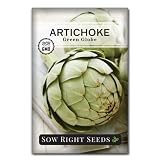
- Beautiful - Large premium packets of Green Globe Artichoke (Cynara scolymus) seeds. A hardy artichoke that remains productive for 5 years. Edible flower buds are green with a hint of purple and are 3-5" in diameter with thick, tasty hearts. If buds are uncut, will open into a beautiful thistle-like flower. Minimum of 2 g (about 50 seeds) per packet.
- Productive - Artichoke germinates in 10-20 days when soil temps are 60-70°F. Plant 1/4” deep and space 48” apart in an area with full sun. This variety will grow 3-5’ tall with a spread of 2-3’. Hearts will mature in 65-75 days, plant in USDA zones 3-10.
- Good Eats - Artichokes are a culinary delight! Add the deliciously textured, edible flowers to your favorite dips, pasta dishes, pizzas, salads and more!
- Easy to Grow - Instructions included on each packet. Plus, we are available to answer all your questions. If these seeds don’t germinate, we will happily make it right for you.
- Safe and Sustainable - Our operation is fully solar powered, and Sow Right Seeds has taken the Safe Seed Pledge to sell only fresh Non-GMO heirloom seeds for you and your family.
Select and manage the crop
- Choose a fertile field and start with clean seed.
- Manage weeds, pests, and diseases during crop growth.
- Remove off-types and unhealthy plants so they do not contribute seed to the lot.
- Harvest at maturity, then thresh, clean, dry, grade, and label the seed separately.
Dry and store the lot carefully
IRRI recommends drying rice seed to 12–14% moisture before storage and keeping it in clean, sealed containers in a cool, dry place. Its fact sheet says properly stored seed can remain good for up to one year. These are practical recommendations, not a guarantee: conditions and storage systems affect how well seed keeps.
Do not assume a treatment recipe is suitable everywhere. Seed-treatment products and procedures vary by country; follow current local registration, label directions, and protective-safety instructions.
Test germination and establishment before planting
Appearance alone cannot show whether a lot will germinate well. IRRI recommends testing a random sample and uses at least 80% germination as its benchmark for “good” rice seed. That is practical field guidance, not a universal legal threshold or a guarantee of field performance.
- Take a representative sample. Draw seed from different parts of the lot rather than choosing only the best-looking grains.
- Run a germination test. Count the seeds tested and how many produce normal seedlings, so you can calculate the percentage that germinated.
- Check emergence in soil. Sow a small sample under conditions similar to your field. IRRI notes that establishment can be lower than germination, so a paper or laboratory result may not predict the final stand.
- Use the result to make a planting decision. If germination or emergence is poor or uneven, seek advice from a local seed service or extension specialist before relying on the lot.
Good seed can reduce the need for replanting and support a more uniform stand, but the final outcome also depends on planting and field conditions. IRRI states that a combination of higher emergence, vigorous early growth, and increased crop resistance can result in a 5–20% yield increase from good seed. This is a general claim about good seed, not evidence that certified seed always outyields well-managed farm-saved seed.
Rank #4
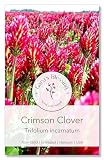
- Trifolium incarnatum - Non-GMO - Open-Pollinated - Untreated - Heirloom - Always Fresh!
- Trifolium incarnatum, commonly known as Crimson Clover, is recognized for its vibrant, deep red blooms and trifoliate leaves. Originating from Europe, this annual legume has become a favored cover crop and ornamental plant.
- The striking crimson flowers of this clover variety add a vivid splash of color to gardens and landscapes. Beyond its visual appeal, Crimson Clover is valued for its role in soil improvement and biodiversity enhancement.
- Renowned for its nitrogen-fixing abilities, Crimson Clover forms a symbiotic relationship with soil bacteria, enriching the soil with nitrogen. This quality makes it a popular choice as a cover crop, contributing to sustainable agricultural practices.
- Crimson Clover adapts well to various soil types and climates, thriving in both temperate and Mediterranean environments. Its versatility extends to its application in landscaping, making it an attractive and functional choice for gardens.
Why local standards matter
There is no single global paddy-seed threshold that applies to every certification scheme. As one jurisdiction-specific example, Thai agricultural guidance from around 2009 specifies at least 98% purity and 80% germination for qualified rice seed, and permits farmer-produced seed under stated source or field-selection and off-type-removal conditions. Those figures and conditions should not be applied outside the relevant Thai context.
Quick wins for a faster PC:
Scan for outdated or missing drivers - takes under a minuteDriver Scan →Clear out junk files and repair common Windows errorsFree Scan →In the United States, Federal Seed Act labeling provisions address interstate seed shipments; they are not a global paddy-seed standard. Rules for seed saving, exchange, sale, labeling, and protected varieties differ by country and circumstance. Check with your agriculture authority or local seed-certification agency if compliance matters to your decision.
Best Value
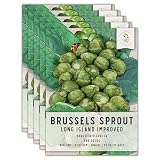
- Heirloom Variety: Long Island Brussels Sprouts, dating back to the 1890s, represent an heirloom variety prized for its rich, consistent yield of closely set, firm sprouts on compact plants.
- Growth Conditions: Thriving in cooler conditions, they prefer temperatures around 60-65°F, making them an ideal fall crop. Full sun and well-drained, fertile soil are essential for optimal growth.
- Harvesting: Sprouts are ready when they reach 1-2 inches in diameter, harvested from the bottom up. After light frosts, their flavor sweetens, enhancing taste.
- Culinary Versatility: Beyond traditional steaming, these sprouts shine when roasted, sautéed, or grilled, absorbing flavors well and offering a nutty, slightly sweet taste profile.
- Quality - All seeds packaged by Seed Needs are intended for the current and the following growing seasons. All seeds are stored in a temperature controlled facility that is free of significant amounts of moisture.
Results from one country also should not be treated as universal. A 2019 Tanzania study reported that more than 90% of farmer seed samples met national standards for key quality parameters, while only about one fifth of samples from formal and informal systems met minimum genetic-purity standards in field grow-out tests. The finding illustrates that routine quality measures and varietal purity can diverge in that study setting; it does not establish the quality of seed in other regions.
Quick Recap
Make the decision by lot, not label alone
- Choose certified seed when the lot’s identity or quality is uncertain, documentation is important, or you need a dependable replacement source.
- Consider farm-saved seed when it is a variety you want to maintain, came from a healthy and uniform crop, was kept separate and stored properly, and passes germination and establishment checks.
- For either option, verify local rules and whether the variety fits your field and intended market. A label and a farmer’s selection history answer different questions; neither replaces evaluating the actual lot.
Product prices and availability are accurate as of the date/time indicated and are subject to change. Any price and availability information displayed on Amazon at the time of purchase will apply.

