
iTechGuides is reader-supported. When you buy through links on our site, we may earn an affiliate commission. As an Amazon Associate I earn from qualifying purchases. Learn more
For temple crowd safety, CCTV analytics should augment trained people, not replace them. Video systems can show several zones at once and flag configured conditions such as rising density, restricted-area entry or a blocked emergency corridor. Operators still have to verify context, communicate with police and event staff, move barriers, manage queues and summon medical or fire assistance. Manual observers and field teams remain the response layer. The available official material describes combined systems, but does not provide a controlled comparison proving that analytics produce better safety outcomes than manual monitoring alone.
What the two approaches actually do
Manual monitoring
Manual monitoring assigns trained people to gates, queues, corridors, stairways, sanctum approaches, parking areas and other risk points. An observer sees behavior in context: a person who has fallen, a family separated in a queue, a gate opened in the wrong direction, a rumor spreading, or a group moving against the planned route. Radio operators, police, volunteers and supervisors can then coordinate a physical response.
Its limits are human and geographical. Attention degrades during long shifts, one person cannot watch every zone, and a dense crowd can hide an incident from a ground-level observer. A manual system also depends on disciplined staffing, radio coverage, clear authority and relief arrangements.
Quick wins for a faster PC:
Scan for outdated or missing drivers - takes under a minuteDriver Scan →Clear out junk files and repair common Windows errorsFree Scan →Fix the driver behind crashes, sound loss and screen glitchesFind Drivers →CCTV analytics
CCTV analytics applies software to camera feeds or recorded frames. Depending on the configured system, it may count people, estimate density, draw a heat map, detect entry into a restricted zone or identify an obstruction in an emergency corridor. An alert is an indication for a human to investigate; it is not a diagnosis and does not itself clear a route or help an injured devotee.
#1 Best Overall

- AI Motion Detection 2.0 – Driving AI to the next level, human&vehicle detection and flexible detection area are more accurate than before. For quicker locating in crucial moments, human&vehicle smart searching in recordings offers you great help.
- Tried-and-True Safe Guard – This one-stop security solution can work with TVI, AHD, CVI, CVBS & IP cameras, the kit includes 1080P cams. The 8CH 3K lite DVR can hook up with 1080P@30fps or 3K/5MP@20fps cams. Therefore, you can also DIY it with other cameras in your home.
- Reliable 24/7 Continuous Recording – With a pre-installed 1TB HDD(Support up to 10TB HDD), providing 24/7 surveillance recording for you. Upgraded H.265+ saves more storage space and uses less bandwidth, recording videos longer and smoother viewing.
- Smart Dual-Light Effectively Guard Your Home – This newly upgraded security system offers you a crisp full color night vision, IR mode and color night vision switch flexibly. Once detect intruders, immediate pushes pop up on your phone, securing your peace of mind day&night.
- Color Night Vision & IP67 Weatherproof – Built-in IR lights and white lights, these cameras can see up to 100ft in B&W night vision, full-color night vision up to 66ft. Rated IP67, these wired cameras can brave all weather, and stand from cold to hot.
Analytics are only as useful as the camera view, lighting, network, power, configuration and operating procedures behind them. A camera mounted high above a packed queue may see overall movement while being unable to distinguish a particular object or person. The 2026 Puri Ratha Yatra procurement material explicitly records that occlusion in dense crowds can make object-specific detection unreliable or infeasible.
Comparison by operational function
| Function | CCTV analytics | Manual monitoring | Operational implication |
|---|---|---|---|
| Area coverage | One control room can present multiple camera views and algorithmic alerts. | Each observer normally focuses on an assigned zone or route. | Use cameras to extend visibility, while assigning people to locations where immediate interaction is needed. |
| Counting and density | Can produce configured counts, density estimates and heat maps. | Observers estimate queues and report changes by radio or in person. | Use automated trends to prompt checks; verify counts before changing capacity or opening a route. |
| Context and interpretation | Flags a programmed condition but may not understand why it occurred. | Can interpret behavior, distress, conflicting instructions and local conditions. | A trained operator should validate every consequential alert. |
| Restricted-area entry | Can generate an intrusion alert when a defined virtual boundary is crossed. | Guards or volunteers can challenge, guide or physically stop an entrant. | Pair the alert with a nearby response team and a radio protocol. |
| Emergency-corridor obstruction | Can flag a configured obstruction in a camera’s view. | Field staff can move people, barriers or objects immediately. | The field team, not the camera, restores access. |
| Response | Provides information and escalation. | Police, staff and emergency personnel take action. | Do not describe an alert as a completed intervention. |
| Reliability in a dense crowd | Affected by camera angle, occlusion, lighting, connectivity, power and rules configured in software. | Affected by fatigue, blocked sightlines, staffing gaps and communication failures. | Test both layers under realistic peak conditions rather than relying on a demonstration feed. |
| Privacy and accountability | Creates recorded or live personal-data handling obligations. | Still involves observation and incident records, but usually fewer persistent images. | Define purpose, access, retention, disclosure, deletion and audit controls before deployment. |
| Cost and staffing | Requires cameras, networking, storage, software, operators, maintenance and response staff. | Requires trained observers, supervisors, radios, relief and field personnel. | No evidence here shows that analytics eliminate staffing or guarantee savings. |
The available sources do not quantify coverage, missed-event rates, response times, incident reduction or cost for either approach. Any claim that one method is universally more accurate or safer would go beyond the evidence.
Why temple crowds are a difficult technical environment
Occlusion and changing sightlines
People, umbrellas, flags, barricades, vehicles and temporary structures overlap in a pilgrimage crowd. A person or object visible in one frame can disappear behind several others in the next. Elevated views are useful for overall flow, but they can be poor for identifying a specific object. The Puri procurement document treats this as a feasibility concern, not as proof that every analytic function fails.
Mixed movement and temporary layouts
Temple events commonly change routes for entry, darshan, processions, service vehicles and emergency access. A virtual boundary or density threshold configured for one layout can generate false alerts after a barricade moves. The control room needs a dated map and a process for approving configuration changes.
Consequences of a wrong instruction
Stopping a queue at the wrong time can create pressure behind it; opening an unplanned gate can produce conflicting flows. An alert should therefore trigger verification against the event plan and radio confirmation, not an automatic command to release or divert people.
Continuity requirements
Power loss, network interruption, a failed camera, a crowded control room or an overloaded radio channel can remove the benefit of analytics. The safety plan must specify what staff do when the screen, alert service or communications link is unavailable. Manual observation and physical controls are the fallback, not optional extras.
Rank #2

- 【AI Motion Detection 2.0】Driving AI to the next level, human&vehicle detection and flexible detection area are more accurate than before. For quicker locating in crucial moments, human&vehicle smart searching in recordings offers you great help.
- 【Tried-and-True Safe Guard】This one-stop security solution can work with TVI, AHD, CVI, CVBS & IP cameras, the kit includes 1080P cams. The 8CH 3K lite DVR can hook up with 1080P@30fps or 3K/5MP@20fps cams. Therefore, you can also DIY it with other cameras in your home.
- 【Reliable 24/7 Continuous Recording】With a pre-installed 1TB HDD(Support up to 10TB HDD), providing 24/7 surveillance recording for you. Upgraded H.265+ saves more storage space and uses less bandwidth, recording videos longer and smoother viewing.
- 【Smart Dual-Light Effectively Guard Your Home】This newly upgraded security system offers you a crisp full color night vision, IR mode and color night vision switch flexibly. Once detect intruders, immediate pushes pop up on your phone, securing your peace of mind day&night.
- 【Color Night Vision & IP67 Weatherproof】Built-in IR lights and white lights, these cameras can see up to 100ft in B&W night vision, full-color night vision up to 66ft. Rated IP67, these wired cameras can brave all weather, and stand from cold to hot.
What official temple and government examples show
NDMA guidance summarized by the Government of India
A 9 October 2016 Press Information Bureau summary of National Disaster Management Authority guidance says: “CCTV cameras to monitor movement and police presence to reduce the risk of snatching and other petty crimes should also be on the organisers’ agenda.” The same summary places cameras alongside traffic regulation, route maps, marked emergency exits, queue barricading, medical readiness and fire-safety precautions. That combination frames CCTV as one component of a crowd plan rather than a replacement for route design or emergency response.
Hassanamba Jatra, 2025
The Hassan District Administration’s crowd-management page, last updated 5 September 2026, describes preparations for the 2025 Hassanamba Jatra. It reports that more than 25 lakh devotees were expected. That is a forecast on the event page, not a verified attendance count. The page describes AI-supported cameras feeding a monitoring system visible in a control room, while separately listing police and State Disaster Response Force coordination, tasked officers, walkie-talkies, barricades and emergency services.
This is an administration’s description of an operating arrangement, not an independent evaluation. It demonstrates why a temple deployment normally combines technology with people and physical controls; it does not establish that the cameras prevented incidents or outperformed manual teams.
Puri Ratha Yatra procurement requirements for 2026
An Odisha Public Health Engineering Organisation pre-bid document for the 2026 Ratha Yatra lists requested capabilities including real-time crowd counting, density heat maps, restricted-zone intrusion alerts and emergency-corridor obstruction alerts. It also records the concern that high density and occlusion in elevated camera views can hide specific objects, making some object-focused analytics potentially infeasible or unreliable.
These are procurement requirements and a documented technical concern. They should be used to write a test plan, not presented as evidence that a delivered system achieved those functions.
Recommended Free Tools
Tirumala Brahmotsavam, 2017
A 26 September 2017 Tirumala Tirupati Devasthanams account described CCTV monitoring through a command centre with trained police personnel and a substantial security deployment. Because the account is historical, it should not be used to infer current camera numbers, staffing levels or outcomes. It does, however, reinforce the operational pattern of cameras working through a human command structure.
Rank #3
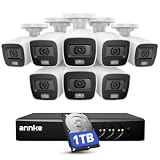
- 【Tried-and-True Safe Guard】This one-stop security solution works with TVI, AHD, CVI, CVBS & IP cameras. The 8CH 3K lite DVR can hook up with 1080P@30fps or 3K/5MP@20fps cams. Plus, the advanced sensor & smart IR capture clear images up to 100ft away
- 【AI Motion Detection 2.0】Driving AI to the next level, human&vehicle detection, flexible detection area are more accurate than before. For quicker locating in crucial moments, human&vehicle smart searching in recordings offers you great help
- 【Reliable 24/7 Continuous Recording】With a pre-installed 1TB HDD(Support up to 10TB HDD), providing 24/7 surveillance recording for you. Upgraded H.265+ saves more storage space and uses less bandwidth, recording videos longer and smoother viewing.
- 【Smart Dual-Light Effectively Guard Your Home】This newly upgraded security system offers you a crisp full color night vision, IR mode and color night vision switch flexibly. Once detect intruders, immediate pushes pop up on your phone, securing your peace of mind day&night.
- 【Color Night Vision & IP67 Weatherproof】Built-in IR lights and white lights, these cameras can see up to 100ft in B&W night vision, full-color night vision up to 66ft. Rated IP67, these wired cameras can brave all weather, and stand from cold to hot.
A practical hybrid operating model
1. Start with a crowd-flow and hazard map
Mark entry and exit routes, queue lanes, pinch points, stairs, ramps, sanctum approaches, toilets, food and water points, vehicle crossings, medical posts, fire equipment and emergency corridors. Identify where a person can fall, where opposing flows can meet and where a delay could build pressure. Route maps and marked emergency exits are specifically part of the NDMA guidance summarized by the Press Information Bureau.
2. Assign human ownership before selecting analytics
For every zone, name the field lead, radio channel, supervisor and escalation authority. A camera alert without an assigned responder is an unowned notification. Set a maximum acknowledgement time and define who can pause a queue, open a gate, divert a route or request police, medical or fire support.
3. Choose views for decisions, not just image quality
Place overview cameras where they can show queue geometry and movement, and closer views where staff must verify an intrusion, fall or obstruction. Avoid placing every camera at the same height or angle. Document blind spots caused by pillars, roofs, banners, trees and temporary structures. Validate views after barricades and event decorations are installed.
4. Specify analytics as testable conditions
Write each requirement in operational language: “alert when density in Zone A exceeds the approved threshold for two consecutive intervals,” or “alert when the marked emergency corridor is obstructed.” Define the zone, threshold, time window, alert recipient, verification step and action. Do not specify a vague requirement such as “detect danger.”
5. Build a staffed control room
Assign operators to watch live views, acknowledge alerts, log decisions and maintain radio contact. A supervisor should be able to change priorities during a procession or medical incident. Provide relief for long shifts and a process for handing over unresolved alerts. Screen layouts should show the relevant map, camera name, timestamp and current route status rather than an undifferentiated wall of feeds.
6. Connect alerts to field response
Use a short message format: zone, condition, time, confidence or verification status, and requested action. The field team confirms what it sees and reports whether the route is clear, people need assistance or the alert was false. Keep an emergency corridor physically protected so that an operator can request clearance without waiting for a software action.
7. Keep manual patrols and fixed posts
Place people at exits, gates, stairs, queue turns and other locations where communication or physical intervention is essential. Patrols should check camera blind spots, crowd behavior and conditions that software is not designed to classify. Analytics may redirect attention, but it should not be the only means of discovering an incident.
Windows Errors? Fix Them Before They Spread
Repair common Windows errors and clear accumulated junk for a smoother, more stable PC - no reinstall needed.Free scan · no reinstallOutdated Drivers Are Slowing You Down
One free scan finds every outdated or missing driver and matches the right update for your exact hardware.Free scan · exact hardware matchRank #4

- 【Local & Remote Control】 The home security camera system support local view & control, no need WiFi, true play & plug. For remote control, support dual-band WiFi 2.4GHz/5GHz connectivity. WiFi pro technology offers 100ft installation distance, suitable for indoor/outdoor use.
- 【Corded Powered, 24/7 Recording】 Hiseeu security camera system, 24/7 wired power of cameras and NVR support 24/7 recording, no dropouts or battery hassles. 3 recording modes (24/7 recording, motion-triggered recording, or customized recording ), total flexibility.
- 【1TB Storage, No Monthly Fee】 Security camera system pre-installed in 1TB hard drive, massive local storage (No subscription fee!) offering over 45 days of continuous 24-hour recording. H.265+ bandwidth optimization Delivers 50% bandwidth reduction compared to H.264 while maintaining 4K/8MP resolution, enabling stable transmission even in low-bandwidth environments.
- 【Expand to 10CH & IP66 Waterproof 】 The NVR security camera system is coming with 4pcs 5MP cameras+1pc 4K NVR with 10" Monitor, it supported to expand to 10CH, scalability to secure large homes or businesses. Operates flawlessly in heavy snow, high winds, and sub-zero temperatures
- 【Motion Sensor/AI Human Detection】 Motion detection of the wireless wifi security camera system give you 24/7 uninterrupted protection. Smartly distinguishes people from false alarms (like pets or shadows), sending alerts only for real threats by AI human detection
8. Rehearse degraded operation
Run drills for a camera failure, power interruption, network loss, radio congestion, false density alert, blocked corridor, missing child and medical emergency. Record who notices the problem, who authorizes the response and how the team maintains coverage while the system is restored. A written fallback plan should be available at the control room and field posts.
9. Review incidents and tune thresholds
After each event, compare alert logs, operator acknowledgements, radio traffic and field reports. Identify alerts that were late, ambiguous or excessive. Change one configuration at a time and document the reason. Do not lower thresholds simply to produce more alerts; an overloaded operator can miss the alert that matters.
10. Measure before making performance claims
For a pilot, define the observation period and comparable zones. Measure alert precision, missed events found by observers, acknowledgement time, field-arrival time, queue-clearance time, camera uptime, network and power interruptions, and the number of staff hours required. Report weather, lighting, peak density and layout because those conditions affect interpretation. These local measurements are necessary before claiming that analytics improve safety or reduce staffing.
Independent reader supportYour contribution helps us test, update, and keep practical guides available for everyone.Privacy, security and accountability
Temple surveillance can affect large numbers of visitors, including children and people who have not been suspected of wrongdoing. A 8 May 2018 CCTV framework announcement from Delhi’s Lieutenant Governor’s Secretariat identifies accountability, protection and purpose-limited disclosure of footage as concerns. Its outline also addresses notice where applicable, storage, monitoring, access, sharing, disposal, review and audit.
Do these 3 things before closing this tab:
1Scan for outdated or missing drivers - takes under a minute2Clear out junk files and repair common Windows errors3Fix the driver behind crashes, sound loss and screen glitchesThose points are a governance checklist, not a statement of current law for every temple or jurisdiction. Obtain local legal and policy advice before deployment. At a minimum, document:
- the safety and security purposes for each camera and analytic function;
- who may view live feeds, export footage or change analytic rules;
- how access is authenticated and logged;
- how long recordings and alert metadata are retained, and when they are deleted;
- when footage may be shared with police, emergency services, courts or other authorities;
- how visitors receive any notice required by local rules;
- how a person can report misuse or request review where a legal process exists; and
- how independent or internal audits verify that access and deletion rules are followed.
Limit analytics to the stated purpose. A system bought to manage queues should not quietly become a general-purpose identity or behavior database without a separate, lawful and documented basis.
Best Value

- 4K Ultra HD - Hiseeu 4K (8MP) TVI analogy wired security camera system provide almost 4 times the clarity of 1080p,capturing clear and detailed footage to keep customer home safe and secure.
- 2 Night Vision Models – 1.Infrared light night vision,Black-and-White,2.Alarm Spotlight Color Mode ( Light is on during the night time,only support up to 4 channel). For energy conservation, we can only setting alarm light,and the light would be only triggered when human is detected,and the push alerts will be sent to your phone app (no monthly fee).
- AI Person/Vehicle Detection – Smart 4K Camera system accurately distinguishes between people and cars, effectively reducing false alarms.With the Smart motion Detection,you could DIY your Surveillance area.Our system is very privacy oriented,you can set privacy mask for your private places.
- Different Record Mode and 1 Way Audio – This camera system come in 3TB hard drive,it can help customers record 15 days for 8 cameras.With the 1 way audio,customer could hear sounds around the area that the camera is monitoring.Multiple recording modes to suit customer needs:Record footage continuously;Record during scheduled times;Only record when detect motion;Recycle record.
- Flexible to Use– IP67 Waterproof Standard of our wired security cameras can withstand changeable environment,can stand from cold to hot, from -40°C/-40°F to 60°C/140°F.Come with 4Pcs 96Ft BNC Cables+4Pcs 58 Ft BNC Cables,customer can install them anywhere customer want.Built in 3TB hard drive for local TV monitor surveillance, the camera system can work without Internet.
Staffing and cost: what can and cannot be concluded
The available sources provide no credible price comparison between analytics and manual monitoring, and they do not show that analytics eliminate personnel. A large installation includes cameras, mounts, network links, power protection, storage, software licensing or development, control-room workstations, cybersecurity, maintenance, calibration and trained operators. Manual operations include observers, supervisors, police, volunteers, radios, relief shifts, barriers and emergency teams.
Prepare a site-specific budget with recurring as well as one-time costs. Include event-day technicians, replacement equipment, connectivity, recording retention, software support, training and drills. Compare that total with the staffing and physical-control plan required for the same risk level. A lower invoice for cameras is not a lower safety cost if the site still needs the same people and response infrastructure.
The Tool Desk
Outbyte PC Repair FREERepair Windows errors before they cause bigger problemsFix Now →Outbyte Driver Updater FREEScan for outdated or missing drivers - takes under a minuteDriver Scan →Common failure modes and corrective actions
| Symptom | Likely cause | Correction |
|---|---|---|
| Many alerts when a procession passes | Thresholds or virtual zones do not reflect the temporary route. | Pause non-critical rules during the approved movement, update the map and keep human posts active. |
| Object-specific detection stops working in a packed queue | People and objects occlude one another in the elevated view. | Use an overview alert only for the condition it can support; add a closer verification view or a field check. |
| Operators ignore alerts | Alert volume, unclear ownership or poor prioritization. | Rank alerts, assign one acknowledgement owner, tune thresholds and review logs after each event. |
| A camera view is clear during testing but blocked on event day | Banners, lighting, barricades or vehicles changed the scene. | Perform a site walk after installation and again before opening; record blind spots and redeploy staff. |
| Field teams receive late or conflicting instructions | No escalation tree or overloaded radio channel. | Use zone-based call signs, a primary and backup channel, concise messages and one incident commander. |
| Coverage disappears during a power or network failure | No continuity design or manual fallback. | Provide tested backup power and links where appropriate, and rehearse manual posts and radio procedures. |
| Footage is copied widely after an incident | Uncontrolled export and sharing practices. | Restrict exports, log access, use an approved disclosure process and apply the retention and deletion schedule. |
How to decide whether analytics are worthwhile
Small or low-density temple
If routes are simple and staff can see the critical areas directly, a small number of cameras for recording and situational awareness may be sufficient. Keep trained people at gates, exits and medical points. Add analytics only for a clearly defined problem, such as monitoring a restricted service entrance.
Large site with several gates and long queues
Analytics can help a control room identify where density is rising across many zones, but retain zone supervisors and field teams. Prioritize counting, trend visualization and corridor obstruction alerts that can be verified quickly. Treat object-specific detection in dense views cautiously.
Short, high-attendance festivals
Temporary infrastructure and rapidly changing routes make configuration management and rehearsals especially important. Require a pre-opening camera survey, a signed route map, staffed posts, radio checks and a manual fallback before enabling automated alerts.
Any site considering a procurement
Ask suppliers to demonstrate the exact camera heights, crowd densities, lighting and barricade layouts expected at the temple. Require test results for false alerts, missed conditions, uptime, alert delivery and recovery after a link or power failure. Separate a requested capability from a proven result, and make acceptance dependent on site testing.
What’s actually slowing this PC down?
Pick the symptom - the matching free tool is one click away.
The evidence-based bottom line
Official guidance and temple examples consistently place cameras beside route planning, barricades, police, medical readiness, emergency access and trained personnel. Analytics are valuable when they turn many camera views into prioritized prompts that people can verify and act on. Manual monitoring remains indispensable for context, communication and physical intervention. Because the cited material contains plans and requirements rather than a controlled head-to-head evaluation, the responsible choice is a tested hybrid design—not a claim that software alone prevents stampedes, guarantees early detection or replaces human monitors.
Quick Recap
Product prices and availability are accurate as of the date/time indicated and are subject to change. Any price and availability information displayed on Amazon at the time of purchase will apply.

