
Recommended Free Tools
iTechGuides is reader-supported. When you buy through links on our site, we may earn an affiliate commission. As an Amazon Associate I earn from qualifying purchases. Learn more
Yes—some voice assistants let you start a session with a button or screen tap instead of a wake word. But turning off the wake phrase changes how you invoke the assistant; it does not, by itself, explain whether the microphone is active, when audio is transmitted, or whether recordings are kept. Those details depend on the specific device and implementation.
What changes when you remove the wake word?
A wake word is one way to tell a voice assistant to begin an interaction. Replace it with push-to-talk, tap-to-talk, or another deliberate control, and you change the activation method—not necessarily the microphone or audio-data path.
That distinction matters: “wake word off” is not a complete privacy description. Check the device documentation for when its microphone samples audio, where wake-word detection happens, when audio leaves the device, and what listening indicators it provides.
How can you invoke an assistant without the wake word?
Use a button or screen control
In Amazon’s Alexa Auto developer guidance, wake-word use can be turned off for the vehicle integration, while push-to-talk (PTT) or tap-to-talk (TTT) remains available. Amazon states, “If the wake word is off, customers can still use PTT to speak to Alexa in their vehicle.” This describes Alexa Auto, not every Alexa device or voice assistant. Amazon’s Alexa Auto invocation guide explains those paths.
#1 Best Overall

- Your favorite music and content – Play music, audiobooks, and podcasts from Amazon Music, Apple Music, Spotify and others or via Bluetooth throughout your home.
- Alexa is happy to help – Ask Alexa for weather updates and to set hands-free timers, get answers to your questions and even hear jokes. Need a few extra minutes in the morning? Just tap your Echo Dot to snooze your alarm.
- Keep your home comfortable – Control compatible smart home devices with your voice and routines triggered by built-in motion or indoor temperature sensors. Create routines to automatically turn on lights when you walk into a room, or start a fan if the inside temperature goes above your comfort zone.
- Do more with device pairing – Fill your home with music using compatible Echo devices in different rooms, or create a home theatre system with Fire TV.
- Say goodbye to drop-offs and buffering - With eero Built-in, Echo Dot doubles as a mesh wifi extender, adding up to 1,000 sq. ft. of wifi coverage to your existing eero network.
For an existing device, look for voice-activation or wake-word controls in its own settings and documentation. A physical button or on-screen control is only an alternative if that particular integration supports it; the available sources do not establish a universal setting path.
Build a custom voice interface
A DIY assistant can pair a button with audio streaming, wake-word detection, voice activity detection (VAD), and noise suppression. The openWakeWord project describes 16-bit, 16 kHz PCM audio input and frame-based processing; frame length affects both efficiency and detection latency. Its optional VAD can suppress positive wake-word predictions unless speech is detected, and its documentation advises tuning thresholds in the target environment. These are implementation options, not guaranteed accuracy improvements. Read the openWakeWord documentation for its input and configuration details.
Rank #2

- Your favorite music and content – Play music, audiobooks, and podcasts from Amazon Music, Apple Music, Spotify and others or via Bluetooth throughout your home.
- Alexa is happy to help – Ask Alexa for weather updates and to set hands-free timers, get answers to your questions and even hear jokes. Need a few extra minutes in the morning? Just tap your Echo Dot to snooze your alarm.
- Keep your home comfortable – Control compatible smart home devices with your voice and routines triggered by built-in motion or indoor temperature sensors. Create routines to automatically turn on lights when you walk into a room, or start a fan if the inside temperature goes above your comfort zone.
- Do more with device pairing – Fill your home with music using compatible Echo devices in different rooms, or create a home theatre system with Fire TV.
- Say goodbye to drop-offs and buffering - With eero Built-in, Echo Dot doubles as a mesh wifi extender, adding up to 1,000 sq. ft. of wifi coverage to your existing eero network.
Does turning off the wake word stop microphone listening?
Not necessarily. The invocation setting and the microphone/data path are separate questions. For example, Home Assistant documents a satellite arrangement in which room audio is streamed to Home Assistant for wake-word detection. It also describes an Android path that detects the wake word on-device and sends audio to Home Assistant only after detection. Those are platform-specific designs, not universal behavior.
Quick wins for a faster PC:
Scan for outdated or missing drivers - takes under a minuteDriver Scan →Clear out junk files and repair common Windows errorsFree Scan →Fix the driver behind crashes, sound loss and screen glitchesFind Drivers →In its overview, Home Assistant says, “To avoid being limited to specific hardware, the wake word detection is done inside Home Assistant.” The same documentation notes that audio quality varies by device and that concurrent satellites require server resources. Home Assistant’s wake-word architecture overview describes these tradeoffs.
Rank #3

- Your favorite music and content – Play music, audiobooks, and podcasts from Amazon Music, Apple Music, Spotify and others or via Bluetooth throughout your home.
- Alexa is happy to help – Ask Alexa for weather updates and to set hands-free timers, get answers to your questions and even hear jokes. Need a few extra minutes in the morning? Just tap your Echo Dot to snooze your alarm.
- Keep your home comfortable – Control compatible smart home devices with your voice and routines triggered by built-in motion or indoor temperature sensors. Create routines to automatically turn on lights when you walk into a room, or start a fan if the inside temperature goes above your comfort zone.
- Do more with device pairing – Fill your home with music using compatible Echo devices in different rooms, or create a home theatre system with Fire TV.
- Say goodbye to drop-offs and buffering - With eero Built-in, Echo Dot doubles as a mesh wifi extender, adding up to 1,000 sq. ft. of wifi coverage to your existing eero network.
To understand a particular setup, distinguish these questions rather than treating “listening” as one state:
- Does the microphone sample audio continuously, or only after a button press?
- Where does wake-word or speech detection run: on the device, on a local server, or elsewhere?
- At what point is audio transmitted, and to which service?
- Does the device clearly signal when a conversation is active?
- What does the provider document about recording retention?
Amazon’s baseline guidance says device makers should ensure a customer’s voice recording is sent only to the agent the customer intends to invoke. That guidance concerns routing to the intended agent; it does not establish the behavior or retention policy of every device. Amazon’s baseline voice-interoperability guidance also addresses attention indicators and customer transparency.
Rank #4
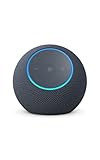
- Meet Echo Dot Max: Experience rich room-filling sound that automatically adapts to your space and fine-tunes playback. Features a built-in smart home hub and Omnisense technology for highly personalized experiences.
- Music to your ears: With nearly 3x the bass versus Echo Dot (2022 release), it fits beautifully in any space, delivering your personal sound stage with deep bass and enhanced clarity. Listen to streaming services, such as Amazon Music, Apple Music, Spotify, and SiriusXM. Encore!
- Do more with device pairing: Connect compatible Echo smart speakers and smart displays in different rooms, or pair with a second Echo Dot Max to enjoy even richer sound
- Simple smart home control: Set routines, pair and control lights, locks, and thousands of smart home devices that work with Alexa without needing a separate smart home hub. With Omnisense technology, you can activate routines via temperature or presence detection.
- Say goodbye to drop-offs and buffering - With eero Built-in, Echo Dot Max doubles as a mesh wifi extender, adding up to 1,000 sq. ft. of wifi coverage to your existing eero network.
Wake word or button: which interaction fits?
| Consideration | Wake-word activation | Button or screen activation |
|---|---|---|
| Convenience | Hands-free; useful when reaching for a control is difficult. | Requires a deliberate press or tap, but avoids saying a phrase to begin. |
| Control over session start | Depends on detection and the system’s activation behavior. | The user explicitly starts the interaction through the supported control. |
| Microphone and audio behavior | Must be checked for the specific implementation; detection may be local or elsewhere. | Still depends on the implementation; a button does not prove the microphone was otherwise inactive. |
| False or missed activations | Detection can produce unwanted triggers or fail to recognize the phrase; actual performance depends on device and environment. | A press avoids wake-phrase detection, but the button path can have its own usability or hardware constraints. |
| Speed and accessibility | Can be quick and hands-free, including in a vehicle, when it works reliably. | Can be more deliberate, but may be inconvenient if the control is hard to reach or use. |
| Compute and network needs | Varies: detection can run on-device or use a server-based design. Home Assistant documents server-resource needs for concurrent satellites. | Varies with what happens after the press; the invocation control alone does not determine processing or network use. |
| Listening-state clarity | Look for clear cues that show when the assistant is responding or listening. | Look for the same cues after activation; explicit invocation does not replace status feedback. |
There is no suitable general statistic establishing how much removing a wake word changes privacy, accuracy, false activations, or user satisfaction. Project-specific engineering guidance should not be treated as a universal outcome.
Do these 3 things before closing this tab:
1Scan for outdated or missing drivers - takes under a minute2Clear out junk files and repair common Windows errors3Fix the driver behind crashes, sound loss and screen glitchesDo you need new hardware?
No. If an existing assistant offers a wake-word setting and a supported button or screen alternative, you can use those controls without buying a development device. For a DIY Home Assistant experiment, its documentation names the M5Stack ATOM Echo as a low-cost way to try voice assistance; that mention does not establish a current price, package contents, or availability. Home Assistant’s overview describes the example hardware.
Quick Recap
Best Value

- Alexa can show you more - Echo Show 5 includes a 5.5” display so you can see news and weather at a glance, make video calls, view compatible cameras, stream music and shows, and more.
- Small size, bigger sound – Stream your favorite music, shows, podcasts, and more from providers like Amazon Music, Spotify, and Prime Video—now with deeper bass and clearer vocals. Includes a 5.5" display so you can view shows, song titles, and more at a glance.
- Keep your home comfortable – Control compatible smart devices like lights and thermostats, even while you're away.
- See more with the built-in camera – Check in on your family, pets, and more using the built-in camera. Drop in on your home when you're out or view the front door from your Echo Show 5 with compatible video doorbells.
- See your photos on display – When not in use, set the background to a rotating slideshow of your favorite photos. Invite family and friends to share photos to your Echo Show. Prime members also get unlimited cloud photo storage.
What to check before changing the setting
- Confirm the supported invocation method. Check the documentation for your exact device or integration; do not assume another model’s controls apply.
- Find the microphone and transmission details. Determine whether detection is local or server-based and when audio is sent.
- Check for clear activity cues. Know how the device indicates that it is listening or processing a request.
- Try the alternative in its real setting. A button-driven workflow may suit a desk but be awkward elsewhere. For DIY detection, test thresholds and audio quality in the intended environment.
- Review the failure path. Know how to start a session if the button, network, or wake-word detector is unavailable.
Product prices and availability are accurate as of the date/time indicated and are subject to change. Any price and availability information displayed on Amazon at the time of purchase will apply.

