
iTechGuides is reader-supported. When you buy through links on our site, we may earn an affiliate commission. As an Amazon Associate I earn from qualifying purchases. Learn more
Seawater can be used to produce hydrogen by electrolysis, and laboratory studies have reported promising durability and current density. But direct seawater splitting is not yet established commercial practice: chloride reactions, corrosion and mineral deposits make sustained operation difficult. A separate route—desalinating seawater first, then using established electrolysis technologies—adds water treatment but gives the electrolyser a more controlled feed.
How does direct seawater splitting work?
An electrolyser uses electricity to split water into hydrogen and oxygen. In direct seawater electrolysis, seawater is fed to the system without conventional desalination or enhanced pretreatment. In the indirect route, seawater is first desalinated and purified, and the resulting high-purity water is electrolysed.

The direct approach aims to avoid the desalination step, but seawater is not simply pure water with salt added. Its dissolved ions create competing reactions and deposits that the system must manage. As the authors of a 2024 Nature Sustainability paper put it, “because of the complex ion environment, direct electrolytic splitting of seawater faces major challenges, notably chlorine evolution, corrosion of electrodes and other side reactions” (Fan et al., 2024).
What makes seawater difficult to electrolyse?
Chloride reactions at the anode
At the anode, chloride can compete with the reaction that produces oxygen. Chlorine and other chlorine-containing products can create safety, product-quality, corrosion and efficiency concerns. Their formation is one reason that results from an ordinary water electrolyser cannot simply be assumed to carry over to raw seawater. Reviews of direct seawater splitting describe electrode side reactions and corrosion as central obstacles (Xu et al., Chemical Communications, 2023).
#1 Best Overall

- Core Functionality: This scientific apparatus experiment kit is designed specifically for water electrolysis demonstration, enabling clear visualization of the electrolysis process to enhance students' understanding of chemical principles and electrochemical reactions
- User-Friendly Design: the electrolysis kit features simple operation suitable for both students and teachers, streamlining laboratory experiments and making it an effective educational tool for chemistry lab equipment and electrolysis teaching aids
- Safe and Reliable Construction: Manufactured with advanced technology and materials, this lab electrolysis apparatus ensures safe usage during experiments, providing a secure learning environment for educators and students alike
- Versatile Laboratory Use: Suitable for electrolysis experiment teaching, scientific research, and demonstration purposes, this electrolysis scientific apparatus meets diverse needs in educational and industrial scientific settings
- Compact and Portable Size: with dimensions of approximately 6.49 by 4.52 by 2.75 inches and weighing about 7.51 ounces, this compact electrolysis kit is easy to handle and store, ideal for classroom and laboratory use
Mineral deposits at the cathode
At the cathode, water reduction can raise the local pH. That shift can encourage magnesium and calcium in seawater to form hydroxide deposits on the electrode. Deposits can cover active sites and foul the surface, reducing performance. Corrosion and other side reactions can also shorten catalyst life.
Why one design may not solve every problem
Researchers are testing different combinations of catalysts, surface layers, membranes, electrolytes and device configurations. For example, a 2024 Nature Communications study reports that its Mo2N system forms ammonium in situ; the authors propose that this helps constrain local hydroxide and reduce magnesium hydroxide precipitation in their tested system. That proposed mechanism is specific to the reported design, not a universal fix (2024 study).
Rank #2

- 【Electrolysis Protection】: Draws corrosive electrolysis away from the lower unit in seawater, reducing pitting on the propeller shaft and nearby metal parts during saltwater operations.
- 【Direct Bolt On Fit】: Installs with basic hand tools in about 10 minutes, no drilling or modification required, ideal for seasonal service and pre-storage replacement.
- 【Zinc Alloy Material】: Made of marine grade zinc alloy, this trim tab anode is engineered for high salinity environments, fitting 6G8 11325 00 applications.
- 【Wide Compatibility】: Designed for outboard engines from to and , serving as a direct swap part for matching lower unit assemblies.
- 【2-Pack Maintenance Set】: Includes 2PCS anodes for routine replacement every 6 to 12 months in saltwater, protecting trim tabs, engine block areas, and lower unit components.
A separate 2024 study designed a layered double hydroxide catalyst with carbonate ions in its interlayers and graphene quantum dots on its surface, aiming to reduce chloride adsorption and improve resistance to chloride corrosion. These are examples of active research strategies, rather than evidence that seawater-derived side effects have been eliminated across systems (Fan et al., 2024).
What have laboratory studies demonstrated?
Fan and colleagues reported more than 2,800 hours of stable electrolysis at approximately 1.25 A cm−2 for their catalyst test. In the same paper, their photovoltaic-electrolysis device for overall seawater splitting achieved a reported solar-to-hydrogen efficiency of 18.1% and 200 hours of stability at a working current above 440 mA. These are results for the study’s catalyst and device configurations; they should not be read as commercial operating specifications or as proof of year-round plant performance (Nature Sustainability, version of record 9 February 2024).
Rank #3

- [TRANSPARENT DESIGN] Crafted from durable materials, this water electrolysis container is designed with a transparent exterior that lets you easily observe the entire experimental process. Witnessing the experiment in action makes it an engaging and educational experience for students and enthusiasts alike, allowing them to track hydrogen and oxygen generation visibly.
- [INNOVATIVE GAS RELEASE] The built-in glass beads facilitate a sealed environment during gas production. To release the generated gases, simply pinch the latex tubing at the side to create an escape path. This ingenious feature ensures that the experiment runs smoothly while maintaining safety throughout the process, making the learning experience both fun and secure.
- [EFFICIENT GAS VENTING] Equipped with two latex gas guide tubes, this container enhances efficiency by minimizing gas leakage. This functional design guarantees the accuracy and reliability of your experiments. Students will appreciate the meticulous ventilation system, which ensures that they can focus on observing the science behind water electrolysis without interruptions.
- [EASY TO USE] This PEM water electrolysis demonstrator is designed with ease of use in mind. Perfect for educational settings, it allows experiment lovers to grasp the fundamental concepts of hydrogen and oxygen generation effortlessly. With this kit, students can verify water's molecular composition hands-on, making complex theories accessible and relatable.
- [VERSATILE APPLICATION] Ideal for both school classrooms and experimental , this water electrolysis kit is a fantastic tool for hands-on education. It promotes interactive learning, helping students enhance their observational and analytical skills while performing the experiment. More than just an instructional aid, it inspires curiosity and scientific inquiry among students.
The figures show meaningful progress on performance and durability under reported experimental conditions. They do not by themselves establish the costs, lifetime, maintenance needs or output of a commercial facility. A different 2024 study also reports a hydrogen production rate and calculates a hydrogen cost for its Mo2N system; that calculation depends on the study’s assumptions and apparatus, so it is not a verified market price or bankable project estimate (Nature Communications, 2024).
Direct seawater splitting or desalination first?
| Consideration | Direct seawater splitting | Desalination, then electrolysis |
|---|---|---|
| Feed preparation | Aims to use seawater without conventional desalination or enhanced pretreatment; requirements depend on system design. | Adds desalination and purification before electrolysis. |
| Electrolyser environment | Chloride and other ions bring risks from side reactions, corrosion and mineral deposits. | High-purity feed supports more stable operation with established electrolysis technologies, according to the 2025 technical review. |
| Maturity in the cited review | Research and demonstration; the review says most work remained at laboratory scale. | Uses established electrolysis technologies with a water-treatment step. |
| Main scale-up question | Can performance last under realistic, sustained operation while controlling seawater-derived side effects? | How do treatment energy, water-treatment equipment, integration and total project economics affect the system? |
The comparison reflects the technical review’s account of the two routes, with direct-route challenges also discussed in the 2023 review (RWTH Aachen University technical review, 2025; Xu et al., 2023). Avoiding conventional desalination does not automatically make direct splitting cheaper: the available evidence here does not establish comparable project-level costs or lifecycle impacts for the two routes.
Independent reader supportYour contribution helps us test, update, and keep practical guides available for everyone.Is direct seawater electrolysis commercially viable now?
A 2025 technical review reports that most direct seawater electrolysis research remained at laboratory scale and that it found no operating commercial renewable-hydrogen projects based on direct seawater splitting. It also identifies a Chinese demonstration project launched in 2023. Those are the review’s status findings, not a guarantee of project status after its publication; demonstration activity should not be confused with established commercial operation (RWTH Aachen University technical review, 2025).
Free tools Windows power users keep installed
One-click scans. No signup required.
For now, the strongest case for direct splitting is as a research pathway that could reduce dependence on conventional feedwater treatment if it can deliver reliable performance at scale. The alternative of desalination followed by established electrolysis involves additional treatment, but it avoids exposing the electrolyser to the full seawater ion mixture. Which route makes sense for a project depends on the treatment system, electrolyser, integration and economics; the cited studies do not establish a universal cost winner.
Quick Recap
Best Value
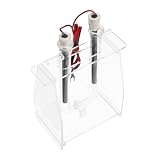
- Safety features: designed with user safety in mind, incorporating features that protect users during the electrolysis process,water electrolysis equipment,student teaching instrument
- Versatile use: suitable for electrolysis experiment teaching, scientific research, and other scenarios, meeting diverse needs and enhancing learning experiences,water electrolysis demonstration,school lab chemical experiment
- Safety assured: incorporates safety features to ensure the protection of users, providing a secure environment for conducting experiments,chemical physical teaching aid,student teaching aid
- Effective learning tool: clearly illustrates the electrolysis process, aiding students in comprehending complex scientific principles and enhancing their educational experience,physical demonstration instrument,water electrolysis lab
- Ease of use: userfriendly design operation, making it suitable for students and teachers, and enhancing the efficiency of educational experiments,educational for lab,chemical teaching instrument
Product prices and availability are accurate as of the date/time indicated and are subject to change. Any price and availability information displayed on Amazon at the time of purchase will apply.

