
iTechGuides is reader-supported. When you buy through links on our site, we may earn an affiliate commission. As an Amazon Associate I earn from qualifying purchases. Learn more
No. Current predictive tools cannot independently determine that a person “needs” an antidepressant. They can estimate the chance of improvement with treatment, and some models attempt to estimate whether one antidepressant class may work better than another. Those estimates are not a diagnosis, a prescription, or a guarantee of benefit. A clinician still has to assess symptoms, safety, alternatives, preferences, and follow-up response.
“Do I need antidepressants?” is not the same as “Which drug might work?”
Clinical treatment decisions start with questions such as whether symptoms meet criteria for a depressive disorder, how severe or persistent they are, whether bipolar disorder or another condition could be present, and whether there is immediate risk of self-harm. They also include psychotherapy, social support, sleep, substance use, physical health, previous treatment, medication interactions, pregnancy considerations, and the patient’s goals.
Most predictive studies address a narrower question: what outcome might occur if someone receives treatment? A prognostic model estimates likely improvement under treatment in general. A predictive or differential-treatment model tries to estimate whether one option—such as an SSRI versus an SNRI—may be more helpful for a particular person than another option. A 2025 comparative review found that many studies did not clearly separate these two kinds of features, making their outputs difficult to interpret clinically.
Quick wins for a faster PC:
Fix the driver behind crashes, sound loss and screen glitchesFind Drivers →Clear out junk files and repair common Windows errorsFree Scan →Scan for outdated or missing drivers - takes under a minuteDriver Scan →That distinction matters: a model can forecast a higher probability of response to a medicine without showing that medication is the right treatment for that person.
#1 Best Overall

- TOP-SELLING CONSUMER DNA TEST: From your origins in over 3,600 places around the world to the most connections to living relatives, no other DNA test kit delivers an experience as unique and interactive as AncestryDNA.
- YOUR DATA, YOUR CONTROL: We give you full control over your genetic information. You decide what to share, and with whom.
- A FEW SIMPLE STEPS: Simply activate your DNA kit online and return your saliva sample in the prepaid package to our state-of-the-art lab. Your results will be available online in roughly six weeks.
- ORIGINS AND INHERITANCE: AncestryDNA provides more precise ancestral origins with greater geographic detail. Our innovative SideView technology takes your results even further by showing your origins and matches by parental side. *Some DNA features require an Ancestry subscription.
- BUILD YOUR FAMILY TREE: Combine what you learn from your DNA results with an Ancestry subscription and gain access to millions of family trees and the world's largest collection of online family history records. *Access to record collections varies depending on subscription level.
What data do the models use?
Published systems have been trained on combinations of electronic-health-record (EHR) diagnoses and prescriptions, symptom scores, age and other demographic information, prior treatment, medical and psychiatric comorbidities, and sometimes genetic or other biological measurements. The goal is to find patterns associated with response or remission, not to discover a single diagnostic marker.
An EHR model comparing four antidepressant classes
One npj Digital Medicine study analyzed structured and unstructured EHR data from 17,556 patients. It modeled response to selective serotonin reuptake inhibitors (SSRIs), serotonin–norepinephrine reuptake inhibitors (SNRIs), bupropion, and mirtazapine. Every tested model reported an area under the receiver-operating-characteristic curve (AUROC) of at least 0.70 and an area under the precision–recall curve of at least 0.68. The investigators also identified patient factors associated with each class.
Those are development-study metrics. They do not show that a tool deployed in an ordinary clinic will safely select a prescription, nor that the model improves outcomes compared with careful clinician assessment.
The Tool Desk
Outbyte Driver Updater FREEScan for outdated or missing drivers - takes under a minuteDriver Scan →Outbyte PC Repair FREERepair Windows errors before they cause bigger problemsFix Now →Rank #2

- REVIEW IMPORTANT TEST INFO: There is a lot to consider with genetic testing. Before purchasing, review important information about Genetic Health Risk*, Carrier Status*, and Pharmacogenetics** reports at 23andme. org/test-info and 23andme. org/test-info/pharmacogenetics. A portion of your purchase may be eligible for FSA/HSA reimbursement***.
- UNDERSTAND YOUR GENETIC HEALTH: Receive 160+ personalized genetic reports, including 50+ Conditions* and wellness reports. Get insights into heart health, metabolic health, mental health, and more. You choose whether to view certain reports.
- TRACK HEALTH GOALS: Health Tracks(SM) show how everyday choices may shape your health over time. Opt in to the Family Health History Tree to input and track information to share with your healthcare provider.
- PLAN AHEAD WITH 45+ CARRIER STATUS REPORTS*: Find out whether you carry a genetic variant for inherited conditions across categories like blood, lung, and hearing health, information you can bring to family planning conversations with your healthcare provider.
- LEARN HOW YOUR BODY MAY RESPOND: FDA-authorized pharmacogenetics reports show how your DNA may impact the way your body processes certain medications**, including some used in heart health and mental health care. Talk to your healthcare provider before making any medication changes.
How accurate are antidepressant prediction tools?
The spread of results is wide because studies use different outcomes, populations, data quality, and validation methods. A 2025 systematic review screened 5,370 records and included 19 comparative studies. Sample sizes ranged from 49 to 77,226 participants.
| Measure reported in the review | Range across studies | Why the number needs caution |
|---|---|---|
| AUROC | 0.59 to 0.95 | A high score in a selected sample may fall when tested in a different health system or population. |
| Classification accuracy | 62% to 95.4% | Accuracy depends on outcome prevalence and the decision threshold; it does not equal a probability that a patient will benefit. |
| External validation | Seven of 19 studies | Most studies did not test the model on an independent, comparable population. |
Internally validated results—where a model is tested on data closely related to the data used to build it—can look substantially better than external results. The review also found limited reporting of calibration, almost no formal explainability, weak cross-trial validation, and inadequate separation of prognostic from predictive variables.
Calibration asks whether predicted probabilities match what actually happens. For example, among people assigned a 70% predicted response probability, close to 70% should respond in a comparable setting. A model can rank patients correctly yet be badly calibrated, which makes its percentages unsafe to use as treatment promises.
Rank #3

- TOP-SELLING CONSUMER DNA TEST: From your origins in over 3,600+ places around the world to the most connections to living relatives, no other DNA test kit delivers an experience as unique and interactive as AncestryDNA.
- YOUR DATA, YOUR CONTROL: We give you full control over your genetic information. You decide what to share, and with whom.
- DNA + TRAITS: Ever wondered where your freckles came from, or why you hate cilantro? AncestryDNA + Traits lets you discover 75+ genetic traits, allowing you to explore how your genes might have influenced a range of appearance, sensory, performance, nutrient, and other personal characteristics.
- A FEW SIMPLE STEPS: Simply activate your DNA kit online and return your saliva sample in the prepaid package to our state-of-the-art lab. Your results will be available online in roughly six weeks.
- ORIGINS AND INHERITANCE: AncestryDNA is the only DNA test that can show your origins results, DNA matches, and traits by each side of the family, without your parents taking a DNA test.
A 2024 review in Drug Discovery Today concluded that the value of machine learning for selecting antidepressants in clinical practice needs more study. In a separate community-practice evaluation, models built from demographic and clinical EHR characteristics performed poorly at predicting improvement during the first six months of antidepressant treatment. The authors recommended systematic assessment of early outcomes while more accurate tools are developed.
What’s actually slowing this PC down?
Pick the symptom - the matching free tool is one click away.
What genetic (pharmacogenomic) tests can—and cannot—show
Pharmacogenomic tests examine variants that may affect drug metabolism or related pathways. A report may suggest that a person is likely to have higher or lower blood concentrations of a medicine, or that a dose adjustment deserves consideration. That is different from proving which antidepressant will relieve symptoms.
What the 2024 randomized-trial meta-analysis found
A 2024 systematic review and meta-analysis of 15 randomized clinical trials compared pharmacogenomic-guided care with treatment as usual. After eight weeks, guided patients had a 3.4% greater reduction in symptom severity. The pooled analysis corresponded to a 37% higher remission rate and an 18% higher response rate. There was no difference in treatment discontinuation.
Rank #4

- MAP YOUR ORIGINS ACROSS 5,000+ REGIONS: Ancestry Composition breaks down your ethnicity across 5,000+ geographic regions worldwide, the most detailed ancestry breakdown of any consumer DNA service. Ancestry Timeline estimates how many generations ago your most recent ancestor from each population lived.
- FIND LIVING RELATIVES: Opt in to DNA Relatives to see up to 1,500 people in the 23andMe database who share DNA with you, from close family to distant cousins, and message them directly. Your Family Tree builds itself automatically based on your DNA.
- DISCOVER WHAT MAKES YOU UNIQUE: See how your DNA may influence physical features, sensory preferences, and habits across 30+ traits, including cilantro taste aversion to hair texture to deep sleep.
- TRACE ANCIENT MIGRATIONS: Maternal and Paternal Haplogroup reports follow your ancestors' migration paths across continents over thousands of years (paternal haplogroup requires a Y chromosome). Find out how much of your ancestry can be traced back to the Neanderthals.
- PRIVATE BY DESIGN: Your DNA data is encrypted, protected, and always under your control. Enhanced security measures are implemented to keep your information safe. Subject to 23andMe’s Terms of Service and Privacy Statement at 23andMe online.
The apparent efficacy advantage became statistically nonsignificant when the analysis was restricted to studies judged at low risk of bias. The authors characterized the benefit as marginal and found no corresponding improvement in tolerability.
Why routine testing is not established
Another 2024 systematic review concluded that widespread routine testing may not produce significant outcome changes compared with usual care and may not generalize to everyone taking antidepressants. A 2023 roadmap review described the technology as still evolving and found little evidence to support routine use of currently available tests for predicting antidepressant response.
These findings do not mean a test is never useful. A clinician may consider pharmacogenomic information in a selected case—such as repeated unexpected side effects, unusual metabolism concerns, or several unsuccessful medication trials—while recognizing that the result is one input among many and may not be covered or available in every country.
Best Value
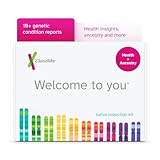
- REVIEW IMPORTANT TEST INFO: There is a lot to consider with genetic testing. Before purchasing, review important information about Genetic Health Risk* and Carrier Status* reports at 23andme. org/test-info. A portion of your purchase may be eligible for FSA/HSA reimbursement***.
- UNDERSTAND YOUR GENETIC HEALTH: Get 10+ Condition reports* that show whether you have genetic variants associated with a higher risk of certain conditions. Includes FDA-authorized reports, and you choose whether to view certain reports.
- PLAN AHEAD WITH 45+ CARRIER STATUS REPORTS*: Discover if you carry a genetic variant for inherited conditions across categories like blood, lung, and hearing health, information you can bring to family planning conversations with your healthcare provider.
- OPTIMIZE YOUR DAILY WELLNESS: See how your genes may influence lifestyle factors like deep sleep, lactose intolerance, genetic weight, and muscle composition.
- MAP YOUR ORIGINS ACROSS 5,000+ REGIONS: Explore your Ancestry Composition, trace maternal and paternal haplogroups (paternal requires a Y chromosome), and dig into your Neanderthal Ancestry. Opt in to find up to 1,500 DNA Relatives, and your Family Tree builds itself automatically.
How to evaluate a predictive tool before trusting its output
If a clinician, health system, or vendor presents an antidepressant prediction score, ask the following questions:
- What is the target? Is it general prognosis, or a comparison between named medications or classes?
- Was it externally validated? Look for testing in an independent population similar to the intended users, not only a split of the original dataset.
- Is it calibrated? A reported probability should correspond to observed outcomes in the relevant setting.
- Does it improve decisions? The strongest evidence would show that using the tool changes clinician-supervised treatment and leads to better patient outcomes, not merely a higher AUROC.
- Can its limits be explained? Important input features, missing-data effects, uncertainty, and failure cases should be disclosed.
- Does the population fit? Check representation of age, ancestry, comorbidities, concurrent medicines, severity, and the care setting.
A consumer-facing score or DNA result that omits these details should not be treated as a medical conclusion.
What to do instead of relying on a prediction score
- Get a standard clinical assessment. Confirm the diagnosis and discuss severity, bipolar-spectrum symptoms, suicide risk, physical causes, substance use, and non-medication options.
- Share treatment history. Tell the clinician which medicines, doses, durations, therapies, and side effects you have already experienced. Previous response and tolerability often provide more immediately actionable information than an unvalidated score.
- Agree on a measurable target. Use a symptom scale or specific goals, such as sleep, concentration, functioning, or panic frequency, so change can be tracked rather than guessed.
- Set an early review. Arrange follow-up to check side effects, adherence, mood changes, agitation, and suicidal thinking. Early monitoring is especially important after starting or changing a medicine.
- Adjust with the clinician. If improvement is absent or adverse effects are unacceptable, discuss dose, timing, switching, augmentation, psychotherapy, or other evidence-based options instead of treating an algorithm output as final.
Urgent help is needed for immediate danger, severe agitation, new mania-like symptoms, or thoughts of self-harm. Contact local emergency services or a crisis service and do not wait for a predictive test.
Outdated Drivers Are Slowing You Down
One free scan finds every outdated or missing driver and matches the right update for your exact hardware.Free scan · exact hardware matchPC Slower Than It Used to Be?
A free scan shows the junk files, broken settings and background clutter dragging Windows down - then fixes them in one click.Free scan · Windows 10 & 11Bottom line for AI and antidepressant decisions
Machine-learning and pharmacogenomic tools may eventually support more individualized prescribing, but current evidence does not justify letting them decide who “really needs” an antidepressant. Their most credible role today is as supplementary information for a qualified clinician, combined with a full assessment, shared decision-making, and structured follow-up that measures what happens after treatment begins.
Quick Recap
Product prices and availability are accurate as of the date/time indicated and are subject to change. Any price and availability information displayed on Amazon at the time of purchase will apply.

