
iTechGuides is reader-supported. When you buy through links on our site, we may earn an affiliate commission. As an Amazon Associate I earn from qualifying purchases. Learn more
Carbon nanotubes are being studied for flexible wearable sensors, but the oxygen-sensing result often cited is a laboratory device that detects oxygen in gas—not a wearable that measures blood oxygen saturation. The distinction matters: the research suggests a possible path toward compact sensing, but it does not establish a consumer CNT oxygen monitor.
What did the carbon-nanotube oxygen sensor actually measure?
Rajavel and colleagues fabricated a resistive sensor using a random network of multiwalled carbon nanotubes (CNTs) and tested it in a gas environment at room temperature and standard pressure. In this design, the CNT network’s electrical resistance responds to oxygen exposure. The authors discuss oxygen adsorption at functional and graphitic sites as part of the sensing behavior. The 2015 study reports 3.6% sensitivity, a response time of about 60 seconds, a recovery time of about 180 seconds, and detection at oxygen concentrations as low as 0.3%. The abstract available for the study does not define how sensitivity was calculated, so that figure should not be treated as a universal accuracy measure or compared with other sensors without more detail.
These are results from a laboratory experiment. They are not established specifications for a worn device, a clinical monitor, or an independently replicated product.
What’s actually slowing this PC down?
Pick the symptom - the matching free tool is one click away.
Gas oxygen sensing and blood SpO₂ are different jobs
| Question | CNT gas sensor in the study | Pulse oximetry |
|---|---|---|
| What is measured? | Oxygen concentration in surrounding gas | Estimated oxygen saturation in blood (SpO₂) |
| How does it sense? | Electrical resistance change in a CNT network | Optical measurement of light passing through or reflecting from tissue |
| Where was it tested? | Controlled laboratory gas conditions at room temperature and standard pressure | On a person using an optical sensor; results depend on placement and measurement conditions |
| What does the cited evidence establish? | A gas-sensor device experiment | Pulse oximetry is the relevant approach for estimating blood oxygen saturation; it is not evidence for CNT sensing |
As the comparison shows, detecting oxygen in air cannot be taken as evidence that a sensor can estimate oxygen saturation in blood. The CNT device addresses the first target. A fingertip pulse oximeter is a familiar consumer example of the second technology, but it is a different measurement approach and should not be assumed to contain CNTs. A 2019 wrist pulse-oximetry study is relevant to the engineering challenges of optical SpO₂, not to CNT sensors.
#1 Best Overall

- Smart Notification: Enable the O2 notification in the app. Your OxyU SE will beep and the app will beep & vibrate when your blood oxygen level is outside your preset threshold
- Continuous & Accurate Tracking: With a rechargeable lithium battery that lasts 12-16 hours on a full charge, the fingertip O2 meter provides continuous blood oxygen and heart rate
- Wear to Measure, Sync Later: The finger pulse ox works independently with built-in memory that stores up to 4 sets of 10-hour data. Simply wear it to measure and take it off to sync with app, data gets uploaded automatically. App storage is unlimited
- ViHealth App for Detailed Insights: Record blood oxygen saturation and pulse rate trends second by second. View historical data with precise 4-second updates and range distribution. Generate and share detailed reports directly from the app
- Effortless Operation: Starts automatically when worn. Wake the screen by flipping your wrist. Rotate the screen 180° to accommodate both left and right hands. Lightweight and comfortable for long-time wear
Are CNT oxygen sensors wearable yet?
The sources support describing CNTs as a research direction for flexible health sensors and smart textiles, not as proof of a CNT-based wearable oxygen monitor. A 2021 perspective reviews CNT wearable-sensor potential, while its general discussion of blood-oxygen monitoring in wearables does not establish that those existing devices use CNTs. The review therefore supports the possibility of future applications, not a claim that an ultra-small CNT oxygen wearable is already available.
The cited evidence does not report the dimensions of a wearable CNT oxygen device, a commercialization timeline, a market figure, regulatory clearance, or consumer availability. “Ultra-small” is consequently a prospect, not a demonstrated size specification in these studies.
Rank #2
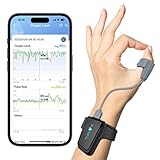
- 【Free APP&Software for Android, iOS&PC】The "Vihealth" App and "O2 Insight Pro" Software allow you to share all-day data and trend easily, or watch your real-time O2 level and heart rate on your phone, tablet or computer. Please download "Vihealth" from Apple Store or Google Play.
- 【Smart Vibration & Audio Reminder】The oximeter vibrates and keeps making a "drip" sound if blood O2 saturation falls below your defined level. Vibration and sound intensity can be adjusted.
- 【All-day Monitoring】Checkme O2 Max records your O2 level (blood O2 saturation level), pulse rate, and motion with extremely accuracy.
- 【Comfort Patented Ring Sensor】Soft silicone ring sensor won't make your finger numb and never slips from your finger, which completely frees your finger.
- 【Up To 72Hrs Long-lasting Use】No AAA batteries required, without keeping batteries nearby, continuous using up to 3 days (72 hours) after one charge.
Why can wrist oxygen readings be unreliable?
Wrist SpO₂ introduces challenges separate from CNT gas sensing. In a 2019 study involving ten participants, Phillips and colleagues described movement, device fit, low perfusion, and ambient light as potential sources of unreliable wrist measurements. Their custom optical wrist setup used a machine-learning filter to reject readings judged unreliable. That work illustrates the practical complications of wrist pulse oximetry; it does not validate CNT-based measurement or establish that every wrist wearable performs the same way.
Quick Recap
Best Value

- Continuous Overnight Sleep Monitoring — This wearable pulse oximeter tracks your SpO2 and heart rate every 4 second throughout the night. Perfect for detecting oxygen drops during sleep, helping you understand your body condition.
- Bundled APP & Detailed Reports — Sync real-time data via Bluetooth to our user-friendly mobile app. Generate PDF/JPG reports on your phone for easy sharing. Track trends over days, weeks, or months effortlessly.
- Accuracy & Long Battery Life — Advanced sensor technology delivers reliable SpO2 (±2%) and pulse rate readings. Rechargeable battery supports up to 12-16 hours of continuous monitoring on a single charge.
- Smart Alert & Comfortable Wear — Built-in Alert gently wakes you when oxygen levels drop below your preset threshold. Soft silicone wristband design ensures comfortable all-night wear without disturbing your sleep.
- Ideal for athletes, pilots, seniors & fitness‑conscious people — Suitable for high-altitude activities, aviation use, elderly wellness monitoring and etc. 12-month warranty and responsive customer support included. Note: This device is intended for sports and aviation use only, not for medical purposes.
Rank #4

- COMFORTABLE SOFT RING SENSOR: The lightest, smallest ring sensor for continuous tracking, durable and adapt to most fingers.
- DETAILED APP & PC REPORT: Free APP & PC software provides graphic report and trends of data, reviewing real-time data in APP dashboard. Unlimited sharing of PDF and CSV reports
- UNUSUAL DATA MARKING: If the SpO2 level is lower than the preset threshold and heart rate is lower or higher than the preset threshold, the device will mark it in the report.
- UNLIMITED STORAGE IN APP: When the device is connected to the APP via Bluetooth, the data will be uploaded automatically. The built-in memory can store 4 groups of 10 hours of data on device.
- RECHARGEABLE: The device runs automatically when you wear it, up to 16 hours for a full charge.
Rank #3
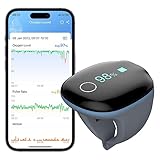
- All-day Monitoring: It can be used continuously tracking of blood oxygen level, pulse rate and body motion for the whole day. (Up to 16 hours).
- Smart Readings Reminder: If the O2 level is lower than the preset threshold and heart rate is lower or higher than the preset threshold, the device and the APP will vibrate and mark it in the report.
- Detailed APP & PC Reports: Free APP & PC software provides graphic O2, PR report and trends of data. Unlimited sharing of PDF and CSV reports. APP compatible with iOS 9.0 or above, iPhone 4s/ iPad 3 or above, Android 5.0 or above, with Bluetooth 4.0 BLE.
- Built-in Memory: O2ring device stores four groups of 10-hour data.When the device is connected to the APP via Bluetooth, the data will be uploaded automatically.
- User Friendly: The O2ring runs automatically when you wear it.The patented comfortable soft silicon sensor ring is light and convenient. It is suitable for customers with a finger perimeter of 2.17-3.15 inch, roughly the size of an adult finger
What the current evidence supports
- Demonstrated: a laboratory resistive CNT-network sensor that responds to oxygen in gas.
- Reported for that experiment: 3.6% sensitivity, about 60 seconds to respond, about 180 seconds to recover, and detection down to 0.3% oxygen.
- Not established by these sources: a CNT wearable that measures blood SpO₂, a specific wearable device size, clinical performance, regulatory clearance, or consumer availability.
Product prices and availability are accurate as of the date/time indicated and are subject to change. Any price and availability information displayed on Amazon at the time of purchase will apply.

