
iTechGuides is reader-supported. When you buy through links on our site, we may earn an affiliate commission. As an Amazon Associate I earn from qualifying purchases. Learn more
It is possible as an overclocking target, but the phrase “Q9550 at 3.8 GHz stock volts” does not establish that a particular processor achieved a stable result. Intel rates the Core 2 Quad Q9550 at 2.83 GHz. Reaching 3.8 GHz at its 8.5× multiplier requires about 447 MHz base FSB, and the result depends on the individual CPU and the rest of the system.
What 3.8 GHz means for a Q9550
The Q9550’s 8.5× multiplier means its core frequency is the base front-side bus (FSB) frequency multiplied by 8.5. A target of 3,800 MHz therefore requires roughly 447 MHz base FSB: 3,800 ÷ 8.5 ≈ 447. Intel’s published specifications list a 2.83 GHz rated frequency and 1333 MHz FSB; the latter is the effective data rate, not the 333 MHz base clock used in the overclock calculation. Intel’s Q9550 specifications list 12 MB cache, LGA775 packaging, and a 95 W TDP as well.
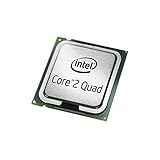


A historical Q9550 guide illustrates the distinction: 333 MHz base FSB × 8.5 is about 2.83 GHz, while 400 MHz × 8.5 is about 3.4 GHz. Those calculations show what clock settings imply; they do not show that a chip will run reliably at a given speed.
Does “stock volts” prove it is stable?
No. “Stock volts” can mean different things: leaving CPU voltage on Auto in BIOS, manually setting a value equal to the processor’s VID, or measuring the voltage actually delivered under load. Those values are not interchangeable, and the title alone does not identify which one was used.
Intel’s 2008 processor datasheet gives a Q9550 VID range of 0.8500–1.3625 V. VID is a published voltage identification range, not an overclocking recommendation, a universal safe voltage, or a guarantee of how a particular chip behaves. The Q9550 datasheet copy hosted by ManualShelf provides that range.
Nor does a frequency claim alone establish stability. The available details do not identify the CPU revision, motherboard and BIOS, memory configuration, cooling, temperatures, measured load voltage, stress test, test duration, or error criteria. Without those, 3.8 GHz at stock voltage should be treated as an unverified configuration claim, not a repeatable result.
Rank #2

- Processor Type - Intel Core 2 Quad
- Product Type - CPU
- Clock Speed - 2.8GHz
- Product Type - CPU
- Processor Type - Intel Core 2 Quad
Why one Q9550 system may behave differently from another
- CPU sample: Individual processors can differ in how much frequency they sustain at a given voltage.
- Motherboard and BIOS: FSB capability, voltage behavior, and CPU support are specific to the board and firmware. Check the exact model’s CPU support list and required BIOS version. For example, ASUS’s P5Q WS support list distinguishes Q9550 revisions and BIOS requirements; it is not a compatibility guarantee for other boards.
- Memory settings: Raising the FSB can affect memory frequency and stability, so memory clock and timings matter to the outcome.
- Cooling and load conditions: Cooling and temperatures under the tested workload affect whether the system can sustain a configuration.
- Voltage behavior: A BIOS setting and the voltage measured at idle or under load can differ. Report both the setting and measured behavior rather than calling either one simply “stock.”
How to report a credible 3.8 GHz result
A useful report lets someone distinguish the CPU’s setting from the system’s actual behavior. Include:
- Exact motherboard model, BIOS version, and CPU revision.
- Base FSB and multiplier.
- Whether CPU voltage was set to Auto or manually, plus measured idle and load voltage.
- Memory frequency and timings.
- Cooling method and load temperature.
- The named stability test, its duration, and whether the run produced errors, throttling, or crashes.
For comparisons between “stock-voltage” results, use the same CPU sample and workload where possible, and match the voltage definition and validation method. Otherwise, two claims may describe materially different conditions.
Independent reader supportYour contribution helps us test, update, and keep practical guides available for everyone.Risks of running beyond specification
Intel rates the Q9550 at 2.83 GHz; 3.8 GHz is outside that published clock specification. In a 2012 Intel Community response, an Intel employee warned that operating an Intel product outside its published specifications, including overclocking, can cause data corruption and unreliable system behavior. The response also described possible effects on product life and warranty. Treat that as historical manufacturer support guidance, not a guarantee that a particular system will fail or a universal statement of current warranty law. Read the Intel Community response.
Quick Recap
Product prices and availability are accurate as of the date/time indicated and are subject to change. Any price and availability information displayed on Amazon at the time of purchase will apply.

