
iTechGuides is reader-supported. When you buy through links on our site, we may earn an affiliate commission. As an Amazon Associate I earn from qualifying purchases. Learn more
A few small bubbles in the glass led Salesforce’s tAIster to guess Champagne. The wine was actually Chardonnay. In TechRadar reporter Mike Moore’s three-sample demonstration at Dreamforce 2026, the agent identified the first two wines correctly and missed the third—but that brief, informal result does not show how accurately AI can identify wine in general.
How did tAIster try to identify the wine?
Moore connected to tAIster by scanning a QR code on a smartphone and was given three mystery wines. Rather than having the agent directly taste or chemically analyze them, he described what he experienced. The interaction prompted him for sensory clues, including appearance, aroma, taste, and how the wine felt or gripped in the glass.
In effect, tAIster turned a person’s descriptions into a guess about the wine. That is different from an AI system independently sensing what is in the glass: the report describes a human supplying the sensory information.
What were the results?
Moore reported that tAIster guessed his first two samples correctly. For the third, it guessed Veuve Clicquot Champagne after he mentioned small bubbles; he identified the wine as Chardonnay. The result was two correct guesses and one incorrect guess in a single person’s three-sample experience, as TechRadar’s account describes.
#1 Best Overall

- ELEVATE YOUR WINE EXPERIENCE: The Red Wine Aroma Kit is designed to take your wine-tasting skills to the next level. Perfect for beginners and seasoned sommeliers alike, this set includes 15 carefully curated aromas commonly found in red wines. This educational tool allows you to identify and appreciate the subtle notes that make each glass unique, enhancing your wine experience and building a deeper appreciation for the art of tasting.
- IDEAL FOR WINE TASTING AND SMELL TRAINING: Each of the 15 aromas in this Red Wine Aroma Kit has been selected to help you train your senses to recognize key notes in red wines. From fruity and floral to earthy and spicy, the kit covers a broad spectrum of aromas, giving you the tools to differentiate and understand the complexity of red wines. Whether practicing at home or using it in a group setting, this kit is an essential companion for wine education.
- A FUN AND EDUCATIONAL WINE GAME: The scents included in this aroma kit include: Raspberry, Strawberry, Cherry, Blackcurrant, Blackberry, Coffee, Corked, Green Bell Pepper, Black Pepper, Liquorice, Oak, Mushroom, PLum, Smoke, Chocolate.
- INCLUDES COMPREHENSIVE GUIDEBOOK: The kit comes with a detailed guidebook filled with information on each aroma, including descriptions, origins, and their role in red wine profiles. This guide also provides tips and techniques for effective aroma training and wine tasting, making it a valuable resource for both beginners and experienced wine enthusiasts. With this guide, you’ll gain confidence in your ability to detect and describe wine aromas like a professional.
- PERFECT GIFT FOR WINE LOVERS: Whether for a holiday, birthday, or special occasion, the Red Wine Aroma Kit makes an exceptional gift for wine lovers. Its educational and interactive nature turns wine tasting into a fun, immersive experience that friends and family can enjoy together. Ideal for wine parties, tasting sessions, or as a unique gift for a wine enthusiast, this kit brings a new level of excitement to wine exploration.
That makes for a memorable demonstration, not a measure of general accuracy. The account does not establish the range of possible answers tAIster could choose from or how a guess counted as correct. Sensory clues can also fit many wines, so a plausible description does not necessarily identify one exact bottle, grape, region, or style.
What does the “400,000 wines” claim mean?
TechRadar said tAIster had been educated on “around 400,000 different types of wines,” with attributes such as taste, feel, and aroma. That figure is the article’s description of the agent’s wine knowledge; it is not independently verified dataset documentation, and it does not demonstrate that the agent can identify a wine accurately.
Rank #2
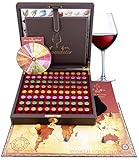
- Professional Sommelier Wine Aroma Kit, renowned for over 20 years for the quality of its aromas. (Praised by World Best Sommelier 1995 S. Tazaki, Europe Best Sommelier 2005 R. Garrone, Master of Wine D. Meiburg, The New York Times June 2024.) It is the choice of wineries, educators, merchants, and true wine lovers.
- Featuring 88 wine aromas, it is the world’s most comprehensive wine aroma collection. This kit serves as the ultimate reference for developing your sense of smell and exploring the complex aromas of wine.
- By using the Aromaster Wine Aroma Kit, you will gradually develop your wine-tasting skills, enabling you to identify grape varieties, winemaking techniques, wine maturation, and winemaking faults.
- The kit includes a manual on how to train your nose, the best condition for wine tasting, reasons behind wine faults, the list of wine appellation vs grape varieties; the Wine Aroma Wheel featuring 20 grape varieties and a Board Game to challenge friends and family.
- To check the quality of our aroma kit, look for us on Facebook at "Aromaster Kit"
Salesforce’s Dreamforce 2026 retrospective confirms the event context, but the official material located does not independently corroborate the wine session or Moore’s results. The reported guesses should therefore be attributed to his account, not treated as a Salesforce-validated test.
Quick wins for a faster PC:
Repair Windows errors before they cause bigger problemsFix Now →Scan for outdated or missing drivers - takes under a minuteDriver Scan →What would a meaningful accuracy test require?
A stronger evaluation would need a clearly defined task and repeatable conditions. For example, researchers would need to specify whether the system must name a grape, region, style, or exact bottle—and whether it can choose freely or select from a limited list.
Rank #3
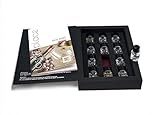
- 12 aromas to smell, which are commonly found in red wines.
- A publication in English on how to train the sense of smell and how to taste red wine.
- Tasting tool to rapidly learn to recognise the aromas in red wines.
- Widely used by sommelier schools and associations
- An elegant gift idea.
- A larger, varied set: Test more wines across different styles and origins, rather than relying on three samples.
- Clear scoring: Decide in advance what counts as a correct answer, distinguishing an exact identity from a broadly correct category.
- Blinding: Keep tasters and evaluators from knowing the wine identity when they provide descriptions and score guesses.
- Replication: Repeat the exercise with different people and sessions to see whether the result holds beyond one interaction.
Human blind-tasting research provides background on tasting and training, but it is not a test of tAIster. A 2018 paper in the Journal of Wine Economics analyzed 196 tasting sheets containing 2,271 tasting notes; its study concerns human blind tasting, not this AI agent.
Independent reader supportYour contribution helps us test, update, and keep practical guides available for everyone.Can AI identify a wine from a description?
It can make a guess from human-provided sensory clues, as tAIster did in Moore’s demonstration. The reported two correct answers and one miss show what happened in that session, not how often the agent—or AI systems generally—will identify a wine correctly. Descriptions can narrow possibilities, but this account does not establish reliable identification of a particular wine.
Quick Recap
Product prices and availability are accurate as of the date/time indicated and are subject to change. Any price and availability information displayed on Amazon at the time of purchase will apply.

