
iTechGuides is reader-supported. When you buy through links on our site, we may earn an affiliate commission. As an Amazon Associate I earn from qualifying purchases. Learn more
Yes. A passing test suite shows that the system behaved as expected in the situations the tests exercised; it does not prove that account balances remain correct under every production workload. A ledger can fail when simultaneous transactions interact, when an application handles a database retry incorrectly, or when nobody compares its records with an independent statement. The key question is not how many tests pass, but whether the money invariant still holds after concurrent work has committed.
How can tests pass while a ledger still loses money?
Many tests run one operation at a time, check only an API response, or replace the production database with a mock. Those tests can verify useful behavior without reproducing the timing, persistence, and failure conditions that expose concurrency bugs.
Consider two requests that each try to transfer 80 units from an account holding 100. If both read the original balance before either finishes, the final result depends on how the application and database coordinate their writes. A sequential test may never create that overlap. A test that checks only for a successful response may also miss a mismatch between the transfer records and the persisted balances.
Free tools Windows power users keep installed
One-click scans. No signup required.
The same issue can arise when a transaction fails and is retried, when a delivery is repeated, or when a balance is maintained separately from the underlying entries. Passing tests are evidence about tested conditions—not a guarantee that every concurrent sequence preserves value.
#1 Best Overall

- Effortlessly build your crypto portfolio via the all in one Ledger Wallet app: buy, sell, send, receive, swap, stake and more across popular blockchains. 15,000+ coins & tokens in a single dashboard. Keep a close eye on the market. Compare service providers. Track performance. Get timely alerts. Build your portfolio with confidence.
- Effortlessly build your crypto portfolio via the all in one Ledger Wallet app: buy, sell, send, receive, swap, stake and more across popular blockchains. 15,000+ coins & tokens in a single dashboard. Keep a close eye on the market. Compare service providers. Track performance. Get timely alerts. Build your portfolio with confidence.
- Enjoy Bluetooth connectivity, iOS access, and hours of battery use with this mobile-first, secure backup signer. Freedom you can depend on.
- Genuine Check: confirm your signer is authentic during setup with the Ledger Wallet app.
- Protect your signer: keep it in mint condition at all times with a bespoke Pod or Case to avoid scratches and everyday wear and tear.
What does a database transaction protect?
A business event often requires several related writes: for example, recording both sides of a transfer and updating any associated balance data. A database transaction lets those writes commit together or roll back together. PostgreSQL 18’s transaction documentation describes this all-or-nothing behavior and explains that intermediate transaction states are not visible to concurrent transactions.
Atomicity does not, by itself, make every possible transaction sequence correct. Transactions can each complete successfully while their combined result reflects an unsafe interaction. PostgreSQL 18 calls a committed result a serialization anomaly when it is inconsistent with every possible ordering in which those transactions ran one at a time.
That definition is specific to PostgreSQL’s documentation and behavior. Other database engines have their own isolation semantics, so do not assume that a setting or guarantee carries over unchanged between products or configurations.
Quick wins for a faster PC:
Repair Windows errors before they cause bigger problemsFix Now →Fix the driver behind crashes, sound loss and screen glitchesFind Drivers →Rank #2

- All your digital assets in one place. You can manage thousands of crypto including Bitcoin, Ethereum, Solana, Tether and more.
- Defend your identity against hackers: secure your online accounts with passwordless, hardware backed, 2FA logins for all your favorite apps and websites.
- Connectivity: USB-C cable connection only. No Bluetooth.Compatible with the Ledger Wallet crypto app, both desktop (Windows, macOS, Linux) and mobile (Android only). Not compatible with iOS.
- Protect your digital assets with the industry's best security: keep your private keys offline in your private signer, battle-tested by the Donjon's white hat hackers, CC EAL 6+ certified Secure Element, constantly updated Ledger OS.
- Effortlessly build your crypto portfolio via the all in one Ledger Wallet app: buy, sell, send, receive, swap, stake and more across popular blockchains. 15,000+ coins & tokens in a single dashboard. Keep a close eye on the market. Compare service providers. Track performance. Get timely alerts. Build your portfolio with confidence.
What does Serializable isolation do—and what does it not do?
PostgreSQL 18’s Serializable isolation level permits concurrent transactions to commit only when the database can establish that their effect is equivalent to some serial ordering. When it cannot, a transaction can fail with a serialization error. That rejection is a safety outcome: the application must handle it rather than assume every attempted transaction will commit.
PostgreSQL’s documentation says to retry the whole transaction, including the application logic that decides what statements and values to use. Retrying only the final SQL write can be wrong if it reuses a decision based on a read that is now stale. PostgreSQL does not automatically retry such failures because it cannot determine whether the application’s full retry would be correct.
Serializable isolation is therefore not a standalone guarantee that a ledger is correct. The application still needs sound transaction boundaries, correct business rules, and safe failure handling. A design using another isolation level or locking strategy also needs tests that exercise the conditions its correctness depends on.
Rank #3
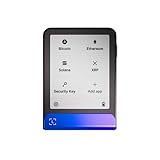
- Simply & securely take control of your digital assets and identity with the all-in-one Ledger Wallet crypto app and Ledger Flex touchscreen signer.
- Digital asset control at your fingertips: manage 15,000+ crypto across multiple chains. Earn rewards. Top up & share with ease. Explore DeFi with confidence. Collect and showcase NFTs. Make informed choices with clarity.
- Connect effortlessly with Ledger Wallet: pair your secure Ledger signer with the all in one Ledger Wallet crypto app to manage thousands of digital assets across multiple devices and accounts with Ledger Sync from a single, secure dashboard.
- Cutting-edge design: monitor the market, compare rates, and Clear Sign transactions on the secure, high resolution, 2.8'' E Ink touchscreen.
- This is what security feels like: Ledger touchscreen signers all come with a private, offline, PIN-protected backup, Ledger Recovery Key, to never lose access to your assets.
How should you test ledger correctness under concurrency?
Test the invariant in the persisted state, using the database engine and transaction settings that matter in production. There is no universal test-count target: the useful coverage depends on the ledger’s schema, business rules, and concurrency controls.
Windows Errors? Fix Them Before They Spread
Repair common Windows errors and clear accumulated junk for a smoother, more stable PC - no reinstall needed.Free scan · no reinstallOutdated Drivers Are Slowing You Down
One free scan finds every outdated or missing driver and matches the right update for your exact hardware.Free scan · exact hardware match1. Define what must remain true
For a double-entry event, a common invariant is that its signed postings balance. For an account transfer, a related invariant is that total value across the affected accounts is conserved, adjusted for explicit fees, exchange, or other documented rules. These are examples, not universal rules for every financial system; the correct invariant is the one your business event promises to preserve.
2. Create overlapping operations
Run conflicting operations at the same time against the real persistence engine. Examples include competing withdrawals or transfers that depend on the same available balance. Check the committed entries and balances after the operations finish, rather than relying only on response codes or success messages.
Rank #4

- More than just crypto: confirm your device is authentic with Genuine Check, manage all your logins with Ledger Security Key, detect common scams with Transaction Check and more.
- Industry-defining security: battle-tested by the Donjon's white hat hackers, protected by the Secure Element, and powered by Ledger OS.
- Connect effortlessly with Ledger Wallet: pair your secure Ledger signer with the all in one Ledger Wallet crypto app to manage thousands of digital assets across multiple devices and accounts with Ledger Sync from a single, secure dashboard.
- Playful, user-friendly design: monitor the market, compare rates and Clear Sign all transactions on the secure 2.8'' anti-glare, scratch-resistant touchscreen.
- This is what security feels like: Ledger touchscreen signers all come with a private, offline, PIN-protected backup, Ledger Recovery Key, to never lose access to your assets.
3. Exercise duplicate delivery and failure paths
Where requests can be delivered more than once, test the system’s idempotency behavior: repeating an event should not create an unintended second financial effect. Where the database can reject or abort work, test that the application reruns the complete decision and transaction safely. Include a scenario that forces a retry rather than testing only the successful path.
4. Verify the transaction boundary
Check that all writes constituting one business event either commit together or roll back together. A failure between related writes should not leave a partial event that later code treats as complete.
5. Recompute derived balances
If the system caches or materializes balances, independently recompute them from durable entries and compare the results. A public ledger project describes this kind of cross-check as one design example; it is not an authoritative standard or proof that a different implementation is safe.
Best Value

- All your digital assets in one place. You can manage thousands of crypto including Bitcoin, Ethereum, Solana, Tether and more.
- Connectivity: USB-C cable connection only. No Bluetooth.Compatible with the Ledger Wallet crypto app, both desktop (Windows, macOS, Linux) and mobile (Android only). Not compatible with iOS.
- Protect your digital assets with the industry's best security: keep your private keys offline in your private signer, battle-tested by the Donjon's white hat hackers, CC EAL 6+ certified Secure Element, constantly updated Ledger OS.
- Effortlessly build your crypto portfolio via the all in one Ledger Wallet app: buy, sell, send, receive, swap, stake and more across popular blockchains. 15,000+ coins & tokens in a single dashboard. Keep a close eye on the market. Compare service providers. Track performance. Get timely alerts. Build your portfolio with confidence.
- Choose the colors that match your style: express your personality and your crypto management mood, color code your signers, one for each use (trading, staking, HOLDing...).
What can reconciliation reveal that tests miss?
Tests compare a system’s behavior with expected outcomes chosen inside the test. Reconciliation asks a different question: do the ledger’s records agree with an independent witness, such as a bank statement or processor record?
Compare the relevant account and statement period, identify legitimate items still in transit, and investigate unmatched or aging lines. A reconciliation can expose a discrepancy that internal tests never modeled. It is not conclusive if the statement period, transaction population, or matching logic is incomplete; document what was included and how exceptions were resolved.
How should you compare concurrency designs?
There is no supported basis here for ranking unnamed implementations or declaring one strategy universally safest. Evaluate any candidate design against the same operational questions:
What’s actually slowing this PC down?
Pick the symptom - the matching free tool is one click away.
- Invariant enforcement: Can the design preserve the required balance and value-conservation rules when requests contend?
- Concurrency mechanism: Which isolation level, lock, or other mechanism prevents the unsafe interleaving?
- Retry safety: Does a rejected or interrupted operation rerun its full decision logic, and can duplicate requests be handled without duplicate effects?
- Failure behavior: What persisted state remains after an abort, crash, or partial failure?
- Operational performance: How do latency and throughput behave under representative contention?
- Independent evidence: Can durable entries be recomputed and reconciled against relevant external records?
Judge the result by persisted outcomes and operational evidence, not by test count alone. More unit tests, higher code coverage, or enabling Serializable isolation cannot individually establish that a financial system is correct.
Quick Recap
Product prices and availability are accurate as of the date/time indicated and are subject to change. Any price and availability information displayed on Amazon at the time of purchase will apply.

