
What’s actually slowing this PC down?
Pick the symptom - the matching free tool is one click away.
iTechGuides is reader-supported. When you buy through links on our site, we may earn an affiliate commission. As an Amazon Associate I earn from qualifying purchases. Learn more
You can connect a phone app to an Arduino 101/Genuino 101 over its built-in Bluetooth Low Energy (BLE), but the board sketch and app must be designed to exchange the same data. The board advertises a BLE service and exposes characteristics; the app scans for the board, connects, discovers the service, then reads, writes, or subscribes to those characteristics. This is different from using an app to program the board or upload a sketch.
What the phone-to-board connection does
Arduino 101 and Genuino 101 are regional names for the same Intel Curie development board. Arduino’s December 17, 2015 launch announcement identified the board’s built-in BLE capability, so a phone connection does not require an added radio shield. The announcement described controlling a phone over Bluetooth without additional hardware; that is a launch-era description, not a promise of present-day software support.

BLE communication depends on a shared design, not merely on having an app installed. The board firmware must advertise and expose a service and its characteristics. The phone app must know what service to find and how to interpret or send the characteristic values. You choose the UUIDs, permissions, and payload format for the project; there is no one universal Arduino 101 app protocol established for every project.
Quick wins for a faster PC:
Clear out junk files and repair common Windows errorsFree Scan →Fix the driver behind crashes, sound loss and screen glitchesFind Drivers →Plan what the app and board will exchange
Start with one specific interaction. For example, the board could provide a sensor reading for the app to display, or the app could send a command that changes an LED state. Decide which side produces each value and whether the app should read it on demand, write a value, or subscribe to updates.
#1 Best Overall
- Read: The app requests a value the board exposes, such as a sensor measurement.
- Write: The app sends a command or setting to the board, such as an LED on/off request.
- Subscribe: The app receives characteristic updates when the board publishes new values, if the characteristic and firmware support that behavior.
Keep the payload explicit and small, and make the board sketch and app agree on its meaning and encoding. The archived examples demonstrate possible project types, but they do not define a required service schema for a custom app.
Implement the connection as two cooperating parts
1. Make the board advertise
Write board firmware that configures BLE and exposes the service and data or command characteristics your interaction requires. Arduino’s 2016 firmware-source announcement says BLE and USB communication were managed by the Curie module’s x86 core while the ARC core ran Arduino sketches. That is useful platform context, but ordinary app development does not require modifying the board’s underlying firmware.
Rank #2

- START CODING WITH THE ELEGOO UNO R3: Connect the included USB cable, upload your first sketch, and build sensor, motor, display, and automation projects, making it a practical controller for maker desks, classrooms, coding clubs, and robotics labs
- ATMEGA328P CORE FOR EVERYDAY PROJECTS: A 16 MHz clock, 32 KB flash, 14 digital I/O pins with 6 PWM outputs and 6 analog inputs provide a versatile foundation for LEDs, buttons, relays, servos, displays and sensors
- RELIABLE USB PROGRAMMING AND CLEAR WIRING: The ATmega16U2 USB interface supports sketch uploads and serial communication, while clearly labeled headers help simplify connections to jumper wires, shields and modules
- POWER AND EXPAND YOUR WAY: Run the board from USB or a recommended 7-12 V external supply, then add compatible shields and modules for data logging, automation, robotics, test fixtures and custom electronics projects
- BOARD AND USB CABLE INCLUDED: Comes with 1 ELEGOO UNO R3 development board and 1 USB-A to USB-B data cable; breadboard, sensors, shields and power adapter are not included, and younger learners should work with an experienced adult
2. Scan, connect, and discover from the app
The phone app scans for an advertising BLE peripheral, connects to the board, and discovers its services. Arduino’s archived technical report describes this scan-connect-services sequence. Its examples mention a BLE Sensor Tag and include nRF UART wording in sample output; these are examples in a report, not a guarantee that a particular app, framework, or service is currently available or right for your design.
The Tool Desk
Outbyte Driver Updater FREEFix the driver behind crashes, sound loss and screen glitchesFind Drivers →Outbyte PC Repair FREEClear out junk files and repair common Windows errorsFree Scan →3. Exchange data using the characteristic design
After service discovery, the app should locate the characteristic it needs and use it according to the board sketch’s design: read, write, or subscribe to updates. Match the app’s expected type, encoding, and interpretation to the firmware. Do not assume UUIDs or a payload format from a different BLE project will work without being implemented on the board.
Rank #3
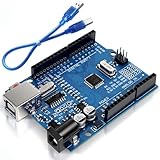
- Unlock your creativity with the versatile UNO R3 Board ATmega328P! Explore endless possibilities in electronics projects with its user-friendly Arduino development environment, extensive digital and analog I/O pins, and compatibility with various sensors and modules. Let your imagination soar!
- Experience the power of UNO R3 Board ATmega328P! This feature-packed development board boasts a high-performance ATmega328P microcontroller, 32KB of flash memory, and 2KB of SRAM. It's perfect for both beginners and advanced users seeking to build innovative applications in robotics, home automation, and more.
- Ignite your passion for electronics with the UNO R3 Board ATmega328P! Its open-source design allows for customization, while its 14 digital I/O pins and 6 analog input pins provide ample connectivity options. Get ready to bring your ideas to life and create interactive projects like never before.
- Elevate your DIY projects with the UNO R3 Board ATmega328P! This highly versatile development board offers seamless integration with the Arduino ecosystem, providing access to a vast library of code and resources. With its reliable performance and broad compatibility, you can easily prototype and realize your electronic dreams.
- Discover the endless potential of the UNO R3 Board ATmega328P! With its robust communication interfaces, including UART, SPI, and I2C, you can connect and communicate with a wide range of devices. Whether you're a hobbyist or a professional, this powerful development board is a must-have for creating innovative and interactive electronic systems.
4. Test discovery, data flow, and reconnecting separately
Verify the steps independently: the board advertises, the app can discover the peripheral and expected service, and the intended characteristic operation works. Test both directions if the project reads and sends values, then disconnect and reconnect to check whether discovery and data exchange recover as expected. These are implementation checks based on the documented BLE sequence, not reported test results for a particular app or sketch.
What the legacy Arduino 101 software evidence means
Arduino’s 2015 announcement said Arduino IDE support began with version 1.6.7. Its retired documentation index lists CurieBLE examples for Arduino 101, including Battery Monitor, Button LED, Callback LED, Heart Rate Monitor, and LED. They are historical starting points for understanding BLE interactions, not proof that current IDE installers can compile them unchanged or that a compatible mobile app remains available.
Rank #4

- MORE I/O FOR COMPLEX PROJECTS: Use 54 digital I/O pins with 15 PWM outputs, 16 analog inputs and expanded headers for robotics, automation, multi-sensor systems, CNC experiments and other projects that need more connections
- ATMEGA2560 MEMORY FOR LARGER SKETCHES: Run at 5 V and 16 MHz with 256 KB flash, 8 KB SRAM and 4 KB EEPROM, providing extra program space and working memory for larger control, sensing and data-handling tasks
- FOUR HARDWARE UARTS FOR MULTI-DEVICE BUILDS: Connect serial devices such as displays, GPS modules or motor controllers without sharing one port, while I2C, SPI, external interrupts and ICSP support additional expansion
- ATMEGA16U2 USB INTERFACE: Use the included USB-A to USB-B data cable for sketch uploads and serial monitoring, with the ATmega16U2 handling USB-to-serial communication between the board and a connected computer
- USB OR EXTERNAL POWER: Power the board by USB or a suitable regulated DC source through the barrel jack, and use proper drivers or separate supplies for motors and other high-current loads; includes 1 MEGA 2560 R3 board and 1 USB cable
The board is legacy hardware. DFRobot’s Arduino 101/Genuino 101 product page labels its catalog listing “Discontinued” and “no longer for sale.” That describes availability at that retailer, not the entire used market. If considering a used board, check the seller, condition, included accessories, and whether the listing is for the Arduino 101/Genuino 101 model and the region name you expect.
Recommended Free Tools
Should you use a Genuino 101 or choose another board?
| Situation | Practical choice | What to verify |
|---|---|---|
| You already own an Arduino 101/Genuino 101 | It has built-in BLE, so it can be a starting point for a phone-connected project. | Confirm your current development environment supports the board core and library versions you need; archived examples alone do not establish current compatibility. |
| You are buying hardware for a new project | Consider a current BLE-capable board rather than relying on discontinued stock. | Check live listings and board condition. Arduino describes the MKR WiFi 1010 as suitable for BLE communication with a cellphone, but it is a different board. |
Do not assume an alternative board will accept Genuino 101 pins, libraries, or sketches unchanged. The available product descriptions establish BLE capability, not comparative range, latency, mobile operating-system support, or total project cost.
Best Value

- START CODING WITH A FLEXIBLE UNO R3 BOARD: Connect the included USB cable, upload sketches with Arduino IDE and build sensor, motor, display and automation projects for maker desks, classrooms, coding labs and electronics prototyping
- ATMEGA328P CORE FOR EVERYDAY PROJECTS: A 16 MHz clock, 32 KB flash, 2 KB SRAM, 1 KB EEPROM, 14 digital I/O pins with 6 PWM outputs and 6 analog inputs support LEDs, buttons, relays, servos, displays and sensors
- CH340C USB-TO-SERIAL INTERFACE: The onboard CH340C handles USB communication for sketch uploads and serial monitoring, while clearly labeled digital, analog and power headers help simplify wiring to modules and shields
- USB OR EXTERNAL POWER: Run the board from the included USB cable or a recommended 7-12 V external DC supply, then expand with compatible shields and modules for robotics, data logging, automation and custom embedded projects
- BOARD AND USB CABLE INCLUDED: Comes with 1 ELEGOO UNO R3 controller board and 1 USB-A to USB-B data cable; breadboard, jumper wires, sensors, shields and power adapter are not included
Board specifications and project implications
Arduino’s 2015 announcement listed 384 kB of flash and 80 kB of SRAM, with 24 kB available for sketches. These are stated board specifications, not performance measurements. For an app connection, the important point is that the board’s BLE behavior still depends on firmware and a service/characteristic design shared with the phone app.
Quick Recap
Product prices and availability are accurate as of the date/time indicated and are subject to change. Any price and availability information displayed on Amazon at the time of purchase will apply.

