
Recommended Free Tools
iTechGuides is reader-supported. When you buy through links on our site, we may earn an affiliate commission. As an Amazon Associate I earn from qualifying purchases. Learn more
Hermes Agent is an open-source agent runtime from Nous Research; it is not itself the model. You configure a model provider or endpoint for Hermes to use, get one ordinary conversation working, and then add only the capabilities your workflow needs. The project’s Quickstart describes guided, manual, and blank-slate setup paths, with installation options for Linux, macOS, WSL2, and Windows.
What Hermes Agent provides—and what you choose
Hermes supplies the agent framework and runtime: the layer that brings together model access, tools, memory, skills, messaging, and other documented capabilities. You choose the provider, model, or endpoint it communicates with. That distinction matters: installing Hermes does not by itself settle which model you will run, what credentials you need, or what that provider charges.
The project documentation covers tools and toolsets, memory, skills, a messaging gateway, MCP integration, voice, and security. These are options to configure for a particular job, not prerequisites for every installation.
Which setup path fits your starting point?
| Path | What it offers | Best fit |
|---|---|---|
| Nous Portal | A guided provider setup path described in the Quickstart. | You want a guided start rather than configuring every provider and tool yourself. |
| Full setup | You configure providers and tools yourself. | You want direct control over provider and tool choices. |
| Blank-slate setup | A reduced starting configuration. | You want to begin with less preconfigured setup and add what you need. |
For any path, check the current provider’s documentation for model access, credentials, endpoint details, and pricing. The project documentation does not establish a universally best provider or comparable provider prices or performance.
#1 Best Overall
![Arduino® UNO™ Q 4GB [ABX00173]- Hybrid Board, Qualcomm Dragonwing QRB2210 microprocessor (MPU) & STM32U585 Microcontroller(MCU), AI Vision, Voice, IoT, Robotics, Linux Debian OS, Wi-Fi 5, USB-C](https://m.media-amazon.com/images/I/51cl4xygwGL._SL160_.jpg)
- Dual-Brain Hybrid Power: Combines the Qualcomm Dragonwing QRB2210 MPU (Quad-core Arm Cortex-A53 @ 2.0 GHz CPU, Adreno GPU, AI acceleration) and the real-time, low-power STM32U585 MCU for advanced applications like object recognition, voice commands, and motion detection.
- AI & Linux Capabilities: Unlocks AI-powered vision and sound solutions; runs Linux Debian OS for coding in Python and supports the Arduino ecosystem with libraries and Sketches; quick start with Arduino App Lab.
- Advanced Features: Equipped with 4 GB LPDDR4 RAM, 32 GB eMMC built-in storage, ideal for single-board computer (SBC) mode, running multiple simultaneous high-level processes, more complex AI or ML models, extensive logs. Dual-band Wi-Fi 5 (2.4/5 GHz), Bluetooth 5.1, and high-speed headers for vision, audio, and display peripherals.
- Seamless Expansion & Connectivity: Features the classic UNO form factor for shields compatibility, an 8x13 LED matrix, and a Qwiic connector for easy expansion with Modulino nodes; power and connect via the USB-C connector.
- Intended Use & Development: The perfect platform for prototyping robotics or IoT projects, empowering innovators with a unified development experience to mix Arduino Sketches, Python scripts, and containerized AI models in a single interface.
Install Hermes and get one conversation working
- Choose the operating-system installation route. The Hermes Quickstart describes a shell installation path for Linux, macOS, and WSL2, and a Windows PowerShell installer. Follow the current command and prerequisites in the official Quickstart and Installation guide; use the Installation guide’s troubleshooting material if setup fails.
- Select one provider and model. Use one of the setup paths above and configure the credentials and endpoint required by your chosen provider. Keep this first setup narrow so you can tell whether the basic connection works.
- Try an ordinary chat before adding features. The Hermes Agent Quickstart puts the sequence plainly: “Rule of thumb: if Hermes cannot complete a normal chat, do not add more features yet. Get one clean conversation working first, then layer on gateway, cron, skills, voice, or routing.” The Quickstart does not attribute this guidance to an individual speaker.
The available documentation here does not establish one current release number, a complete set of system requirements, or a required hardware configuration. Check the current Installation guide for the prerequisites that apply to your operating system and chosen setup.
Decide where the model and agent execution will run
Hosted provider or local/self-hosted model
The Quickstart explicitly distinguishes a hosted provider setup from a local or self-hosted model path. The provider or endpoint determines the model connection; Hermes remains the configurable agent framework. Confirm the current endpoint and credential instructions with the provider or model service you select.
Rank #2
- Dual-Brain Hybrid Power: Combines the Qualcomm Dragonwing QRB2210 MPU (Quad-core Arm Cortex-A53 @ 2.0 GHz CPU, Adreno GPU, AI acceleration) and the real-time, low-power STM32U585 MCU for advanced applications like object recognition, voice commands, and motion detection.
- AI & Linux Capabilities: Unlocks AI-powered vision and sound solutions; runs Linux Debian OS for coding in Python and supports the Arduino ecosystem with libraries and Sketches; quick start with Arduino App Lab.
- Advanced Features: Equipped with 2 GB LPDDR4 RAM, 16 GB eMMC built-in storage, ideal to develop in PC-connected mode, running the OS, Python scripts, and basic network services (SSH) without a demanding GUI or heavy multitasking; great for lightweight AI and memory-optimized TinyML applications, needing local storage for basic OS and core libraries. Dual-band Wi-Fi 5 (2.4/5 GHz), Bluetooth 5.1, and high-speed headers for vision, audio, and display peripherals.
- Seamless Expansion & Connectivity: Features the classic UNO form factor for shields compatibility, an 8x13 LED matrix, and a Qwiic connector for easy expansion with Modulino nodes; power and connect via the USB-C connector.
- Intended Use & Development: The perfect platform for prototyping robotics or IoT projects, empowering innovators with a unified development experience to mix Arduino Sketches, Python scripts, and containerized AI models in a single interface.
Local machine or remote terminal backend
Hermes documentation lists terminal backends including Daytona and Modal, so local execution is not the only documented direction. A remote backend may suit a workflow that needs remote execution, but check the backend’s current availability, pricing, and operating details in its own documentation. The Hermes material does not establish that a dedicated local computer is required.
If you do want a machine that stays on, a Linux computer can be an optional host. Choose hardware based on the model and workload you plan to use; the project’s installation material does not specify a required machine class or configuration.
Rank #3
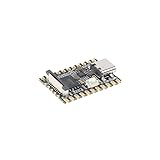
- Single core ARM Cortex-A7 32-bit core, integrated with NEON and FPU
- Built in Micro's self-developed 4th generation NPU, with high computational accuracy and support for mixed quantization of int4, int8, and int16. Among them, int8 has a computing power of 0.5 TOPS and int4 has a computing power of up to 1.0 TOPS
- Built in self-developed 3rd generation ISP3.2, supports 4 million pixels, and supports various image enhancement and correction algorithms such as HDR, WDR, and multi-level denoisin
- It has powerful encoding performance, supports intelligent encoding, adapts to save bit rates according to the scene, and saves more than 50% of the bit rate compared to conventional CBR mode, making the captured images high-definition, smaller in size, and doubling the storage space
- The design with built-in RISC-V MCU supports low-power fast startup, 250ms fast capture, and simultaneous loading of AI model library, enabling facial recognition to be completed within 1 second
Add capabilities only when the workflow calls for them
- Tools and toolsets: Add the documented tool capabilities needed for the tasks you want the agent to perform.
- Memory: Configure memory if your workflow needs information to persist beyond an individual exchange.
- Skills: Add skills for workflows that benefit from reusable capabilities or instructions.
- Messaging gateway: Choose this when you want to interact through a messaging integration or operate a bot beyond a direct chat.
- Cron: Consider scheduled operation only if you need recurring tasks.
- MCP integration: Explore this when you need the project’s documented MCP integration.
- Voice and routing: Add these when voice interaction or model/provider routing is part of the intended workflow.
- Security: Review the project’s security documentation before exposing an agent or enabling capabilities that affect your environment. The specific settings depend on the setup, so use the current security guidance rather than assuming a default configuration is suitable.
After each addition, check that the original conversation still works and that the new capability serves a real need. Treat messaging, scheduling, tools, and other extensions as separate configuration choices rather than a single all-or-nothing installation.
Independent reader supportYour contribution helps us test, update, and keep practical guides available for everyone.Where developers should look next
The architecture guide is an orientation map for the codebase and points to subsystem-specific documentation, including provider extension guidance. It also describes SQLite-based session storage with FTS5 full-text search. Use the architecture guide to identify the relevant subsystem, then consult the current subsystem documentation and repository code for implementation details.
Rank #4

- 【POWERFUL ESP32‑S3 CONTROLLER】Built‑in Xtensa 32‑bit LX7 dual‑core processor, 512KB SRAM, 8MB PSRAM, 16MB Flash for stable AI voice computing and multitask processing.
- 【Preloaded Dual AI Platforms】Comespre-installed with complete Deepseek and OpenAI voice dialogue projects.Experience intelligent voice interaction instantly. (Note: OpenAI functionality requires your own API key.)
- 【STABLE WIRELESS & CLEAR AUDIO】Integrated 2.4GHz Wi‑Fi + Bluetooth 5 (LE); dedicated audio decoding module for natural, responsive voice interaction.
- 【USER‑FRIENDLY VISUAL & PLUG‑AND‑PLAY】2” TFT‑SPI color screen shows real‑time chat; modular design, no extra wiring, ready to use after setup.
- 【FULL LEARNING SUPPORT】45 programmable GPIOs, rich interfaces, online web tutorials, free technical support for beginners & developers.
Provider choice, integration availability, backend details, and installation instructions can change. Verify those specifics in the current project and provider documentation before building a setup around them.
Quick Recap
Product prices and availability are accurate as of the date/time indicated and are subject to change. Any price and availability information displayed on Amazon at the time of purchase will apply.

