
What’s actually slowing this PC down?
Pick the symptom - the matching free tool is one click away.
iTechGuides is reader-supported. When you buy through links on our site, we may earn an affiliate commission. As an Amazon Associate I earn from qualifying purchases. Learn more
You can build an iPhone or Apple-platform app that runs a language model locally and reads Apple Health data through HealthKit after the user grants access. But local inference alone does not prove that health data stays on the device: downloads, logs, storage, backups, sync, diagnostics, and remote requests are part of the privacy story too.
This guide outlines the architecture and the checks a responsible implementation needs. It does not claim that a particular model, device, or app has been performance-tested, medically validated, or independently audited.
What “stays on your phone” actually means
On-device inference means the model generates its response on the device rather than sending the prompt to a remote inference service. It says nothing by itself about where the app gets its model, whether it synchronizes summaries, or whether prompts appear in logs or diagnostics.
Do these 3 things before closing this tab:
1Scan for outdated or missing drivers - takes under a minute2Clear out junk files and repair common Windows errors3Fix the driver behind crashes, sound loss and screen glitchesMap every stage of the data path before making a privacy claim:
#1 Best Overall

- All-in-One AI Learning Lab Powered by Raspberry Pi & Multi-LLMs. Turn Raspberry Pi (5 / 4B / 3B+ / 3B / Zero 2W) into a complete AI learning lab with support for multi-LLMs like ChatGPT, Gemini, Grok, DeepSeek, Qwen, Doubao, and Ollama. Includes Pan-Tilt HAT,10-axis (10DOF) module, camera, and high-quality components. Learn AI through guided video lessons created with educator Paul McWhorter. (Raspberry Pi not included)
- Build Fun Multi-Modal AI Projects with Voice, Vision & Sensors. Combine sensors, breadboard circuits, Multi-LLMs, voice recognition, and camera vision to create engaging multi-modal AI projects. Learn STT and TTS through hands-on programming, turning abstract AI concepts into interactive projects you can see, hear, and control—perfect for AI beginners
- AI Vision Tracking with YOLO, OpenCV, MediaPipe & Pan-Tilt HAT. Create intelligent vision projects using OpenCV and MediaPipe to detect and track objects, colors, and human movements. The Pan-Tilt HAT allows your projects to actively follow targets, helping learners understand how AI vision and motion work together in real systems
- Fusion HAT+ Power System with Voice AI Interaction. The Fusion HAT+ provides power, safe shutdown, and simplified hardware control via a unified Python library. With the Fusion HAT+ featuring a built-in speaker and microphone, easily build AI voice interaction projects by combining Multi-LLMs with sensors and electronic components
- Step-by-Step Learning with Video Lessons & Technical Support. Includes a structured, project-based curriculum with clear documentation, sample code, and video tutorials created with Paul McWhorter. Backed by responsive technical support and an active community, this kit helps beginners confidently progress from Python basics to AI and interactive projects
- Health access: which HealthKit data types the app requests, and why.
- Model setup: whether model files are bundled or downloaded, and which service serves a download.
- Inference: whether prompts and results are processed locally or sent to a server.
- After inference: whether results are saved, logged, exported, synced, backed up, or included in diagnostics.
- Network activity: whether the app contacts analytics, crash-reporting, update, or other services.
Describe these flows accurately in the app’s disclosures and privacy policy. If the app downloads a model or contacts a service, do not imply that no data ever leaves the device; distinguish model-file downloads from transmission of health data.
Choose the model and MLX Swift components
MLX Swift is a Swift interface to MLX for Apple silicon, with documented iOS and macOS examples, including a chat example. Language-model implementations are maintained in the separate MLX Swift LM project. Its README documents language and vision-language model support, integrations, and package guidance.
Before implementation, settle the exact model artifact and dependency versions. Meta’s Llama 3 model card covers the original model release, dated April 18, 2024; that release is not interchangeable with later Llama versions or arbitrary converted artifacts. Record the model variant, size, quantization, and artifact source, and verify the terms that apply to that exact artifact.
Windows Errors? Fix Them Before They Spread
Repair common Windows errors and clear accumulated junk for a smoother, more stable PC - no reinstall needed.Free scan · no reinstallCrashes, No Sound, or Screen Glitches?
Random freezes, missing sound and display glitches usually trace back to one bad driver. Find and replace yours safely.Free scan · under a minuteRank #2
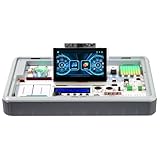
- All-in-One AI & STEM Learning Station: CrowPi 3 for Raspberry Pi 5 supports OpenCV, facial recognition, object detection, and large language models such as LLMs, offering a comprehensive platform for AI exploration and prototyping (Raspberry Pi 5 not included)
- Intelligent interactive experience: Equipped with a 4.3-inch capacitive touch display, a 2-megapixel camera and a high-sensitivity microphone. The Raspberry Pi 5 kit support AI visual recognition, voice recognition and interaction, providing an intuitive and smooth user experience
- Integrated Versatile Sensors & Modules: Built-in 41 sensors and modules, CrowPi 3 Raspberry Pi 5 starter kit offer a clear layout for easy sensor projects and AI visual development, with no complicated wiring required. Ready to use right out of the box for seamless learning and creation
- Compatible with Multiple Development Boards: Supports 4 mainstream development boards including Raspberry Pi 5, Arduino Nano, micro:bit, and Pico—catering to a wide range of users, from beginners to professional engineers, and meeting development needs at different stages
- Ideal for Educators, Makers and Developers: CrowPi 3 offers 200+ course resources, including AI interaction, Python programming, Node-RED IoT projects, and more. With hands-on lessons for beginners to advanced learners, it supports AI, coding and electronics development for education and project building
The MLX Swift LM README describes a 3.x main branch and notes that the major version introduced breaking changes. Pin the package version used by your project, then follow the setup instructions for that pinned release rather than assuming current main-branch examples match it. The MLX Swift README provides the framework context, installation information, and platform examples.
These project materials establish an Apple-silicon development context, not a hardware recommendation. They do not establish memory requirements, latency, or suitability for a particular model and Mac or iPhone configuration. Measure your selected model, quantization, and target devices before making performance or compatibility claims.
Request only the HealthKit data the feature needs
HealthKit access is permission-based. Design the feature around specific data types rather than requesting broad access for a general-purpose chatbot. Explain in the interface why each requested type is needed and what the app will do with it.
Rank #3

- Complete Raspberry Pi 5 16GB Kit Integrated: Includes the Raspberry Pi 5 16GB Board, CrowPi 3 with the Raspberry Pi 5 supports OpenCV, facial recognition, object detection, and large language models such as LLMs, offering a comprehensive platform for AI exploration and prototyping
- Intelligent interactive experience: Equipped with a 4.3-inch capacitive touch display, a 2-megapixel camera and a high-sensitivity microphone. The Raspberry Pi 5 kit support AI visual recognition, voice recognition and interaction, providing an intuitive and smooth user experience
- Integrated Versatile Sensors & Modules: Built-in 41 sensors and modules, CrowPi 3 Raspberry Pi 5 starter kit offer a clear layout for easy sensor projects and AI visual development, with no complicated wiring required. Ready to use right out of the box for seamless learning and creation
- Compatible with Multiple Development Boards: Supports 4 mainstream development boards including Raspberry Pi 5, Arduino Nano, micro:bit, and Pico—catering to a wide range of users, from beginners to professional engineers, and meeting development needs at different stages
- Ideal for Educators, Makers and Developers: CrowPi 3 offers 200+ course resources, including AI interaction, Python programming, Node-RED IoT projects, and more. With hands-on lessons for beginners to advanced learners, it supports AI, coding and electronics development for education and project building
- Define the feature and the HealthKit types it needs.
- Explain the purpose at the point of request, using plain language.
- Request authorization through HealthKit and handle the user’s choice without implying that access was granted when it was not.
- Make the app’s actual data use clear in its privacy policy and other disclosures.
- Keep the model prompt limited to information relevant to the user’s request.
Apple’s HealthKit privacy documentation requires a clear health or fitness purpose, permission prompts, disclosure of data use, and a privacy policy. It says HealthKit information may not be used for advertising or similar services and may not be sold to data brokers or resellers. Disclosure to third parties is limited, including when a user has given permission. Review Apple’s requirements for your specific use case rather than treating consent as blanket permission.
Quick wins for a faster PC:
Scan for outdated or missing drivers - takes under a minuteDriver Scan →Clear out junk files and repair common Windows errorsFree Scan →Fix the driver behind crashes, sound loss and screen glitchesFind Drivers →Apple also documents how HealthKit handles read authorization in its authorization guidance. Build the interface and data handling around that authorization model; do not treat an app’s request as proof that it can read every requested value.
Keep prompts and results out of unintended storage
For a genuinely local workflow, identify where raw HealthKit values, constructed prompts, and generated answers reside during and after inference. Avoid persisting them unless the feature requires it. If you do retain them, define the purpose, retention period, deletion behavior, and whether operating-system backups or app sync can include them.
Rank #4

- COMPLETE KIT: Development kit includes Raspberry Pi Compute Module 5, IO Board, protective case, cooling system, antenna kit, power supply, and essential HDMI/USB cables
- POWERFUL PROCESSOR: Features BCM2712 64-bit processor with ARM Cortex-A76 architecture for high-performance computing capabilities
- DEVELOPMENT READY: IO Board provides comprehensive connectivity options including HDMI and USB ports for versatile prototyping and embedded solutions
- THERMAL MANAGEMENT: Includes dedicated cooler and heatsink system to maintain optimal operating temperatures during development
- CONNECTIVITY: Comes with antenna kit and multiple USB/HDMI cables for immediate setup and testing of wireless applications
Apple’s HealthKit privacy documentation describes local HealthKit storage and encryption while the device is locked. That does not automatically cover copies your app creates, including summaries, cached prompts, exported files, or logs. Treat app-created data as a separate part of the design and review its storage and backup behavior.
- Do not place health values or prompts in routine debug logs.
- Review crash reports and diagnostics for accidental prompt or response capture.
- Make export, sharing, and sync behavior explicit to users.
- Provide a practical way to delete app-generated health summaries if they are stored.
Check the Llama 3 license and health-use limits
Local execution does not remove model-license obligations. Read Meta’s Llama 3 Community License and the applicable acceptable-use policy for the version and artifact you use. The license includes conditions for covered redistribution and prohibits unauthorized or unlicensed professional practice, including medical or health practice. It also addresses handling sensitive information without required rights and consents.
The Tool Desk
Outbyte PC Repair FREEClear out junk files and repair common Windows errorsFree Scan →Outbyte Driver Updater FREEFix the driver behind crashes, sound loss and screen glitchesFind Drivers →Meta’s model card describes the original Llama 3 release as intended for English commercial and research use, subject to the license and acceptable-use policy. That is not evidence of medical accuracy or authorization to provide clinical services. Do not present a general-purpose model as a clinician, diagnostic service, or substitute for professional care without appropriate professional and regulatory review.
Compare local and remote inference by the whole data flow
| Design question | Local inference | Remote inference |
|---|---|---|
| Where does the model process prompts? | On the user’s device, if the app truly runs the model there. | On a remote service. |
| What health data is transmitted for inference? | None for inference if prompts remain on-device; other app network flows still need review. | Prompts or related health information are sent to the service, so disclose the transfer and assess the service and applicable requirements. |
| What other network activity matters? | Model downloads, diagnostics, telemetry, sync, and exports. | The same flows, in addition to the inference request. |
| What must be verified? | Storage, logs, backups, download source, and any outbound requests. | All local flows plus the remote service’s data handling and the app’s disclosures. |
This comparison is architectural, not a claim that either design is automatically private or compliant. The privacy outcome depends on the complete implementation and the applicable platform and license conditions.
Validate the implementation before making claims
- Confirm that the chosen model artifact, version, and quantization match the project’s documented setup.
- Pin MLX Swift LM and verify that the APIs and instructions correspond to the pinned major version.
- Test the app’s HealthKit permission and denial paths, and ensure the feature behaves honestly when data is unavailable.
- Inspect network activity and app storage for prompts, health values, summaries, diagnostics, and sync.
- Measure memory use and response latency on each target device before publishing compatibility or speed claims.
- Review the user-facing purpose, privacy policy, HealthKit requirements, and the exact model license and acceptable-use terms.
The cited project documentation does not provide a benchmark for a specific model, quantization, memory footprint, latency, or Mac configuration. Nor does it establish clinical validity, a privacy audit, or regulatory compliance for an app built from these components.
Quick Recap
Product prices and availability are accurate as of the date/time indicated and are subject to change. Any price and availability information displayed on Amazon at the time of purchase will apply.
Free tools Windows power users keep installed
One-click scans. No signup required.

