
Recommended Free Tools
iTechGuides is reader-supported. When you buy through links on our site, we may earn an affiliate commission. As an Amazon Associate I earn from qualifying purchases. Learn more
Solar fuels are chemical fuels made by using sunlight to convert feedstocks such as water or carbon dioxide into energy-rich products. Unlike solar panels, which turn sunlight into electricity, solar-fuel systems store some of the captured solar energy in chemical bonds. A 2010 U.S. funding announcement put the idea in the headlines; later research has advanced components and laboratory devices, but DOE still identifies major barriers to commercial use.
What are solar fuels?
A solar fuel is a chemical product made using sunlight as an energy source. The fuel stores energy in its chemical bonds, so it can be transported or used later rather than consumed as electricity at the moment it is generated.
That distinguishes solar fuels from ordinary photovoltaic (PV) systems. A PV panel converts sunlight into electricity; a solar-fuel device uses sunlight to drive chemical reactions. The two approaches can complement one another, but they are not the same technology.
How can sunlight be turned into fuel?
Artificial photosynthesis is one approach: it borrows the broad idea of using light to drive chemical transformations, while relying on engineered materials and catalysts rather than a leaf. A typical system needs several parts working together:
#1 Best Overall

- Horizon puts renewable energy technology into the hands of our future scientists
- Solar Hydrogen Education Kit generates clean energy using the sun
- Renewable hydrogen is created using only solar energy and water
- Combining cutting-edge science, education and fun for all!
- Includes fuel cell, small electric motor, propeller blade, experiment manual and assembly guide
- Light absorber: A semiconductor or other light-absorbing material captures sunlight and creates energetic charge carriers.
- Charge transfer: Those charges must move to the reaction sites before they recombine and lose useful energy.
- Catalysts: Catalysts drive the oxidation and reduction reactions that convert the feedstock into a chosen product.
- Product separation: The system must keep products from recombining or undergoing unwanted reactions, and collect them in a usable form.
Hydrogen can be produced by splitting water. Carbon dioxide can be reduced to carbon-containing products such as methanol or ethanol; DOE also identifies ammonia and hydrazine as possible solar-fuel pathways. These routes differ in feedstock, reaction steps, products, and system design. Some combine a semiconductor light absorber with a molecular catalyst in a hybrid photoelectrode.
Why did solar fuels make news in 2010?
Chemistry World reported on July 27, 2010, that U.S. researchers were receiving $122 million to develop techniques intended to imitate nature and generate fuel directly from sunlight. The announcement reflected an ambitious research program, not a claim that solar fuels were ready for consumers or had reached commercial scale.
Rank #2

- Horizon puts renewable energy technology into the hands of our future scientists
- Fuel Cell Car Science Kit uses a PEM fuel cell to combine electrolysis and power conversion
- Watch as oxygen and hydrogen gases are formed to power the car
- Combining cutting-edge science, education and fun for all!
- Includes PEM fuel cell and car, education manual and experiment guide
The underlying appeal is energy storage: sunlight is intermittent and arrives in diffuse form, while chemical fuels can store and move energy. The technical challenge is to capture sunlight and direct it through a sequence of reactions without losing too much energy or producing unwanted compounds.
Do these 3 things before closing this tab:
1Repair Windows errors before they cause bigger problems2Fix the driver behind crashes, sound loss and screen glitches3Clear out junk files and repair common Windows errorsWhat happened in later U.S. research funding?
| Date | Announcement | Scope |
|---|---|---|
| 2015 | $75 million announced by DOE to renew the Joint Center for Artificial Photosynthesis (JCAP) | DOE described JCAP’s goal as developing liquid transportation fuels from sunlight, water, and carbon dioxide using artificial photosynthesis. |
| February 2020 | DOE planned up to $100 million over five years for artificial-photosynthesis research through its Fuels from Sunlight Energy Innovation Hub program, subject to appropriations. | DOE said JCAP funding was concluding and that the Liquid Sunlight Alliance (LiSA) and the Center for Hybrid Approaches in Solar Energy to Liquid Fuels (CHASE) would succeed it. |
These are distinct, dated funding announcements with different scopes; they should not be read as a current annual spending figure. DOE Office of Science describes the Fuels from Sunlight program as comprising two multidisciplinary centers working on liquid solar fuels through artificial photosynthesis. In the 2020 announcement, U.S. Under Secretary for Science Paul Dabbar said, “Sunlight is our most basic energy source, and the ability to generate fuels directly from sunlight has the potential to transform our energy economy and vastly enhance U.S. energy security.” That was the policy rationale for the program, not evidence of technical or commercial readiness.
Rank #3

- 6 COMPLETE SOLAR CAR STEM KITS FOR KIDS: Includes 6 individual Solar Car science kits for kids ages 8-12 with all parts and clear illustrated instructions. Perfect bulk stem toys for classroom group activities, science fairs, or party favors!
- ENCOURAGE STEM LEARNING: By building solar‑powered cars, kids can watch solar panels convert sunlight into kinetic energy, explore how basic circuits work, and discover the principles of gear transmission. This hand-on stem toys for ages 8-13 sparks curiosity in solar power and science engineering
- DEVELOPS MULTIPLE SKILLS: Assembling this STEM projects cultivates engineering thinking, creativity, hands-on ability, and problem-solving skills, while nurturing imagination and a lasting interest in science experiments. Perfect for classroom, homeschool, or weekend fun!
- EASY TO ASSEMBLE: No soldering, no special tools needed thanks to simple plug‑in circuit connections, kids can build independently. Step‑by‑step instructions make assembly quick and frustration‑free.
- DURABLE AND SAFE: Made of non-toxic plywood, smooth surface and rounded corner make your children safe when assembling these wood crafts. Ideal building kits for kids ages 8-12, and suitable for science classrooms in grade 2nd, 3rd, 4th and 5th.
What has laboratory research demonstrated?
DOE reported on September 6, 2024, on laboratory work using high-surface-area silicon photoelectrodes. The reported examples paired the silicon photoelectrode with a cobalt catalyst to reduce carbon dioxide to methanol, and with a rhenium catalyst to reduce carbon dioxide to carbon monoxide. These are research results, not commercially available fuel-making products.
DOE’s account of JCAP accomplishments also lists ways to protect light-absorbing semiconductors from corrosion, high-throughput research capabilities, earth-abundant catalysts, improved mechanistic understanding of carbon dioxide reduction, and integrated test beds and prototypes for solar-to-hydrogen conversion. Such advances address pieces of the problem, but progress in a material or component alone does not demonstrate a complete, durable commercial system.
Rank #4

- Fuel cell supplementary set for the photovoltaics equipment set
- For student experiments on fuel cells, solar energy, and hydrogen technology
- Parts are sized to fit nicely in the rugged storage container
- Contents includes: 1 solar module for fuel cell, 2 fuel cells
- Pack of 1
Can solar energy make liquid fuels?
Yes. Carbon dioxide conversion can produce carbon-based fuels, and DOE’s research programs have explicitly targeted liquid transportation fuels. But the word “can” describes a research pathway, not a guarantee of economical production at commercial scale. A full system must combine light capture, charge movement, catalytic conversion, and product handling while maintaining useful performance over time.
Free tools Windows power users keep installed
One-click scans. No signup required.
Nor does using sunlight make every resulting fuel automatically carbon-neutral. The carbon and other feedstocks, auxiliary energy, equipment manufacture, and overall lifecycle emissions all affect the climate outcome. The available DOE descriptions establish research routes and goals, not a universal lifecycle result for every solar-fuel system.
Best Value
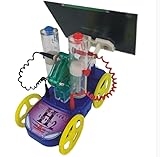
- Hydrogen Fuel Cell and Solar Power Generate Car
What still stands between research and commercial use?
DOE identifies three broad challenges to commercial realization:
- Selectivity and efficiency: The reaction pathways must produce the desired fuel selectively and efficiently, rather than wasting energy or generating unwanted products.
- Materials lifetime and activity: Components must keep their desired activity over long operating periods; light-absorbing materials can also face corrosion and degradation.
- Integrated-system control: Researchers need better understanding and control of how components interact when assembled into a working device.
A convincing commercial-readiness case would therefore require more than a promising catalyst or a successful laboratory reaction. It would need an integrated system with clearly reported solar-to-fuel efficiency under specified test conditions, product selectivity and yield, operating lifetime, and a credible path to affordable, scalable materials and product separation. The reviewed DOE accounts do not provide a like-for-like current efficiency dataset, so they do not support a numerical ranking of the routes.
Quick Recap
Product prices and availability are accurate as of the date/time indicated and are subject to change. Any price and availability information displayed on Amazon at the time of purchase will apply.
The Tool Desk
Outbyte PC Repair FREERepair Windows errors before they cause bigger problemsFix Now →Outbyte Driver Updater FREEScan for outdated or missing drivers - takes under a minuteDriver Scan →
