
Windows Errors? Fix Them Before They Spread
Repair common Windows errors and clear accumulated junk for a smoother, more stable PC - no reinstall needed.Free scan · no reinstallCrashes, No Sound, or Screen Glitches?
Random freezes, missing sound and display glitches usually trace back to one bad driver. Find and replace yours safely.Free scan · under a minuteiTechGuides is reader-supported. When you buy through links on our site, we may earn an affiliate commission. As an Amazon Associate I earn from qualifying purchases. Learn more
Big data and AI may help researchers find patterns in aging, hormones and muscle loss, but they have not established a reliable, personalized “longevity protocol.” For people concerned about age-related muscle loss, activity and non-pharmacological care remain central. Hormone tests and treatments need to be considered in the context of symptoms, medical history and evidence for the outcome a person actually wants—not a dashboard score or an isolated lab result.
Can AI help you live longer?
AI can help researchers analyze large biomedical datasets, identify patterns and develop questions for further study. The National Institutes of Health (NIH) supports AI-ready datasets, research algorithms and multidisciplinary partnerships, while emphasizing transparency, privacy and equity. That is a research opportunity, not evidence that a consumer AI service can predict an individual’s lifespan or prescribe a proven longevity treatment.
Aging datasets can combine sensitive information such as health records, laboratory measurements and changes tracked over time. NIH warns that sending research data to an external AI provider can result in unauthorized disclosure. Before entering health information into any AI tool, consider where it goes, who can access or reuse it, and whether its privacy protections are clear. Do not treat an AI-generated risk estimate or recommendation as a clinical diagnosis.
Do these 3 things before closing this tab:
1Scan for outdated or missing drivers - takes under a minute2Repair Windows errors before they cause bigger problems3Fix the driver behind crashes, sound loss and screen glitchesWhat to look for in an AI health tool
- Clinical outcomes: Does the tool have evidence that it improves a meaningful health outcome, rather than merely detecting a pattern or producing a score?
- Data provenance: Are the data sources and the people represented in them described? A model built on data that poorly represent a user may not apply to that user.
- Privacy and transparency: Are data handling and model limitations explained, and is it clear whether information is shared with an outside provider?
- Clinical involvement: Is a qualified clinician involved in interpreting findings and making decisions?
These are useful questions for assessing a tool; they do not amount to an endorsement or ranking of any particular platform.
#1 Best Overall
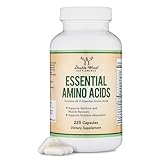
- CONTAINS ALL 9 ESSENTIAL AMINO ACIDS (EAAS): Each serving consists of a 1 gram powder blend of all 9 essential amino acids
- CONTAINS ALL BRANCHED CHAIN AMINO ACIDS (BCAAS): Each serving contains L-Leucine, L-Isoleucine, and L-Valine
- REQUIRED FOR COUNTLESS BODILY FUNCTIONS: The nine essential amino acids are required for many bodily processes such as building proteins and synthesizing neurotransmitters
- SUPPORTS MUSCLE RECOVERY AND GROWTH: Essential aminos help support muscle growth, muscle soreness, and exercise endurance
- WE BOTTLE WELLNESS: At Double Wood we provide pure, potent supplements that deliver exceptional value, all backed by careful sourcing and rigorous third-party testing
What can you do about age-related muscle loss?
Sarcopenia is a clinical condition involving loss of muscle strength and muscle mass or function. It is not interchangeable with a commercial goal such as “optimizing” body composition. If strength or mobility is changing, a clinician can assess whether a health condition, medication or other factor needs attention and help determine what kind of support is appropriate.
Start with non-pharmacological care
The International Clinical Practice Guidelines for Sarcopenia (ICFSR) place non-pharmacological management first. For older adults with sarcopenia, the guideline conditionally recommends combining nutritional supplementation with physical activity, but rates the evidence for that combination as very low certainty. That rating reflects limits including imprecision, few small trials and concerns about bias. It is not a blanket recommendation for everyone to take a supplement.
Physical activity, including strength-focused activity when appropriate, belongs in a muscle-health discussion. The suitable plan depends on a person’s ability, health and goals; a clinician or qualified exercise professional can help tailor it. A home aid such as resistance bands may be one way to support activity, but bands are not a treatment on their own or a substitute for clinical assessment.
Recommended Free Tools
Rank #2
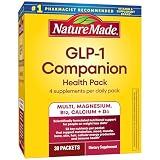
- Weight Loss Nutritional Support Supplement: Thirty individual packets of Nature Made GLP-1 Companion Health Pack for a 30-day supply—one month of daily packs
- Daily Multivitamin Packs Contain Four Supplements: Vitamin D3 + Calcium, Vitamin B12, Magnesium and a daily Multivitamin for men and women
- Multiple Benefits: 22 key nutrients per packet that supports metabolism, mood(1), muscle health, bone health, skin health, hair health, cellular energy production and immune health
- Mineral & Multi Vitamin Packets for Daily Use: Adults take the contents of 1 packet daily with water and a meal; Scientifically formulated nutritional support for people on a GLP1 or weight loss diet
- Gluten-Free Vitamins & Minerals: These GLP1 Companion Pack supplements are gluten-free with no synthetic FD&C dyes and no artificial flavors
Do not treat anabolic hormones as established sarcopenia therapy
The ICFSR guideline says, “The current evidence is insufficient to recommend anabolic hormones for the management of sarcopenia.” It also advises against pharmacologic treatment as first-line management. A biological role for testosterone in muscle, or an association between low testosterone and muscle loss, does not by itself show that raising testosterone will improve strength, physical function or longevity.
Can testosterone help build muscle as you age?
Testosterone treatment is not a general-purpose intervention for aging, low energy or muscle gain. The U.S. Food and Drug Administration (FDA) describes approved testosterone products as treatments for men with low testosterone associated with a medical condition. Whether treatment is appropriate depends on the indication and an individual medical assessment.
Evidence in older men is outcome-specific. The Endocrine Society’s scientific statement summarizes the Testosterone Trials as finding a modest, transient benefit for sexual function, but no benefit for vitality or physical or cognitive function. These findings do not establish testosterone as a way to prevent age-related muscle loss or extend life.
Rank #3

- 6’-SIALYLLACTOSE: 6’-SL, a clinically tested and scientifically supported novel ingredient, plays a unique function on muscle health. 6’-SL inhibits muscle protein degradation while promoting muscle protein synthesis. 6’-SL keeps muscle health by maintaining the balance between muscle protein synthesis and degradation.
- MUSCLE MASS INCREASE: 6’-SL boosted an essential muscle protein (Myosin Heavy Chain) production and muscle fiber size. 6’-SL helped muscle mass increase in key lower leg muscles, Gastrocnemius and Soleus muscle. (Source DOI: 10.3390/nu16162600)
- MUSCLE STRENGTH IMPROVEMENT: 6′-SL administration resulted in increased muscle strength in both normal and experimentally induced muscle weakness conditions. Both cases showed a notable improvement in grip strength. (Source DOI: 10.3390/nu16162600, 10.1016/j.bbrc.2024.150892)
- MUSCLE FATIGUE REDUCTION: 6′-SL helps reduce muscle fatigue by lowering blood lactate levels, supporting better work performance during endurance exercise. (Source DOI: 10.3390/nu16172957)
- AEROBIC & METABOLIC SUPPORT: In a 12-week double-blind human clinical study in healthy males, 6′-SL showed favorable changes in aerobic exercise capacity and energy metabolism, including fat and glucose oxidation. (Source DOI: 10.3390/nu18111743)
For cardiovascular safety, the FDA’s 2026 information summarizes the TRAVERSE postmarketing trial, published in 2023. Among more than 5,200 men who received at least one dose of AndroGel 1.62%, major adverse cardiovascular events occurred in 7.0% of participants receiving the product and 7.3% receiving placebo. The FDA said the trial did not show a new cardiovascular safety signal. Those trial results are not proof that testosterone is suitable for every older man or that it has no risks.
Free tools Windows power users keep installed
One-click scans. No signup required.
In June 2026, the FDA requested updates to testosterone product prescribing information, including removal of the age-related hypogonadism limitation and revisions to prostate-related information. A label update does not turn age alone, a muscle goal or an AI recommendation into a medical indication; treatment decisions still require clinical context.
Do you need hormone testing during menopause?
Usually, a single hormone test is not needed to determine where someone is in the menopause transition. NIH explains that hormone levels fluctuate substantially, which limits what one result can establish. Testing may have a role in particular clinical circumstances, but it should not be treated as a universal screening requirement or a stand-alone measure of “hormone optimization.”
Rank #4

- SUPPORTS BONE AND MUSCLE HEALTH (1): These magnesium tablets help maintain bone health and play a role in maintaining bone mineralization(1)
- EASY CONSUMPTION: These magnesium tablets are coated for easy swallowing, making it convenient to incorporate essential magnesium into your daily regimen
- HIGH POTENCY FORMULA: Each Nature's Bounty Magnesium 500mg tablet provides 119% of the recommended daily intake
- PROMOTES ENERGY METABOLISM (1): Magnesium is also involved in muscle contractions, nerve impulses, and energy metabolism (1)
- FREE FROM ARTIFICIAL FLAVORS: Natures Bounty Magnesium tablets are gluten-free and do not contain artificial flavors and sweeteners
Menopause treatment decisions depend on symptoms, health history and personal preferences. NIH says the benefit-risk profile of menopausal hormone therapy is generally more favorable for healthy women with bothersome symptoms who are younger than 60 or within 10 years of menopause onset. Hormone therapy also has risks and is not appropriate for everyone; individual discussion with a clinician matters.
What is known about testosterone for menopausal women?
Do not assume testosterone is an established way to improve women’s muscle health. In an August 2026 notice, the FDA identified important knowledge gaps for testosterone use in menopausal women, including effects on musculoskeletal health, challenges in measurement, and long-term cardiovascular and breast-cancer safety. A notice identifying unanswered questions is not evidence that treatment improves muscle outcomes or that long-term safety has been established.
Why a hormone dashboard is not a diagnosis
Personalization depends on reliable measurements and on knowing what a measurement can—and cannot—say. The Endocrine Society’s scientific statement calls for accurate, standardized hormone assays and harmonized reference ranges across endocrine axes. It also cautions that assay choice can affect whether low testosterone is identified. A number from one test, a composite dashboard score or a model-generated target should therefore not be presented as a validated diagnosis or universal goal.
Big data can be useful when measurements are collected consistently, linked to meaningful clinical outcomes and drawn from populations representative of the people to whom conclusions will be applied. AI may help researchers analyze those data. It cannot make a weak measurement reliable, make an unrepresentative dataset representative, or convert an association into proof that changing a hormone will improve health.
How to evaluate a proposed longevity or hormone plan
| Question | Why it matters |
|---|---|
| What condition or symptom is being addressed? | A treatment for a diagnosed medical condition is a different proposition from a product marketed for general aging, energy or muscle gain. |
| What outcome has been demonstrated? | Evidence about a biomarker or association does not necessarily show improved strength, function, symptoms or longevity. |
| How reliable and contextualized are the measurements? | Assay choice, fluctuating levels, reference ranges and clinical context can affect interpretation. |
| How are data protected and model limits explained? | Health information may be sensitive, and an AI output is only as applicable as its data and methods allow. |
| How do risks, timing and preferences affect the choice? | Hormone therapies are not appropriate for everyone; treatment decisions should reflect personal health history and priorities. |
For any proposed plan, ask what evidence supports the specific outcome you care about, who interprets the results, and what alternatives are available. For muscle concerns, that conversation can begin with clinical assessment and an individualized activity plan rather than a promise that an algorithm or hormone target will reverse aging.
Quick Recap
Product prices and availability are accurate as of the date/time indicated and are subject to change. Any price and availability information displayed on Amazon at the time of purchase will apply.
What’s actually slowing this PC down?
Pick the symptom - the matching free tool is one click away.

