
Free tools Windows power users keep installed
One-click scans. No signup required.
iTechGuides is reader-supported. When you buy through links on our site, we may earn an affiliate commission. As an Amazon Associate I earn from qualifying purchases. Learn more
Better detection of DNA synthesis orders requires more than matching a sequence against a list of dangerous organisms. A robust screening program combines sequence comparison, checks for fragments that could be assembled into a sequence of concern, review of the customer and order, and documented follow-up. The rules differ by jurisdiction and funding context, and screening-window requirements can change over time.
What does DNA synthesis screening detect?
DNA synthesis screening is a review of sequences requested from a provider that synthesizes nucleic acids. It looks for sequences that may match, or contribute to, a sequence of concern. A match is a signal for further review—not proof that a customer intends harm. The sequence, the order, and the customer need to be considered together.
HHS/ASPR guidance recommends screening synthetic DNA and RNA, in single- and double-stranded forms. Its expanded concept of sequences of concern includes sequences that contribute to pathogenicity or toxicity, not only sequences from agents already subject to regulation. The guidance says: “This guidance sets forth recommended baseline standards for the gene and genome synthesis industry (providers) and for manufacturers of benchtop nucleic acid synthesis devices.”
What’s actually slowing this PC down?
Pick the symptom - the matching free tool is one click away.
How can screening catch more than an exact sequence match?
Compare sequence windows, not just full-length sequences
A sequence can be short, altered, or embedded in a longer order. Screening over smaller windows lets a system compare sections of an order with sections of known sequences of concern. HHS recommends moving toward screening smaller windows and expanding the range of sequences considered as soon as practical. The applicable window length depends on the governing framework and its effective date; it is not a universal technical constant.
#1 Best Overall

- 33 Teacher Manipulatives: These colorful, large DNA, mRNA, ribosome, tRNA and amino acid models attach to your blackboard and can be seen from the back of the classroom. You simulate the process for your students at your own pace, allowing students to ask questions as you proceed.
- 180 Student Manipulatives: Students work at their tables using smaller size models to work through the process and internalize key concepts. Includes 5 sets of student materials, sufficient for a class of 30 students.
- Assessment: Each student is given a unique DNA sequence and is asked to identify the resulting amino acid sequence. Verification of the sequence is a snap using the included teacher key.
- No Consumables: The kit can be used over and over again, and can be shared by the entire science department.
- Instructional CD: A CD demonstrating how to use the kit is included. Students see protein synthesis in action, model it and are then assessed on the lessons. It is a complete package that makes complex biological processes fun for students and easy to teach!
Look for related sequences and possible fragments
Exact identity is not the only useful signal. UK Department for Science, Innovation and Technology guidance describes a best-match approach using local sequence alignment. It evaluates the greatest percent identity over 16-amino-acid or 50-nucleotide windows, in all six reading frames. That method is described in UK guidance; it should not be treated as a universal requirement for every jurisdiction.
Screening also needs to consider whether shorter components in an order could be assembled into a sequence of concern. A provider can assess components across an individual customer’s order, while detection across multiple orders or providers raises additional coordination and privacy questions.
Rank #2

- Model the molecular mechanics of gene expression — from DNA to protein. The Protein Synthesis Molecular Model Set from Mega Molecules is a hands-on educational tool designed to guide students through the complete process of protein synthesis: transcription and translation. Using color-coded components, this set allows learners to construct and manipulate accurate physical models of DNA, mRNA, tRNA, and amino acids—making the molecular biology behind gene expression tangible and engaging.
- This model set supports an active learning experience in which students construct DNA nucleotides using phosphoric acid, deoxyribose, and the four nitrogenous bases: adenine, thymine, cytosine, and guanine.
- Users build a DNA strand from a gene sequence (e.g., T-A-C-C-T-G-C-A-G-A-C-T), physically connecting the nucleotides via gray bonding links to represent covalent bonds.
- Users transcribe mRNA by pairing RNA nucleotides (adenine, uracil, cytosine, guanine) to the DNA template, demonstrating base pairing rules (e.g., A–U, C–G).
- Users model tRNA molecules with built-in anticodons and specific amino acid attachments—highlighting how tRNA ensures accurate translation at the ribosome.
Keep reference data current and review uncertain hits
A comparison is only as useful as the reference sequences and rules behind it. Providers need processes for maintaining screening databases and distinguishing sequences that warrant concern from pathogen-related sequences that should not trigger an unnecessary response. UK guidance identifies database integrity, confidentiality, and screening accuracy as ongoing challenges. A software tool’s stated capabilities do not by themselves establish how accurately it handles those cases.
Recommended Free Tools
Why do customer and order checks matter?
Sequence screening cannot establish intent by itself. HHS recommends that providers, third-party vendors, and customers verify the legitimacy of recipients of sequences of concern and keep records of transfers. UK guidance likewise calls for follow-up when an order matches a sequence of concern or could be assembled into one, alongside assessment of suspicious orders and customer legitimacy.
Rank #3

- Identify essential enzymes like helicase and polymerase
- Model replication of the leading and lagging strands of DNA
- Explore transcription as they copy one strand of DNA into mRNA using an RNA polymerase
- Engage in translation/protein synthesis as they decode the mRNA into protein on the ribosome placemat
- Reenact the different results of the Meselson and Stahl experiments
- Review the context: assess the customer, the requested sequence, and the purpose and pattern of the order rather than treating a match as a verdict.
- Follow up on a concerning result: seek information needed to determine whether the order is legitimate and apply the relevant provider or jurisdictional process.
- Keep appropriate records: document relevant screening and transfer decisions so they can be reviewed under applicable requirements.
For institutional buyers, procurement records and provider attestations are separate from the technical question of how a sequence is screened. A provider’s screening software cannot replace customer review, and customer checks cannot compensate for a narrow or stale sequence screen.
Which rules apply in the United States and the United Kingdom?
Guidance, procurement conditions, and national rules are not interchangeable. The following status reflects the sources cited here and is date-sensitive.
Rank #4
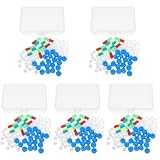
- Package includes five setsthe package list includes 5 x set of dna teaching model, providing multiple units for classroom rotation, group activities, or shared learning environments
- Package includes five setsthe package list includes 5 x set of dna teaching model, providing multiple units for classroom rotation, group activities, or shared learning environments
- Package includes five setsthe package list includes 5 x set of dna teaching model, providing multiple units for classroom rotation, group activities, or shared learning environments
- Package includes five setsthe package list includes 5 x set of dna teaching model, providing multiple units for classroom rotation, group activities, or shared learning environments
- Package includes five setsthe package list includes 5 x set of dna teaching model, providing multiple units for classroom rotation, group activities, or shared learning environments
| Context | What the cited source says | How to interpret it |
|---|---|---|
| U.S. HHS/ASPR guidance | Recommends baseline screening practices, broader coverage of synthetic nucleic acids and sequences of concern, and recipient checks and transfer records. | Recommendations are not the same as a statement that every U.S. provider is governed by an identical procurement condition. |
| U.S. federal research procurement | The 2024 OSTP Framework describes conditions on U.S. governmental life-sciences research funding tied to procurement of synthetic nucleic acids and benchtop devices from compliant providers or manufacturers. NIH’s October 25, 2024 notice says the policy applies to NIH-funded awards, requires procurement documentation, and took effect April 26, 2025. | NIH’s notice applies to NIH-funded awards; it should not be generalized into a claim about every provider or every funding source. ASPR reported that a May 5, 2025 executive order directed agencies to revise or replace the 2024 framework and said its page would be updated when a new framework became available. |
| U.S. screening-window timeline | The Johns Hopkins Center for Health Security implementation hub, as described on October 7, 2026, gives a 200-nucleotide window before October 13, 2026, and a 50-nucleotide window on or after that date. It also describes identifying possible assembly from shorter sequences in bulk or repeated orders by the same customer. | On October 9, 2026, the 50-nucleotide transition is scheduled but has not yet taken effect according to that source. Check the live implementation and agency pages for any update before relying on this timeline. |
| United Kingdom guidance | Guidance dated October 8, 2024, says providers should screen DNA or RNA molecules of at least 50 nucleotides, follow up on matches, and retain records. It also addresses customer legitimacy, suspicious transactions, and user authentication. | This is UK guidance and legal context, not U.S. law. |
How should organizations compare screening approaches?
There is no defensible accuracy ranking among the approaches described here. For a provider, laboratory, or institution evaluating a screening process, compare the design and evidence rather than relying on a product label or a single scale figure.
Quick wins for a faster PC:
Scan for outdated or missing drivers - takes under a minuteDriver Scan →Repair Windows errors before they cause bigger problemsFix Now →- Sequence scope and windowing: determine which nucleic-acid types, strands, sequences of concern, and window lengths are covered under the requirements that apply to you.
- Fragment and cross-order handling: ask whether the system considers components within an order and what process, if any, detects patterns across repeated orders or providers.
- Reference data and validation: examine how databases are maintained, how concerning matches are followed up, and what evidence supports the system’s performance claims.
- Privacy and cybersecurity: assess how sensitive sequence and customer data are protected, who can access them, and how database confidentiality and integrity are maintained. Cross-provider detection may raise data-protection and intellectual-property concerns.
- Customer review and records: confirm how recipient legitimacy, suspicious orders, escalation, and recordkeeping fit around the technical screen.
- Operational commitments: check current provider attestations, applicable requirements, and what happens if a provider changes its adherence or screening process.
The Johns Hopkins implementation hub describes commercial services, open-source tools, and in-house algorithms or software as possible implementation routes, and points to a non-exhaustive tool list. It also describes provider attestations and a 72-hour notification commitment if a provider ceases framework adherence. These are implementation details in that resource, not proof that any particular tool is more accurate or that any provider currently complies.
Best Value
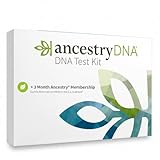
- TOP-SELLING CONSUMER DNA TEST: From your origins in over 3,600 places around the world to the most connections to living relatives, no other DNA test kit delivers an experience as unique and interactive as AncestryDNA
- YOUR DATA, YOUR CONTROL: We give you full control over your genetic information. You decide what to share, and with whom.
- FAMILY HISTORY MEMBERSHIP: The 3-month “World Explorer” membership gives you access to billions of family history records. The membership is redeemable during the AncestryDNA activation process only by the person activating the AncestryDNA test. The person redeeming the membership may choose to convert to an auto-renewing membership by submitting valid billing information.
- BUILD YOUR FAMILY TREE: Combine what you learn from your DNA results with an Ancestry subscription and gain access to millions of family trees and the world's largest collection of online family history records.
- ORIGINS AND INHERITANCE: AncestryDNA is the only DNA test that can show your origins results, DNA matches, and traits by each side of the family, without your parents taking a DNA test.
What does the available performance evidence establish?
The 2024 SecureDNA paper abstract describes a system the authors characterize as free, privacy-preserving, and automated, capable of screening orders of 30 or more base pairs against an up-to-date hazard database. The authors report assessing operational performance and specificity using 67 million base pairs of DNA synthesized by providers in the United States, Europe, and China.
That 67-million-base-pair figure is the scale of the sequence volume used in the authors’ evaluation, not an accuracy rate. The abstract does not provide a comparison with alternative systems, enough methodological detail to independently evaluate the performance claims, or a current independent validation. The sources discussed here do not establish comparable sensitivity, specificity, or false-positive benchmarks across tools. Treat vendor capabilities and individual study results as evidence to examine, not as a basis for declaring one approach best.
Quick Recap
Product prices and availability are accurate as of the date/time indicated and are subject to change. Any price and availability information displayed on Amazon at the time of purchase will apply.

