
Quick wins for a faster PC:
Repair Windows errors before they cause bigger problemsFix Now →Scan for outdated or missing drivers - takes under a minuteDriver Scan →Clear out junk files and repair common Windows errorsFree Scan →iTechGuides is reader-supported. When you buy through links on our site, we may earn an affiliate commission. As an Amazon Associate I earn from qualifying purchases. Learn more
The best Trello alternative depends on what your boards no longer handle. Consider ClickUp or monday.com for broader planning and reporting, Asana for more structure, Notion for projects alongside documentation, and Linear or Jira for software development. These are use-case matches, not universal winners; check each product’s current plan limits and pricing before switching.
Start with the limitation you need to solve
Moving from Trello makes sense when a specific part of your workflow has outgrown boards—not simply because another app has more features. Identify the gap first, then compare tools against the work your team actually does.

- Planning and reporting: Do you need timelines, dependencies, time tracking, sprints, or reports across projects?
- Workflow structure: Do teams need clearer processes and coordination while keeping a familiar visual workflow?
- Documentation: Would it help to keep project plans and reference material together?
- Software development: Do engineers need sprint planning, a backlog, or developer-focused integrations?
- Migration and cost: Which Trello integrations, automations, and workflows must survive the move, and what will the required seats cost on the plan you need?
These questions help narrow the shortlist. A product’s fit depends on configuration and plan access, so verify the details against your team’s actual workflow.
Alternatives for broader planning and reporting
ClickUp: more planning views and cross-project reporting
ClickUp may suit teams that have outgrown a board-only approach and want to evaluate additional planning views, sprints, time tracking, or cross-board reporting. These use cases come from ClickUp’s own 2026 comparison article, which is vendor-affiliated: ClickUp sells one of the alternatives it recommends. Treat its positioning as a starting point, not an independent product test or proof that ClickUp will fit a particular team.
#1 Best Overall

- Confidently track and manage large jobs with ease
- Project ruling provides instant organization for notes, plans & deadlines
- Premium-weight paper is perforated to detach easily
- Snag-resistant coil and extra-strong back are perfect for notes on the go
- Gray, navy or maroon cover, 7-1/4" x 9-1/2", 84 sheets
Before choosing it, test the views and reports your team actually needs, and check which capabilities are included in the current plan you would buy. Broader configuration can also mean more setup than a simple board workflow.
monday.com: visual reporting
ClickUp’s comparison also positions monday.com for teams that prioritize visual reporting. That characterization is from a competing vendor’s comparison, not a neutral assessment. Verify the reporting features, integrations, and plan limits directly with monday.com before making a decision.
Rank #2
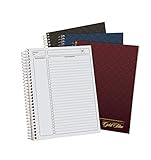
- 9-1/2 x 7-1/4
- Assorted Covers in Navy, Gray, Maroon
- Planner Ruled
- Designer Gold Fibre Series Planner Notebook. 84 Pages.
- INCLUDES 3 NOTEBOOKS: Each pack includes 3 notebooks that can be any combination of the three colors we offer: Navy, Gray, or Maroon; Your order may include 3 of the same color
Alternatives for more structured general work
Asana: structure with familiar board workflows
Asana is a candidate if your team wants more structured work while retaining a board-style way to view tasks. ClickUp’s vendor-authored comparison makes this distinction; it does not establish which specific Asana features your team can use on a given plan. Check the current plan details against your needs for views, reporting, dependencies, and collaboration.
Alternative for documentation alongside tasks
Notion: flexible documents and project tracking
Notion is worth considering if project tracking and documentation belong together—for example, when tasks need to sit alongside project notes or reference material. ClickUp’s comparison highlights this combined use case. A flexible workspace may require more configuration than a ready-made board: decide how your team will organize projects, pages, and tasks, then prototype a representative workflow before migrating everything.
Rank #3

- TURN YOUR IDEAS INTO REALITY: Unleash your creativity with this unique planning notebook, consisting of 224 pages divided into 112 Project Planner sheets. Each sheet is designed to step-by-step completion and management of your project.
- EMPOWER YOUR MANAGEMENT: This professional project organizer keeps all project-related information in one place. Stay on top of multiple projects with the convenient project tracker notebook feature, ensuring no detail is missed.
- ARCHIVE YOUR PROJECT GOALS: Stay focused on your projects with dedicated sections for objectives, tasks with deadline, essential supplies and tools notes, space for ideas and sketches illustration, and notes. Experience a simple yet powerful tool to ensure completion and accomplish more with ease.
- EFFICIENT BONUS STATIONARIES: You will receive either set of a ball pen and two cute sticky notes or a set of remind stick pads (randomly). The versatile design can be used for projects at home, work, school, or business to organize, manage a team, and to delegate tasks. This planner is a simple way to make sure you finish what you start and accomplish more.
- HANDLE SINGLE PROJECT IN HAND: Designed with tearable sheets allow you taking any single sheet for more convenient. 7x10 inch sheets are printed on 70 lb premium paper. With advanced printing technology and leather cover, our planner exudes a premium feel and long lasting.
Alternatives for software development
Linear: a focused engineering workflow
Linear is positioned by ClickUp’s comparison for engineering teams looking for sprint workflows without the complexity that comparison associates with Jira. This is a vendor-affiliated characterization, not a universal measure of complexity. Evaluate it against your team’s backlog, sprint, and developer integration requirements.
Jira: Scrum, backlogs, and developer integrations
Jira is the candidate to assess when software teams need fuller Scrum and backlog processes or developer integrations, according to the same ClickUp comparison. Confirm the current configuration and plan fit with your team: the comparison’s broad positioning does not establish whether Jira is the right level of process for your projects.
Rank #4

- Sold Individually as 3 Each
- Numbered spaces with heading and action columns
- Microperforation, 84 White Sheets
- Sheet Size: 9-1/2"x7-1/4"
- Dark Green Cover
Compare the shortlist before you migrate
Use the same questions for each finalist rather than comparing feature lists in isolation. Current pricing and plan limits are not presented here as a side-by-side table because the available official pricing pages did not establish a consistent, comparable set of figures. Prices and entitlements can change; check each vendor’s current terms for your region and seat count.
Free tools Windows power users keep installed
One-click scans. No signup required.
Quick Recap
Best Value
- Workflow fit: Can the tool represent the actual stages and handoffs your team uses?
- Views: Are the board, timeline, and other views you need available on the plan under consideration?
- Reporting and dependencies: Can the team track progress across projects and show task relationships as required?
- Engineering needs: If applicable, does it support your backlog and sprint process?
- Documentation: Does it support the way your team stores and finds project knowledge?
- Setup: How much configuration will be needed to make the tool usable for the people doing the work?
- Integrations: Do the services your team relies on connect in the way you need?
- Migration effort: Can you transfer or recreate the boards, task details, automations, and habits that matter?
- Total cost: What does the required plan cost for your actual number of seats, and which limits or features affect that calculation?
How to switch without disrupting work
- Inventory the workflow: List the Trello boards, lists, labels, fields, automations, integrations, and recurring processes your team actively uses. Separate essential workflows from outdated boards.
- Choose a representative project: Test a real but manageable project in the alternative. Include the handoffs, views, reporting, and documentation that made you consider leaving Trello.
- Verify plan and integration requirements: Confirm current limits and feature availability directly with each vendor, and check that required integrations work on the intended plan.
- Test data transfer: Review the available export and import paths for Trello and the destination. Check how task details and other information your team depends on are preserved; do not assume automations or integrations will transfer unchanged.
- Run a limited pilot: Have the people who will use the tool complete normal work in it. Record configuration problems and missing capabilities before moving additional projects.
- Calculate seat-based cost: Compare the plans that cover your required features at your real seat count, using current vendor pricing and terms rather than old comparison figures.
- Set a cutover plan: Decide which tool is authoritative during the transition, who handles updates, and when the team will stop creating new work in Trello.

