
iTechGuides is reader-supported. When you buy through links on our site, we may earn an affiliate commission. As an Amazon Associate I earn from qualifying purchases. Learn more
There is no single best storage array for 2026: the leader depends on whether you need to feed accelerators during training, write checkpoints, or serve inference workloads. The latest published MLPerf Storage results, released by MLCommons on September 1, 2026, show different leaders for different tests. SPC-1 results measure a different kind of work—random I/O for business applications—and cannot be used as an AI-storage ranking. The figures below are workload- and configuration-specific, not a universal speed contest.
Which storage system leads each AI workload?
MLPerf Storage v3.0 covers training, checkpointing, vector database (VDB) indexing and querying, and large-language-model KV-cache reads and writes. It also adds an S3 object access layer alongside POSIX. MLCommons reported 19 submitting organizations in the September 2026 round. The results comparison reports 143 individual results; that count is distinct from the organization count.
The published numbers below are reported results for specific workloads and configurations. They should be compared only with results for the same workload and accelerator type, after checking the complete system configuration and supplemental information.
Outdated Drivers Are Slowing You Down
One free scan finds every outdated or missing driver and matches the right update for your exact hardware.Free scan · exact hardware matchWindows Errors? Fix Them Before They Spread
Repair common Windows errors and clear accumulated junk for a smoother, more stable PC - no reinstall needed.Free scan · no reinstall| System | Published result | What it indicates |
|---|---|---|
| YanRongTech F9000X | 543.9 GiB/s on 3D U-Net, feeding 99 simulated B200 accelerators, according to the current comparison of MLPerf Storage v3.0 results. | Highest reported training throughput in that comparison. |
| TuringData F9200 | 541.5 GiB/s on 3D U-Net from three storage nodes. Its reported Checkpoint-70B result is 539.9 GiB/s read and 307.1 GiB/s write. | A strong reported 3D U-Net result, with separate checkpoint read and write figures. |
| Everpure FlashBlade//EXA | At 30 data nodes, 877.5 GiB/s checkpoint write and 833 GiB/s checkpoint read; 1,623 GiB/s KV-cache read, as reported in the current comparison. | The comparison identifies it as a checkpointing and inference leader. |
| Azure Managed Lustre | 642.2 GiB/s checkpoint write from a 4,096 TiB managed cloud deployment, according to the current comparison. | The comparison describes it as the first hyperscale cloud service submitted to this round. |
| NVIDIA AIStore | 20 submissions over S3 object storage across OCI, AWS, and GCP, according to the current comparison. | Shows broad cloud-platform participation; the cited count is not a throughput result. |
These entries do not share one workload or configuration. For example, the F9000X 3D U-Net training figure cannot be directly ranked against FlashBlade//EXA’s checkpoint-write or KV-cache-read figures. Likewise, the fact that one system has a higher headline number does not establish that it is faster for a different application.
#1 Best Overall

- Value NAS with RAID for centralized storage and backup for all your devices. Check out the LS 700 for enhanced features, cloud capabilities, macOS 26, and up to 7x faster performance than the LS 200.
- Connect the LinkStation to your router and enjoy shared network storage for your devices. The NAS is compatible with Windows and macOS*, and Buffalo's US-based support is on-hand 24/7 for installation walkthroughs. *Only for macOS 15 (Sequoia) and earlier. For macOS 26, check out our LS 700 series.
- Subscription-Free Personal Cloud – Store, back up, and manage all your videos, music, and photos and access them anytime without paying any monthly fees.
- Storage Purpose-Built for Data Security – A NAS designed to keep your data safe, the LS200 features a closed system to reduce vulnerabilities from 3rd party apps and SSL encryption for secure file transfers.
- Back Up Multiple Computers & Devices – NAS Navigator management utility and PC backup software included. NAS Navigator 2 for macOS 15 and earlier. You can set up automated backups of data on your computers.
What MLPerf Storage does—and does not—measure
Training throughput is a storage-feed test
In the training test, simulated accelerators read real data through PyTorch. The benchmark skips accelerator arithmetic by sleeping for a measured batch-computation interval. A valid result must meet workload-specific accelerator-utilization thresholds, and the listed training figures average five consecutive measured runs. This tests the data path from storage to client DRAM; it is not an end-to-end measurement of training a model.
Microsoft’s explanation of the benchmark likewise says it does not assess GPU computation, model accuracy, or total training time. A high storage result therefore cannot by itself predict how quickly a particular team will train a model.
Rank #2

- Value NAS with RAID for centralized storage and backup for all your devices. Check out the LS 700 for enhanced features, cloud capabilities, macOS 26, and up to 7x faster performance than the LS 200.
- Connect the LinkStation to your router and enjoy shared network storage for your devices. The NAS is compatible with Windows and macOS*, and Buffalo's US-based support is on-hand 24/7 for installation walkthroughs. *Only for macOS 15 (Sequoia) and earlier. For macOS 26, check out our LS 700 series.
- Subscription-Free Personal Cloud – Store, back up, and manage all your videos, music, and photos and access them anytime without paying any monthly fees.
- Storage Purpose-Built for Data Security – A NAS designed to keep your data safe, the LS200 features a closed system to reduce vulnerabilities from 3rd party apps and SSL encryption for secure file transfers.
- Back Up Multiple Computers & Devices – NAS Navigator management utility and PC backup software included. NAS Navigator 2 for macOS 15 and earlier. You can set up automated backups of data on your computers.
Checkpointing tests write and recovery-read behavior
Checkpoint tests address saving model state and reading it back. Write and read figures are separate workload results: a fast checkpoint write does not automatically establish equally fast recovery reads. Compare the same checkpoint test and inspect the configuration before using either figure for procurement.
VDB and KV-cache tests add inference-related workloads
Version 3.0 added VDB indexing and querying and LLM KV-cache read and write tests. These additions broaden the benchmark beyond training and checkpointing, but their results remain specific to those test workloads. They are not interchangeable with general-purpose latency, database, or application benchmarks.
Rank #3
- Value NAS with RAID for centralized storage and backup for all your devices. Check out the LS 700 for enhanced features, cloud capabilities, macOS 26, and up to 7x faster performance than the LS 200.
- Connect the LinkStation to your router and enjoy shared network storage for your devices. The NAS is compatible with Windows and macOS*, and Buffalo's US-based support is on-hand 24/7 for installation walkthroughs. *Only for macOS 15 (Sequoia) and earlier. For macOS 26, check out our LS 700 series.
- Subscription-Free Personal Cloud – Store, back up, and manage all your videos, music, and photos and access them anytime without paying any monthly fees.
- Storage Purpose-Built for Data Security – A NAS designed to keep your data safe, the LS200 features a closed system to reduce vulnerabilities from 3rd party apps and SSL encryption for secure file transfers.
- Back Up Multiple Computers & Devices – NAS Navigator management utility and PC backup software included. NAS Navigator 2 for macOS 15 and earlier. You can set up automated backups of data on your computers.
Do not normalize by client count
Microsoft explains that the reported throughput is aggregate storage-system throughput; the number of client nodes is a load-generator configuration, not a basis for normalizing storage performance. MLCommons identifies usable-capacity-normalized bandwidth, rack-unit density, and throughput per watt as potentially useful comparisons when those values are reported. Its methodology cautions against client-normalized throughput and comparisons across different workload or accelerator types.
How SPC-1 differs from AI storage benchmarks
SPC-1 measures predominantly random I/O for business-critical applications such as OLTP, databases, and mail servers. Its purpose is different from testing an AI system’s ability to stream training data, save checkpoints, handle vector workloads, or serve KV-cache traffic. An SPC-1 IOPS figure is not evidence that an array is the fastest choice for AI.
Rank #4
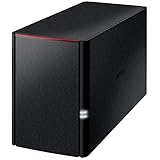
- Value NAS with RAID for centralized storage and backup for all your devices. Check out the LS 700 for enhanced features, cloud capabilities, macOS 26, and up to 7x faster performance than the LS 200.
- Connect the LinkStation to your router and enjoy shared network storage for your devices. The NAS is compatible with Windows and macOS*, and Buffalo's US-based support is on-hand 24/7 for installation walkthroughs. *Only for macOS 15 (Sequoia) and earlier. For macOS 26, check out our LS 700 series.
- Subscription-Free Personal Cloud – Store, back up, and manage all your videos, music, and photos and access them anytime without paying any monthly fees.
- Storage Purpose-Built for Data Security – A NAS designed to keep your data safe, the LS200 features a closed system to reduce vulnerabilities from 3rd party apps, SSL encryption for secure file transfers, and RAID for redundancy.
- Back Up Multiple Computers & Devices – NAS Navigator management utility and PC backup software included. NAS Navigator 2 for macOS 15 and earlier. You can set up automated backups of data on your computers.
The Storage Performance Council’s current results page identifies active published results as SPC-1 version 3 and retains older results as historical. Its table also distinguishes accepted results from submissions still under review.
| SPC-1 entry | Published IOPS | Status and qualification |
|---|---|---|
| ExponTech WDS V3 | 27,201,325 IOPS | Accepted result; submitted in 2023 and accepted November 19, 2023, according to the Storage Performance Council’s active results table. |
| FlashNexus FN8200 | 30,002,765 IOPS | Submission dated February 25, 2025, marked “Submitted for Review” in the active table. It is not the accepted SPC-1 record. |
The larger pending number should not be presented as an accepted record. Acceptance status is part of the result, not a footnote to ignore.
Best Value

- [Quad-Core Processor for Daily Tasks] Powered by Realtek RTD1619B quad-core 1.7GHz CPU, ensuring stable performance for file storage, backup, and personal cloud usage.
- [Fast 2.5GbE Network Upgrade] Equipped with 2.5-Gigabit Ethernet, delivering faster transfer speeds than traditional Gigabit NAS for home data management.
- [1GB DDR4 Efficient Memory] Optimized 1GB DDR4 memory ensures stable system performance for basic multitasking and background services.
- [Personal Cloud Backup Solution] Create your own private cloud to store, access, and manage files securely from anywhere with full data ownership.
- [Tool-Free Installation for Fast & Easy Setup] Designed for user convenience with tool-free drive installation, allowing quick HDD/SSD setup without screws—perfect for beginners and IT professionals.
How to judge benchmark evidence before buying
Separate the evidence types
- Published benchmark submission: A result reported under a named benchmark and workload, such as MLPerf Storage v3.0 or an accepted SPC-1 result. Preserve the benchmark version, workload, configuration, and acceptance status when quoting it.
- Vendor or partner claim: A performance figure that the current comparison identifies as based on vendor testing or a projection. Precision does not make such a claim an audited result. Keep claims of rack-scale throughput visually and verbally separate from benchmark submissions.
- Deployment evidence: A named operator or installation can show that a system has been adopted, but adoption is not a benchmark result and does not establish performance for another customer’s configuration.
The current StorageReview guide separates AI-native specialists from incumbent enterprise vendors and presents different evidence levels for each. It lists DDN, Hammerspace, WEKA, and VAST among AI-native specialists, and Dell and other incumbent storage brands among vendors with AI product lines. The guide says DDN has v2.0 MLPerf results but did not submit to v3.0; Hammerspace also did not submit to v3.0; WEKA’s most recent audited submission is v1.0; and VAST has not submitted to MLPerf Storage. These are guide-reported statuses, not independent vendor-by-vendor verification here.
The guide names CoreWeave, xAI Colossus, and Nebius as multi-vendor or named deployment examples. Treat these as reported adoption examples, not as comparative benchmark data. A separate v3.0 comparison says several prominent v2.0 submitters did not participate in the latest round. Missing current-round data is not proof of weaker performance.
Use a workload-matched procurement checklist
- Match the benchmark workload and accelerator type to the job you plan to run.
- For training, examine sustained data-feed throughput and the supported accelerator scale; for checkpointing, examine both write and recovery-read results.
- For inference, check the relevant vector or KV-cache behavior rather than substituting a training score.
- Review usable-capacity-normalized bandwidth, rack density, and power efficiency only where comparable figures are reported.
- Confirm whether the data path uses POSIX or S3, and inspect the tested architecture and complete configuration.
- Use deployment examples as adoption context, and keep them distinct from measured performance evidence.
What the 2026 standings mean for “best”
For the workloads represented in the published v3.0 comparison, YanRongTech F9000X leads the cited 3D U-Net training figure; Everpure FlashBlade//EXA leads the cited checkpointing and KV-cache examples; and Azure Managed Lustre posts a notable checkpoint-write result from a large managed deployment. TuringData F9200 has closely grouped reported 3D U-Net throughput and its own Checkpoint-70B read/write results. These are useful shortlists by workload, not a single overall winner.
The Tool Desk
Outbyte PC Repair FREEClear out junk files and repair common Windows errorsFree Scan →Outbyte Driver Updater FREEScan for outdated or missing drivers - takes under a minuteDriver Scan →MLCommons reported median and maximum on-premises efficiency figures for this round: 14 GB/second per watt median and 201 maximum for checkpoint writes, and 34 GB/second per watt median and 277 maximum for UNet3D reads. These are submission-set statistics reported by MLCommons in 2026, not guaranteed efficiency values for any named array. Use per-system efficiency data only when the relevant configuration and measurement are available.
The available comparison is strongest for AI and neocloud storage as of October 5, 2026. It is not a complete ranking of mainstream enterprise block/file arrays or SMB storage products. For those segments, this evidence alone does not establish a best array; evaluate the relevant application workload and evidence rather than extending an AI benchmark ranking beyond its scope.
Quick Recap
Product prices and availability are accurate as of the date/time indicated and are subject to change. Any price and availability information displayed on Amazon at the time of purchase will apply.

