
Quick wins for a faster PC:
Fix the driver behind crashes, sound loss and screen glitchesFind Drivers →Repair Windows errors before they cause bigger problemsFix Now →iTechGuides is reader-supported. When you buy through links on our site, we may earn an affiliate commission. As an Amazon Associate I earn from qualifying purchases. Learn more
Short answer: For the clearest long-term consumer commitment, eero is the easiest choice: its policy guarantees software security updates for at least five years from the date you buy a new device. ASUS publishes dated, region-specific support entries, including four years for the RT-AX86U Pro in the UK through 31 December 2026. NETGEAR requires an exact-model end-of-service check, TP-Link separates current and legacy product lines, and Ubiquiti UniFi provides unusually flexible update controls without publishing one universal consumer-router lifespan. OpenWrt can extend a compatible router’s useful life, but it requires technical ownership and ongoing maintenance.
Support is only one part of a good purchase. Confirm the exact model, country, Wi-Fi generation, Ethernet capacity, coverage, mesh requirements and client compatibility before paying for hardware. A fast router that has already reached end of service is a worse long-term investment than a slightly slower model that still receives security fixes.
Which router has the longest documented security support?
Among the policies covered here, eero has the clearest broad consumer promise. Its published policy says: “We’ll support your eero devices with guaranteed software security updates until at least five years from when you bought them new on eero.com or Amazon.com.” The clock begins at purchase, not at the date a model was introduced, which makes the commitment easier to apply when shopping for a current device.
Recommended Free Tools
Other manufacturers use different systems. ASUS publishes support dates by model and region. NETGEAR publishes an end-of-service (EOS) date for each product. TP-Link distinguishes actively supported product lines from legacy hardware. Ubiquiti’s UniFi platform emphasizes centralized update management and visible releases rather than a single published lifespan for every consumer model. OpenWrt is a third-party route: longevity depends on whether the exact hardware revision remains supported and whether you are prepared to install and maintain the firmware.
#1 Best Overall

- THE SPEED OF EERO MAX 7 - With two 10 Gigabit Ethernet ports, you can enjoy wired speeds up to 9.4 Gbps, wireless speeds up to 4.3 Gbps, and multi-gigabit backhaul speeds—making your network seriously fast.
- THE POWER OF WI-FI 7 TECHNOLOGY - Wi-Fi 7 technology can provide more than twice the speed of Wi-Fi 6, so you can enjoy greater capacity, less latency, and more efficiency on your network.
- TRUEMESH RELIABILITY - Our patented TrueMesh network intelligence dynamically finds the ideal path for data transfer, limiting interference and helping ensure fast, reliable internet.
- LEVEL UP YOUR GAME - eero Max 7 helps deliver high performance gaming experiences, ideal for AR, VR, and cloud applications that require high throughput and low latency.
- ADVANCED DIGITAL SECURITY - An optional subscription to eero Plus protects your data, helping to keep your family’s personal information, connected devices, and network protected from online threats.
| Option | Published support evidence | How updates are delivered | Main qualification |
|---|---|---|---|
| eero | At least five years of software security updates from purchase of a new unit through eero.com or Amazon.com | Managed product ecosystem; verify the update controls for your model | Applies to the stated purchase channels and security-update policy; hardware and feature support can differ |
| ASUS | Model- and region-specific dates; the UK PSTI table lists RT-AX86U Pro for four years through 31 December 2026 | Manufacturer firmware updates | Do not transfer the UK date to another country or to another model |
| NETGEAR | Model-specific end-of-service dates | Manufacturer firmware, including security fixes when provided | Check the exact EOS date before purchase |
| TP-Link | Current product lines have an active firmware program; legacy fixes are supplied only where technically feasible | Manufacturer firmware | “Legacy” status can limit future fixes |
| Ubiquiti UniFi | No universal consumer-router duration is published in the material reviewed; a Singapore cybersecurity listing shows 31 December 2027 for specific listed products | Automatic, scheduled or manual updates through UniFi Update Manager | The 2027 date is regional and model-specific, not a brand-wide guarantee |
| OpenWrt-compatible hardware | Depends on the exact device and the supported OpenWrt branch; the OpenWrt 24.10 support horizon is stated as extending into 2026 | Owner-installed third-party firmware; manual administration | Compatibility, installation skill and future maintenance are your responsibility |
These are not interchangeable promises. A dated EOS entry tells you when a manufacturer expects support to end. A guaranteed period from purchase is easier for a buyer to calculate. A flexible update manager improves administration but does not, by itself, prove how many years a device will receive fixes. Third-party firmware can outlive the vendor’s support, but only if the project still supports your exact hardware.
Why firmware support matters more than a headline Wi-Fi speed
A router sits between every device on your network and the internet. Its firmware controls wireless encryption, the administration interface, routing services and exposed network functions. When a vulnerability is discovered, a patch is useful only if the vendor still builds and distributes firmware for that model.
Once a router reaches end of service, it may continue to deliver the advertised Wi-Fi rate, but the security risk changes. New vulnerabilities can remain unpatched, and newer phones, laptops or smart-home devices may stop receiving compatibility improvements. Replacing an otherwise working router feels wasteful, which is why a documented support horizon should be part of the purchase decision rather than an afterthought.
Look for three separate signals:
- A defined horizon: a guaranteed period, a dated EOS entry or an explicit branch lifecycle.
- A working delivery path: automatic, scheduled or clearly documented manual updates.
- Evidence of vulnerability handling: a published disclosure process, security advisories or transparent release notes.
WPA3 support is also worth checking, but it should not distract from patch availability. A router can advertise a modern wireless standard and still be a poor long-term choice if its firmware is no longer maintained.
How to evaluate a router’s support promise before buying
1. Identify the exact model and hardware revision
Support is frequently model-specific. “AX” or “Wi-Fi 6” on a product family does not prove that every variant has the same end date. Record the full model name, regional suffix and hardware revision shown on the retailer listing or box. If a manufacturer publishes separate entries for revisions, match that identifier exactly.
2. Check the country-specific policy
Regulatory tables and support pages can differ by country. ASUS’s UK PSTI table is a clear example: it lists the RT-AX86U Pro with four years of security-update support through 31 December 2026. That date is evidence for the UK entry, not an automatic worldwide promise. Before importing a router, check the support statement for the country where it will be used and where it was sold.
Rank #2
- ADVANCED DIGITAL SECURITY - An optional subscription to eero Plus protects your data, helping to keep your family’s personal information, connected devices, and network protected from online threats.
- PARENTAL CONTROLS - With eero Plus, set wifi schedules and age-appropriate content filters to help regulate internet usage for a safer experience for your kids.
- AD BLOCKING - Speed up and improve your browsing experience with eero Plus ad and tracker blocking.
- THE SPEED OF EERO MAX 7 - With two 10 Gigabit Ethernet ports, you can enjoy wired speeds up to 9.4 Gbps, wireless speeds up to 4.3 Gbps, and multi-gigabit backhaul speeds—making your network seriously fast.
- THE POWER OF WI-FI 7 TECHNOLOGY - Wi-Fi 7 technology can provide more than twice the speed of Wi-Fi 6, so you can enjoy greater capacity, less latency, and more efficiency on your network.
3. Find the end-of-service or lifecycle date
For NETGEAR, search the exact model’s EOS information before checkout. The company says firmware updates can contain security fixes, but the useful question is whether the model is still inside its service period. A product with an EOS date only months away should be treated as short-lived even when the discount is attractive.
The Tool Desk
Outbyte Driver Updater FREEScan for outdated or missing drivers - takes under a minuteDriver Scan →Outbyte PC Repair FREEClear out junk files and repair common Windows errorsFree Scan →4. Determine who controls updates
Automatic updates reduce the chance that a household forgets to patch. Scheduled updates are useful when you need to avoid work or study hours. Manual updates provide control but require someone to monitor advisories and log in. Ubiquiti UniFi explicitly supports all three approaches through Update Manager: “UniFi supports flexible update options, allowing you to automate or schedule updates and manually trigger them when needed.”
5. Separate security support from feature support
A vendor may continue shipping security fixes after it stops adding new features, or it may publish a date that covers only security updates. Read the wording carefully. The eero promise is specifically for software security updates. Do not interpret it as a guarantee that every future feature, throughput improvement or accessory will work on every older unit.
eero: the clearest purchase-based guarantee
eero is the strongest fit for a buyer whose first question is, “How long will I receive security fixes?” The policy guarantees at least five years of software security updates from the purchase of a new device through eero.com or Amazon.com. Because the term starts on the purchase date, a newly purchased current model does not lose several years of promised coverage simply because the hardware has been on sale for a while.
Why it stands out
- The duration is stated in years rather than hidden behind an unknown EOS date.
- The starting point is clear: the date a new unit was bought through the specified channels.
- It suits households that want a managed mesh setup rather than a highly manual firmware routine.
What to verify
Confirm that the unit is new and bought through one of the channels named in the policy. Check the exact model’s Wi-Fi generation, Ethernet ports and coverage for your home; a five-year security promise does not compensate for inadequate capacity or placement. Also distinguish security updates from optional feature support when comparing older and newer eero hardware.
Best fit
The eero Max 7 mesh Wi-Fi router is the natural shortlist candidate for readers who prioritize a clearly stated five-year security-update guarantee and a simple managed mesh setup. Choose it for that support clarity and the mesh format, not merely for a speed label.
Rank #3
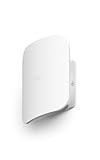
- THIS WIFI BRINGS ALL THE TOYS TO THE YARD - eero Outdoor 7 provides up to 15,000 sq. ft. of mesh wifi coverage outdoors (a 70 foot radius) and connects 100+ devices, so you can stay connected, whether you’re on the patio or in the treehouse.
- WEATHERPROOF IP66 - Tested to operate between -40°F and 131°F. With an IP66 rating for protection from dust, rain, and snow, eero Outdoor 7 can safely remain outdoors all year round.
- BUILT FOR SPEED - Wi-Fi 7 technology delivers wireless speeds up to 2.1 Gbps so you can scroll, surf, swipe, and stream outside.
- POWER(FUL) FLEXIBILITY - Powered by AC or Power over Ethernet (PoE+).
- WIFI SETS UP IN MINUTES - Once you’ve installed your eero Outdoor 7, use the eero app to guide you through setup, control your network, receive automatic updates, and manage your network from anywhere.
ASUS: useful dated evidence, but only for the right region and model
ASUS publishes regional support tables rather than one universal promise. Its UK PSTI networking-product table lists the RT-AX86U Pro and other products for four years of security-update support, ending on 31 December 2026.
How to interpret the date
“Four years” does not necessarily mean four years from your checkout date. The table’s end date is 31 December 2026, so a purchase made late in 2026 has substantially less remaining coverage than a purchase made when the entry was first issued. Treat the calendar date as the controlling fact.
Checks before purchase
- Confirm that your country’s ASUS support table lists the exact model.
- Match the hardware revision and regional suffix.
- Read whether the entry covers security updates, general firmware or both.
- Compare the remaining time to the router’s expected ownership period.
Best fit
The RT-AX86U Pro is a sensible single-router option when the dated entry applies to your market and the remaining support period meets your needs. It is not evidence that every ASUS router has the same horizon, and the UK date must not be presented as a global commitment.
Free tools Windows power users keep installed
One-click scans. No signup required.
NETGEAR: make the EOS lookup part of your shopping process
NETGEAR publishes end-of-service dates, so support is determined one model at a time. The company notes that firmware updates can contain security fixes. That combination is useful only if you check the EOS record before buying.
A practical NETGEAR check
- Write down the complete model number, including any regional suffix.
- Locate the manufacturer’s EOS or product-lifecycle entry for that model.
- Record the stated end date and compare it with your planned ownership period.
- Check the latest firmware release notes for security fixes and the supported update method.
If the EOS date is missing, unclear or imminent, assume the support horizon is uncertain rather than treating the absence of a warning as a guarantee. A discounted model can be good value for a short deployment, but it is a weak choice for a household seeking many years of security maintenance.
TP-Link: distinguish current lines from legacy hardware
TP-Link says: “For our currently supported product lines, we maintain an active firmware update program and a published process for vulnerability disclosure.” That is a positive signal because it addresses both ongoing updates and how vulnerabilities are reported.
Rank #4

- OUR MOST AFFORDABLE WI-FI 7 ROUTER - eero 7 helps you future-proof your network and make the most of Wi-Fi 7 performance starting today.
- SAY GOODBYE TO DEAD SPOTS - eero 7 minimizes network disruptions to help ensure you have fast, reliable wifi in every room of your home.
- FULL SPEED AHEAD - Support for internet plans up to 2.5 Gbps with two auto-sensing 2.5 GbE ports and wireless speeds up to 1.8 Gbps.
- HIGHLY CONNECTED - Three eero 7s support 120+ devices and 6,000 sq. ft. of coverage, so there’s plenty of reliable Wi-Fi 7 performance to go around.
- BACKWARD COMPATIBLE - eero 7 is backward compatible with all previous generations of eero and compatible with eero Built-in on select Amazon Echo devices.
The qualification is important. TP-Link separates currently supported product lines from legacy hardware, and legacy fixes are provided only where technically feasible. “Technically feasible” is not a fixed number of years, so do not convert it into a guaranteed lifespan.
How to use the policy
- Check whether the exact product line is listed as current rather than legacy.
- Look for a recent firmware history and security advisories.
- Prefer a current model when the expected ownership period is long.
- Do not assume that a successor model’s support status applies to an older router with a similar name.
This approach can work well when you are comfortable checking status periodically. It is less predictable than eero’s purchase-based guarantee because the category of the product line matters.
Ubiquiti UniFi: excellent update control, no single universal lifespan
UniFi is attractive to owners who want centralized administration. Update Manager supports automatic, scheduled and manual updates, allowing a household or small office to choose how much control it wants over rollout timing. The interface also exposes active releases, making it easier to see what is available than on a router that requires occasional visits to a support page.
What the documentation does and does not prove
The reviewed material does not establish one universal consumer-router support duration for Ubiquiti. A Singapore Cybersecurity Labelling listing shows 31 December 2027 for specific listed products, but that date is regional and model-specific. It must not be generalized to every UniFi gateway, router or access point.
Operational trade-offs
- Automatic updates: least hands-on, but you should still plan for reboots and verify that important services recover.
- Scheduled updates: useful when internet downtime must occur during a chosen window.
- Manual updates: maximum control, with a corresponding obligation to monitor releases.
- Managed ecosystem: centralized tools can simplify multiple devices, but the learning curve is higher than a basic consumer router.
Best fit
The UniFi Dream Router belongs on the shortlist for a user who values centralized update controls and is willing to learn a managed networking system. Buy it on the strength of those controls and the verified lifecycle of the exact model, not on an assumed brand-wide end date.
Windows Errors? Fix Them Before They Spread
Repair common Windows errors and clear accumulated junk for a smoother, more stable PC - no reinstall needed.Free scan · no reinstallOutdated Drivers Are Slowing You Down
One free scan finds every outdated or missing driver and matches the right update for your exact hardware.Free scan · exact hardware matchOpenWrt: the advanced route to a longer hardware life
OpenWrt can keep compatible hardware useful after the original vendor stops maintaining it. The trade-off is that you become responsible for firmware selection, installation, configuration, updates and recovery. It is a longevity strategy, not a zero-maintenance guarantee.
Best Value

- WIFI AT THE SPEED OF LIFE - eero Pro 7 brings next-generation speed and reliability to home and business networks with high bandwidth needs.
- RELIABLE CONNECTIVITY - eero Pro 7 helps eliminate dead spots, so you stay connected across different floors and rooms throughout your home and small or medium-sized business.
- PRO-LEVEL SPEED - Support for internet plans up to 5 Gbps with two auto-sensing 5 GbE ports and wireless speeds up to 3.9 Gbps handle your network’s most demanding wifi needs.
- HYPER-CONNECTED - eero Pro 7 supports 200+ devices and 2,000 sq. ft. of coverage (a 25 foot radius), so there’s no shortage of Wi-Fi 7 performance for your work and life.
- BACKWARD COMPATIBLE - eero Pro 7 is backward compatible with all previous generations of eero and compatible with eero Built-in on select Amazon Echo devices.
Check compatibility before buying
- Identify the exact model and hardware revision, not just the product family.
- Confirm that the device has a current OpenWrt-supported image and sufficient flash and RAM.
- Read installation notes for that revision, including recovery requirements.
- Check whether wireless drivers, hardware acceleration and other features work as expected.
- Confirm that the supported branch will remain maintained for the period you need.
The OpenWrt 23.05.6 lifecycle notice states a support horizon for the OpenWrt 24.10 series into 2026. Branch lifecycles change, so treat that as a dated planning point rather than a promise that every compatible router will be maintained indefinitely.
Who should choose it
OpenWrt suits technically confident owners who value control, privacy and the ability to replace vendor firmware. It is a poor fit if you need a one-button setup, do not want to recover a failed flash or cannot spend time monitoring updates. Buy only hardware with confirmed support; a router that is merely “popular with OpenWrt users” is not enough.
Independent reader supportYour contribution helps us test, update, and keep practical guides available for everyone.Choose by household and network scenario
| Your priority | Most suitable path | Reason | Check before committing |
|---|---|---|---|
| Simple mesh with a clearly stated security term | eero, including the eero Max 7 shortlist option | At least five years of security updates from purchase of a new unit through the named channels | Coverage, Ethernet needs, client compatibility and purchase channel |
| Single router with a dated manufacturer entry | ASUS RT-AX86U Pro where the local table applies | UK entry lists four years through 31 December 2026 | Country, hardware revision and remaining time before the date |
| Model-by-model lifecycle tracking | NETGEAR | EOS dates make the decision explicit when the exact model is checked | EOS date and latest security-related firmware notes |
| Current product-line policy and vulnerability disclosure | TP-Link current line | Active firmware program and published vulnerability-disclosure process | Whether the product is current or legacy |
| Centralized update administration | Ubiquiti UniFi, such as the Dream Router | Automatic, scheduled and manual update choices | Exact model lifecycle, region and willingness to learn the platform |
| Maximum control and potential hardware longevity | OpenWrt-compatible router | Third-party firmware can outlast vendor support | Exact-device support, branch lifecycle and your maintenance ability |
Hardware features that still determine the right choice
Long support is not a substitute for an appropriate network design. Before choosing among these paths, measure the requirements that firmware cannot fix.
- Wi-Fi generation and client mix: newer radios help only if your phones, computers and smart-home devices can use them.
- Coverage and layout: a single powerful router may not cover a large or multi-floor home; a supported mesh system can be more practical.
- Ethernet speed: check the number and speed of wired ports against your broadband service, NAS, switch and access points.
- Concurrent load: many simultaneous video calls, streaming devices and smart-home clients can expose limits that a headline link rate hides.
- WPA3 and compatibility modes: verify that the security mode you want works with older clients before enabling it across the network.
- Management model: decide whether you prefer a managed ecosystem, a traditional vendor interface or owner-controlled third-party firmware.
Installation and maintenance practices for a long service life
At installation
- Save the model number, hardware revision, purchase date and region in a password manager or household record.
- Change the administrator password immediately and use a unique credential.
- Set a strong wireless password and select WPA3 where all important clients support it; otherwise use the strongest compatible mode.
- Disable internet-facing administration unless you have a specific, secured reason to use it.
- Register the device only if required for support, and understand which account or app controls updates.
- Export or document the configuration after the network is working so a reset or replacement is recoverable.
During ownership
- Check the firmware status at a regular interval even when automatic updates are enabled.
- Read release notes for security fixes, changed defaults and reboot requirements.
- Use scheduled updates when a household cannot tolerate an unexpected restart.
- Keep a current backup of configuration and record any custom DNS, port-forwarding or VLAN settings.
- Recheck the support or EOS status before adding more dependent equipment to the network.
What to do when a router is nearing end of service
If a supported update is available
Install it through the manufacturer’s documented method, preferably during a maintenance window. Confirm that the internet connection, wireless networks and important wired devices return after the reboot. If the update fails, do not repeatedly interrupt power; use the vendor’s recovery instructions and your saved configuration.
If the model is legacy but still functional
First determine whether the vendor still supplies security fixes for that specific hardware. TP-Link’s policy, for example, says legacy fixes are provided only where technically feasible. If the status is unclear or the last security release is old, plan replacement rather than treating continued operation as proof of safety.
If you want to keep the hardware
Check exact OpenWrt compatibility. A supported image can extend useful life, but installation can erase the existing configuration and may require recovery access. If no current image supports the hardware revision, retire the router or isolate it from untrusted networks instead of forcing an unsupported firmware build.
A buying checklist for long-term security
- Have you written down the exact model and hardware revision?
- Is the support statement valid in your country?
- Does it give a purchase-based term, a specific EOS date or only a general policy?
- How much supported life remains on the day you buy it?
- Are security updates automatic, scheduled or manual?
- Is there a visible vulnerability-disclosure or security-advisory process?
- Does the router provide the Wi-Fi generation, coverage, Ethernet speed and client compatibility you need?
- Are you comfortable with the management account or ecosystem?
- If considering OpenWrt, is the exact hardware revision listed as supported today?
- Do you have a replacement or recovery plan when support ends?
The best long-term router is therefore the one whose support evidence matches your risk tolerance and technical ability. Choose eero when a clear five-year purchase-based security commitment and simple mesh management matter most. Choose a dated ASUS entry only after confirming your region and the remaining calendar time. Use NETGEAR by checking EOS model by model, TP-Link by verifying current-line status, Ubiquiti for centralized update control with a model-specific lifecycle check, and OpenWrt only when you are ready to maintain the firmware yourself.
Quick Recap
Product prices and availability are accurate as of the date/time indicated and are subject to change. Any price and availability information displayed on Amazon at the time of purchase will apply.

