
Recommended Free Tools
iTechGuides is reader-supported. When you buy through links on our site, we may earn an affiliate commission. As an Amazon Associate I earn from qualifying purchases. Learn more
For an open-source AI gateway shortlist, start by evaluating LiteLLM and Bifrost as independent projects. Portkey Gateway is an adjacent option for teams considering a different deployment or edition of the Portkey project—not an independent competitor. Portkey’s repository described Gateway 2.0 as a pre-release in material available on October 7, 2026, so check its current status before deciding.
There is no evidence here to support a universal “top three” ranking. The useful choice depends on provider and API coverage, routing and failover needs, feature and license boundaries, and the team’s ability to operate a self-hosted service.


Which Portkey alternatives are worth evaluating?
LiteLLM and Bifrost are the two independent open-source AI gateway projects to compare first. Their official project materials describe different feature sets and provider coverage, but those descriptions are not standardized or independently validated comparisons. Portkey Gateway belongs in the discussion only as a same-project option.
Quick wins for a faster PC:
Clear out junk files and repair common Windows errorsFree Scan →Scan for outdated or missing drivers - takes under a minuteDriver Scan →| Project | What its documentation describes | Important qualification |
|---|---|---|
| LiteLLM | Gateway and SDK supporting 100+ APIs, with cost tracking, guardrails, load balancing, and logging. | The project identifies some features as commercial-license features; verify the current license and feature boundaries. |
| Bifrost | Unified API for 20+ providers, automatic failover and load balancing, and a built-in web UI. | Adaptive load balancing is labeled Enterprise in its routing documentation. Provider counts and performance claims are project-reported. |
| Portkey Gateway | Portkey’s own gateway; the repository described Gateway 2.0 as a pre-release with core enterprise gateway capabilities merging into open source. | It is not an independent Portkey alternative. Recheck release status and edition boundaries. |
LiteLLM: broad API coverage and gateway features
LiteLLM’s official repository describes an AI gateway and SDK supporting 100+ APIs, alongside cost tracking, guardrails, load balancing, and logging. That breadth may make it a useful candidate when an application needs a shared gateway across multiple providers and related operational features. The stated API count is the project’s own claim, not a standardized coverage test.
#1 Best Overall
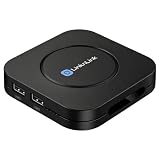
- ONE-CLICK HA INSTALL - Deploy Home Assistant in seconds, no coding. Unifies multi-brand devices into one control center. Includes one-click HACS, Add-on Manager, OTA, backup, and 30s auto-restore watchdog. Full Linux SSH and Docker access.
- AI HOME AUTOMATION - OpenClaw AI agent learns your routines to auto-adjust lighting, climate, and devices. Skip YAML—describe needs in plain language and AI creates automation instantly. Proactively recommends useful automations, evolving into a smart household manager.
- MATTER BRIDGE - Connects Zigbee, Wi-Fi, and other smart devices into Apple Home, Alexa, and Google Home. Generates a Matter pairing QR code—simply scan with your preferred app to add devices. Control everything by voice via HomePod, Echo, or Nest for a unified multi-platform smart home.
- FULL AI SERVER - A compact 24/7 OpenClaw AI server beyond smart home control. Handles writing, research, emails, and content generation as your everyday AI assistant. Saves hardware costs and power versus a separate PC/Mac. Affordable, low-maintenance local AI.
- MOBILE APP SETUP - Download the free LinknLink App, sign in, and add multi-brand devices via smartphone. All device info auto-syncs to HomeClaw—no repeated config or manual importing. Drastically reduces setup time and effort for first-time installation and future expansion.
Pay close attention to licensing: LiteLLM’s repository distinguishes features available under a commercial license and advertises enterprise support options. Check the current repository and license documentation to confirm whether the capabilities your team needs are available under the terms you can use. The documented feature list alone does not establish production performance or suitability for a particular workload. LiteLLM’s official repository
Bifrost: unified API, routing, and failover
Bifrost’s overview describes a unified API for 20+ providers, automatic failover and load balancing, and a built-in web UI. Its setup documentation describes an API following the OpenAI request/response format and offers NPX and Docker setup paths. Confirm that its supported providers and API behavior cover the exact endpoints and features your application uses. Bifrost’s official overview · Bifrost setup documentation
Rank #2
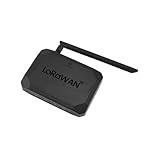
- NO SUBSCRIPTION FEES & PRIVATE LORAWAN NETWORK: Build a local LoRaWAN IoT network with the built-in SIoT server and pre-installed Node-RED. Collect data, create dashboards, and run automation flows locally without required cloud service fees. Suitable for DIY makers, home gardeners, educators, and small IoT prototype projects.
- LOCAL DATA PROCESSING & PRIVACY CONTROL: Sensor data can be processed on the local network through the built‑in MQTT/SIoT server, reducing reliance on third‑party cloud platforms. Local automation rules continue running when internet access is unavailable — suitable for home, garden, greenhouse, and classroom IoT setups.
- 4KM COVERAGE & 8-CHANNEL RELIABILITY: Equipped with the SX1302 8-channel LoRaWAN chip, -140dBm sensitivity, 27dBm max transmit power, and included 5dBi antenna. Supports up to 4km coverage in open environments, helping connect garden sensors, greenhouse nodes, garages, mailboxes, and remote monitoring points.
- NODE-RED DRAG-AND-DROP VISUAL AUTOMATION:Automation rules, data dashboards, and control logic can be built with little to no coding using the pre‑installed Node‑RED. Flows such as reading soil moisture, checking temperature, and sending relay commands are created through a visual interface — reducing setup time for maker, education, and prototype projects.
- EASY SETUP WITH WIFI AP & MQTT INTEGRATION: Configure the gateway via Wi-Fi AP mode using a laptop or mobile device. Built-in MQTT broker supports integration with Node-RED dashboards, and other MQTT-compatible platforms. Designed for indoor residential, educational, and prototyping use; not intended for outdoor installation.
Bifrost documentation reports 11 microseconds of overhead per request at 5,000 requests per second. This is a Bifrost-reported benchmark from 2026, not an independently replicated result or an apples-to-apples comparison with another gateway. Test the latency and throughput of your own workload rather than using that figure to predict production results.
Routing and edition boundaries
Bifrost’s routing documentation describes governance-based routing and adaptive load balancing, and labels adaptive load balancing as an Enterprise feature. Confirm the current edition matrix and terms before treating a documented capability as included in the edition you plan to deploy. Bifrost routing documentation
Portkey Gateway: a same-project option, not an independent alternative
Portkey Gateway may be relevant if you are evaluating self-hosting or a change in how you use the Portkey project. Its official repository described Gateway 2.0 as a pre-release in which core enterprise gateway capabilities were merging into open source. Because release status and feature boundaries can change, confirm them in the repository before making a migration decision. Portkey Gateway’s official repository
The repository also makes scale and latency claims; they should not be treated as independently verified measurements. Including Portkey Gateway in this shortlist does not make it a separate vendor replacement for Portkey.
Independent reader supportYour contribution helps us test, update, and keep practical guides available for everyone.How to choose an AI gateway for your workload
1. Decide what you need to operate
If you require self-hosting, account for the work of operating upgrades, secrets, availability, and observability—not just initial installation. Bifrost documents NPX and Docker setup routes, but confirm the supported deployment configurations for the version you intend to use. Verify the deployment model and operational requirements for each candidate directly.
Do these 3 things before closing this tab:
1Repair Windows errors before they cause bigger problems2Scan for outdated or missing drivers - takes under a minute3Clear out junk files and repair common Windows errors2. Match provider and API coverage to your application
Make a list of the providers, model endpoints, streaming behavior, and API shapes your application actually depends on. Compare that list with each project’s current documentation. LiteLLM’s 100+ API count and Bifrost’s 20+ provider count are project-reported figures, not results from a common compatibility test.
3. Specify the routing behavior you need
“Routing” can mean explicit provider selection, weighted distribution, load balancing, retries, or fallback after an error. Write down the required behavior and failure conditions, then confirm which mechanisms are documented and which edition includes them. In particular, Bifrost labels adaptive load balancing as Enterprise; LiteLLM lists load balancing among its gateway features, with commercial-license boundaries applying to some features.
4. Check governance, observability, and licensing together
Identify the controls your team needs, such as logging, guardrails, cost tracking, or governance-based routing. Then verify both their availability and their license or edition terms in the current project documentation. A feature appearing in a project overview does not by itself establish that it is included in every edition.
5. Validate with your own traffic and failure cases
Run representative requests through the candidate gateway and test the cases that matter to your service: normal responses, provider errors, timeouts, retries, fallback behavior, and streaming if applicable. Measure under your own deployment and workload conditions. The project-published performance claims described above are not independent comparative evidence, and no hands-on test establishes how these gateways perform against one another.
Quick Recap
Product prices and availability are accurate as of the date/time indicated and are subject to change. Any price and availability information displayed on Amazon at the time of purchase will apply.

