
Do these 3 things before closing this tab:
1Clear out junk files and repair common Windows errors2Fix the driver behind crashes, sound loss and screen glitches3Repair Windows errors before they cause bigger problemsiTechGuides is reader-supported. When you buy through links on our site, we may earn an affiliate commission. As an Amazon Associate I earn from qualifying purchases. Learn more
The best pool chemical monitoring system for most residential owners is the WaterGuru SENSE S3 because its reagent-based C5/C5+ cassette directly measures free chlorine, pH, alkalinity, CYA and calcium hardness. Choose Ondilo ICO Pool for subscription-free hourly pH/ORP trends, Pentair ChemCheck for compatible Pentair automation, or a Taylor liquid kit for verification.
Smart pool monitors are convenience and trend tools, not automatic chemical dispensers or a replacement for independent testing. Most products measure water, send alerts and recommend an adjustment; they do not safely inject chlorine, acid or other chemicals into the pool.
| # | Preview | Product | Price | |
|---|---|---|---|---|
| 1 |
|
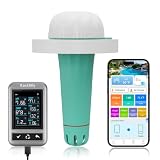
Kactoily 7-in-1 Smart Pool Monitor WiFi Digital Pool Water Tester with App | $179.99 | Buy on Amazon |
Key takeaways
- WaterGuru SENSE S3 offers the broadest verified residential chemistry panel, including direct free-chlorine, pH, total alkalinity, CYA and calcium-hardness measurements through replaceable cassettes.
- Ondilo ICO Pool costs $449 on its U.S. product page, has no listed subscription fee, and reports pH, ORP and temperature hourly.
- iopool EcO Start + Connect measures pH, ORP and temperature without a subscription, but the U.S. buying page showed the product sold out or available by preorder in the research snapshot.
- Pentair ChemCheck is primarily an installed-system choice for owners with compatible Pentair AquaLink RS automation rather than a general-purpose standalone monitor.
- ORP indicates oxidation or disinfection activity; ORP is not the same measurement as free chlorine in parts per million.
- A quality Taylor liquid-reagent test kit remains important for abnormal results, major chemical treatments, high CYA, algae, pool opening and safety-related decisions.
Best pool chemical monitoring system: quick comparison
The best pool chemical monitoring system depends on whether you want broad ppm-style chemistry coverage, continuous trend information, existing automation integration or the lowest operating cost. The table separates direct free-chlorine measurement from ORP so the comparison does not imply that every chlorine-related number means the same thing.
What’s actually slowing this PC down?
Pick the symptom - the matching free tool is one click away.
| Product | Best for | Direct free chlorine? | Other verified measurements | Testing pattern | Subscription and consumables | Price or availability signal | Recommendation confidence |
|---|---|---|---|---|---|---|---|
| WaterGuru SENSE S3 | Broad residential chemistry coverage | Yes, through C5/C5+ reagent cassette | pH, total alkalinity, CYA, calcium hardness, temperature, pump/flow data | Daily chemistry testing; not minute-by-minute free-chlorine sensing | No annual residential app subscription stated; replaceable cassettes required | $399 list price; $359.10 sale price displayed | High |
| Ondilo ICO Pool | No-subscription connected monitoring | No direct ppm claim; uses ORP | pH, ORP, temperature; salt or TDS-related configuration depending on model/configuration | Hourly pH, ORP and temperature readings on the product page | No subscription fee listed; probe, calibration and battery costs require checking | $449 | High for its stated use; not a broad-panel substitute |
| iopool EcO Start + Connect | Pool and spa monitoring without a subscription | No direct ppm claim; uses ORP | pH and temperature | Connected sensor monitoring through a gateway and app | No subscription stated; gateway and probe maintenance apply | $359 displayed; U.S. page showed sold out/preorder | Medium because availability must be rechecked |
| Pentair ChemCheck | Existing Pentair automation installations | No direct free-chlorine ppm claim established in the supplied documentation; uses ORP | pH and water-quality factors used for alerts and recommendations | Installed monitoring connected to compatible automation | Compatibility, installation, service and current price require confirmation | Current retail price and availability not verified | Medium for Pentair owners; low as a standalone recommendation |
| Aiper HydroComm | Buyers watching newer multifunction monitors | Not verified | Exact chemistry panel not verified from current primary documentation | Not verified | Consumables, app, gateway, battery and support terms require verification | $459 sale price displayed against $499 | Low until the current manual is checked |
| Taylor liquid-reagent kit | Accuracy safeguard and manual benchmark | Yes, depending on kit configuration | Pool pH, free chlorine, alkalinity and other parameters depending on kit | User-initiated testing | No smart-device subscription; reagents must be replenished | Current price not verified in the supplied research | High as a verification method |
What does a pool chemical monitor actually measure?
A pool chemical monitor may measure several different properties, and the measured property determines what the number can tell you. Free chlorine is a sanitizer concentration; pH and alkalinity describe water balance; CYA and calcium hardness address stability and surface or equipment concerns; ORP is an electrical signal associated with oxidation activity.
#1 Best Overall
- [ 24/7 Complete Water Quality Monitoring ] Stop guessing with messy test strips. Continuously track 7 key parameters—pH, Free Chlorine (CL), ORP, EC, TDS, Salinity, and Water Temperature—to keep your pool water balanced and clear every day.
- [ 5200mAh Battery & Magnetic Fast Charge ] Powered by a high-capacity 5200mAh rechargeable battery that lasts 3–4 months on a single charge. Features a simple magnetic charging port for quick power-ups without opening the casing or removing seals.
- [ Indoor Display Hub & IP68 Waterproof ] Features a dedicated indoor receiver with a 980ft (300m) long-range wireless signal for convenient at-a-glance monitoring without checking your phone. Engineered with IP68 waterproof sealing and durable housing to float naturally in your pool year-round.
- [ Smart App Control & Real-Time Alerts ] Connect seamlessly via 2.4GHz WiFi to monitor live metrics anywhere, anytime. Receive instant smartphone notifications and hub alerts when water parameters shift, making pool care completely effortless.
- [ Versatile for All Water Types ] Designed for ultimate versatility. Works seamlessly in saltwater and chlorine swimming pools, hot tubs, spas, above-ground pools, and freshwater ponds.
| Parameter | What it tells a pool owner | Why the distinction matters |
|---|---|---|
| Free chlorine | The concentration of available chlorine sanitizer | A direct free-chlorine reading in ppm is not interchangeable with an ORP value. |
| pH | Acidity or alkalinity affecting comfort, sanitizer effectiveness and corrosion risk | ORP can change when pH changes, so ORP should be interpreted with pH. |
| Total alkalinity | The water’s resistance to rapid pH changes | A monitor that only reports pH and ORP may not reveal an alkalinity problem. |
| Cyanuric acid | Outdoor chlorine stabilizer | High CYA can reduce effective chlorine performance while remaining invisible to an ORP/pH-only monitor. |
| Calcium hardness | Dissolved calcium level relevant to plaster, concrete and other calcium-sensitive surfaces | Low or high calcium hardness requires a broader water-balance check than ORP provides. |
| ORP | A voltage-based indicator of oxidation or disinfection activity | ORP is a proxy, not a direct free-chlorine ppm measurement, and it is affected by pH, temperature, CYA, salt chemistry and probe condition. |
| Temperature | Water temperature and a factor that influences chemical demand and ORP | Temperature helps explain trends but does not replace sanitizer or water-balance testing. |
| Salinity or TDS | Dissolved salt or total dissolved solids, depending on the device | Salinity or TDS is useful diagnostic information but is not a complete chemistry test. |
WaterGuru’s measurement documentation lists free chlorine, pH, total alkalinity, CYA and calcium hardness for its SENSE cassette system. Ondilo’s technology explanation describes ORP as an indicator of disinfection levels, while iopool describes ORP as disinfection capacity rather than free chlorine concentration.
How do reagent and ORP pool monitors differ?
Reagent-based monitors chemically test a water sample and can present several results in familiar pool-maintenance units. Electrode systems use pH and ORP probes to track water conditions frequently, but ORP is an indirect signal whose interpretation depends on the pool’s chemistry.
Reagent-based monitoring
WaterGuru SENSE uses a replaceable cassette to test multiple parameters. The C5/C5+ cassette covers free chlorine, pH, total alkalinity, CYA and calcium hardness, making the system a better match for owners who want broad chemistry coverage and dosing advice based on more than one signal.
Free tools Windows power users keep installed
One-click scans. No signup required.
The trade-off is ongoing consumable cost and testing frequency. WaterGuru describes the C5/C5+ cassette as lasting roughly one month with daily measurements, while C2/C2+ cartridges are designed for approximately two months. A daily test is useful trend information, but it is not a continuous result after every chemical addition.
pH/ORP electrode monitoring
Ondilo ICO Pool, iopool EcO and Pentair ChemCheck emphasize pH and ORP sensing. Electrode systems can remain in the water and report frequent trends without disposable chemistry cassettes. ORP can help identify changes in sanitizer activity, but ORP is affected by pH, temperature, CYA, salt chemistry, circulation, probe cleanliness and probe age.
A normal ORP value does not prove that CYA, total alkalinity or calcium hardness is correct. Do not convert an ORP number into a free-chlorine ppm number unless the manufacturer provides a validated conversion for the specific pool conditions; the supplied research does not establish such a conversion for these products.
Which pool chemical monitoring system is best for each buyer?
1. WaterGuru SENSE S3: best overall chemistry coverage
WaterGuru SENSE S3 is the strongest general recommendation for a residential owner who wants the widest verified chemistry panel in one smart monitor. Its C5/C5+ reagent cassette directly measures free chlorine, pH, total alkalinity, CYA and calcium hardness, and the app can provide advice based on pool type, pool size and chemical choices.
The SENSE S3 installs at the skimmer and can show pump flow and water temperature in the app. WaterGuru also lists a float ring for hot tubs and above-ground pools, so buyers should confirm the physical setup for their particular vessel and skimmer. The official SENSE product page showed a $399 list price and a $359.10 sale price during the supplied research snapshot.
WaterGuru states that the residential SENSE product has no annual app subscription, but no-subscription does not mean no operating cost. The current supplies page listed three C5+ cassettes for $76. At approximately three months per three-pack with one daily test, four three-packs annualize to about $304 before tax and shipping if the price and test schedule remain unchanged. The same page listed three C2+ cassettes for $76 and approximately six months of daily free-chlorine and pH testing, which annualizes to about $152 under the same assumptions.
WaterGuru SENSE S3 is a good fit for owners who want direct free-chlorine information and broader water-balance data. WaterGuru SENSE S3 is a poor fit for owners seeking zero consumables, instant readings after every chemical addition or a commercial multi-pool system. WaterGuru’s statements about meeting or exceeding professional DPD testing standards are manufacturer claims, not independent comparative test results.
2. Ondilo ICO Pool: best no-subscription connected monitor
Ondilo ICO Pool is the best fit for a buyer who prioritizes connected, frequent pH/ORP trend information and does not want a listed software subscription. The U.S. product page lists a $449 price, hourly pH, ORP and temperature measurements, app-based water-quality status, dosing recommendations and rechargeable battery life of up to six months.
ICO supports chlorine, bromine and salt-treated pools according to the U.S. ICO Pool product page. Saltwater compatibility does not make ICO a direct free-chlorine meter: a salt chlorine generator still produces chlorine, and the owner still needs to manage pH, CYA, alkalinity and other water-balance factors.
ICO is narrower than WaterGuru’s C5/C5+ chemistry panel. ICO is most useful for owners who understand ORP as a disinfection-activity indicator and want remote trends without a recurring software fee. Buyers should verify probe replacement pricing, calibration requirements, battery expectations and support terms before treating ICO as cheaper to own over several seasons.
3. iopool EcO Start + Connect: best pool-and-spa option if available
iopool EcO Start + Connect measures pH, ORP and temperature and includes a Bluetooth/Wi-Fi gateway in the bundle. The product page states that no subscription is required, personalized maintenance recommendations are available through the app, and the product carries a two-year warranty.
The critical buying limitation is availability: the iopool U.S. product page showed “Sold out” and described the item as a preorder in the research snapshot. Recheck the page immediately before publication or purchase; a product that cannot ship during pool season is not an immediately actionable recommendation.
Quick wins for a faster PC:
Scan for outdated or missing drivers - takes under a minuteDriver Scan →Clear out junk files and repair common Windows errorsFree Scan →Fix the driver behind crashes, sound loss and screen glitchesFind Drivers →EcO is attractive for owners of pools, hot tubs or spas who want no recurring software fee and are comfortable with pH/ORP trend monitoring. The gateway adds another installation and connectivity dependency. The narrower chemistry panel also means that a separate test is needed for CYA, alkalinity and calcium hardness.
4. Pentair ChemCheck: best for compatible Pentair automation
Pentair ChemCheck makes the most sense when a pool already uses compatible Pentair AquaLink RS automation. Pentair describes ChemCheck as a water-quality monitoring system that uses ORP, monitors pH and sends alerts and recommended chemical dosage guidance to a smart device.
ChemCheck is not the best general standalone recommendation because compatibility, installation and current pricing must be confirmed. The Pentair product documentation should be checked against the exact automation equipment and current installation requirements.
Pentair ChemCheck is appropriate for an owner who wants a permanently installed monitor integrated with existing equipment. Pentair ChemCheck is a poor fit for an owner without Pentair automation, someone who wants a movable device or anyone expecting direct readings for CYA, alkalinity and calcium hardness.
The Tool Desk
Outbyte PC Repair FREEClear out junk files and repair common Windows errorsFree Scan →Outbyte Driver Updater FREEScan for outdated or missing drivers - takes under a minuteDriver Scan →5. Aiper HydroComm: a newer alternative requiring verification
Aiper HydroComm should be treated as a provisional candidate rather than a proven accuracy leader. Aiper’s U.S. store showed a $459 sale price against a $499 reference price, but the supplied primary evidence did not verify the exact chemistry panel, sensing method, battery life, connectivity, replacement parts or support terms.
Before buying HydroComm, check the current U.S. product page and owner’s manual for whether the device measures free chlorine directly or uses ORP, and whether it measures pH, salinity, temperature, alkalinity or other parameters. The Aiper store listing supports the price signal and smart-monitor positioning, but it does not justify publishing a definitive five-parameter or accuracy claim.
Do pool chemical monitors work with saltwater pools?
Saltwater pools still use chlorine: a salt chlorine generator creates chlorine from salt, but the pool owner must still manage pH, CYA, alkalinity and other chemistry. A monitor should not be recommended for a salt pool solely because it reports ORP.
| Product | Salt-pool position from supplied evidence | Important limitation |
|---|---|---|
| WaterGuru SENSE S3 | Measures free chlorine and broader chemistry through its cassette | Confirm current model guidance for salt systems; salinity itself is not listed as part of the C5/C5+ panel. |
| Ondilo ICO Pool | U.S. page lists chlorine and salt treatment compatibility | ORP remains an indirect activity signal, not free-chlorine ppm. |
| iopool EcO | Marketed for pools and spas | Verify current salt-pool compatibility in the manual before purchase. |
| Pentair ChemCheck | Most compelling alongside compatible Pentair automation | Confirm the exact equipment and installation requirements. |
| Aiper HydroComm | Not sufficiently verified | Confirm whether salinity and free chlorine are directly measured. |
How often do smart pool monitors test the water?
“Continuous monitoring” does not necessarily mean a laboratory-quality chemistry result every minute. A device may stay in the water continuously, sample hourly, perform a full reagent test once per day or store readings locally and upload them only when a gateway connects.
ICO’s product page positions the device as continuously connected and lists hourly pH, ORP and temperature measurements. WaterGuru performs daily chemistry tests with replaceable cassettes. A daily broad chemistry test and an hourly ORP trend solve different problems: WaterGuru is better for a periodic multi-parameter snapshot, while ICO is better for frequent trend visibility.
Connectivity also affects the meaning of remote monitoring. Confirm whether the device stores readings offline, whether Bluetooth works when Wi-Fi fails, whether alerts require internet service and whether sampling continues without a gateway connection. “Smart” does not guarantee remote alerts during every network outage.
What does a pool chemical monitor automate?
Most consumer pool monitors monitor and recommend; they do not automatically add chemicals. An app may say to add acid or sanitizer, but a recommendation is not the same as a controller connected to dosing pumps or a device that physically dispenses chemicals.
| Function | What the shortlisted products generally provide |
|---|---|
| Measure water | Yes, but the measured parameters and frequency differ. |
| Show readings in an app | Yes for the connected products, subject to network and gateway requirements. |
| Send alerts | Prominent for connected systems such as ChemCheck; confirm exact alert behavior for each model. |
| Recommend chemical doses | WaterGuru, ICO, iopool and ChemCheck describe recommendations or guidance. |
| Physically dispense chemicals | Not established for the consumer monitors in this shortlist. |
| Control existing pool automation | ChemCheck is the relevant integrated option, subject to compatible Pentair equipment. |
Follow the chemical product label rather than blindly accepting a single app recommendation. The EPA pool-product label documentation illustrates why product-specific directions and specified water-balance conditions remain authoritative.
Windows Errors? Fix Them Before They Spread
Repair common Windows errors and clear accumulated junk for a smoother, more stable PC - no reinstall needed.Free scan · no reinstallCrashes, No Sound, or Screen Glitches?
Random freezes, missing sound and display glitches usually trace back to one bad driver. Find and replace yours safely.Free scan · under a minuteWhy should you keep a Taylor test kit?
A Taylor liquid-reagent test kit remains the accuracy safeguard because a smart monitor can drift, lose flow, misinterpret unusual chemistry or report stale data. Manual testing is especially important when opening or closing the pool, adding a large chemical quantity, treating algae, investigating cloudy water or deciding whether swimming is appropriate after treatment.
Use a manual test when a monitor produces an implausible result, when a probe needs cleaning or calibration, when CYA or calcium hardness must be confirmed, or when the pool has recently received chemicals that have not fully circulated. The Taylor residential test-kit documentation provides context for manual pH, free-chlorine and alkalinity testing.
The best workflow is not smart monitor versus manual kit. Use the smart monitor for routine trends and alerts, then use a liquid-reagent kit to validate important or surprising decisions. A monitor alone should not be presented as the sole authority for swim safety.
What should you do when a monitor gives a wrong-looking result?
When an ORP reading looks wrong
- Do not add a large chemical dose solely because of one ORP reading.
- Run the pump and circulate the pool adequately.
- Retest pH and sanitizer with a manual kit.
- Consider pH, CYA, temperature, salt chemistry, recent chemical additions and probe condition.
- Clean or calibrate the probe according to the manufacturer’s instructions.
- Contact the manufacturer if the discrepancy persists after circulation and manual verification.
ORP can move for reasons that do not represent a simple change in free-chlorine ppm. High or low CYA, pH outside the expected range, temperature changes, poor circulation, a dirty probe or recently added chemicals can all complicate interpretation.
When the monitor recommends chemicals after treatment
Allow the chemical to mix through the pool before judging the next reading. Follow the chemical label, never exceed label directions and verify the water manually when the treatment was substantial or the water is visibly abnormal.
When CYA is too high
A pH/ORP-only monitor may not reveal a stabilizer problem. Confirm CYA separately and plan the appropriate water replacement or dilution strategy rather than trying to correct the issue from an ORP number alone.
When the pump is off or flow is low
Skimmer-mounted and installed monitors can produce stale or unreliable readings when water is not moving. WaterGuru says its app can show pump flow and water temperature; use the manufacturer’s flow guidance and verify suspicious readings manually.
How much does a pool monitoring system cost to own?
Hardware price is only the first-year cost. Include reagent cassettes, replacement probes, calibration solution, battery or charging needs, gateway hardware, shipping, installation and any cloud fee before comparing products.
Recommended Free Tools
| Cost category | WaterGuru SENSE S3 | Ondilo ICO Pool | iopool EcO | Pentair ChemCheck |
|---|---|---|---|---|
| Hardware signal | $399 list; $359.10 sale displayed | $449 | $359 displayed | Not verified |
| Software subscription | No annual residential app subscription stated | No subscription fee listed | No subscription stated | Not verified |
| Recurring supplies | C5+ three-pack listed at $76; approximately three months of daily testing | Probe and calibration costs require confirmation | Probe, gateway and calibration costs require confirmation | Installation and service costs require confirmation |
| Simple annualized example | About $304 for four C5+ three-packs, before tax and shipping, if price and usage remain unchanged | Do not calculate without verified probe costs | Do not calculate without verified probe costs | Do not calculate without verified installation and service costs |
WaterGuru’s annualized figures are estimates, not guarantees. Seasonal pool use, test frequency, cassette depletion and future pricing can change the total. A device with no subscription can still have meaningful maintenance costs.
How should you choose a pool chemical monitoring system?
- Choose WaterGuru SENSE S3 if direct free-chlorine readings and the broadest verified chemistry panel matter most.
- Choose Ondilo ICO Pool if you want hourly pH/ORP trends, remote app access and no listed subscription fee, and you understand ORP’s limitations.
- Choose iopool EcO if pool-and-spa use and no recurring software fee are priorities, but only after the U.S. page confirms stock and shipping.
- Choose Pentair ChemCheck if you already have compatible Pentair AquaLink RS automation and want installed integration.
- Investigate Aiper HydroComm only after reading the current U.S. manual and confirming its direct measurements, sensing method, connectivity and support terms.
- Choose a Taylor liquid kit alone or alongside a monitor if low long-term cost, direct user control and independent verification matter more than remote alerts.
For above-ground pools and spas, confirm whether the device floats safely, whether a float ring or skimmer adapter is required, whether the smaller water volume changes the manufacturer’s guidance and whether the product supports the intended sanitizer. WaterGuru lists a float ring for hot tubs and above-ground pools, while iopool markets EcO for pools, hot tubs and spas.
Frequently Asked Questions
Do pool monitors test chlorine directly?
Some pool monitors test free chlorine directly, while others measure ORP. WaterGuru SENSE S3 uses a reagent cassette to measure free chlorine, whereas Ondilo ICO, iopool EcO and Pentair ChemCheck rely substantially on ORP, which indicates disinfection activity rather than free-chlorine ppm.
Are ORP readings the same as free chlorine?
No. ORP is an electrical indicator of oxidation or disinfection activity, not a direct free-chlorine concentration. ORP is influenced by pH, temperature, CYA, salt chemistry, circulation and probe condition, so a manual sanitizer test remains important.
Do saltwater pools still need chemical monitoring?
Yes. A salt chlorine generator produces chlorine, but saltwater pools still require management of pH, CYA, alkalinity and other water-balance factors. Confirm that the selected monitor supports the exact salt-system configuration; ORP compatibility alone does not provide a full salt-pool test.
Do smart pool monitors automatically add chemicals?
Usually no. Consumer monitors generally measure water, send alerts and recommend chemical doses. A dosing recommendation is not the same as a system that controls pumps or physically dispenses chlorine, acid or other chemicals.
Can a pool monitor detect high CYA?
A broad-panel system such as WaterGuru SENSE with the applicable cassette can measure CYA, but a pH/ORP-only system may not reveal high stabilizer levels. Confirm abnormal or important readings with a manual liquid-reagent test kit.
Can one device be used in both a pool and a spa?
Only when the manufacturer supports both uses and the physical setup is suitable. WaterGuru lists a float ring for hot tubs and above-ground pools, and iopool markets EcO for pools and spas; check volume, sanitizer, adapter, calibration and transfer instructions before moving a device.
The Bottom Line
WaterGuru SENSE S3 is the best overall choice when broad chemistry coverage and direct free-chlorine information matter more than recurring cassette costs. Ondilo ICO Pool is the better no-subscription choice for frequent pH/ORP trends, while Pentair ChemCheck is best reserved for compatible Pentair automation. Whatever monitor you choose, retain a Taylor liquid test kit and verify unusual or safety-related results manually.
Quick Recap
Product prices and availability are accurate as of the date/time indicated and are subject to change. Any price and availability information displayed on Amazon at the time of purchase will apply.

