
Free tools Windows power users keep installed
One-click scans. No signup required.
iTechGuides is reader-supported. When you buy through links on our site, we may earn an affiliate commission. As an Amazon Associate I earn from qualifying purchases. Learn more
The best microphone for gaming depends on your room, platform, and whether you stream. For most PC gamers, the Elgato Wave:3 MK.2 is the strongest all-around USB choice; a Shure MV6 or MV7+ is safer in a noisy room, while a headset mic remains the most practical option for voice chat alone.
A dedicated microphone can make Discord, party chat, in-game callouts, and livestreams clearer, but premium recording specifications do not guarantee better communication. Microphone distance, room noise, pickup direction, gain, monitoring, and platform compatibility usually matter more than sample rate or bit depth.
Key takeaways
- The Elgato Wave:3 MK.2 is the best overall recommendation for most PC gamers who want USB simplicity, headphone monitoring, mute control, Clipguard, and Wave Link routing; its U.S. price was $169.99 when checked on August 16, 2026.
- A close-positioned dynamic microphone such as the Shure MV6 or Shure MV7+ is generally safer than a condenser in a room with keyboard, fan, HVAC, roommate, or echo problems.
- The Shure MV7+ is documented as compatible with PS5 but not Xbox, so Windows or PS5 support must never be treated as proof of Xbox compatibility.
- The HyperX QuadCast 2 S is a good RGB-focused streaming choice with four pickup patterns, but its 192 kHz/32-bit capability is unnecessary for ordinary gaming voice chat.
- A good headset microphone can outperform a desk-mounted condenser for voice chat when the dedicated microphone would sit too far from the mouth.
Which is the best microphone for gaming?
The best microphone for gaming for most PC players is the Elgato Wave:3 MK.2. The recommendation is an editorial judgment based on practical gaming criteria rather than a claim that the Wave:3 MK.2 sounds best in every room. The USB condenser combines a cardioid capsule, physical mute control, headphone monitoring, gain control, Clipguard protection, onboard processing, and Wave Link software for managing microphone, game, Discord, music, and stream audio.
Crashes, No Sound, or Screen Glitches?
Random freezes, missing sound and display glitches usually trace back to one bad driver. Find and replace yours safely.Free scan · under a minutePC Slower Than It Used to Be?
A free scan shows the junk files, broken settings and background clutter dragging Windows down - then fixes them in one click.Free scan · Windows 10 & 11Elgato listed the Wave:3 MK.2 at $169.99 on its U.S. store when checked on August 16, 2026. Prices and availability are temporary U.S. signals, so check the current listing before buying. The official Wave:3 MK.2 product page also lists Windows 11 or newer and macOS 14.2 or newer for the stated software configuration.
#1 Best Overall

- [Natural Audio Clarity] Operated with frequency response of 50Hz-16KHz, the podcasting XLR mic delivers balanced audio range, likely to resonate with your audience. Directional cardioid dynamic microphone corded will not exaggerate your voice, while rejects unwanted off-axis noise for vocal originality and intelligibility during your PS5 gaming streaming video recording. (Tips: Keep the top of end-addressing XLR dynamic microphone AM8 facing audio source, and suggested recording range is 2 to 6 in.)
- [XLR Connection Upgrade-Ability] To use XLR connection, connect the podcast microphone to an audio interface (or mixer) using a separate XLR cable (NOT Included) . Well-connected and smooth operation improves audio flexibility to make you explore various types of music recording singing. The streaming mic isolates the pristine and accurate sound from ambient noise with greater no interference and fidelity. (RGB and function key on mic are INACTIVE when using XLR connection.)
- [USB Connection with Handy Mute] Skip the hassle of setting something up and plug the cable to play the dynamic USB microphone directly, which suits for beginner creators or daily podcast. You can quickly control the gamer mic with tap-to-mute that is independent of computer/Macbook programs to keep privacy when live streaming. LED mute reminder helps you get rid of forgetting to cancel the mute. (RGB and function key are only available for USB connection, but NOT for XLR connection)
- [Soothing Controllable RGB] RGB ring on the desktop gaming microphone for PC, with 3 modes and more than 10 light colors collection, matches your PC gears accessories for gaming synergy even in dim room. You can control the RGB key button of the dynamic microphone USB directly for game color scheme gaming or live streaming. Configured memory function, the streaming microphone RGB no need to repeated selections after turnning off and brings itself alive when power on. (Only available for USB connection)
- [More Function Keys] Computer microphone with headphones jack upgrades your rhythm game experience and gets feedback whether the real-time voice your audience hear as expected. Get the desired level via monitoring volume control when gaming recording. Smooth mic gain knob on the PC microphone gaming has some resistance to the point, easily for audio attenuation or boost presence to less post-production audio. (Only available for USB connection)
The best choice changes in three common situations:
- Noisy or echo-prone room: choose a close-positioned dynamic microphone, such as the Shure MV6 or Shure MV7+, rather than assuming a sensitive condenser will reject the room.
- RGB and multiple pickup patterns: choose the HyperX QuadCast 2 S if its controls, shock mount, RGB, and pattern selection matter more than advanced routing.
- Voice chat only: keep a good headset microphone in consideration. A headset microphone stays close to the mouth while the player moves and can be more intelligible than a dedicated desk mic placed several feet away.
Quick recommendations
| Use case | Recommended microphone | Connection and type | Why choose it | Main drawback |
|---|---|---|---|---|
| Most PC gaming and streaming | Elgato Wave:3 MK.2 | USB condenser; cardioid | Wave Link routing, Clipguard, mute, gain control, and headphone monitoring | Can still capture noise and room reflections |
| Noisy room or broadcast-style voice | Shure MV6 or MV7+ | Dynamic; MV7+ supports USB and XLR | Focused vocal presentation when placed close to the mouth | Needs close placement; MV7+ is expensive |
| RGB streaming setup | HyperX QuadCast 2 S | USB; four pickup patterns | RGB, physical controls, shock mount, and headphone monitoring | High-resolution recording modes add little to voice chat |
| General recording as well as games | RØDE NT-USB+ | USB condenser | Conventional USB recording design with headphone output | Fewer gaming-specific routing controls |
| Compact entry-level upgrade | Razer Seiren V3 Mini | Compact USB microphone | Simple, inexpensive starting point; approximately $50 in current comparison coverage | Fewer controls and less expansion flexibility |
| Voice chat without a desk setup | Good headset microphone | Headset-mounted microphone | Consistent mouth distance and easy positioning | Usually less full-sounding than a dedicated microphone |
Prices in the table are not universal retail prices. The Wave:3 MK.2 price was checked on August 16, 2026; current comparison coverage placed the Shure MV7+ around $299, the HyperX QuadCast 2 S around $200, and the RØDE NT-USB+ around $157. The B&H comparison listing is a useful observed-price reference, not a promise of current price or availability.
How were these gaming microphones chosen?
Gaming microphones were evaluated for the things teammates actually notice: intelligibility, background-noise behavior, consistent placement, mute access, monitoring, software and routing, platform support, total setup cost, and upgrade potential. A microphone that records at a higher sample rate is not automatically better for Discord or in-game chat.
Speech intelligibility
Clear consonants and controlled low frequencies help teammates understand short callouts over game audio. A microphone should produce a strong, clean voice signal without forcing the user to boost a quiet recording aggressively in software.
Noise behavior
Keyboard switches, mouse clicks, PC fans, HVAC, other people, and hard room surfaces can overwhelm a voice signal. A directional pattern can reduce some sound arriving from less-sensitive angles, but cardioid does not mean that a microphone captures only the speaker’s voice. Distance and room acoustics remain important.
Monitoring and mute access
A headphone output lets the user hear clipping, background noise, delayed monitoring, and game/chat balance problems. A physical or touch mute control is often more useful during a match than an extra high-resolution recording mode.
Routing and software
Streamers may need separate control of game audio, Discord, alerts, music, microphone effects, and the stream mix. The Wave Link feature documentation describes multiple software channels, independent mixes, and effects support on Windows and macOS. Those PC and Mac features should not be assumed to transfer to a console.
Which microphone should you buy?
Elgato Wave:3 MK.2: best overall for PC gaming and streaming
Buy it for: PC gamers and streamers who want a straightforward USB setup with practical controls and software routing.
The Elgato Wave:3 MK.2 uses a cardioid condenser capsule. Its useful gaming features include a headphone output, gain control, mute control, onboard DSP, Clipguard protection, VST support, and integration with Wave Link. Wave Link can help separate game, chat, music, microphone, and other software sources into different mixes.
Clipguard is useful when a player suddenly shouts or laughs, because the system can switch to a lower-level signal path when peaks occur. Clipguard does not fix a microphone placed too far away, eliminate room echo, or replace sensible gain adjustment. The Elgato technical documentation provides the microphone’s specifications and Clipguard details.
Room behavior: The condenser capsule can deliver a detailed voice in a quiet room, but it may also hear a keyboard, fan, chair, reflections, or other people. Keep the microphone close and reduce gain rather than placing it across the desk and compensating with software volume.
Rank #2

- USB/XLR Connectivity-AM8T comes with a dynamic microphone and a boom arm stand. Versatile PC gaming microphone kit with USB compatibility plug and play for PC in streaming or recording, without additional drivers. And also, while in XLR compatibility for mixer or sound card connection, the XLR studio vocal microphone is good at vocal, podcast, or musical instruments creation.
- Vibrant RGB Light-The streaming microphone RGB illuminates your gaming setup with customizable RGB lighting for a visually stunning game experience. You can easily control the RGB mode/colors or turn off by simply tapping the RGB button without making any complicated settings on specific software.
- Enhanced Features-Featured -50dB sensitivity and cardioid polar pattern, the USB recording mic kit not easily pick up background noise for delivering clear audio. The PC gaming microphone USB kit includes a boom arm for easy positioning, mute button and gain knob for precise control, headphones jack for real-time monitoring, and headphone volume control while streaming or recording.
- Decent for Gamers and Streamers-The XLR microphone designed specifically to meet the needs of gaming enthusiasts and streamers. Ideal for various applications, including gaming, streaming, podcasting, voiceovers, and more, which also works with popular streaming software like OBS and Streamlabs.
- Recording Microphone Kit-The dynamic microphone is more convenient for working from home or going out for podcasts, and the complete accessories allow for faster recording work due to its simple straightforward assembly. External windscreen of the XLR dynamic microphone filter out plosive voice.
Platform note: The Wave:3 MK.2 is most compelling on Windows or macOS, where Wave Link provides its strongest benefits. Basic USB operation and software compatibility are separate questions, and console buyers should verify the exact console behavior before purchase.
Skip it if: the room is loud and echo-prone, the microphone must remain far from the mouth, or the buyer needs confirmed Xbox support that the available dossier does not establish.
Shure MV6 and MV7+: best direction for noisy rooms
Buy them for: players who can keep a microphone close to the mouth and want a dynamic vocal presentation with less room ambience than a typical desk condenser may capture.
Dynamic microphones are often safer in noisy rooms, but “dynamic” does not mean “eliminates background noise.” A dynamic microphone can still capture a keyboard, fan, or roommate when the source is nearby or the microphone is positioned too far away. Dynamic microphones may also require more gain and can sound quiet or thin at the wrong distance.
The Shure MV7+ is a hybrid USB/XLR dynamic microphone. USB makes it usable without an interface, while XLR gives a future path toward an interface-based setup. That flexibility is valuable for a creator planning to expand, but the MV7+ can be excessive for someone who only wants clearer Discord audio. Current comparison coverage showed an observed price signal of about $299 on August 16, 2026.
Console compatibility: Shure’s MV7+ user guide documents PS5 support and explicitly states that the microphone is not compatible with Xbox. Do not buy the MV7+ for Xbox on the assumption that Windows or PS5 support carries over.
The Shure MV6 is the simpler direction for a buyer who wants a dynamic USB microphone without immediately paying for hybrid USB/XLR flexibility. The supplied research identifies the MV6 as a current recommendation, but it does not provide a verified price, detailed specification sheet, or console compatibility statement for the MV6. Check the manufacturer’s current documentation for those details.
Skip the MV7+ if: the microphone will sit far from the mouth, the budget is limited, or the buyer uses Xbox without a separately verified connection path.
Do these 3 things before closing this tab:
1Fix the driver behind crashes, sound loss and screen glitches2Repair Windows errors before they cause bigger problems3Scan for outdated or missing drivers - takes under a minuteHyperX QuadCast 2 S: best for RGB and pickup-pattern flexibility
Buy it for: gamers and streamers who want RGB lighting, onboard controls, a shock mount, headphone monitoring, and several pickup patterns.
Tom’s Hardware reports that the QuadCast 2 S offers four patterns: cardioid, omnidirectional, bidirectional, and stereo. The patterns can suit different recording arrangements, but ordinary gaming voice chat normally benefits most from a properly positioned directional setting rather than from changing patterns frequently.
Tom’s Hardware also notes that the microphone’s 192 kHz/32-bit capability is unnecessary for ordinary gaming use. Higher recording specifications can matter in specialized production workflows, but they do not make a Discord voice automatically four times clearer. Read the Tom’s Hardware gaming microphone coverage for the reported pattern and specification details.
Rank #3

- Clear Sound: Equipped premium chips and core, coupled with expert tuning, resulting in a pure, clean sound, providing high-fidelity reproduction that ensures a smooth and precise communication for your team.
- Vibrant RGB lighting: 4 RGB modes to choose from: 6 static color, single-color gradient, breathing, and mix-color gradient. Quickly transform your gaming vibe by one tap on the lighting control button.
- Brightness Control: Adjust the brightness of the RGB lights by long tapping the RGB icon. Choose your lighting preference without worrying about eye strain.
- Easy Sound Control: Easily mute it by tapping the top of the mic, makes you respond flexibly to unexpected situations during live streaming and gaming. Recommended using a USB 2.0/3.0 port and ensure the Type-C connector is fully and completely connected. Rotating the top of the microphone to adjust the gain, ensuring that you maintain an appropriate volume at all times.
- All-in-One Equipment Kit: TC310+ is a completed mic & arm kit, equipped with a metal-made boom arm and the sturdy clamp that fits most desks with a thickness not exceeding 2.36''. Multiple adjustable joints let you easily find the perfect angle for you and your desk & monitor.
Room behavior: Like other desk condensers, the QuadCast 2 S can hear a noisy environment if it is too far from the speaker or aimed toward the keyboard. The included shock mount helps with some mechanical vibration, but it cannot block keyboard sound traveling through the air.
Skip it if: the buyer only needs basic team chat, does not care about RGB or multiple patterns, or has a noisy room where a close dynamic microphone would be easier to manage.
RØDE NT-USB+: best conventional USB condenser for broader recording
Buy it for: users who want one conventional USB condenser for gaming, livestreaming, voice-over, and general recording.
The RØDE NT-USB+ includes a headphone connection and USB bus power. Its design is attractive to a buyer who values general recording use more than game-specific software routing. The RØDE technical datasheet documents the microphone’s specifications and headphone output.
MusicRadar’s review places the NT-USB+ in a broader USB-microphone context and discusses its recording strengths and comparison with the Wave:3. The MusicRadar review is useful when the purchase is not limited to gaming.
Quick wins for a faster PC:
Scan for outdated or missing drivers - takes under a minuteDriver Scan →Clear out junk files and repair common Windows errorsFree Scan →Fix the driver behind crashes, sound loss and screen glitchesFind Drivers →Room behavior: The NT-USB+ is a condenser, so it is a better fit for a quiet, controlled room than for a desk beside a loud PC fan or mechanical keyboard. A boom arm and close placement can improve the practical result, but accessories add to the real cost.
Skip it if: the primary goal is advanced game/chat routing or the room is noisy and untreated.
Razer Seiren V3 Mini: best compact budget direction
Buy it for: beginners who want an inexpensive, compact USB microphone rather than a large streaming setup.
Current comparison coverage placed the Razer Seiren V3 Mini at approximately $50 on August 16, 2026. The Razer microphone category is the appropriate place to check the current model, price, and availability.
The Tool Desk
Outbyte Driver Updater FREEScan for outdated or missing drivers - takes under a minuteDriver Scan →Outbyte PC Repair FREERepair Windows errors before they cause bigger problemsFix Now →The Seiren V3 Mini’s appeal is straightforward USB operation and a small footprint. The trade-off is fewer controls and less flexibility than the more expensive recommendations. Buyers who need headphone monitoring, multiple pickup patterns, extensive routing, or a longer upgrade path should compare the total feature set rather than choosing only by size or price.
In a noisy room, a budget dynamic alternative such as the Samson Q2U may be a better direction than a small condenser, provided the buyer can position the microphone close to the mouth. The supplied research does not provide current Samson Q2U pricing or a verified product-page URL.
Rank #4
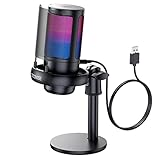
- Gradient RGB Symphony Lights: Cyclic and gradient RGB lights, in line with your live broadcast aesthetics. Bring you an immersive gaming experience and awaken all your senses. There's also a palpable sense of security, and when the COCONISE microphone is muted, the RGB lights go off to let you know you're working. Prevent accidents when you forget to mute your PC microphone for gaming.
- Practical and convenient function: It is equipped with a one-button mute touch sensor. When you want to close the microphone, you only need to touch it lightly to mute the sound, and the RGB light will go out to inform you that the microphone has been successfully closed. Equipped with a rotary control volume button at the bottom. There is a 3.5MM headphone jack in the middle, you can plug in the headphones to monitor your own voice in real-time and make adjustments in time when recording.
- Cardioid Polar Pattern: This microphone features a cardioid polar pattern that captures crisp, smooth, and clear sound in front of the microphone, reducing side pickup so it can focus on your voice. At the same time, it is equipped with a 25mm ultra-large capacitor diaphragm capsule, which can capture a wider range of audio with a sampling rate of up to 192kHz, and the pickup is delicate and noise-free.
- SOLID FIT: With a weighted carbon steel base, your big movements won't knock the mic down, even during intense gaming sessions. The detachable metal anti-splash screen is adopted. Compared with the sponge, the metal anti-splash screen can filter the plosive sound more effectively. And the rubber elastic band is firmly clamped on the shock mount, which can reduce the vibration noise caused by violent keyboard tapping and mouse clicking.
- Plug and Play:PC gaming microphone for streaming, compatible with PS4/PS4pro/PS5 desktop and laptop. You can quickly enter the game chat. The 180CM long detachable USB data cable can be extended from the back of the computer host to the main body of your gaming USB microphone without limitation.
Is USB or XLR better for gaming?
USB is better for most first-time gaming microphone buyers because it combines the microphone and analog-to-digital converter in one plug-and-play device. XLR becomes more attractive when the buyer already owns an audio interface or plans a more expandable hardware setup.
| Connection | Best for | Advantages | Trade-offs |
|---|---|---|---|
| USB | PC gaming, Discord, console use where explicitly supported, and simple streaming | One cable, no separate interface, often includes headphone monitoring, mute, gain, and software controls | Console support varies; USB hubs, cables, drivers, or software can cause interruptions |
| XLR | Existing audio-interface owners and expandable streaming setups | Hardware gain control, broad component choice, and easier integration with other audio hardware | Requires an interface, XLR cable, and sometimes a boom arm; gain staging is more complicated |
| USB/XLR hybrid | Creators who want simple USB use now and interface-based expansion later | Can begin without an interface and later move to XLR | Costs more than a basic USB model and does not automatically sound better in a poor room |
A premium XLR microphone is only one part of an XLR system. Add the interface, XLR cable, possible boom arm, headphones, and cable-management hardware before comparing the total cost with a USB microphone.
Recommended Free Tools
Should you choose a dynamic or condenser microphone?
Choose a condenser for a quiet room and detailed general recording; choose a dynamic microphone for a noisy room when the microphone can remain close to the mouth. Neither design is universally superior.
| Room and use | More suitable starting point | Why | Important limitation |
|---|---|---|---|
| Quiet, carpeted, or treated room | Condenser | Can provide a detailed, open voice for gaming, streaming, and recording | Still captures reflections and nearby noise if placed poorly |
| Noisy bedroom or shared room | Dynamic | Close placement and focused vocal capture can reduce the amount of room ambience in the signal | Does not eliminate noise and may need more gain |
| Echo-prone hard-surface room | Close dynamic or headset mic | Shorter mouth-to-microphone distance reduces the need to amplify the room | A dynamic microphone placed far away can sound worse than a close headset mic |
| Voice chat only while moving or gaming | Headset microphone | Stays consistently near the mouth | Usually has less full-bodied sound than a dedicated microphone |
Noise rejection depends on directionality, distance, room acoustics, gain, and processing. Software noise suppression can help, but aggressive suppression can cause pumping, clipped consonants, metallic artifacts, or missing syllables.
How should you position a gaming microphone?
Place the microphone close enough to receive a strong voice signal, keep the distance consistent, and aim the correct pickup side toward the mouth. Placement often produces a larger improvement than replacing one competent microphone with another.
- Move the microphone close to the mouth without placing it directly in the path of breath and plosive bursts.
- Check the manufacturer’s pickup direction. The front of a cardioid microphone is not always the side that looks most obvious.
- Keep the microphone at a consistent distance while speaking and gaming.
- Use a boom arm if a desk stand forces the microphone behind the monitor or too far from the speaker.
- Place the microphone between the mouth and keyboard only when it does not block the display or interfere with mouse movement.
- Use a pop filter or foam windscreen if words beginning with “p” or “b” produce audible bursts.
- Do not expect a shock mount to fix keyboard noise transmitted through the air. A shock mount mainly helps with mechanical vibration.
A microphone that is below the desk, behind the monitor, or several feet away will normally need excessive gain. Excessive gain raises room noise along with the voice, so moving the microphone closer is usually preferable to adding digital gain.
What’s actually slowing this PC down?
Pick the symptom - the matching free tool is one click away.
How do gain, monitoring, and processing affect voice chat?
Input gain controls the strength of the captured microphone signal, headphone volume controls how loud monitoring sounds, and a mix control balances microphone monitoring against computer audio. These controls solve different problems.
- Input gain: adjust until normal speech is strong without clipping when the player shouts.
- Headphone volume: changes monitoring loudness, not the microphone’s recorded level.
- Monitor mix: balances the direct microphone signal with game or computer audio when the hardware supports it.
- Software gain: increases the digital level after capture and cannot restore detail lost because the microphone was too distant or too quiet.
- Noise suppression: reduces some background sound but can damage speech when set too aggressively.
- Noise gate: closes the microphone below a threshold; an overly high threshold cuts off quiet syllables.
- Compression: narrows the difference between quiet and loud speech, but excessive compression can make noise more obvious.
- Limiter or clipping protection: helps prevent peaks from exceeding the available level, but it does not replace correct placement.
Use one primary noise-suppression layer where possible. Discord, the game, streaming software, and microphone software can each process the same signal, and stacking aggressive processing is a common cause of metallic or incomplete speech.
How do you set up a gaming microphone?
- Connect directly: connect the USB microphone to the computer rather than a questionable hub while troubleshooting.
- Choose the input: select the microphone in the operating system, Discord, OBS if applicable, and the game’s voice settings.
- Confirm the hardware: check the microphone’s mute button and watch the operating-system input meter while speaking.
- Set placement: bring the microphone near the mouth, aim the correct side toward the speaker, and move it away from direct plosive airflow.
- Set gain: speak normally, then test a loud callout. Lower gain if shouting clips; move the microphone closer rather than relying on software gain.
- Enable monitoring: use the headphone output to listen for clipping, fan noise, delayed monitoring, and unintended echo.
- Add moderate processing: use restrained suppression, gate, compression, and limiting. Compare processed and unprocessed speech.
- Test each application separately: use the operating-system recorder, Discord’s microphone test, the game’s own test, and OBS separately to identify where a problem begins.
On Windows and macOS, Wave Link’s software routing is most useful when the player needs separate mixes for the game, chat, music, microphone, and stream. A microphone can still work as a basic USB audio device without exposing every Wave Link feature, and console software capabilities should not be assumed.
Independent reader supportYour contribution helps us test, update, and keep practical guides available for everyone.Which microphone works best on PC, Mac, PS5, and Xbox?
Windows PC
USB microphones are generally the easiest PC option. Check operating-system support, available USB ports, application input selections, privacy permissions, exclusive-mode settings, and automatic device switching. Elgato lists Windows 11 or newer for the stated Wave:3 MK.2 software configuration.
The Tool Desk
Outbyte Driver Updater FREEScan for outdated or missing drivers - takes under a minuteDriver Scan →Outbyte PC Repair FREERepair Windows errors before they cause bigger problemsFix Now →Mac
The Wave:3 MK.2 product page lists macOS 14.2 or newer for the stated software configuration. Verify support for the exact Mac and current Wave Link version, and remember that basic USB audio operation is separate from optional routing software.
Best Value

- Custom three-capsule array: This professional USB mic produces clear, powerful, broadcast-quality sound for YouTube videos, Twitch game streaming, podcasting, Zoom meetings, music recording and more
- Blue VO!CE software: Elevate your streamings and recordings with clear broadcast vocal sound and entertain your audience with enhanced effects, advanced modulation and HD audio samples
- Four pickup patterns: Flexible cardioid, omni, bidirectional, and stereo pickup patterns allow you to record in ways that would normally require multiple mics, for vocals, instruments and podcasts
- Onboard audio controls: Headphone volume, pattern selection, instant mute, and mic gain put you in charge of every level of the audio recording and streaming process
- Positionable design: Pivot the mic in relation to the sound source to optimize your sound quality thanks to the adjustable desktop stand and track your voice in real time with no-latency monitoring
PS5
PS5 buyers should verify that the console recognizes the microphone as a USB audio device and should not assume that every USB headphone output, mute control, or software feature works on the console. Shure’s MV7+ guide specifically documents PS5 support. Test party chat and in-game chat separately because the two paths may expose different settings.
Xbox
Xbox buyers should require explicit manufacturer or current platform-testing confirmation. Windows or PS5 compatibility does not establish Xbox compatibility. Shure’s MV7+ guide explicitly says that the MV7+ is not compatible with Xbox, so the MV7+ should not be recommended to Xbox owners without a separately verified workaround.
| Platform | Safest buying approach | What to verify |
|---|---|---|
| Windows PC | USB microphone for simplicity; Wave:3 MK.2 for routing | Windows version, USB connection, application input, privacy and exclusive-mode settings |
| Mac | USB microphone; confirm current software support | macOS version and whether Wave Link is needed |
| PS5 | Only a microphone with documented PS5 support | USB recognition, headphone output, mute/gain behavior, party chat, and in-game chat |
| Xbox | Only a model with explicit Xbox confirmation | Manufacturer documentation or recent reputable testing; do not infer compatibility |
What should you troubleshoot when a gaming microphone sounds bad?
Why does my microphone sound distant?
A distant microphone is usually too far away, aimed at the wrong side, below the desk, behind the monitor, or being rescued with excessive software gain. Confirm the input device, move the microphone closer, check its pickup side, raise input gain gradually, reduce or disable an overactive gate, and retest in Discord or the game.
Why do teammates hear my keyboard or fan?
Keyboard or fan noise usually means the microphone is too sensitive for the room, too far from the mouth, aimed at the noise source, or using insufficient processing. Move the microphone closer, lower gain, use a directional pattern, turn it away from the keyboard or fan, try a dynamic microphone, and apply moderate rather than extreme suppression.
Why does my voice clip when I shout?
Voice clipping usually means input gain is too high, the microphone is too close, or the software lacks suitable peak protection. Lower gain, test loud callouts, and use a limiter or Clipguard where available. Elgato’s Clipguard can switch to a lower-level signal path during peaks, but correct placement still matters.
Why does my voice sound metallic or cut out?
Metallic or incomplete speech is commonly caused by aggressive AI suppression, an excessively high noise-gate threshold, USB connection problems, or several applications processing the same signal. Disable all but one suppression layer, lower the gate threshold, connect directly to the computer, try another USB port and cable, and compare a raw operating-system recording with Discord, OBS, and the game.
Why is the microphone detected but silent?
A detected but silent microphone usually has the wrong input selected, hardware mute enabled, missing privacy permission, a game-specific voice setting disabled, or a console chat-mixer problem. Check the operating-system input, Discord input, game input, mute button, input meter, privacy permissions, console chat settings, and exclusive-control behavior.
Why do my headphones have an echo?
Headphone echo usually occurs when hardware monitoring and software monitoring are enabled simultaneously, or when an operating-system “listen to this device” path is active. Keep one monitoring path enabled, disable operating-system listen playback, and check whether the game is returning microphone audio to the headset.
Common buying mistakes to avoid
- Choosing by sample rate or bit depth: the QuadCast 2 S’s reported 192 kHz/32-bit capability does not make ordinary Discord chat clearer.
- Ignoring distance: a premium microphone far from the mouth can sound worse than a modest headset microphone.
- Assuming a condenser is automatically better: condenser sensitivity can expose fans, keyboards, reflections, and other voices.
- Assuming a dynamic microphone rejects everything: dynamics still capture nearby noise and usually need close placement.
- Buying RGB instead of solving placement: lighting improves appearance, not speech intelligibility.
- Forgetting accessories: a boom arm, shock mount, pop filter, USB hub, XLR cable, interface, headphones, and cable-management hardware can materially change total cost.
- Assuming PC software works on consoles: Wave Link, VST effects, and routing features are primarily PC and Mac benefits.
- Assuming PS5 support means Xbox support: the Shure MV7+ documentation demonstrates why platform claims must be checked separately.
Which microphone should you buy for your setup?
| Your situation | Best starting choice | Reason |
|---|---|---|
| Quiet room, PC, and streaming | Elgato Wave:3 MK.2 | Combines USB simplicity with Wave Link routing, monitoring, mute, and Clipguard |
| Noisy room or shared bedroom | Shure MV6 or MV7+; consider a headset mic | Close dynamic or headset placement can limit room sound |
| RGB and multiple pickup patterns | HyperX QuadCast 2 S | Provides four reported patterns, RGB, physical controls, shock mount, and monitoring |
| Gaming plus voice-over or general recording | RØDE NT-USB+ | Conventional USB condenser with headphone output and broader recording usefulness |
| Low-cost compact upgrade | Razer Seiren V3 Mini | Simple USB operation at an approximately $50 observed price signal |
| PS5 | Only a model with current documented PS5 support | Console recognition and control behavior must be verified separately |
| Xbox | Only a model with explicit Xbox confirmation | Compatibility cannot be inferred from PC or PS5 operation |
| Team chat only | Good headset microphone | Consistent mouth distance may matter more than studio-style sound |
For most PC buyers, start with the Elgato Wave:3 MK.2 if the room is reasonably quiet and streaming or routing matters. Choose a close dynamic microphone for a noisy room, the HyperX QuadCast 2 S for RGB and pattern flexibility, and the RØDE NT-USB+ for broader conventional recording. For chat alone, compare the cost and convenience of a good headset microphone before buying a premium desk microphone.
Frequently Asked Questions
What is the best microphone for gaming on PC?
The Elgato Wave:3 MK.2 is the strongest all-around PC recommendation for gamers who want USB simplicity, headphone monitoring, mute and gain controls, Clipguard, and Wave Link routing. A dynamic microphone may be a better choice if the room is noisy or echo-prone.
Is a dynamic or condenser microphone better for gaming?
A condenser microphone is usually better for a quiet room and detailed general recording, while a dynamic microphone is usually safer in a noisy room when it can remain close to the mouth. Neither type automatically eliminates background noise.
Is the Shure MV7+ compatible with Xbox?
Shure’s MV7+ user guide explicitly states that the MV7+ is not compatible with Xbox, although the guide documents PS5 support. Xbox buyers should choose only a microphone with explicit manufacturer or current platform-testing confirmation.
Do I need an expensive microphone for Discord?
No. A correctly positioned headset microphone or inexpensive USB microphone can provide clear Discord voice chat. Placement, room noise, gain, and processing usually matter more than premium sample-rate or bit-depth specifications.
The Bottom Line
Bottom line: Buy the Elgato Wave:3 MK.2 for the most practical PC gaming and streaming feature set, choose a close-positioned Shure dynamic for a noisy room, and verify console compatibility before purchasing. If the microphone is for voice chat alone, a good headset mic may be the best value because it stays consistently close to the mouth.
Quick Recap
Product prices and availability are accurate as of the date/time indicated and are subject to change. Any price and availability information displayed on Amazon at the time of purchase will apply.
Free tools Windows power users keep installed
One-click scans. No signup required.

