
The Tool Desk
Outbyte PC Repair FREERepair Windows errors before they cause bigger problemsFix Now →Outbyte Driver Updater FREEFix the driver behind crashes, sound loss and screen glitchesFind Drivers →iTechGuides is reader-supported. When you buy through links on our site, we may earn an affiliate commission. As an Amazon Associate I earn from qualifying purchases. Learn more
CosmoLex is the best default law firm accounting software for a small or midsize U.S. firm that wants legal billing, operating books, trust accounting, and practice management in one system. Clio is stronger for a broad practice-management ecosystem, LeanLaw plus QuickBooks Online suits QBO-centered firms, and Tabs3 is a strong dedicated legal-accounting option.
The important qualification is that law-firm accounting is not ordinary bookkeeping. A firm handling retainers, settlement proceeds, or other client funds needs a legal-specific trust-accounting workflow—not merely an invoice tool or a general ledger.
Key takeaways
- CosmoLex is the strongest all-in-one shortlist choice because its vendor describes built-in IOLTA accounting, client trust ledgers, matter-based accounting, legal billing, and three-way reconciliation.
- LeanLaw is designed to add legal billing and trust-accounting workflows to QuickBooks Online, but the QBO subscription remains a separate cost and integration point.
- Tabs3 Cloud starts at $89 per user per month in the observed pricing information, while Tabs3 OnSite starts at $69 per user per month; optional PracticeMaster modules cost extra.
- Clio’s pricing page showed a plan starting at $49 per user, but the exact accounting features depend on the selected Clio product and plan.
- QuickBooks Online alone is generally not a complete legal trust-accounting system because general bookkeeping does not automatically provide matter-level client ledgers and legal three-way reconciliation.
- No software guarantees IOLTA or bar-rule compliance; the firm remains responsible for configuration, approvals, reconciliations, and jurisdiction-specific procedures.
Best law firm accounting software at a glance
The best law firm accounting software depends on whether the firm wants one legal-specific database, a legal layer connected to an existing general ledger, or a dedicated accounting suite. These products are not identical substitutes.
| Product | Best for | Trust/IOLTA and three-way reconciliation | Operating accounting | Legal billing | QuickBooks required? | Deployment | Observed starting price | Main drawback |
|---|---|---|---|---|---|---|---|---|
| CosmoLex | Unified legal accounting | Vendor describes built-in IOLTA workflows, client ledgers, and three-way reconciliation | Integrated general ledger and business accounting | Time, expenses, LEDES/UTBMS, batch billing, online payments | No | Cloud | Current exact amount not exposed; free trial and per-user pricing promoted | May be excessive for firms needing only bookkeeping |
| Clio Manage / Clio Accounting | Practice-management ecosystem | Trust and operating-account reconciliation advertised; verify product and plan | Clio Accounting provides accounting functions; advanced needs require confirmation | Time, expenses, invoices, payments, receivables | No, but QBO/Xero integrations are available | Cloud | Starting at $49 per user in observed pricing | Accounting depth and packaging vary by plan |
| LeanLaw + QuickBooks Online | Firms already committed to QBO | Legal trust accounting and three-way reconciliation through the connected workflow | QuickBooks Online supplies the general ledger | Time, custom invoices, e-payments, trust transfers, LEDES export on Pro | Yes | Cloud and integrated stack | Core $55/user/month; Pro $75/user/month, plus QBO | More synchronization and vendor-management complexity |
| Tabs3 Cloud | Dedicated legal billing and accounting | Trust accounting, client ledgers, three-way reconciliation, trust checks, alerts | Financials, general ledger, accounts payable, bank reconciliation | Dedicated legal billing; PracticeMaster optional | No | Cloud | $89/user/month; PracticeMaster listed at $35/user/month | Modules and user counts can raise total cost |
| Tabs3 OnSite | Local or on-premises control | Legal trust-accounting functions; verify current licensing and setup | Dedicated financial features | Billing; PracticeMaster optional | No | On-premises | $69/user/month; PracticeMaster listed at $32/user/month | Firm assumes backup, security, update, and disaster-recovery responsibilities |
| QuickBooks Online alone | Operating-side bookkeeping | Not the default choice for complete legal trust accounting | General ledger and standard bookkeeping | Basic business invoicing rather than a complete legal billing layer | It is the general ledger | Cloud | Not verified in this research pass | Generic accounting controls may not provide matter-level trust accounting |
Feature and pricing claims above come from the vendors’ current product and pricing materials where available: CosmoLex legal accounting features, Clio pricing, LeanLaw pricing, and Tabs3 pricing. Prices are observed signals, not permanent quotes; billing frequency, user count, modules, onboarding, migration, and payment services can change the total.
#1 Best Overall

- Two-way Power Desk Calculator: Use solar power or battery power,In the case of sunlight or light, it can also be used without battery (Provide 2 AA batteries, only 1 needed).
- Optimized for Desk Use: The angled display offers a better viewing angle, especially when placed on a flat surface.
- Ergonomic Screen Tilt: Reduces neck strain with a user-friendly viewing angle, naturally aligning with your line of sight for a more comfortable experience.
- 10-Key Calculator with Large Buttons: Easy-to-use design follows computer keyboard layout.
- Desktop Basic Office Calculator:Perfect for daily use in offices, businesses, schools, retail stores, shopping centers, and home offices.
What must law-firm accounting software do?
Law-firm accounting software must keep the firm’s money, client money, and matter-level records distinct while connecting billing activity to the correct financial accounts.
The three financial views every firm should require
- Operating-account books: the firm’s revenue, expenses, payables, receivables, payroll, distributions, and cash flow.
- Trust-account records: money received for a client or matter that has not yet been earned or properly disbursed.
- Individual client and matter ledgers: the amount attributable to each client and matter, including deposits, withdrawals, fees, costs, and remaining balances.
A trust-account balance by itself is not enough. The essential control is a three-way reconciliation comparing the bank statement or bank balance, the firm’s internal trust-account ledger, and the sum of the individual client trust ledgers. Tabs3 describes this three-way reconciliation as comparing client ledgers, internal trust ledgers, and bank statements. LeanLaw describes synchronization among bank accounts, trust accounts, and QuickBooks Online in its legal trust-accounting workflow.
Trust-account features to verify
- Multiple trust accounts and separate account configuration
- Client- and matter-level trust ledgers
- Earned-versus-unearned fund separation
- Trust receipts, checks, statements, and audit reports
- Trust-to-operating transfers with matter-level detail
- Overdraft warnings or prevention controls
- Minimum-balance alerts and replenishment notices
- Settlement proceeds and multi-party allocations
- Detailed audit trails for edits, reversals, and corrections
- Bank, internal-ledger, and client-ledger reconciliation
The vendor may describe these features as supporting IOLTA workflows, but software does not decide whether a particular withdrawal is ethically permissible or whether a firm followed its state bar’s timing and approval rules.
Outdated Drivers Are Slowing You Down
One free scan finds every outdated or missing driver and matches the right update for your exact hardware.Free scan · exact hardware matchPC Slower Than It Used to Be?
A free scan shows the junk files, broken settings and background clutter dragging Windows down - then fixes them in one click.Free scan · Windows 10 & 11Which law firm accounting software is best for each type of firm?
| Firm situation | Best-fit shortlist | Reason |
|---|---|---|
| Solo or small firm wants one system | CosmoLex | Combines legal billing, practice management, operating accounting, and trust accounting. |
| Firm prioritizes intake, documents, payments, and integrations | Clio Manage / Clio Accounting | Provides a broad legal-workflow ecosystem and advertises more than 300 integrations. |
| Accountant already works in QuickBooks Online | LeanLaw + QBO | Adds legal billing and trust controls without replacing the firm’s preferred general ledger. |
| Firm wants dedicated legal financial software | Tabs3 Cloud | Combines legal billing, financials, trust accounting, and three-way reconciliation. |
| Firm prohibits or limits cloud deployment | Tabs3 OnSite | Offers a locally deployed option, subject to current licensing and IT requirements. |
| Firm only needs operating bookkeeping | QuickBooks Online plus a legal trust layer when needed | QBO can handle general books, but client funds require a carefully controlled legal workflow. |
Why is CosmoLex the best all-in-one choice?
CosmoLex is the best default choice for a small or midsize firm that wants legal accounting and practice management in one cloud system. The vendor describes built-in IOLTA trust accounting, client trust ledgers, matter-based accounting, a general ledger, three-way reconciliation, LEDES/UTBMS billing, batch invoicing, online payments, and audit trails in its legal accounting software overview.
A unified database can reduce duplicate entry between timekeeping, invoices, trust balances, and operating books. A unified system also removes the need to maintain QuickBooks as a separate general ledger, although the firm still needs sound chart-of-accounts design, permissions, reconciliation procedures, and accountant review.
Who should choose CosmoLex?
CosmoLex fits a firm that wants matter-based reporting and does not want to assemble separate practice-management, billing, trust, and bookkeeping products. CosmoLex may be more software than necessary for a firm that only needs basic bookkeeping or invoicing.
What should a CosmoLex demo prove?
Ask the vendor to demonstrate an advance retainer, a bill, a trust-to-operating transfer, a reversal, a settlement allocation, and a three-way reconciliation using a realistic matter. Confirm the reports and controls required by the firm’s jurisdiction rather than relying on a general “IOLTA compliant” claim.
Is Clio the best law-firm accounting software for a broader legal ecosystem?
Clio is the best shortlist option for firms that prioritize practice management, client intake, documents, payments, and integrations alongside financial workflows. Clio advertises time and expense tracking, online payments, trust and operating-account reconciliation, and—through Clio Accounting—accounts receivable, accounts payable, bank-transaction matching, and financial reporting.
Clio should not be treated as one undifferentiated product. The firm must distinguish Clio Manage, Clio Accounting, and connections to QuickBooks Online or Xero. The exact accounting capabilities and plan availability should be confirmed on the current Clio pricing page before purchase.
Clio also says Clio Manage connects with more than 300 integrations across categories including calendars, email, accounting, and document storage; the Clio Manage overview is the appropriate place to verify the current integration list. A firm needing advanced partnership accounting, tax workflows, or complex multi-entity consolidation should test whether Clio’s accounting layer is deep enough or whether a separate general ledger remains necessary.
When is LeanLaw plus QuickBooks Online the right architecture?
LeanLaw plus QuickBooks Online is the best fit for a firm that already relies on QBO and wants to preserve its accountant’s general-ledger workflow while adding legal billing and trust accounting.
Quick wins for a faster PC:
Scan for outdated or missing drivers - takes under a minuteDriver Scan →Clear out junk files and repair common Windows errorsFree Scan →Fix the driver behind crashes, sound loss and screen glitchesFind Drivers →LeanLaw’s materials describe trust deposits and transfers, multiple trust accounts, client- and matter-based accounting, three-way reconciliation, time tracking, e-payments, custom invoice templates, and LEDES export on its Pro plan. LeanLaw positions the product as a legal billing and trust-accounting layer with two-way synchronization to QBO; see the LeanLaw trust-accounting feature page.
Rank #2

- 【5 Inch LCD Display&Large Button】When you put the calculator on the desktop, the 30°large display is just opposite your sight, more clear than a straight display. Large and separated keys, make your every press more accurate.
- 【Large Accounting Calculator】Silver panel with orange,blue and gray color buttons,vibrant color matching.The functions on the panel meet the needs of your accounting work and daily used.
- 【ABS Engineering Plastic】This calculator is made of ABS high strength engineering plastics, light weight but durable. It can withstand the impact of falling on the height of the desktop for several times.
- 【Solar and Battery Supply】The calculator uses high conversion rate solar panels,solar power can be used in well-lit areas.At the same time, we provide matching battery(included one AA battery)double safe uninterruptible power.The calculator will shut down automatically after 8 minutes without operation.
- 【Use Occasion】This calculator is suitable for all occasions.Fit for everyone using in school, office, home and supermarket. As a gift for children, parents and friends is also a good choice.
The trade-off is architectural complexity. The total stack includes LeanLaw, QBO, payment services, and any practice-management or document tools. The firm must decide which system owns each transaction, monitor synchronization, resolve duplicate or missing entries, and ensure the accountant understands how trust transactions flow into QBO.
| Architecture | Advantages | Risks |
|---|---|---|
| All-in-one legal accounting | One database, fewer sync points, connected billing and matter reporting | Migration may be harder; the platform’s accounting model may limit advanced needs |
| Legal layer plus QBO | Retains QBO familiarity and accountant workflows; flexible modular stack | More vendors, delayed or duplicate entries, sync failures, and higher reconciliation responsibility |
Why choose Tabs3 Cloud or Tabs3 OnSite?
Tabs3 is the best dedicated legal accounting shortlist option for firms that want established legal billing and financial functions, detailed trust controls, and a choice between cloud and locally deployed software.
Tabs3 lists trust-account management, three-way reconciliation, client statements, trust checks, minimum-balance alerts, electronic deposits, autopay, and Positive Pay export. Tabs3 Financials also describes a general ledger, accounts payable, bank reconciliation, and financial statements in its financials overview.
Tabs3 Cloud suits firms that want vendor-hosted access and updates. Tabs3 OnSite suits firms that require local deployment or greater control over update timing, but local deployment transfers responsibility for backups, security, patching, remote access, and disaster recovery to the firm. PracticeMaster is an optional practice-management module rather than an automatic part of every financial subscription.
Tabs3 is worth comparing when dedicated accounting depth matters more than having the broadest modern third-party ecosystem. Confirm migration support, user licensing, modules, payment services, and reporting during the sales process.
Is QuickBooks Online alone enough for a law firm?
QuickBooks Online alone is generally not enough for a firm handling client trust funds. QBO can be useful for operating-side bookkeeping, bank feeds, financial statements, and accountant collaboration, but generic accounting software is not designed around legal client ledgers, matter-level trust balances, or legal three-way reconciliation.
The American Bar Association’s guidance on online trust-accounting services advises lawyers to select platforms designed for legal trust accounting and to consider the risks of relying on generic tools without legal-specific safeguards.
Do these 3 things before closing this tab:
1Scan for outdated or missing drivers - takes under a minute2Clear out junk files and repair common Windows errors3Fix the driver behind crashes, sound loss and screen glitchesQBO can be the general ledger in a controlled stack such as LeanLaw plus QBO, or it can work alongside a dedicated trust product such as TrustBooks. The firm should not assume that a trust bank account, a QBO class, or a spreadsheet is equivalent to a complete legal trust-accounting system.
What legal billing features should the software include?
Legal accounting software should connect time, expenses, retainers, invoices, payments, and trust transfers to the correct client and matter.
- Time capture from desktop, mobile, calendar, or practice-management workflows
- Expense recording and client-cost reimbursement
- Hourly, flat-fee, contingency, split, and alternative-fee billing
- Evergreen retainers and minimum-balance alerts
- Trust-to-operating transfers after fees are earned
- Batch invoicing, invoice approvals, write-offs, discounts, interest, and late fees
- LEDES and UTBMS support when corporate clients require it
- Electronic payments and accurate payment allocation
- Accounts receivable, replenishment, and collection reports
CosmoLex advertises LEDES/UTBMS billing, batch invoicing, online payments, and payment allocation. LeanLaw advertises custom invoices, e-payments, time tracking, and LEDES export on Pro. Verify whether a feature is native, restricted to a higher plan, or dependent on another paid service.
What operating-account accounting features matter?
A firm that wants to replace QuickBooks needs more than trust tracking. The product should provide a chart of accounts, bank feeds, bank reconciliation, accounts payable, accounts receivable, vendor bills, check printing, journal entries, profit-and-loss statements, balance sheets, cash-flow reporting, and tax-related exports.
Free tools Windows power users keep installed
One-click scans. No signup required.
Also verify 1099 reporting, cash-versus-accrual support, multiple offices or entities, partner compensation, distributions, and consolidated reporting. Tabs3 Financials describes general-ledger, accounts-payable, bank-reconciliation, and financial-statement functions; not every legal billing platform provides the same operating-side depth.
Rank #3

- Two-way Power Desk Calculator: Use solar power or battery power,In the case of sunlight or light, it can also be used without battery (Provide 2 AA batteries, only 1 needed).
- Optimized for Desk Use: The angled display offers a better viewing angle, especially when placed on a flat surface.
- Ergonomic Screen Tilt: Reduces neck strain with a user-friendly viewing angle, naturally aligning with your line of sight for a more comfortable experience.
- 10-Key Calculator with Large Buttons: Easy-to-use design follows computer keyboard layout.
- Desktop Basic Office Calculator:Perfect for daily use in offices, businesses, schools, retail stores, shopping centers, and home offices.
Which integrations should a firm test?
An integration label does not necessarily mean real-time, two-way synchronization. Ask the vendor to identify exactly how each connection works.
| Integration or connection | What to verify |
|---|---|
| QuickBooks Online or Xero | Two-way sync, transaction ownership, error handling, mapping, and duplicate prevention |
| LawPay or another legal payment processor | Trust-versus-operating routing, payment allocation, settlement timing, refunds, and processing-fee treatment |
| Banks and bank feeds | Pending versus posted transactions, duplicates, returned checks, voids, transfers, and disconnections |
| Microsoft 365, Outlook, Gmail, and Google Workspace | Time capture, calendar integration, email filing, permissions, and data retention |
| Practice-management and document systems | Matter IDs, contacts, invoices, documents, and whether synchronization is native or connector-based |
| E-billing portals | LEDES/UTBMS formats, rejection handling, status tracking, and export history |
| Payroll and tax systems | Journal-entry exports, 1099 data, tax reports, and cash/accrual treatment |
| APIs and CSV exports | Data ownership, field coverage, export frequency, rate limits, and what happens after cancellation |
Classify each connection as a native integration, two-way sync, one-way export, API connection, manual CSV import, or paid third-party connector. “Integrated” is not a sufficient implementation description.
How much does law firm accounting software cost?
Law firm accounting software pricing should be treated as observed pricing, not a permanent quote. The research information reports pricing observed on August 18, 2026, and that information should be rechecked immediately before publication because prices, packaging, and plan availability change.
What’s actually slowing this PC down?
Pick the symptom - the matching free tool is one click away.
| Product | Observed pricing signal | Likely additional costs to ask about |
|---|---|---|
| CosmoLex | Official page promotes per-user pricing and a free trial; exact current amount was not exposed | Extra users, onboarding, migration, payments, and premium support |
| Clio | Pricing page showed a plan starting at $49 per user | Accounting plan, selected modules, payment processing, add-ons, and integrations |
| LeanLaw | Core $55/user/month; Pro $75/user/month | QuickBooks Online, payment processing, e-billing, and implementation |
| Tabs3 Cloud | Starts at $89/user/month; PracticeMaster listed at $35/user/month | Modules, user counts, payment services, migration, and support |
| Tabs3 OnSite | Starts at $69/user/month; PracticeMaster listed at $32/user/month | IT infrastructure, backups, security, disaster recovery, and support |
| QuickBooks Online, LawPay, and TrustBooks | Current prices were not verified in this research pass | Subscriptions, connectors, payment rates, trust-account fees, and setup |
Calculate total cost using the firm’s actual number of attorneys, paralegals, billers, bookkeepers, and accountants. Include the base subscription, separate QBO licensing, payment-processing fees, e-billing charges, data migration, implementation, training, bookkeeping support, additional entities or offices, API fees, premium support, and the cost of maintaining parallel systems.
What should a vendor demonstrate before you buy?
Require a live demonstration using the firm’s own workflows rather than a feature checklist. The vendor should show each of these steps and explain the resulting ledger entries and reports:
- Receive an advance retainer.
- Assign the retainer to a specific client and matter.
- Record billable time and expenses.
- Generate and approve an invoice.
- Apply trust funds to the invoice.
- Transfer earned funds to operating.
- Record a client-cost reimbursement.
- Process a settlement with fees, liens, costs, client proceeds, and multiple beneficiaries.
- Run a three-way reconciliation.
- Correct a bank-feed duplicate or missing transaction.
- Reverse a mistaken transaction without destroying the audit history.
- Produce a client trust ledger and statement.
- Export records for the accountant or tax preparer.
- Close a matter with a remaining trust balance, unbilled time, or outstanding check.
- Handle a disputed or partially paid invoice.
During the demonstration, ask what prevents or flags a client-ledger overdraft, how permissions separate preparation from approval, how corrections appear in the audit trail, and how the software handles a bank-feed disconnection or returned check.
Independent reader supportYour contribution helps us test, update, and keep practical guides available for everyone.What failure modes should the firm test?
Trust-account overdrafts
A client ledger can appear positive while the bank account is short, or the bank can show funds that are allocated incorrectly among clients. The firm must investigate the discrepancy immediately rather than rely on a net trust balance.
Recommended Free Tools
Commingled earned and unearned funds
Test whether the system clearly shows when a fee becomes earned, how the transfer from trust to operating is authorized, and how the transaction appears on both the client ledger and the firm’s books.
Settlement allocations
Personal-injury and settlement-heavy firms should test gross receipts, liens, medical expenses, attorney fees, case costs, client disbursements, multiple beneficiaries, returned funds, and disputed funds.
Evergreen retainers
Test minimum balances, replenishment alerts, replenishment requests, restricted use of funds, and whether funds are applied only after fees are earned. Tabs3 and LeanLaw both describe minimum-balance or replenishment functionality.
Payment-processing fees
Confirm which account pays every processing fee. The ABA’s guidance on online trust-accounting services specifically highlights the importance of ensuring that payment fees do not improperly come out of client trust funds.
Matter closeout
The software should make it difficult to close a matter with a remaining trust balance, unbilled time, unreconciled expenses, unapplied payments, outstanding checks, or unresolved liens.
Rank #4
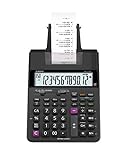
- FAST TWO-COLOR PRINTING – Prints at 2.0 lines per second with dual-color output (black/red) for easy distinction between positive and negative values.
- CHECK, CORRECT & RE-PRINT – Review and correct up to 150 steps before printing; use re-print and after-print functions for efficient documentation.
- TAX & BUSINESS FUNCTIONS – Includes cost/sell/margin, mark-up/mark-down, tax calculation keys, and currency exchange for quick financial operations.
- BIG DISPLAY & EASY INPUT – Features a 12-digit LCD and large, clearly spaced plastic keys for comfortable, accurate data entry.
- UPGRADED DESIGN – New version of the HR-100TM, ideal for taxes, bookkeeping, and accounting with clock/calendar printouts, subtotal & grand total, and percent functions.
Multiple entities and offices
Multi-office and multi-entity firms must verify separate books, shared or separate trust accounts, intercompany transactions, consolidated reports, partner compensation, multiple jurisdictions, and role-based permissions. Multiple users do not automatically mean enterprise-grade accounting.
How should a firm choose by size and architecture?
Solo or very small firm
Choose an all-in-one product when the owner wants fewer systems and has straightforward billing and trust workflows. CosmoLex is the leading default shortlist. A solo firm that only needs operating bookkeeping may choose QBO, but should add a legal trust layer before handling client funds.
Small firm with staff
Prioritize permissions, invoice approvals, bank reconciliation, trust replenishment, matter profitability, and accountant access. CosmoLex, Clio, LeanLaw plus QBO, and Tabs3 should all be compared through the same live workflow.
Growing midsize firm
Model per-user costs for attorneys, paralegals, billers, and accounting staff. Test batch billing, LEDES, split billing, multi-matter clients, reporting, integrations, migration, and data export before selecting a platform.
Multi-office or multi-entity firm
Do not assume that small-firm software supports entity separation, intercompany accounting, consolidated statements, partner distributions, or multiple jurisdictions. Obtain a written demonstration of those workflows and have the firm’s accountant review the design.
Firm with an existing accounting department
A modular legal layer such as LeanLaw plus QBO may preserve familiar accounting processes. The firm must document transaction ownership, reconciliation responsibilities, approval rights, and recovery procedures when synchronization fails.
Implementation checklist
A successful implementation is a control project, not just a data import. Complete these steps before relying on production reports:
What’s actually slowing this PC down?
Pick the symptom - the matching free tool is one click away.
- Design the chart of accounts and distinguish operating, trust, client, and matter records.
- Identify every trust account, operating account, entity, office, and jurisdiction.
- Configure user roles, approval limits, segregation of duties, and accountant access.
- Connect bank feeds and payment processors only after confirming trust-versus-operating routing.
- Map clients, matters, contacts, invoices, retainers, vendors, and historical transactions.
- Agree on opening balances and reconcile those balances to bank statements and client ledgers.
- Document the procedures for deposits, disbursements, transfers, reversals, refunds, and settlement distributions.
- Configure minimum-balance alerts, replenishment notices, billing approvals, and closeout checks.
- Train attorneys, staff, billers, bookkeepers, and accountants on their separate responsibilities.
- Run at least one month in parallel with the existing system and compare trust, operating, billing, and receivables reports.
- Have the accountant and, where appropriate, ethics or bar counsel review the workflow against applicable state rules.
Final recommendations
Choose CosmoLex when the firm wants the clearest all-in-one legal accounting architecture. Choose Clio when practice management, intake, documents, payments, and integrations are the primary priorities and the selected accounting plan passes the firm’s tests. Choose LeanLaw plus QuickBooks Online when QBO is already central to the firm’s accounting operation. Choose Tabs3 Cloud for a dedicated legal accounting suite, or Tabs3 OnSite when local deployment is a genuine requirement and the firm can support its IT obligations.
The final decision should follow a live test of retainers, trust-to-operating transfers, settlement distributions, reversals, bank-feed errors, and three-way reconciliation. The best product is the one that produces accurate matter-level records within the firm’s procedures—not the product with the longest feature list or the lowest advertised subscription price.
Frequently Asked Questions
Does law firm accounting software guarantee IOLTA compliance?
No. Law firm accounting software can support IOLTA workflows, client ledgers, audit trails, and three-way reconciliation, but software does not guarantee compliance with a state bar’s rules. The firm remains responsible for bank setup, approvals, reconciliations, timing, and proper handling of client funds.
Can a law firm use QuickBooks Online for trust accounting?
QuickBooks Online can support a firm’s operating books, but QuickBooks Online alone is generally not a complete legal trust-accounting solution. Firms handling client funds should use a legal-specific trust layer or a carefully controlled workflow that provides client ledgers and three-way reconciliation.
Do these 3 things before closing this tab:
1Scan for outdated or missing drivers - takes under a minute2Repair Windows errors before they cause bigger problems3Fix the driver behind crashes, sound loss and screen glitchesWhat is the difference between three-way reconciliation and checking a trust balance?
Three-way reconciliation compares the bank statement or bank balance, the internal trust-account ledger, and the sum of individual client trust ledgers. Checking only the total trust balance does not prove that money is allocated correctly among clients or matters.
Which law firm accounting software is best for a small firm?
CosmoLex is the strongest default shortlist choice for a small firm seeking one system for legal billing, operating accounting, trust accounting, and practice management. LeanLaw plus QuickBooks Online may be better when the firm already relies on QBO, while Tabs3 is worth comparing when dedicated legal accounting is the priority.
The Bottom Line
Bottom line: Start with CosmoLex for an all-in-one legal accounting system, Clio for the wider practice-management ecosystem, LeanLaw plus QuickBooks Online for QBO-centered firms, and Tabs3 for dedicated legal accounting or on-premises deployment. Before signing up, make every vendor demonstrate the firm’s actual trust, billing, settlement, reconciliation, and closeout workflows.
Quick Recap
Product prices and availability are accurate as of the date/time indicated and are subject to change. Any price and availability information displayed on Amazon at the time of purchase will apply.
Free tools Windows power users keep installed
One-click scans. No signup required.

