
iTechGuides is reader-supported. When you buy through links on our site, we may earn an affiliate commission. As an Amazon Associate I earn from qualifying purchases. Learn more
There is no single best grass seed for erosion control that also suits every landscape. The right choice depends on your local climate, precipitation, soil, elevation, slope, sun exposure and the look and maintenance you want. Official guidance from the USDA Natural Resources Conservation Service (NRCS) and university extension services agrees on three points: match the seed to the site, install it so it makes firm contact with the soil, and protect the bare surface until roots hold it in place. Bare soil stays vulnerable to erosion for the whole germination period, so the seed alone does not stop erosion on day one.
Why there is no universal best seed
A grass that anchors a steep bank in a wet, cool region may look wrong in a dry, sunny front lawn, and a warm-season species that thrives in the South may not establish at all in a northern winter climate. Seed suppliers often sell blends under broad labels such as “slope mix” or “erosion mix,” but the guidance reviewed for this article does not support a single blend that works across climates, soil types and exposures. Ask what the species are and where they are adapted, not only what the package is called.
Erosion control and a finished landscape can also call for different plants. A quick-establishing cover may be the right first step, while the look you want may require a different species or a longer maintenance plan. Decide which goal comes first before you buy.
The Tool Desk
Outbyte Driver Updater FREEFix the driver behind crashes, sound loss and screen glitchesFind Drivers →Outbyte PC Repair FREEClear out junk files and repair common Windows errorsFree Scan →Match the seed to the site
NRCS treats planning, species selection, seed quality, seeding rate, installation and follow-up evaluation as connected decisions rather than separate purchases. Before choosing a mix, record the conditions that will shape the result:
#1 Best Overall
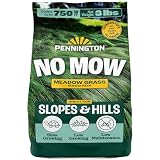
- Low-Maintenance Grass Seed Mix: Grows up to 12 inches, then naturally flops to about 6 inches for a manageable, no mow grass seed
- Perfect for Slopes, Hills, and Lawns: Drought tolerant lawn seed that grows beautifully in erosion-prone or hard-to-mow areas for even coverage
- Saves Time and Supports Sustainability: This lawn seed grass promotes eco-friendly lawn care
- Simple to Use: Prepare soil, spread seed evenly with a grass seed spreader, and water regularly to encourage consistent, uniform growth for a low-maintenance lawn
- Simple to Use: Prepare soil, spread seed evenly with a grass seed spreader, and water regularly to encourage consistent, uniform growth for a low-maintenance lawn
| Site factor | What to record | Why it matters |
|---|---|---|
| Region and precipitation | Your local rainfall pattern and whether the site gets summer or winter moisture | Local precipitation determines which species and seed sources can establish |
| Soil | Texture, drainage and surface condition, including any compaction or fill | Soil affects germination, root growth and how fast a cover forms |
| Elevation | Height above sea level and local temperature range | Seed sources adapted to one elevation may not survive at another |
| Slope and runoff | Steepness, length of the slope and where water concentrates | Steep and concentrated flow areas need more surface protection |
| Sun exposure | Full sun, partial shade or heavy shade | Many grasses that tolerate sun decline in shade, and the reverse is also true |
| Irrigation and maintenance | Whether you can water, mow and repair bare spots | Maintenance expectations determine whether a temporary cover or a permanent lawn is realistic |
| Goal | Conventional lawn, native planting or conservation cover | Each goal calls for different species and different acceptable appearance |
For the species and seeding rate for your area, contact your local NRCS office, Extension service or conservation district. Rates and species recommendations that work in one county can be wrong in the next, so avoid copying a rate from a package or an article without a site assessment.
Check the seed label before you buy
Prefer certified seed of a known variety when it is available. A legible label gives you the information needed to compare products on quality, not only price.
Rank #2

- These fast growing grass seeds are suitable for areas that receive 4 to 6 hours of daily sunlight
- Species and variety: confirm the exact names and whether they are suited to your region and site.
- Purity: the proportion of the bag that is the stated seed rather than inert matter or other plants.
- Germination: the share of seed expected to sprout under test conditions.
- Weed content: the presence of noxious or other unwanted seed.
- Lot identity and test date: so you can trace the seed if a problem appears.
- Seed source: the origin of the germplasm should suit your precipitation, soil and elevation.
Compare bags by their stated species, intended conditions and test results. A cheaper mix with unclear composition is not a saving if it establishes poorly.
Recommended Free Tools
Get the seed in contact with the soil
Good seed-to-soil contact matters more than most homeowners expect. NRCS guidance for warm-season grasses calls for shallow placement, so seed that sits on the surface or is buried too deep will often fail to sprout. On difficult slopes, tracking the soil or using a seeding method suited to the slope may be needed. Where seed cannot be worked into the soil, NRCS describes spreading it over freshly graded, loose soil and immediately protecting the surface with mulch, anchored or tackified as the site requires.
Rank #3

- A grass seed for lawns that grows thick blades of grass that stand up to hot summers and heavy rains
- Sun and shade grass seed for use in full sun to medium-shaded areas
- Lawn seed that holds up well under foot traffic
- See results in 8 to 21 days with Pennington grass seed
- This bag of tall fescue grass seeds for lawns covers up to 4,000 sq. ft.
Iowa State University Extension’s homeowner guidance for lawns is similar in principle: cover the seed shallowly, lightly firm it against the soil, then mulch with clean, weed-free straw. Adapt the depth and firming to your seed supplier’s directions and your soil.
Protect the surface while grass establishes
Bare soil is most exposed during the first weeks, before roots bind it. The table below sets out the protection options named in the guidance and the limits attached to each.
Rank #4

- FAST GERMINATION FOR QUICK COVERAGE: High ryegrass content provides rapid germination and early growth, making this mix suitable for projects that require fast establishment and immediate ground coverage
- COST-EFFECTIVE FOR LARGE AREA SEEDING: Designed for contractors and large-scale applications, this mix delivers dependable results at an economical price point, suitable for bulk seeding projects
- EROSION CONTROL & DISTURBED SOIL APPLICATIONS: Works well on slopes, construction sites, and roadside areas where quick vegetation is needed to help stabilize soil and reduce erosion risk
- BALANCED BLEND FOR COVERAGE & FILL-IN: Combines fast-growing ryegrass with fine fescue and Kentucky bluegrass to provide both quick coverage and improved density over time
- BUILT FOR CONTRACTORS & UTILITY APPLICATIONS: Suitable for new construction, lawn repair, utility areas, and general-purpose seeding where performance, speed, and coverage matter most
| Protection option | Where the guidance points to it | Limits to know |
|---|---|---|
| Straw mulch | Clean, weed-free straw on lawn and suitable sites | On slopes, mulch may move unless it is netted or tackified |
| Erosion-control mat or blanket | Steep slopes and erosion-prone areas | Installation method and anchoring must follow the product’s directions; the guidance does not give one fixed set of specifications |
| Netting | To hold mulch in place on slopes | Not a substitute for seed contact or for a suitable species |
| Tackifier or hydroseeding | Critical or steep slopes where mulch alone is not enough | Suitability depends on the site; NRCS post-fire guidance notes these may be needed on critical slopes |
If a planting fails, NRCS post-fire guidance advises repairing the seeding where possible rather than assuming the first attempt is final. Check the area after heavy rain for rills, washed seed or exposed roots, and reseed or re-protect those spots promptly.
Quick wins for a faster PC:
Scan for outdated or missing drivers - takes under a minuteDriver Scan →Repair Windows errors before they cause bigger problemsFix Now →Fix the driver behind crashes, sound loss and screen glitchesFind Drivers →Water during establishment
Iowa State Extension’s lawn guidance gives a practical sequence for watering newly seeded areas. The timing below is for lawn seed and should be adjusted to your climate and the seed supplier’s directions.
Best Value

- Kentucky 31 Tall Fescue grass seed is the original turf for your home
- Tall fescue seed provides a durable, economical lawn
- A grass seed for lawns that grows thick blades of grass that stand up to hot summers and heavy rains
- Fescue fast growing grass seeds for lawns produce a lighter green, drought-resistant turf
- Fescue fast growing grass seeds for lawns produce a lighter green, drought-resistant turf
- Keep the upper inch of the seedbed moist during germination. Light, frequent watering prevents the surface from drying out.
- Avoid watering so hard that water runs off the slope or washes seed away.
- Once seedlings are about two inches tall, reduce how often you water, but water more deeply each time to encourage roots to grow down.
- Check the surface by hand. If the top inch dries out between waterings during germination, increase moisture immediately.
Burned sites follow different rules
NRCS guidance on seeding after a wildfire is written for burned land, where soil may be hydrophobic, vegetation is gone and runoff risk is high. Its advice to use certified seed of a known variety, to check the seed’s origin against the site’s precipitation, soil and elevation, and to ask local staff for species and rates applies to any site. Its numerical slope thresholds and seeding rates do not transfer to ordinary landscaping, so do not use them for a home lawn without expert advice.
Signs the planting needs attention
- Seed or mulch washing into low spots after rain.
- Patches where seed has not sprouted even though the surface has been kept moist.
- Seedlings that die back quickly during dry spells after emergence.
- Gullies, rills or exposed roots on the slope.
When these appear, check the seed contact, the protection and the watering schedule before reseeding. Most failures trace back to one of those three factors.
For sites that are large, very steep or technically difficult, get input from local NRCS staff, your Extension service, your conservation district or a qualified contractor before buying a large quantity of seed.
Free tools Windows power users keep installed
One-click scans. No signup required.
Quick Recap
Product prices and availability are accurate as of the date/time indicated and are subject to change. Any price and availability information displayed on Amazon at the time of purchase will apply.

