
Free tools Windows power users keep installed
One-click scans. No signup required.
iTechGuides is reader-supported. When you buy through links on our site, we may earn an affiliate commission. As an Amazon Associate I earn from qualifying purchases. Learn more
The best external GPU depends first on your laptop’s connection. For most compatible Windows laptops, a Thunderbolt 4 or Thunderbolt 5 enclosure is the easiest route to a desktop graphics card. OCuLink generally offers better eGPU performance when your laptop supports it, but it is less common and usually does not provide charging or full dock functionality. USB-C alone is not enough, and conventional eGPUs are not generally supported on Apple Silicon Macs.
Our leading picks are the Sonnet Breakaway Box 850 T5 for a full-size Thunderbolt 5 enclosure, the Razer Core X V2 for a less expensive bare TB5 enclosure, the GPD G1 for portability, and the ONEXGPU 2 for a faster all-in-one dock. Prices and availability in this article are US observations checked August 9, 2026 and can change.
Quick recommendations
| Category | Recommendation | Why choose it | Main limitation |
|---|---|---|---|
| Best full-size Thunderbolt 5 enclosure | Sonnet Breakaway Box 850 T5 | 850W integrated PSU, 100W laptop charging, triple-wide GPU support, USB, 5GbE, and downstream Thunderbolt | Expensive and not a general-purpose Apple Silicon Mac solution |
| Best bare Thunderbolt 5 enclosure | Razer Core X V2 | $349.99 enclosure, PCIe 4.0 x4 slot, up to 140W charging, and support for large graphics cards | GPU and ATX power supply are sold separately; almost no dock I/O |
| Best Thunderbolt 3/4 enclosure and Intel Mac option | Sonnet Breakaway Box 750ex | Integrated 750W PSU, 85W charging, USB hub, Ethernet, and supported Intel Mac configurations | Older TB3 link and only double-width GPU support |
| Best compact all-in-one eGPU | GPD G1 | 0.92kg, built-in 240W GaN supply, OCuLink and USB4, display outputs, USB ports, and SD reader | Fixed RX 7600M XT with 8GB VRAM |
| Best higher-performance all-in-one eGPU | ONEXGPU 2 | Fixed RX 7800M with 12GB VRAM, OCuLink, USB4, 100W charging, Ethernet, and an SSD slot | 1.59kg before the power adapter and not upgradeable |
| Best modular OCuLink/TB5 dock | Minisforum DEG2 | OCuLink, two Thunderbolt 5 ports, 140W charging, 2.5GbE, M.2 expansion, and ATX/SFX PSU support | GPU and PSU are separate; the official page listed it out of stock when checked |
| Best proprietary portable option | ASUS ROG XG Mobile 2025 | Up to RTX 5090 Laptop GPU, 24GB GDDR7, 150W graphics power, integrated PSU, and dock ports | Works only with specific ASUS models and BIOS versions |
| Best connection for raw eGPU performance | OCuLink | Direct PCIe-style connectivity generally reduces the bottleneck compared with Thunderbolt | Uncommon on ordinary laptops, no laptop charging, and less convenient |
These are editorial recommendations based on documented specifications, compatibility information, and published comparative testing. They are not claims of hands-on testing.
What an external GPU actually is
An external GPU, or eGPU, places graphics hardware outside the laptop and connects it through a high-bandwidth interface. It can add graphics performance for gaming, 3D work, video effects, rendering, and some AI workloads when the laptop’s processor and software support the arrangement.
“External GPU” describes several different products, and they are not interchangeable:
#1 Best Overall

- 【Up Link & Down Link】Up link: Oculink 4i(PCIE4.0x4), Down Link: PCIEx16(PCIE4.0x4). Only Support Oculink.
- 【Power Supply】This DEG1 supports ATX and SFX standard power supplies, which provides flexible power supply solutions for mini chassis.
- 【Oculink Interfaces】Please kindly note the OCulink interface does not support hot plugging, and the machine needs to be turned off first.
- 【Follow-start Function】The follow-start function is only compatible with MINISFORUM Mini PCs, it requires the use of original wires.
- Note: The GPU is not included.
- Upgradeable eGPU enclosure: An empty enclosure containing a PCIe slot and, in some models, a power supply. You install a desktop graphics card yourself. Razer Core X V2 and the Sonnet Breakaway Box products belong here.
- All-in-one portable eGPU dock: The graphics processor is permanently installed, usually a mobile Radeon or GeForce chip. GPD G1, ONEXGPU 2, and ASUS ROG XG Mobile 2025 are examples. They are easier to transport but cannot accept a future GPU upgrade.
- Bare or modular GPU dock: A minimally enclosed PCIe connection that may require a separate desktop GPU, power supply, cable, and mounting hardware. OCuLink docks often take this form.
- Proprietary eGPU system: A manufacturer-specific dock that may use a familiar physical connector but only supports selected laptops. ASUS XG Mobile is the important example here.
An enclosure is therefore not automatically a graphics card. A $349.99 Razer Core X V2 is only part of a working system: you still need a compatible GPU and a standard ATX power supply.
First check whether your laptop supports an eGPU
Do not buy based on the shape of the port. A USB-C connector can carry ordinary USB, video, charging, Thunderbolt, or USB4. Only some implementations can tunnel the PCIe data required by an eGPU.
Quick wins for a faster PC:
Repair Windows errors before they cause bigger problemsFix Now →Scan for outdated or missing drivers - takes under a minuteDriver Scan →Ports that may support an eGPU
| Laptop connection | What to verify | Typical choice |
|---|---|---|
| Thunderbolt 3 | Confirm Thunderbolt is enabled and supported by the exact laptop model, then check the enclosure’s OS and GPU limits | TB3 enclosure such as Sonnet Breakaway Box 750ex |
| Thunderbolt 4 | Confirm the laptop supports external graphics; a TB5 enclosure will run at the host’s TB4 capability | TB4 or backward-compatible TB5 enclosure |
| Thunderbolt 5 | Confirm eGPU support and the required operating system or firmware | TB5 enclosure such as Sonnet 850 T5 or Razer Core X V2 |
| USB4 | Verify PCIe tunneling and external-GPU support for the exact model; USB4 capabilities vary | Only an enclosure documented to support that USB4 implementation |
| OCuLink | Check the connector generation, cable, hot-plug behavior, and whether the laptop provides charging separately | OCuLink dock or modular enclosure |
| Ordinary USB-C or USB 3.x | These ports do not provide the required PCIe connection | Not compatible with a conventional eGPU |
Razer specifically requires Thunderbolt 4, Thunderbolt 5, or a USB4 port with external-graphics support and warns that a normal USB-C port is insufficient. See Razer’s Core X V2 compatibility and setup documentation.
How to verify USB4 in Windows
On a Windows laptop, open Device Manager, expand Universal Serial Bus controllers, and look for USB4(TM) Host Router (Microsoft). Sonnet’s Windows eGPU guide uses this as an important indication that the system has the host router needed to pass GPU or PCIe data to an enclosure.
Windows 11 also exposes USB4 information at Settings → Bluetooth & devices → USB → USB4 Hubs and Devices. This page appears when Windows detects a USB4 host router. The Microsoft USB4 settings documentation explains the behavior. The absence of a host router is a reason to investigate further, not an invitation to assume compatibility.
Always check the laptop manufacturer’s technical specifications or support page using the exact model number. “USB4 laptop,” “gaming laptop family,” or “USB-C with display output” is not precise enough.
Recommended Free Tools
Thunderbolt 3, Thunderbolt 4, Thunderbolt 5, USB4, and OCuLink compared
Thunderbolt 3 and Thunderbolt 4
Thunderbolt 3 and Thunderbolt 4 are 40Gbps-class interfaces, but an eGPU does not receive a desktop graphics card’s normal PCIe x16 connection. Thunderbolt carries the PCIe traffic through a narrower external link. Sonnet documents the Breakaway Box 750ex connection as PCIe 3.0 x4 over Thunderbolt 3 and quotes approximately 2,800MB/s of PCIe bandwidth.
Thunderbolt 4 is usually the most broadly compatible conventional eGPU option. It does not guarantee identical results across laptops: the host controller, BIOS, firmware, CPU, display routing, drivers, and internal-versus-external monitor choice all affect performance.
Thunderbolt 5
Intel specifies Thunderbolt 5 at 80Gbps bidirectional bandwidth, with Bandwidth Boost supporting up to 120Gbps for display-heavy workloads. Intel also describes it as doubling PCIe data throughput compared with Thunderbolt 4 and incorporating USB4 Version 2, DisplayPort 2.1, and PCIe Gen 4 technologies. Those are interface capabilities, not a promise that an eGPU will receive 80Gbps of usable graphics bandwidth after protocol overhead and controller limits.
A Thunderbolt 5 enclosure is not an automatic upgrade for a Thunderbolt 4 laptop. For example, the Razer Core X V2 can connect backward to Thunderbolt 4 and selected USB4 systems, but the laptop determines the negotiated link. TB5 can still be worthwhile with a TB4 laptop if the enclosure has better GPU clearance, power delivery, warranty, or long-term upgrade value.
Thunderbolt 5 is most compelling when the laptop actually has TB5, the graphics card is powerful enough to benefit, the enclosure will double as a high-end dock, or the price difference from a good TB4 enclosure is small.
USB4
USB4 is a family of capabilities rather than one guaranteed performance level. USB4 Version 2.0 can support up to 80Gbps and includes PCIe tunneling, but laptop manufacturers do not implement every USB4 feature identically. A USB4 label alone cannot establish eGPU compatibility.
For a USB4 laptop, verify all three points:
- The port supports PCIe tunneling.
- The manufacturer supports external graphics or the enclosure maker documents that exact USB4 configuration.
- The laptop’s BIOS, firmware, operating system, and cable meet the enclosure’s requirements.
OCuLink
OCuLink is a direct PCIe-style connection commonly implemented as PCIe 4.0 x4. It normally carries the graphics connection but not the USB hub, Ethernet, SD reader, or laptop-charging functions found in many Thunderbolt docks.
OCuLink is generally the best choice for raw eGPU performance when it is available. In a published RTX 5070 Ti comparison, OCuLink delivered approximately 6.6GB/s host-to-device and 6.7GB/s device-to-host throughput, versus about 5.6GB/s and 5.8GB/s for Thunderbolt 5. Across 12 games, Thunderbolt 5 was approximately 13–14% slower on average, with larger losses in some titles. That test used a desktop platform rather than a representative laptop, so treat it as directional evidence rather than a universal performance guarantee.
Rank #2

- Package Include: OCuLink SFF-8612 Female to PCIe x16 Enclosure Dock, and SFF-8611 Male to Male Cable 50cm/19.7inch (Note: The GPU and Power Supply are not included)
- Advantage of the dock: Our enclosue detachable design on both ends for improved portability and easy storage. PCB board with 10μ gold-plated contacts ensure superior conductivity and reduce oxidation/rust-related resistance that may cause system crashes or BSOD. Multi-status LED indicators provide clear visual feedback for real-time device monitoring. Transfer Speed: PCIe 4.0 x4 (64Gbps )
- SFF-8611 Male to Male Cable: Ultra-thin & flexible design (0.5mm thickness) with premium aesthetics, eliminating port damage risks from rigid traditional OCuLink cables. Flat cable architecture with full-coverage shielding and advanced EMI materials to minimize interference and performance degradation
- Compatible Graphics Cards: Compatible with graphics cards of various sizes like RTX 4090, AMD RX 7900 XTX etc., no need to worry about graphics card length restrictions. 🔺Compatible Power Supply: Compatible with standard ATX power supply ONLY, dual screw mounting (top & bottom) for PSU stability
- Note: The OCulink interface does not support hot plugging, and the computer needs to be turned off to unplug the cable.
A practical, though not absolute, connection hierarchy is:
OCuLink / direct PCIe 4.0 x4
> Thunderbolt 5 / higher-end USB4 implementations
> Thunderbolt 4 / USB4 40Gbps
> Thunderbolt 3
The real result depends on the host, GPU, drivers, game, resolution, display path, and other devices sharing the link.
Best external GPU enclosures and docks
Sonnet Breakaway Box 850 T5: best full-size Thunderbolt 5 enclosure
Buy it if: You want a desktop graphics card, an integrated high-wattage PSU, substantial card clearance, laptop charging, and useful dock ports in one desk-based unit.
The Breakaway Box 850 T5 is an empty, upgradeable enclosure rather than a complete eGPU. It supports Windows computers with Thunderbolt 5 or Thunderbolt 4 and some Windows USB4 systems. Sonnet lists support for NVIDIA GeForce RTX 50-, 40-, and 30-series cards and AMD Radeon RX 9000-, 7000-, and 6000-series cards. It accepts triple-wide cards up to 345 × 155 × 70mm, with three 8-pin connectors or one 16-pin 12VHPWR connector.
- Power: Integrated 850W PSU and up to 100W laptop charging
- Dock features: One downstream Thunderbolt port with 15W power, USB 3.2 Gen 2 Type-A ports, and 5GbE Ethernet
- Size and weight: 21 × 39.6 × 24.5cm and 6.4kg
- Price checked August 9, 2026: $599.99 listed through Sonnet’s store, subject to change
Its main advantage over the Razer enclosure is completeness: the PSU is included and the unit provides real dock functionality. Its main disadvantage is cost, especially because the graphics card is still separate. Sonnet describes Apple Silicon Mac GPU support as experimental support for AI developers, not general consumer gaming support. See the official 850 T5 specifications.
Razer Core X V2: best bare Thunderbolt 5 enclosure
Buy it if: You already own a desktop GPU or want to choose your own card and power supply, and you value a relatively low enclosure price over integrated dock features.
The Core X V2 costs $349.99 for the enclosure alone on Razer’s US store, checked August 9, 2026. It includes a Thunderbolt 5 cable and supports a PCIe 4.0 x4 expansion slot, full-length cards up to 3.5 slots, and up to 140W USB-C Power Delivery to the laptop. Razer lists maximum internal dimensions of 362.7 × 82 × 185.1mm.
- Included: Enclosure and 0.7m Thunderbolt 5 cable
- Not included: Desktop graphics card or standard ATX PSU
- Host support: Thunderbolt 5, backward-compatible Thunderbolt 4, and selected USB4 systems
- Operating system: Windows 11; Razer’s support documentation lists no Mac compatibility
- Dock I/O: No useful peripheral ports beyond the host USB-C/Thunderbolt connection
- Cooling: Built-in 120mm fan with fan-curve control through Razer Synapse
It is a strong platform for a buyer who can source a suitable PSU and does not need Ethernet, USB ports, or a card reader. The $349.99 headline price should never be compared directly with the price of a complete fixed-GPU dock.
The Tool Desk
Outbyte Driver Updater FREEScan for outdated or missing drivers - takes under a minuteDriver Scan →Outbyte PC Repair FREERepair Windows errors before they cause bigger problemsFix Now →Use Razer’s Core X V2 product page and support documentation to verify current card dimensions, power requirements, and host compatibility before ordering.
Sonnet Breakaway Box 750ex: best TB3/TB4 enclosure and Intel Mac option
Buy it if: You have an Intel Mac with a supported Thunderbolt 3 configuration, or a Windows laptop that needs a mature enclosure with integrated power, USB, and Ethernet.
The 750ex is an empty Thunderbolt 3 enclosure with a 750W internal PSU, up to 85W laptop charging, four USB-A ports, and Gigabit Ethernet. It supports Windows systems with Thunderbolt 3, 4, or 5 and supported Intel Mac eGPU configurations. The PCIe 3.0 x4 connection is older than TB5, but it remains suitable for a sensible midrange desktop GPU.
- GPU limit: One full-length, full-height, double-width card up to 312 × 160 × 55mm
- Power: Cards requiring up to 375W continuous power plus an additional 100W peak
- Size and weight: 18.5 × 34 × 20.2cm and 3.2kg
- Price checked August 9, 2026: $399.99 listed in stock on Sonnet’s store
Its double-width limit rules out many large modern graphics cards, including numerous 3- and 4-slot designs. It is not the right choice for a high-end oversized GPU, but it remains one of the clearer choices for supported Intel Mac systems. See Sonnet’s 750ex specifications and current store listing.
Crashes, No Sound, or Screen Glitches?
Random freezes, missing sound and display glitches usually trace back to one bad driver. Find and replace yours safely.Free scan · under a minutePC Slower Than It Used to Be?
A free scan shows the junk files, broken settings and background clutter dragging Windows down - then fixes them in one click.Free scan · Windows 10 & 11GPD G1: best compact all-in-one eGPU
Buy it if: You want a genuinely portable graphics dock for a USB4- or OCuLink-equipped laptop, mini PC, or gaming handheld and do not want to install a desktop GPU.
The GPD G1 contains a fixed AMD Radeon RX 7600M XT with 8GB of GDDR6 memory. It has both OCuLink and USB4, a built-in 240W GaN power supply, HDMI 2.1, two DisplayPort 1.4a outputs, three USB-A ports, and an SD 4.0 reader when connected through USB4. GPD lists support for up to three external displays, dimensions of 225 × 111 × 30mm, and a weight of 0.92kg.
Rank #3
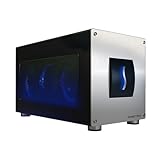
- Astounding Performance: Unlock near-desktop GPU power with your Thunderbolt 5 Windows 11 laptop. Breakaway Box 850 T5 delivers 80 Gbps of bi-directional bandwidth, ensuring blazing-fast performance for GPU-accelerated workflows. Accelerates Thunderbolt 4 and Most USB4 Windows 11 Computers, too. Intel Thunderbolt Certified.
- Supports Triple Wide GPU Cards NVIDIA GeForce RX50, 40, and 30 Series; AMD Radeon RX 9000, 7000, and 6000 Series.
- 850W power supply supports the power requirements of today’s and tomorrow’s power-hungry GPU cards. And large built-in, variable-speed, temperature-controlled fan quietly and effectively cools whatever card you install.
- Editing, rendering, color grading, animation, and visual effects run significantly faster with GPU acceleration. And Supercharge AI-driven applications with massively increased processing power and efficiency.
- Built-in Thunderbolt 5 Dock for Additional Connectivity Includes one Thunderbolt 5 peripheral port, three 10 Gbps USB Type A ports, plus a 5 Gigabit Ethernet (RJ45) port for super-fast wired network connectivity.
GPD lists a 63Gbps effective OCuLink bandwidth and up to 65W host power through USB4. A selectable 60W quiet mode or 100W normal mode controls the device’s operating profile. OCuLink is the faster graphics path, but GPD says the USB-A and SD expansion functions are unavailable over OCuLink because that connection is being used for PCIe graphics data.
The G1 is easier to carry than a desktop GPU enclosure, but its RX 7600M XT is permanently installed and its 8GB VRAM is a meaningful limit for demanding games, high-resolution textures, and some AI models. It should be evaluated as a complete mobile graphics system, not as an upgradeable Radeon desktop card. Consult the GPD G1 specifications and GPD’s OCuLink and USB4 explanation.
ONEXGPU 2: best higher-performance all-in-one eGPU
Buy it if: You want a fixed, portable AMD eGPU with more graphics memory and performance headroom than the GPD G1, particularly for an OCuLink-equipped handheld or mini PC.
The ONEXGPU 2 uses a fixed Radeon RX 7800M with 12GB of GDDR6. It provides OCuLink at 64Gbps, USB4 at 40Gbps, up to 100W reverse USB-C power delivery, an M.2 2280 NVMe slot operating at PCIe 3.0 speeds, two USB 3.2 ports, and Gigabit Ethernet. The manufacturer’s FAQ lists support for Thunderbolt 3, Thunderbolt 4, and OCuLink host systems.
- Size and weight: 229.5 × 175 × 43mm and 1.59kg before the power supply
- Price checked August 9, 2026: The store displayed $1,059 with a displayed sale price of $960; promotional pricing is volatile
- Upgradeability: The RX 7800M is fixed and cannot be replaced
The ONEXGPU 2 is more capable than the G1 on paper, but its weight and price reduce its travel appeal. Its SSD shares bandwidth with the GPU connection according to the manufacturer’s FAQ, so buyers should not treat every expansion function as completely independent. AMD is also a less suitable choice for software that specifically requires NVIDIA CUDA. Check the ONEXGPU 2 FAQ and specifications and the current store price.
Minisforum DEG2: best modular OCuLink/TB5 dock, subject to availability
Buy it if: You are comfortable assembling a desk-based eGPU from separate components and want OCuLink performance plus Thunderbolt 5 and dock functionality.
Do these 3 things before closing this tab:
1Scan for outdated or missing drivers - takes under a minute2Clear out junk files and repair common Windows errors3Fix the driver behind crashes, sound loss and screen glitchesThe DEG2 supports 64Gbps OCuLink, two 80Gbps Thunderbolt 5 ports, up to 140W power delivery on one TB5 port, 30W on the second, 2.5GbE, USB 3.2 Gen 2, an M.2 2280 slot, and ATX or SFX power supplies. It accepts full-length, high-TDP desktop graphics cards and includes OCuLink and USB-C cables.
The official Minisforum page listed the dock at $239.90 but marked it out of stock when checked. It is also not a complete eGPU: the GPU and PSU are separate purchases. That makes it potentially attractive to enthusiasts who already have both components, but less suitable for readers seeking a straightforward ready-to-use system. Check the official DEG2 page for current availability before making plans.
ASUS ROG XG Mobile 2025: best for supported ASUS laptops
Buy it if: You own an ASUS or ROG laptop on ASUS’s compatibility list and want a small, integrated eGPU with a high-end fixed mobile GPU.
The ROG XG Mobile 2025 contains up to an NVIDIA GeForce RTX 5090 Laptop GPU with up to 24GB of GDDR7 and a 150W maximum graphics power level. ASUS lists a 330W AC adapter, up to 140W host charging through USB PD 3.1 where supported, Thunderbolt 5 input and output, HDMI 2.1, DisplayPort 2.1, two USB 3.2 Gen 2 Type-A ports, an SD reader, and 5GbE. The unit measures 20.8 × 15.5 × 2.96cm and weighs 0.9kg. ASUS’s US price was $1,299.99 when checked.
What’s actually slowing this PC down?
Pick the symptom - the matching free tool is one click away.
This is not a universal TB5 eGPU. ASUS publishes a model-by-model compatibility list with minimum BIOS versions, and some laptops require a particular port. ASUS also says BIOS updates may be needed to reserve at least 128GB of prefetchable memory. Check the current ASUS compatibility and BIOS list before buying, then compare the official specifications and current price.
Enclosure or all-in-one eGPU?
Choose an upgradeable enclosure when:
- You already own a desktop graphics card.
- You want to replace the GPU later.
- You need a full-size RTX or Radeon desktop card.
- You need a large card, high power limit, or long-term platform.
- You use the eGPU mainly at a desk and prioritize performance over portability.
Choose an all-in-one dock when:
- You want the simplest installation.
- You do not want to source a GPU and PSU separately.
- You use a gaming handheld, mini PC, or compact laptop.
- You value built-in displays, USB, Ethernet, SD, or SSD expansion.
- You accept that the GPU cannot be upgraded.
Do not compare an empty $350 enclosure with a $960 or $1,300 complete eGPU without adding the missing GPU, PSU, cables, and dock hardware. The products serve different buyers.
Performance: how much slower is an eGPU?
There is no defensible universal “eGPU loses X percent” figure. Performance depends on the connection generation, host controller, GPU, CPU, game engine, resolution, settings, drivers, display path, and whether USB or Ethernet traffic shares the link.
Thunderbolt and USB4 also expose a narrower effective graphics path than the PCIe x16 slot used by a desktop motherboard. That matters more when the GPU is very powerful, the game frequently transfers data between system memory and video memory, or the workload is sensitive to latency.
Use an external monitor when possible
For gaming, connect the monitor directly to the eGPU’s HDMI or DisplayPort output. This is usually the preferred path because rendered frames do not need to travel back over the external link to the laptop’s built-in display.
- External monitor connected to the eGPU: Usually the best performance and simplest GPU-selection path.
- Laptop’s internal display: More convenient, but frames may need to cross the external link twice, reducing performance in some workloads.
- Special laptop display routing or MUX behavior: Results vary by model, firmware, drivers, and application.
Apple also recommends connecting the external display directly to the eGPU for supported games and applications. See Apple’s official eGPU guidance.
Rank #4

- USB4 V2 (TBT5 compatible) and OCuLink Dual Mode: Dual-link interfaces support transfer speeds up to 80Gbps (TB5) and 64Gbps (OCuLink). A dedicated hardware switch allows for instant switching between all-in-one docking mode and pure GPU performance mode.
- Integrated M.2 NVMe Storage: A built-in M.2 2280 slot allows direct storage of AI models and project files on the dock. Maintains synchronized workspace and GPU performance when switching between different host devices.
- Universal Power and Graphics Card Compatibility: Supports standard ATX and SFX power supplies and is compatible with a variety of desktop graphics cards. Modular design ensures easy upgrades to power and computing power.
- Enhanced Signal Stability: Built-in re-drive signal booster stabilizes PCIe data transfer. Minimizes latency and connection interruptions during high-bandwidth tasks such as LLM inference or 8K rendering.
- Single-Cable Desktop Workflow: A single TB5 cable handles data transfer, display, and laptop charging. It features automatic power-on and can synchronize with the host computer, providing a seamless plug-and-play desktop experience.
Pair the GPU with the connection
- Thunderbolt 3/4: A sensible midrange desktop GPU is usually a better-balanced choice than the very highest-end card, which may be held back by the link.
- Thunderbolt 5: Higher-end desktop GPUs make more sense, especially when driving an external monitor, although the connection remains narrower than desktop PCIe x16.
- OCuLink: Better suited to a high-end desktop GPU when the host provides a direct PCIe 4.0 x4 connection.
- Fixed mobile eGPUs: Judge the complete system by its actual mobile GPU, memory, and power limit. An RX 7800M is not equivalent to a desktop RX 7800 XT, and an RTX 5090 Laptop GPU is not a desktop RTX 5090.
Total cost: calculate the complete setup
For an empty enclosure
enclosure
+ graphics card
+ PSU, if not included
+ suitable power cables
+ monitor, if needed
+ optional USB hub or dock
The Razer Core X V2 requires both a desktop GPU and a standard ATX power supply. The Sonnet 850 T5 includes an 850W PSU but still requires the GPU. The Minisforum DEG2 requires both a GPU and PSU.
For a fixed eGPU
all-in-one eGPU
+ laptop
+ optional external monitor
+ optional SSD
Fixed docks have a higher upfront price for a known, compact package, but the graphics hardware cannot be upgraded. A desktop enclosure may cost less initially if you already own a suitable GPU and PSU, and it can remain useful through future GPU upgrades.
Recommended Free Tools
When an eGPU is poor value
- Your laptop lacks Thunderbolt, compatible USB4, OCuLink, or a supported proprietary connection.
- The complete enclosure-plus-GPU cost approaches that of a complete gaming desktop.
- Your laptop CPU is too weak for the intended games or professional workload.
- You expect a large improvement while traveling on battery power.
- Your main display is the laptop’s internal screen and the external link is already the bottleneck.
- Your software requires CUDA but you are considering an AMD-only fixed dock.
- Your laptop already has a powerful internal GPU and the external system would offer little practical improvement.
An eGPU is most compelling for someone who already owns a good laptop and wants a docked desk setup with more graphics capability. It is less often the best value for someone starting from zero.
How to install an eGPU on Windows 11
- Confirm compatibility. Identify the exact laptop port and check the laptop and enclosure documentation. For USB4, look for the Microsoft USB4 Host Router and verify PCIe tunneling.
- Update the platform. Install the latest laptop BIOS or UEFI, Thunderbolt or USB4 firmware, chipset drivers, Windows updates, and graphics drivers.
- Install the hardware. For an enclosure, install the graphics card, connect every required GPU power lead, and confirm that the card is fully seated. Check length, height, slot thickness, connector location, and airflow before closing the case.
- Power the enclosure. Connect it to AC power and switch it on before connecting the host cable, following the enclosure maker’s instructions.
- Connect directly. Use the supplied or appropriately certified Thunderbolt/USB4 cable directly between the eGPU and laptop. Avoid placing another hub or dock in the path during initial setup.
- Install the GPU driver. Install the current NVIDIA or AMD driver for the graphics card installed in the enclosure.
- Verify detection. Open Device Manager → Display adapters. The external GPU should appear without a warning icon.
- Connect the monitor. For gaming and testing, connect the display directly to the eGPU’s HDMI or DisplayPort output.
- Test the workload. Run a GPU-accelerated application or game and verify that it is using the external GPU.
- Test the rest of the dock. Check charging, USB devices, Ethernet, sleep/wake, and reconnect behavior before relying on the setup.
Sonnet’s Windows eGPU guide recommends powering the enclosure, connecting the supplied Thunderbolt cable, installing the GPU driver, and checking Device Manager. Razer provides a similar Core X V2 installation sequence.
If an NVIDIA driver will not install
Razer documents a vendor-specific recovery path:
- Disconnect the eGPU from the internet.
- Run the NVIDIA driver installer using Express installation.
- Connect the eGPU and external monitor.
- Check Device Manager, including hidden devices.
- If required, manually install the extracted driver.
- Restart and verify both the external GPU and monitor.
This is not a universal requirement, but it is a useful troubleshooting branch for a Razer setup with a failed NVIDIA driver installation.
Independent reader supportYour contribution helps us test, update, and keep practical guides available for everyone.Mac compatibility
Apple’s official eGPU support requires an Intel Mac with Thunderbolt 3, macOS High Sierra 10.13.4 or later, and a supported AMD graphics card and enclosure combination. Apple explicitly requires an Intel processor, so Apple Silicon Macs should not be presented as generally compatible with conventional consumer eGPUs.
Do these 3 things before closing this tab:
1Fix the driver behind crashes, sound loss and screen glitches2Clear out junk files and repair common Windows errors3Scan for outdated or missing drivers - takes under a minuteSome enclosure manufacturers mention experimental Apple Silicon support for specialized AI development, but that should not be confused with broad gaming or general graphics support. For supported Intel Mac configurations, connect the external monitor directly to the eGPU where possible and check Apple’s supported GPU list before purchasing.
Common problems and fixes
“My laptop has USB-C, but the eGPU is not detected.”
The port may be ordinary USB 3.x, or its USB4 implementation may lack PCIe tunneling or external-GPU support. Other causes include an unsuitable cable, outdated firmware, an unpowered enclosure, a GPU that is not fully seated, a missing driver, or a manufacturer restriction.
Start by checking the exact laptop specifications, looking for USB4(TM) Host Router (Microsoft) where applicable, powering the enclosure, connecting it directly, and updating BIOS and drivers. A normal USB-C port cannot be converted into a conventional eGPU port with a different cable.
“The GPU works, but performance is disappointing.”
- Connect the external monitor directly to the eGPU.
- Confirm the host is negotiating the expected Thunderbolt or USB4 mode.
- Use a suitable, short, certified cable for the advertised connection.
- Check that the game or application is using the external GPU.
- Consider whether the laptop CPU is limiting the workload.
- Check whether USB storage, Ethernet, and other displays are sharing the same link.
- Consider whether the graphics card is simply too powerful for the available external bandwidth.
Do not diagnose an eGPU only from its GPU model. The same card can behave differently on different hosts and displays.
“The laptop charges slowly or still loses battery while gaming.”
Compare the laptop’s required wattage with the enclosure’s maximum USB-C Power Delivery and confirm that the laptop accepts that level. Maximum advertised figures include up to 140W for the Razer Core X V2, 100W for the Sonnet 850 T5, 85W for the Sonnet 750ex, up to 65W for the GPD G1, up to 100W for the ONEXGPU 2, and up to 140W for the ASUS XG Mobile 2025 where the laptop supports USB PD 3.1 EPR.
These are host-charging figures, not the GPU’s power budget, and they are not guarantees that every laptop will charge at the maximum rate. Downstream peripherals and the laptop’s own power-management rules can also matter.
“The GPU fits electrically but not physically.”
Compare the enclosure’s maximum card length, height, slot thickness, power connector position, connector bend radius, PSU leads, and airflow. The Core X V2 supports cards up to 3.5 slots within its specified dimensions; the Sonnet 850 T5 supports triple-wide cards up to 345 × 155 × 70mm; and the Sonnet 750ex accepts only double-width cards. A card can be electrically compatible and still be impossible to install safely.
“The eGPU works on an external monitor but not the laptop screen.”
Internal-display behavior depends on display routing, drivers, firmware, the operating system, and the application. Test first with a monitor connected directly to the eGPU. If that works, the issue is likely the laptop’s internal display path rather than the graphics card itself.
The Tool Desk
Outbyte Driver Updater FREEFix the driver behind crashes, sound loss and screen glitchesFind Drivers →Outbyte PC Repair FREEClear out junk files and repair common Windows errorsFree Scan →Best Value

- Compatibility: Compatible with most NVIDIA/AMD graphics cards up to ≤205mm (≤8.07”) in length, ≤150mm (≤5.91”) in height, and ≤55mm (≤2.17”) in width. Support Windows 10/11, Linux
- This complete kit includes everything you need:a GPU Enclosure Box ,240W external power supply, Thunderbolt 4 cable, 8-pin PCIe power cable, and a custom carrying case. Simply connect one cable to your device and instantly boost your graphics power for editing, rendering, or gaming
- Application: Compatible with NUC/laptop/handheld game console with Thunderbolt 4/3 USB4 interface. Note that The Type-C port is not applicable if it does not support Thunderbolt 3/4 or USB4 protocols. And package does not contain the graphics card
- Multiple Interfaces: Features one Thunderbolt port with PD 85W charging, one Thunderbolt port with PD 15W charging, and one DP port.Supports PCIe 3.0 x16 data transfer mode
- Compact & Durable Design:Featuring a lightweight yet robust anodized aluminum shell, this enclosure combines portability with premium protection. Complete with a custom carrying case, it delivers desktop-grade graphics performance wherever you go
“The ASUS eGPU does not work with my laptop.”
Check ASUS’s exact supported-model and minimum-BIOS list before troubleshooting. A USB4 or Thunderbolt port alone does not make a laptop compatible with the ROG XG Mobile 2025.
Which eGPU is best for each workload?
- Gaming at a desk: Choose an upgradeable enclosure with a desktop GPU and connect an external monitor directly. Sonnet 850 T5 is the strongest full-size TB5 choice; OCuLink is preferable when the laptop supports it.
- Portable gaming: Choose GPD G1 for minimum weight and convenience, or ONEXGPU 2 for a heavier but faster fixed AMD option.
- AI development: Start with software requirements rather than gaming benchmarks. NVIDIA may be the better choice when CUDA or a CUDA-dependent application is required. Verify operating-system and framework support for the exact GPU.
- Video editing and content creation: Consider GPU compatibility with the editor and effects plugins, VRAM capacity, external-monitor requirements, storage, Ethernet, and whether the enclosure’s dock ports share bandwidth with the GPU.
- Intel Mac: Use a documented Thunderbolt 3 enclosure and supported AMD GPU combination, such as the Sonnet 750ex category. Do not assume a modern Windows-focused TB5 product will work.
- Maximum performance: Use OCuLink if your laptop provides it and you can accept separate charging and dock hardware. Otherwise choose TB5 with a sensible GPU and an external monitor.
Buying checklist
- Identify the exact laptop model and port, not just the USB-C connector.
- Confirm Thunderbolt eGPU support or USB4 PCIe tunneling.
- Check the operating system and firmware requirements.
- Decide whether you need a desktop-GPU enclosure or a fixed all-in-one dock.
- Add the GPU, PSU, cables, monitor, and dock costs to the advertised enclosure price.
- Measure the graphics card against length, height, and slot-thickness limits.
- Confirm PSU wattage and every required GPU power connector.
- Compare laptop charging output with the laptop’s own power requirement.
- Prefer an external monitor connected directly to the eGPU for gaming.
- Check whether the workload needs NVIDIA CUDA or another vendor-specific feature.
- Include the power adapter when judging portability.
- Recheck volatile prices, stock, compatibility lists, and BIOS requirements before ordering.
Frequently Asked Questions
Can I use an eGPU with any USB-C laptop?
No. The USB-C shape is not enough. The laptop needs Thunderbolt 3, 4, or 5 with eGPU support, USB4 with PCIe tunneling and external-graphics support, OCuLink, or a compatible proprietary connector. Ordinary USB-C and USB 3.x ports cannot run a conventional eGPU.
Does USB4 support eGPUs?
Some USB4 systems do, but USB4 features vary by laptop. Check the exact model’s specifications, verify PCIe tunneling and external-GPU support, and look in Windows Device Manager for “USB4(TM) Host Router (Microsoft).”
Is Thunderbolt 5 faster than OCuLink?
Not necessarily for eGPU workloads. Thunderbolt 5 has higher headline interface bandwidth, but OCuLink is a more direct PCIe-style connection. A published RTX 5070 Ti test found OCuLink roughly 13–14% faster than Thunderbolt 5 across 12 games, although the test used a desktop platform and should not be treated as universal.
Can an eGPU charge my laptop?
Many Thunderbolt eGPU enclosures provide USB-C Power Delivery, but the maximum varies. The documented figures include 140W for Razer Core X V2, 100W for Sonnet 850 T5, 85W for Sonnet 750ex, 65W for GPD G1, and 100W for ONEXGPU 2. Your laptop must support the offered charging level, and it may still discharge under heavy load.
Can I use an eGPU with the laptop’s built-in screen?
Often, but performance and compatibility vary. An external monitor connected directly to the eGPU is usually preferable because frames do not need to travel back over the external link to the laptop display.
Are Apple Silicon Macs compatible with conventional eGPUs?
Do not treat them as generally compatible. Apple’s official eGPU support requires an Intel Mac with Thunderbolt 3 and a supported AMD GPU and enclosure combination. Some manufacturers mention experimental Apple Silicon AI support, but that is not broad consumer gaming support.
Can I upgrade the GPU in the GPD G1 or ONEXGPU 2?
No. Both are fixed-GPU docks. The GPD G1 contains an RX 7600M XT with 8GB VRAM, while the ONEXGPU 2 contains an RX 7800M with 12GB. Choose an empty enclosure if future GPU upgrades matter.
Do I need a separate PSU?
It depends on the product. Razer Core X V2 and Minisforum DEG2 require a separate PSU. Sonnet 850 T5, Sonnet 750ex, and GPD G1 include internal power supplies. Verify the exact product because an enclosure price may not represent a complete working system.
Will an RTX 5090 work in an eGPU enclosure?
It depends on the exact card’s dimensions, power connectors, PSU capacity, cooling, host connection, and operating-system support. A large high-end card may not fit a double-width enclosure. Even when it fits, Thunderbolt bandwidth can prevent it from performing like the same card in a desktop PCIe x16 slot.
Can I use an eGPU with a laptop that already has a discrete GPU?
Sometimes. The external GPU can provide more performance or different software features, but the result depends on display routing, drivers, CPU limits, and application support. An existing powerful internal GPU can also make the cost-benefit case for an eGPU weak.
Is an eGPU better than buying a desktop?
An eGPU is convenient when you already own a capable laptop and want a desk-based graphics upgrade. A desktop usually offers better performance per dollar, easier upgrades, and a full-bandwidth internal GPU connection. Compare the complete eGPU cost, including the enclosure, GPU, PSU, monitor, and accessories.
Does an eGPU work with Linux?
Linux behavior is product-, distribution-, kernel-, driver-, and host-specific. Check documentation for the exact enclosure and distribution rather than assuming Windows-style plug-and-play support. Suspend, hot-plug, display routing, and proprietary GPU drivers can all affect the result.
Can I disconnect an eGPU without rebooting?
Some systems and enclosures support hot-plugging, but behavior varies by operating system, laptop, driver, and workload. Save work, close GPU applications, use the operating system or vendor’s safe-disconnect procedure when available, and shut down rather than unplugging if the system does not provide a reliable removal method.
What cable do I need?
Use the cable supplied with the enclosure when possible, or a cable certified for the actual Thunderbolt or USB4 speed. A USB-C cable that supports charging or ordinary data is not automatically suitable for Thunderbolt eGPU bandwidth.
The Bottom Line
Choose the connection before choosing the GPU. If your laptop has Thunderbolt 5, the Sonnet Breakaway Box 850 T5 is the most complete full-size enclosure here; the Razer Core X V2 is the better bare-enclosure value if you already have a PSU and do not need dock ports. For Thunderbolt 3/4 and supported Intel Macs, choose the Sonnet Breakaway Box 750ex. For a portable all-in-one, choose the GPD G1 for low weight or the ONEXGPU 2 for more fixed-GPU performance. If your laptop has OCuLink, use it for the strongest external-GPU link, accepting its reduced convenience.
Outdated Drivers Are Slowing You Down
One free scan finds every outdated or missing driver and matches the right update for your exact hardware.Free scan · exact hardware matchWindows Errors? Fix Them Before They Spread
Repair common Windows errors and clear accumulated junk for a smoother, more stable PC - no reinstall needed.Free scan · no reinstallBefore purchasing, verify the exact laptop model, calculate the complete system cost, check card clearance and power, and plan to connect the gaming monitor directly to the eGPU.
Quick Recap
Product prices and availability are accurate as of the date/time indicated and are subject to change. Any price and availability information displayed on Amazon at the time of purchase will apply.

