
iTechGuides is reader-supported. When you buy through links on our site, we may earn an affiliate commission. As an Amazon Associate I earn from qualifying purchases. Learn more
If you’re searching for a “bee spray killer,” first confirm whether the insect is actually a bee. A spray labeled for wasps or hornets is not automatically approved for bees. For a bee colony, contact a qualified local identification and removal professional; for wasps or hornets, use only a product whose current label names the pest and the application site.
First identify the insect and the nest
People often use “bee” to mean any stinging insect, but bees, wasps, and hornets are not interchangeable pesticide targets. Before treating a nest, get the insect identified—especially if you are unsure or the nest is near people, pets, or a building.
- If it is a bee colony: do not assume a wasp-and-hornet spray is suitable. Contact a qualified local professional who can identify the colony and advise on removal or relocation.
- If it is a wasp or hornet nest: consider a pesticide only if the current product label names that pest and permits use at that location.
- If you cannot identify it: avoid spraying and seek local identification help rather than risking treatment of the wrong insect.
Is there a best spray for killing bees?
The available product evidence does not establish a current, recommended “best bee spray.” EPA’s record for CHEMSICO WASP & HORNET KILLER LE (registration number 9688-190) lists hornets, wasps, mud daubers, scorpions, and tent caterpillars as target pests—not bees—and lists outdoor domestic dwellings as an application site. The record lists prallethrin at 0.025% and lambda-cyhalothrin at 0.01%. Those details do not make it a bee-control product; check the current label and availability before considering it for a labeled wasp or hornet use.
A historical EPA-hosted 2005 CRC BeeBlast label advertised killing bees on contact. That dated label is not evidence of current registration, lawful use, retail availability, or a present recommendation.
#1 Best Overall

- Two 14 oz cans of Raid Wasp & Hornet Killer Spray kill flying, stinging bugs on contact, including paper wasps, yellow jackets, mud daubers, bald-face hornets, and more
- Raid Hornet Killer is electrically non-conducting up to 32,500 volts for an effective option
- This pest killer comes in an easy-to-use can that sprays up to 22 feet so you can spray from a safe distance and kill the entire nest
- Raid Hornet Killer Spray is ideal for use outside your home to take care of your bug problem quickly
- Try other Raid bug spray and insect killer products for all of your pesticide and insecticide needs to keep your environment pest free
How to choose a wasp or hornet spray responsibly
Do not choose by a product’s name or by a general claim that it kills stinging insects. EPA explains that pesticide labels specify permitted pests, use sites, directions, and measures to reduce risk. Compare products only after identifying the insect and where the treatment would occur.
- Target pest: the current label must name the identified wasp or hornet. A label listing those pests does not establish authorization for bees.
- Application site: confirm that the label allows use on the particular structure or area where the nest is located.
- Pollinator precautions: follow any label restrictions for blooming plants, crop stages, application time, rates, or buffers. These measures vary by product and use.
- Application and disposal: follow the exact directions, precautions, and disposal instructions on that product’s current label.
EPA’s guidance on protecting bees and other pollinators from pesticides explains why the label for the specific product matters. EPA’s pollinator protection tools and strategies describe measures that can include avoiding foraging periods, bloom-stage restrictions, time-of-day limits, and buffers, depending on the product and use. No efficacy trial or comparable product data establishes a top-performing spray here.
Rank #2

- Kills the entire nest.
- Contains In-Wash Pre-Treaters with Active Stain lifters for great stain removal.
- Safe to use in any washing machine and at any water temperature
- Kills wasps & hornets on contact.
- Residual action kills new wasps and hornets returning to nest.
Why pesticide sprays can harm bees beyond the nest
EPA’s pollinator label advisory warns: “This product can kill bees and other insect pollinators.” It identifies possible exposure through direct contact during foliar applications, residues on plant surfaces, and residues in nectar and pollen. Spray drift can also expose hives or pollinator habitat. The advisory directs users to minimize exposure and drift; the exact precautions for a particular product are on its label.
The Tool Desk
Outbyte Driver Updater FREEFix the driver behind crashes, sound loss and screen glitchesFind Drivers →Outbyte PC Repair FREEClear out junk files and repair common Windows errorsFree Scan →EPA also states: “Anyone who applies a pesticide should always read the label thoroughly before use and look carefully for any hazard or advisory language on pesticides.” Read the label for the exact product and intended use, rather than relying on directions for a different spray.
Rank #3

- FAST KNOCKDOWN: Kills wasps, hornets & yellow jackets.
- ELIMINATES THE NEST: Eliminates the nest where insects live & breed.
- JET SPRAY: Reaches nests up to 27 feet away.
- OUTDOOR USE ONLY: Spray at sunrise or sunset when insects are least active.
- NON-STAINING FORMULA: Non-staining to most home siding depending on age & cleanliness.
What to do if a nest may contain bees
Do not treat a suspected bee colony with a product selected for wasps or hornets. Arrange identification and advice from a qualified local removal professional. The appropriate response depends on what insect is present and the specific site; the available evidence does not establish a particular provider or removal method.
Quick Recap
Best Value
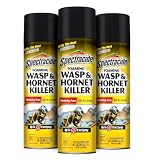
- BLANKETING FOAM FORMULA: Kills listed pests by contact, including wasps, hornets & yellowjackets
- LONG-RANGE JET SPRAY: Sprays up to 27 feet to allow users to stand a safe distance from the nest
- WATER-BASED SOLUTION: Non-staining and leaves no oily residue behind
- KILLS THE NEST: Wait at least 24 hours before removing the nest after spraying
- FOR OUTDOOR USE ONLY: Outdoor use is limited to spot treatments only. Broadcast applications are prohibited
Rank #4
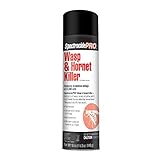
- FAST KNOCKDOWN: Kills wasps, hornets, yellow jackets and mud daubers
- JET SPRAY: This product reaches nests up to 20 feet away
- ELIMINATES THE NEST: SpectracidePRO Wasp & Hornet Killer kills the entire nest and kills returning wasps and hornets for up to 4 weeks
- OUTDOOR USE ONLY: Dielectric breakdown voltage of 47,300 volts
- WHEN TO APPLY: Apply at sunrise or sunset when insects are least active
Product prices and availability are accurate as of the date/time indicated and are subject to change. Any price and availability information displayed on Amazon at the time of purchase will apply.

