
The Tool Desk
Outbyte PC Repair FREERepair Windows errors before they cause bigger problemsFix Now →Outbyte Driver Updater FREEFix the driver behind crashes, sound loss and screen glitchesFind Drivers →iTechGuides is reader-supported. When you buy through links on our site, we may earn an affiliate commission. As an Amazon Associate I earn from qualifying purchases. Learn more
Before choosing a model, writing code, or buying an AI product, write down what the system is supposed to do, who it may affect, what could go wrong, and what evidence would count as success. That short definition gives a team a basis for deciding whether to proceed—and for evaluating the result against the real use, not a vague promise that the AI should “work.”
Why define “right” before you build?
Early choices about an AI system’s purpose and objectives can shape its behavior and capabilities. If a team leaves the intended use implicit, implementation decisions may quietly set the boundaries instead: what data is collected, which outputs are treated as acceptable, and who is expected to catch mistakes.


A written definition is not proof that a system will be safe, fair, accurate, or compliant. It is a working basis for decisions, testing, oversight, and reassessment. The NIST AI Risk Management Framework (AI RMF) organizes this work through four functions—Govern, Map, Measure, and Manage—and treats risk management as continuing across design, development, deployment, use, and evaluation.
NIST released AI RMF 1.0 on January 26, 2023. It is voluntary guidance described as rights-preserving, non-sector-specific, and use-case agnostic; NIST currently says the framework is being revised, not that a revision is complete. See the NIST AI Risk Management Framework and its development and revision information.
#1 Best Overall
What should go into a pre-build AI brief?
Use the following worksheet as a practical synthesis of NIST outcomes, not as a mandatory NIST form. Fill it out with the people who understand the task, the deployment setting, and the people affected by the system.
1. Purpose and intended task
- What user or organizational need are you addressing?
- What specific task will the AI support, and what decision or action may follow its output?
- What benefits do you expect, and compared with what current process or baseline?
Be concrete. “Improve support” is not a testable purpose; “draft answers to routine billing questions for an agent to review” identifies a task and a role for the output.
2. Users, affected people, and setting
- Who will use the system directly?
- Who may be affected by its outputs, including people who never interact with it?
- Where and under what conditions will it be used?
- Whose professional expertise or lived experience is needed to set requirements and identify likely impacts?
Include relevant user expectations, social norms, and context-specific laws. The applicable obligations depend on the jurisdiction, sector, and actual deployment; general framework guidance cannot determine them for an unspecified project.
What’s actually slowing this PC down?
Pick the symptom - the matching free tool is one click away.
3. Boundaries, assumptions, and limits
- Which uses are intended, foreseeable, or explicitly out of scope?
- What assumptions does the system make about input, users, data, or operating conditions?
- What does the system not know or reliably handle?
- How may its outputs be used, and what uses should be blocked or redirected?
State limits in terms that users and operators can act on. For example, define when an answer must be checked against an authoritative source or escalated to a qualified person rather than treated as a conclusion.
Rank #2
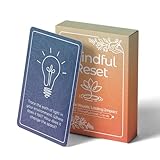
- 𝐑𝐄𝐒𝐄𝐓 𝐘𝐎𝐔𝐑 𝐌𝐈𝐍𝐃 𝐈𝐍 𝟔𝟎 𝐒𝐄𝐂𝐎𝐍𝐃𝐒 – A simple, screen-free way to disconnect after a high-demand workday or regain focus during a busy afternoon. Pull one of these mindfulness cards, pause, and follow a practical prompt designed to bring calm, clarity, and grounding in about a minute—no app, journal, or meditation experience needed.
- 𝐅𝐈𝐍𝐃 𝐓𝐇𝐄 𝐂𝐀𝐋𝐌 𝐘𝐎𝐔 𝐍𝐄𝐄𝐃 𝐓𝐎𝐃𝐀𝐘 – Includes 52 color-coded prompts across Focus, Calm, Gratitude, Self-Compassion, and Presence. These mindfulness cards for adults make it easy to choose the category that fits the moment, or pull a card at random for a quick daily ritual inspired by approachable mindfulness and grounding practices.
- 𝐁𝐔𝐈𝐋𝐃 𝐀 𝐒𝐄𝐀𝐌𝐋𝐄𝐒𝐒 𝐂𝐀𝐋𝐌𝐈𝐍𝐆 𝐇𝐀𝐁𝐈𝐓 – Keep these self care cards on your desk to break the midday work loop, in your bag for travel, or on your nightstand to transition peacefully into sleep. These bite-sized practices fit naturally into work breaks, quiet mornings, evening wind-downs, and everyday wellness routines.
- 𝐌𝐀𝐃𝐄 𝐓𝐎 𝐅𝐄𝐄𝐋 𝐏𝐑𝐄𝐌𝐈𝐔𝐌, 𝐔𝐒𝐄𝐃 𝐃𝐀𝐈𝐋𝐘 – Crafted from thick 350 GSM cardstock with a smooth premium finish, these cards feel substantial in hand and are designed to withstand repeated shuffling, daily handling, and carrying in a bag or desk drawer without easily bending or creasing. Compact 2.5" x 3.5" size makes them easy to keep close wherever life takes you.
- 𝐆𝐈𝐕𝐄 𝐀 𝐆𝐈𝐅𝐓 𝐓𝐇𝐄𝐘'𝐋𝐋 𝐀𝐂𝐓𝐔𝐀𝐋𝐋𝐘 𝐔𝐒𝐄 – Beautifully designed and easy to use, Mindful Reset makes a meaningful gift for mindfulness, meditation, and daily affirmations. Whether used as meditation cards, affirmation cards, or a simple wellness ritual, this thoughtful deck is perfect for women and men, friends, coworkers, teachers, therapists, students, and loved ones looking to bring more calm and intention into everyday life.
4. Benefits, costs, and risk tolerance
Record expected benefits alongside potential costs. Costs include more than money: a wrong output, delay, exclusion, privacy loss, or erosion of trust may matter even when no direct financial loss is easy to calculate.
- Which errors or harms could affect users, other people, or the organization?
- How severe and likely are they in the intended setting?
- Which failures are unacceptable, and which residual risks can the organization tolerate?
Do not treat all errors as equivalent. A misspelled low-stakes draft and an incorrect recommendation used in a consequential decision call for different tolerances and controls.
5. Requirements and human oversight
- What must the system do, and what must it protect?
- What should happen when an output is uncertain, incomplete, or wrong?
- Who reviews consequential outputs, and what authority do they have to reject, correct, or escalate them?
- How can the system fail safely—for example, by withholding an answer or handing a case to a person?
NIST’s Map outcomes call for requirements to be elicited from relevant actors, and for system knowledge limits and human oversight to be documented. Oversight is meaningful only if the reviewer has enough information, time, and authority to act.
Quick wins for a faster PC:
Repair Windows errors before they cause bigger problemsFix Now →Scan for outdated or missing drivers - takes under a minuteDriver Scan →Clear out junk files and repair common Windows errorsFree Scan →6. Evidence that would demonstrate success
Translate “right” into observable evidence tied to the intended task and conditions. Specify metrics, test methods, evaluation data, and who will review the results. NIST calls for objective, repeatable, or scalable test, evaluation, verification, and validation processes, including documented metrics and methods. Validation asks whether objective evidence shows that requirements for the intended use have been fulfilled.
Rank #3

- GO BEYOND SMALL TALK — 52 cards with 104 open-ended questions (two per card) that turn dinners, road trips, and quiet nights in into conversations you'll actually remember. The original Holstee reflection deck.
- TOGETHER OR ON YOUR OWN — spark deeper conversations with couples, families, friends, and coworkers, or use the deck solo as journaling and self-reflection prompts. No rules, no setup — just draw a card and go deeper.
- COLOR-CODED BY THEME — questions span Gratitude, Wellness, Intention, and more, so you can steer toward what matters most in the moment. Inspired by mindfulness and positive psychology.
- SMALL ENOUGH TO POCKET, BEAUTIFUL ENOUGH TO DISPLAY — each card carries a unique, abstract design. Take the deck on the go, or leave it out on the coffee table.
- QUALITY YOU CAN FEEL — made in the USA from sustainably-forested paper with vegetable-based inks and a starch-based laminate that keeps them durable. As kind to the planet as they are to your conversations.
- What does the current process achieve, and what benchmark is appropriate?
- Which cases, users, and operating conditions must the evaluation represent?
- Which errors or outcomes need separate measurement rather than a single aggregate score?
- Who decides whether the evidence is sufficient to proceed?
A strong result on a convenient test set is not automatically evidence of success in a different setting. Describe the deployment conditions the evaluation is meant to represent, and treat gaps in that representation as limits on what the results establish.
7. Change triggers and reassessment
List the changes that require the team to revisit the brief: a new user group, purpose, data source, deployment environment, system capability, or observed impact. Risks and benefits can change over the system’s lifecycle, so the initial definition should inform ongoing monitoring and decisions rather than sit untouched after approval.
How do you make a go/no-go decision?
Use the brief to decide whether the proposed system is appropriate to design, develop, or deploy in the stated context. NIST describes the Map function as building contextual knowledge for an initial go/no-go decision; if a team proceeds, it should use measurement and management processes alongside governance.
- Pause if the purpose, affected people, or intended setting cannot be stated clearly enough to evaluate.
- Proceed to evaluation planning when requirements, limits, oversight, and acceptable risk are specific enough to test.
- Do not proceed as proposed when likely harms exceed the organization’s stated tolerance or when necessary oversight and evidence are unavailable.
- Reassess when the system or its context changes, or when real-world use reveals impacts the brief did not anticipate.
The decision is contextual, not a universal score. NIST notes that trustworthiness characteristics may involve tradeoffs and that not every characteristic matters equally in every setting. Priorities should reflect the task, affected people, and relevant stakeholders.
Independent reader supportYour contribution helps us test, update, and keep practical guides available for everyone.How should you compare build, buy, and no-AI options?
If there are real alternatives, compare them against the same written purpose, requirements, and risk tolerance. A non-AI process may be the better fit; a purchased tool and a custom system may also differ in evidence, limits, and lifecycle demands. Avoid choosing an option because it performs well on a generic demonstration that does not represent the intended use.
| Comparison criterion | Question to answer |
|---|---|
| Fit to task and users | Does the option support the defined task for the people who will use or be affected by it? |
| Expected benefit | Does it improve on an appropriate current-process benchmark? |
| Error consequences | Are likely failures compatible with the stated risk tolerance and available safeguards? |
| Relevant protections | What privacy, fairness, safety, security, transparency, and oversight needs apply in this context? |
| Evidence quality | Do tests reflect realistic users and deployment conditions, and are limitations clear? |
| Lifecycle burden | Can the team monitor performance, respond to failures, and reassess the system as use changes? |
The OECD’s Due Diligence Guidance for Responsible AI, published in 2026, notes that terms such as “define,” “identify,” “map,” and “scope” describe broadly similar scoping work across risk frameworks, though terminology differs.
What the written definition does—and does not—do
A useful brief makes the intended use and decision criteria explicit, so a team can challenge assumptions before they harden into a product. It does not guarantee compliance or trustworthy outcomes. NIST AI RMF and its companion AI RMF Playbook are voluntary resources; the Playbook suggests actions for Govern, Map, Measure, and Manage and is expected to be updated after the framework revision.
For legal duties, consult qualified legal and domain experts familiar with the relevant location and use. For technical and operational decisions, keep the brief connected to testing, oversight, and lifecycle management: “right” is a set of requirements and evidence to revisit, not a label to attach to an AI system once and for all.
Quick Recap
Product prices and availability are accurate as of the date/time indicated and are subject to change. Any price and availability information displayed on Amazon at the time of purchase will apply.

