
Outdated Drivers Are Slowing You Down
One free scan finds every outdated or missing driver and matches the right update for your exact hardware.Free scan · exact hardware matchWindows Errors? Fix Them Before They Spread
Repair common Windows errors and clear accumulated junk for a smoother, more stable PC - no reinstall needed.Free scan · no reinstalliTechGuides is reader-supported. When you buy through links on our site, we may earn an affiliate commission. As an Amazon Associate I earn from qualifying purchases. Learn more
Look at a dune from above, compare its shape with the prevailing wind, and check whether plants anchor it. A barchan is a separate crescent whose horns point downwind; a transverse dune is a ridge running across the wind; and a parabolic dune is U-shaped, with vegetation-held arms pointing upwind.
Compare the shapes and wind directions
Imagine an arrow showing the prevailing wind. The direction of a dune’s horns, arms, or crest provides the quickest way to distinguish these forms.


| Dune type | Shape from above | Orientation to wind | Vegetation and setting | Quick identification cue |
|---|---|---|---|---|
| Barchan | An isolated crescent or arc | Two horns point downwind | Typically little or no vegetation; associated with limited sand supply | A single crescent with tips pointing in the direction the wind blows |
| Transverse | A ridge, sometimes a connected row of smaller crescents | The ridge runs perpendicular to the prevailing wind | Associated with more sand than isolated barchans | A crosswind ridge rather than one separate crescent |
| Parabolic | A U shape with a convex nose and elongated arms | Arms point upwind; the nose advances downwind | Vegetation anchors the arms; may form around a blowout in vegetated sand | Look for plant-held arms trailing back into the wind |
How to identify each dune
Barchan: a crescent with downwind horns
A classic barchan is a distinct crescent, not a long crosswind ridge. Its two pointed horns extend downwind. Barchans are associated with a dominant wind direction and little or no vegetation, and commonly occur where sand supply is limited. The U.S. Geological Survey (USGS) and National Park Service (NPS) describe these identifying traits in their dune overview and Great Sand Dunes type guide.
Free tools Windows power users keep installed
One-click scans. No signup required.
Transverse: a ridge across the wind
A transverse dune is identified by its ridge: the ridge axis runs perpendicular to the prevailing wind. At Great Sand Dunes, the USGS explains that barchans can move together and line up, forming a long transverse ridge made of smaller crescent forms. The ridge-versus-individual distinction is useful: a separate crescent points you toward barchan; a connected crosswind ridge points you toward transverse.
#1 Best Overall
Parabolic: a U with upwind arms
A parabolic dune is U-shaped, but its arms point the opposite way from barchan horns: they trail upwind. Vegetation holds the arms while the dune’s nose can migrate downwind. The NPS notes that these dunes can form around blowouts in vegetated sand; see its description of dune types.
Why “transverse” can be confusing
Some sources use “transverse” broadly for crescentic dunes as well as for ridges. The USGS overview, for example, says crescentic dunes are also known as barchans or transverse dunes. In its account of Great Sand Dunes, however, the USGS describes transverse dunes as ridges formed when barchans line up. These usages are not perfectly consistent, so identify the scale and shape being discussed: an individual crescent or a ridge across the wind. See the USGS pages on dune types and Great Sand Dunes geology.
Independent reader supportYour contribution helps us test, update, and keep practical guides available for everyone.A practical field check
- Establish the prevailing wind direction. Use the direction most relevant to the dune field rather than assuming the wind is identical at every moment.
- View the dune from above, if possible. A plan view makes the crescent, ridge, or U shape easier to distinguish.
- Check the feature relative to the wind. Downwind horns suggest a barchan; a ridge across the wind suggests a transverse dune; upwind-pointing arms suggest a parabolic dune.
- Look for plants on the arms. Vegetation anchoring the arms supports a parabolic identification.
These are field cues, not a guarantee that every dune will match a textbook outline. For example, joined crescents can produce a ridge, while vegetation can affect how a dune’s outline develops. Describe both the visible form and its relationship to the wind when a landform does not fit neatly into one category.
Quick wins for a faster PC:
Fix the driver behind crashes, sound loss and screen glitchesFind Drivers →Clear out junk files and repair common Windows errorsFree Scan →Quick Recap
Rank #3
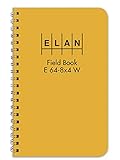
- Wire-o bound with high visibility yellow cover
- Wire-o 4 ⅞ x 7 ¼
- Ruled light blue with red vertical lines
- Six vertical columns left page and 8x4 to the inch right page
- Inside quality white ledger paper is special formulated for maximum archival service with material that is 50 percent cotton and water resistant
Product prices and availability are accurate as of the date/time indicated and are subject to change. Any price and availability information displayed on Amazon at the time of purchase will apply.

